Wukong Destined One Bronze Statue Size FAQs
Wukong Destined One bronze statue size and material FAQs for informed buyers
Wukong armor figures can look dramatically different from one product listing to another, even when the overall pose appears similar. For buyers, merchandisers, retailers, and collectible distributors, the difference is often not limited to visual styling. Height may be measured from different reference points, a stated weight may or may not include a base, and a general description such as “bronze” may not identify the alloy, casting method, or surface finish.
This FAQ guide explains the practical specification questions to confirm before purchasing, sourcing, or listing a Wukong bronze armor collectible. It is designed to help B2B buyers compare quotations more accurately, reduce listing inconsistencies, and communicate production requirements clearly before an order enters the casting process.
How to specify a Wukong Destined One bronze statue accurately
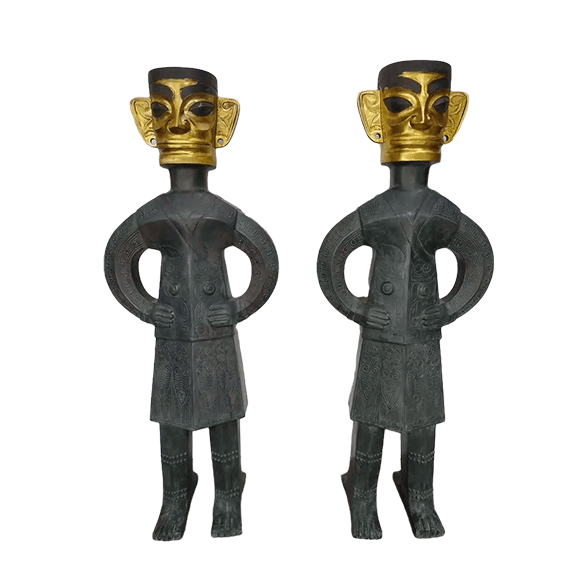
A clear specification begins with more than a product name. Wukong-inspired figures may include a standing combat pose, a crouching pose, raised weapons, layered armor, flowing ribbons, cloud-style bases, or rockwork platforms. Each of these design choices affects the finished dimensions, metal consumption, balance, mold construction, finishing time, and packing requirements.
For purchasing and product-listing purposes, request a specification sheet that separates the sculpture into measurable elements. This makes it easier to compare one supplier quotation with another and ensures that sales teams, warehouse staff, and end customers are referring to the same version of the figure.
What dimensions should buyers request?
At minimum, request the overall height, overall width, and overall depth in millimeters or centimeters. The overall height should state whether it is measured from the bottom of the base to the highest point of the figure, weapon, hair ornament, or raised armor component. A staff or weapon extending above the head can materially change the shipping height.
For detailed listings, it is also useful to request the following measurements:
- Figure-only height, excluding the detachable or integrated base.
- Total height, including weapons, hair details, flame effects, or raised hands.
- Maximum width, especially where a staff, cape, arm, or shoulder armor projects outward.
- Maximum depth from the front-most to rear-most projection.
- Base length, width, and height.
- Mounting-hole position and diameter, if the figure will be fixed to furniture, a plinth, or a public display.
- Crated dimensions for transport planning, when applicable.
A single “height” number is not enough for a complex armor sculpture. A retailer may need shelf-clearance information, while an importer may need outer-carton data and gross weight for freight estimates. A collector-focused listing may also benefit from separate figure dimensions and base dimensions, particularly if the base is removable.
Why can the final size differ from a digital model?
A digital rendering or sculpting file is an important reference, but production dimensions should still be confirmed in the approved production drawing. Lost-wax casting involves pattern work, mold preparation, metal casting, chasing, welding where required, polishing, and patina finishing. The complexity of the armor, weapon, and base should be evaluated before a final dimensional tolerance is agreed.
For a figure with thin staff sections, long ribbons, sharply extended fingertips, or deep undercuts in armor, the practical production plan may require structural review. Buyers should ask whether the intended design will be cast as one piece or as multiple sections joined during finishing. This is not merely a manufacturing detail; it affects installation, packing, and the way dimensions are presented in a product description.
Size FAQs for bronze armor collectibles
Is there a standard size for a Wukong armor figure?
No universal standard size applies to custom bronze collectibles. The same character concept can be produced as a small desk display, a medium cabinet sculpture, a life-size decorative figure, or a larger installation piece. The correct size depends on the intended display environment, target price level, packaging limits, and design details.
Luoyang Yichuan Bronze Craft Co., Ltd. supports custom bronze sculpture production from a single prototype onward, with bulk-order arrangements discussed according to the design complexity and size. For this reason, purchasers should define the intended size range at the quotation stage rather than relying on an image alone.
Should weight be listed as net weight or shipping weight?
Both figures should be treated separately. Net weight refers to the finished sculpture itself, including any integral base unless otherwise stated. Shipping weight, often called gross weight, includes protective internal materials, outer packaging, pallets, crates, and other shipment-related components.
A precise product page should label each measurement clearly. Avoid publishing an unqualified “weight” figure, because a customer may assume it refers to the statue while a freight provider may interpret it as packaged weight.
| Specification Item | Recommended Listing Definition | Why It Matters |
|---|---|---|
| Overall height | Base bottom to highest point | Confirms display clearance and carton planning. |
| Figure height | Figure only, excluding separate base | Helps customers compare collectible scales. |
| Net weight | Finished sculpture without export packaging | Supports handling and display-surface planning. |
| Gross weight | Sculpture plus complete shipment packaging | Supports freight quotations and warehouse receiving. |
| Base size | Length × width × height | Confirms stability and placement requirements. |
Does a larger bronze figure always weigh proportionally more?
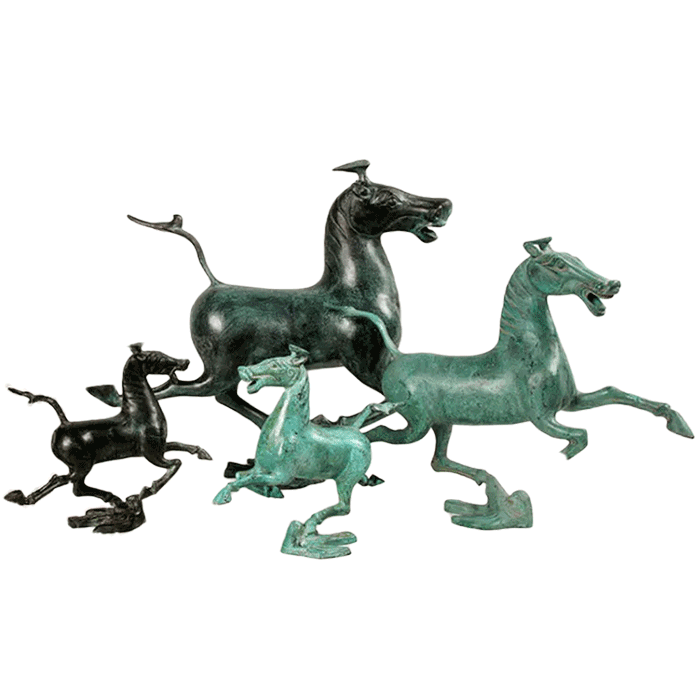
Not necessarily. Weight is influenced by overall scale, wall thickness, whether the sculpture is solid or hollow, the size of the base, the complexity of the pose, and the volume of bronze used in structural areas. Two pieces of similar height can have substantially different weights if one includes a dense pedestal and the other uses an open, dynamic composition.
For this reason, buyers should not estimate freight only from height. Ask for confirmed net and gross weight after the production approach and packaging method have been reviewed. This is particularly important for armor figures with extended weapons or asymmetrical poses that need custom protective packing.
Material and casting FAQs
What metal is used for custom bronze sculptures?
Luoyang Yichuan Bronze Craft Co., Ltd. uses premium Cu-Sn bronze alloy for bronze art pieces. Cu-Sn refers to a copper-and-tin bronze alloy. This material is appropriate for the traditional lost-wax casting process used for detailed art sculpture, allowing the production team to reproduce modeled features such as layered armor plates, facial expression, weapon textures, cloud motifs, animal details, and ornamental relief.
When reviewing a product description, it is better to state “Cu-Sn bronze alloy” when that is the confirmed material rather than using a broad metal term. A specific material statement reduces uncertainty for purchasers comparing bronze with other copper-based materials.
For additional context on alloy terminology, buyers can review bronze and brass differences. This is useful when preparing customer-facing copy that must distinguish a bronze sculpture from brass-colored decorative goods.
Is the sculpture solid bronze?
The term “solid bronze” can cause misunderstandings if it is used without clarification. In art casting, a figure may be produced through a hollow casting structure while still being a genuine bronze sculpture. The appropriate construction depends on dimensions, design, weight requirements, structural considerations, and installation conditions.
Rather than assuming construction from a photograph, buyers should ask for confirmation of the casting approach for the specific project. If a listing needs to make a claim about solid or hollow construction, that claim should be supported by the approved production specification rather than generalized from another model.
How is the armor detail created?
Fine surface detail begins in the sculpture model and is carried through the lost-wax process. After casting, skilled artisans perform hand chasing, which refines surface lines and restores details that require careful finishing. Polishing and patina work then help define the visual hierarchy between raised armor edges, recessed textures, facial features, and the base.
Armor figures require particular attention because their visual impact depends on crisp transitions: layered shoulder plates must remain distinguishable, textile-like surfaces should not appear flat, and decorative motifs should remain legible without becoming overly sharp or fragile. A production review should identify the smallest details that need to remain visible at the selected scale.
Finish, patina, and color-matching FAQs
What patina options are available?
Antique and modern patina finishes are available. An antique direction may emphasize darker recesses, aged bronze tones, or a historically inspired character. A modern direction may use cleaner color contrast, more controlled polish, or a presentation aligned with contemporary interior displays and collectible merchandising.
Patina is a surface finish, and its appearance can change with lighting, photography, screen settings, surrounding colors, and viewing distance. Product photos should therefore be treated as visual references rather than the only technical standard. If a buyer needs a particular finish direction, the request should describe the intended tone clearly and include relevant visual references where available.
Can the patina match a reference image?
Consistent patina color matching is an important sourcing concern for bronze art. To support a clearer result, provide a reference image, identify the desired dominant tone, and explain whether polished highlights, dark recesses, green-toned effects, or warmer brown tones are expected. For repeat purchasing, retain the approved reference and the written finish description as part of the order record.
Buyers should also identify which surface areas need different treatments. For example, the armor may require one tone, the weapon another, and the base a darker grounding color. A single phrase such as “antique bronze” may not be sufficiently specific for a multi-textured Wukong figure.
Those developing a broader Chinese-inspired collection may find Chinese bronze sculpture helpful for considering complementary bronze styles and display categories.
Will polished areas require care?
Any finished bronze surface benefits from appropriate handling and display care. Buyers should avoid presenting maintenance as identical for every finish, because the correct guidance depends on the applied patina, polish level, location, and environmental exposure. For product listings, it is sensible to provide basic handling guidance and to advise customers to consult the supplier for patina touch-up or restoration guidance if needed.
Luoyang Yichuan Bronze Craft Co., Ltd. provides after-sales support for patina touch-ups and restoration guidance. This can be relevant for retailers handling display pieces, long-term collection items, or sculptures that may require appearance maintenance after installation.
Ordering, quality review, and export packing FAQs
Can buyers order one prototype before a bulk order?
Custom sculpture orders can begin from one piece. This is useful when a buyer needs to evaluate the physical form, dimensions, finish direction, or packaging approach before arranging a larger program. Bulk-order requirements are negotiable according to the sculpture size and design complexity.
A prototype evaluation should focus on measurable criteria. Confirm dimensions, pose, base proportions, visible armor details, alloy description, patina direction, and any separate components. If the final retail listing will include a story card, installation instructions, or care information, review those materials alongside the sculpture so that product claims remain consistent.
What should be checked before final shipment?
Quality inspection is completed before shipment. Buyers should still provide their own order-specific acceptance requirements before production, especially when the figure is intended for resale under a defined specification. The most useful checklist addresses both visual and logistical details.
- Confirm the approved overall, figure-only, and base dimensions.
- Confirm the Cu-Sn bronze alloy description for the order documentation.
- Confirm the pose, weapon orientation, and any separate components.
- Confirm the requested antique or modern patina direction.
- Check that casting surfaces and hand-finished details meet the agreed visual standard.
- Confirm net weight, gross weight, and shipment dimensions where required.
- Confirm protective packaging requirements for projecting or fragile sculpture elements.
- Confirm labeling, carton markings, and any listing-related identification needed by the buyer.
The company follows an ISO 9001 quality management system and its art craft products comply with export quality inspection standards. Protective export packing should be discussed early for fragile sculptures, especially designs with narrow staffs, projecting ornaments, or irregular bases. Packing is not an afterthought: it is part of protecting a finished artwork during handling and transport.
What happens if there is a casting defect?
Free replacement is available for casting defects. To make a claim assessment efficient, buyers should document the issue with clear photographs, order identification, packaging observations, and a short description of the affected area. This helps distinguish a casting-related issue from handling damage or a concern involving a finish preference that was not defined in the approved specification.
How merchandisers can write clearer Wukong product listings
A strong listing should describe the actual approved product, not rely on generic collectible language. Start with the item type, then state the confirmed dimensions, material, finish, weight basis, and included components. If a staff, base, or weapon is removable, say so. If the finish is hand-applied, describe it as a hand-finished patina rather than promising that every piece will look identical in every lighting condition.
A practical listing format can include:
- Product type: Bronze Wukong armor figure.
- Material: Cu-Sn bronze alloy.
- Process: Traditional lost-wax casting with hand chasing, polishing, and patina finishing.
- Dimensions: Clearly state overall size and base size.
- Finish: Identify the approved antique or modern patina direction.
- Weight: Label net weight and shipping weight separately where available.
- Packaging: State that protective export packaging is used for shipment when confirmed for the order.
For projects requiring a distinct pose, custom dimensions, or an original display base, buyers can customize a bronze sculpture through a structured custom-production discussion. Clear artwork references, dimensional requirements, and finish expectations will help reduce revisions during late-stage evaluation.
Luoyang Yichuan Bronze Craft Co., Ltd. operates from Yichuan County, Luoyang, Henan Province, with a 3,000-square-meter production area and more than 30 skilled craftsmen, including bronze-casting masters and finishing artisans. With annual output exceeding 50,000 bronze art pieces, the company supports custom and bulk bronze-art requirements while maintaining inspection before shipment.
For Wukong armor figures, the most reliable buying decision comes from verified specifications: define what is measured, identify the Cu-Sn bronze material, clarify the casting and finish approach, and document the approved version before listing or purchasing. This process gives buyers a more dependable basis for comparing products, arranging logistics, and presenting the finished collectible accurately to customers.