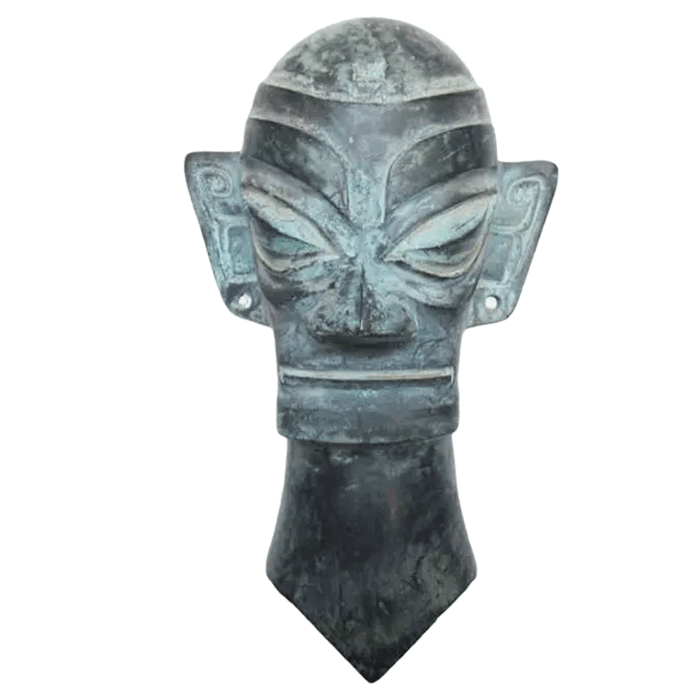
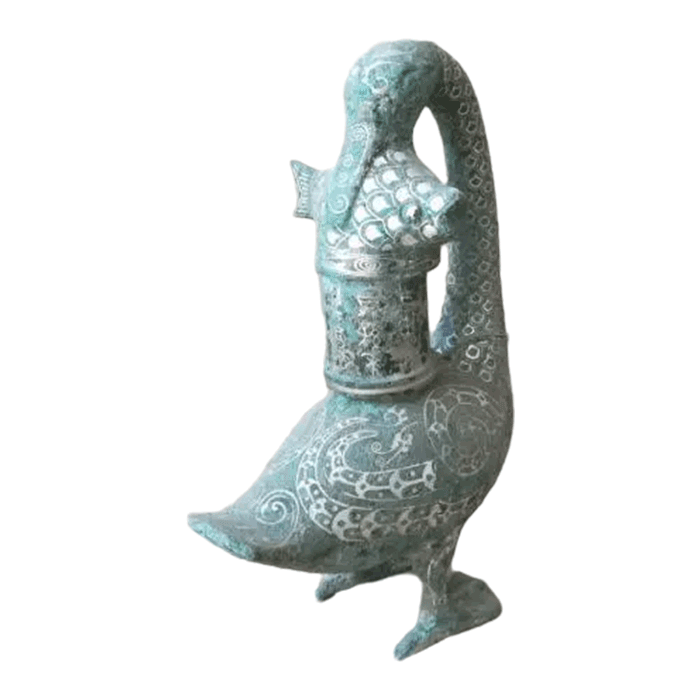
Why Is a Houmuwu Ding Bronze Reproduction So Heavy?
Understanding Why a Houmuwu Ding Bronze Reproduction Carries Such Remarkable Weight
Museum educators, private collectors, and replica researchers who have handled a large bronze ding reproduction often share the same first reaction: surprise at how heavy it is. The original Houmuwu Ding, cast during the late Shang Dynasty and now recognized as one of the heaviest ancient bronze vessels ever unearthed, weighed close to 832.84 kilograms. Any faithful reproduction that intends to honor the artifact's engineering—rather than simply mimic its silhouette—must reckon with that same mass. This article breaks down the metallurgical, structural, and manufacturing reasons behind the weight, and explains what that weight tells buyers about authenticity and craftsmanship quality.
The Alloy Composition Behind the Mass
Bronze is not a single material but an alloy, and the ratio of copper to tin (and sometimes lead) determines both density and durability. A premium Cu-Sn bronze alloy, similar to what ancient Shang foundries used, has a density considerably higher than the brass or lightweight composites sometimes substituted in budget reproductions. When a workshop uses a proper bronze alloy rather than a cheaper zinc-heavy blend, the resulting piece naturally gains weight—this is one of the simplest ways to verify material authenticity before a purchase is finalized.
At Luoyang Yichuan Bronze Craft Co., Ltd., every vessel—including ding, zun, and hu tripods—is cast from a premium bronze alloy selected specifically to match the density profile expected of historical bronzeware. This is not a cosmetic choice. Collectors who compare two seemingly identical statues by weight alone can often identify which one uses genuine bronze and which one is a lighter imitation.
Wall Thickness and the Lost-Wax Casting Method
Why Thickness Matters More Than Size
Weight is not purely a function of overall dimensions. The thickness of the vessel walls, legs, and handles plays a decisive role. The original Houmuwu Ding features thick, load-bearing walls designed to support enormous internal volume and withstand ceremonial use over centuries. A reproduction that thins out these walls to save material will look correct in photographs but will feel hollow and underweight in person—an immediate red flag for anyone assessing structural fidelity.
The Role of Traditional Lost-Wax Casting
Producing a piece with historically accurate wall thickness requires the traditional lost-wax casting method, which allows craftsmen to control mold cavity dimensions with precision unattainable through simplified sand-casting shortcuts. This method also enables the intricate taotie motifs and surface reliefs associated with Shang-era bronzeware to be captured without weakening the vessel's structural integrity. Readers interested in how these casting traditions developed over centuries can review this overview of the evolution of bronze culture over 2000 years for additional historical context.
Structural Engineering of the Original Vessel
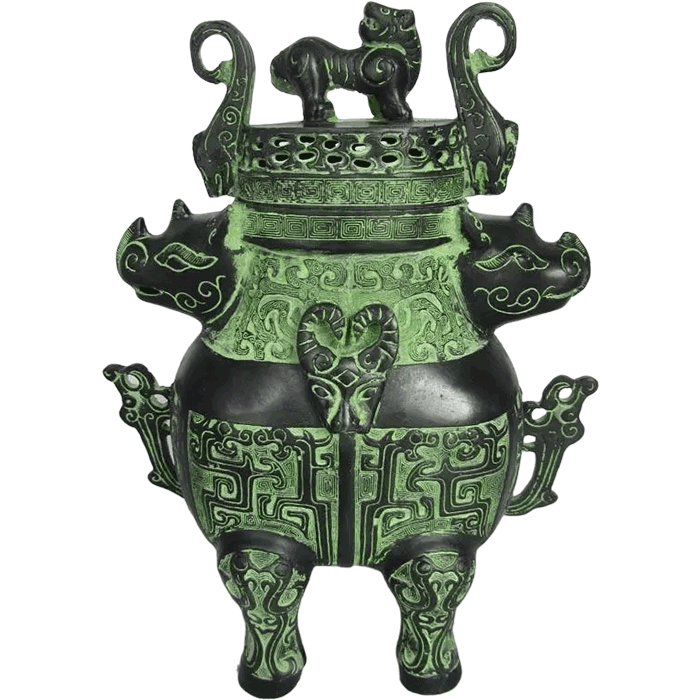
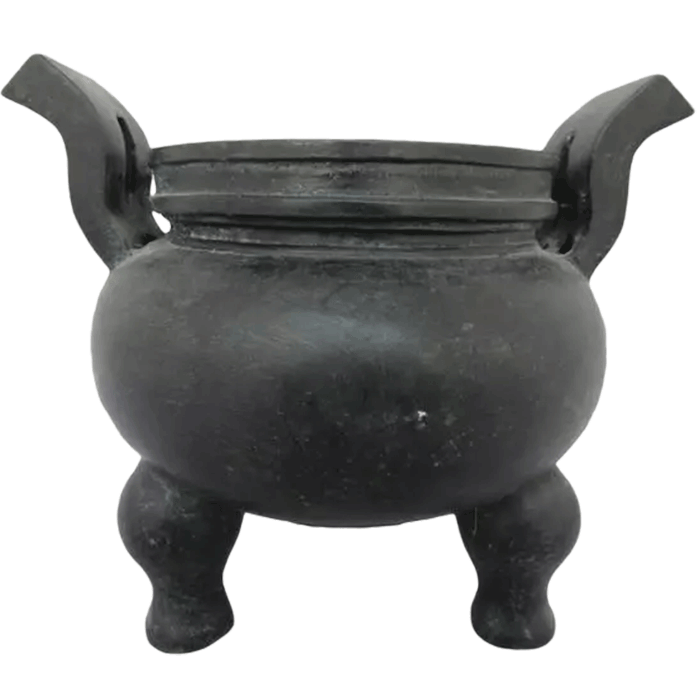
The Houmuwu Ding was never a decorative afterthought—it was engineered as a functional ceremonial vessel meant to hold offerings and endure repeated handling. Its four legs, thick rim, and heavy handles were all load-bearing elements, distributing weight evenly so the tripod would not tip or crack under stress. A well-executed Houmuwu Ding bronze reproduction respects this same engineering logic rather than treating the legs and handles as purely aesthetic add-ons.
This is where replica researchers often find the clearest evidence of quality. A reproduction with thin, hollow legs may stand upright on a display shelf but will lack the physical presence and balance of the original. Museums and serious collectors typically request documentation or physical verification of internal wall thickness before accepting a piece as a research-grade reproduction. For those studying how other monumental bronze vessels from the same historical period were engineered, this article on the Houmuwu square cauldron offers useful comparative detail.
How Luoyang Yichuan Bronze Craft Approaches Weight-Accurate Reproduction
Luoyang Yichuan Bronze Craft Co., Ltd. operates from a 3,000-square-meter production facility in Yichuan County, Luoyang, Henan Province, staffed by more than 30 skilled craftsmen, including bronze-casting masters and finishing artisans. The company is ISO 9001 certified, and products comply with export quality inspection standards for art crafts, which matters greatly for institutional buyers who need documentation alongside the physical object.
For collectors or museum programs pursuing a museum-grade Houmuwu Ding bronze reproduction, the workshop supports everything from a single custom prototype (MOQ of 1 piece) to bulk production runs, with bulk pricing negotiable based on size and design complexity. Because each piece is cast using the lost-wax method with hand chasing, polishing, and patina finishing, buyers can request either an antique surface treatment—closely matching the oxidized green-brown patina of excavated bronzes—or a modern finish for display purposes.
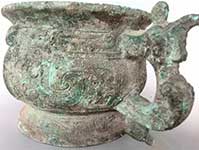
The company also addresses common sourcing pain points specific to large-scale bronze vessel replication: exact replication of antique proportions, consistent patina color matching across a production batch, and export-compliant protective packaging designed for fragile, heavy sculptures. Every shipment undergoes quality inspection, and casting defects are covered by free replacement, with after-sales support available for patina touch-ups and restoration guidance.
Evaluating Weight as a Quality Indicator
Questions to Ask Before Ordering
- What alloy ratio is used in the bronze, and can the supplier provide material composition data?
- What is the wall thickness at the base, legs, and rim compared to published data on the original artifact?
- Is the piece produced using traditional lost-wax casting or a simplified alternative method?
- Does the finished weight align proportionally with a scaled-down or full-size Houmuwu Ding bronze reproduction?
Why This Matters for Museums and Researchers
For institutions using reproductions in educational displays, weight accuracy contributes directly to the pedagogical value of the piece. Visitors and students often learn as much from lifting or touching a reproduction (under supervision) as from reading a placard. A reproduction engineered with historically accurate mass distribution communicates the physical reality of Shang Dynasty bronze casting far better than a lightweight replica ever could. Those researching related bronze forms, including tripods, vases, and ceremonial vessels, may also find value in browsing Chinese bronze sculpture collections to compare structural approaches across different vessel types.
Beyond the Ding: Applying the Same Standards Across Bronze Categories
The same principles governing weight and structural fidelity in a large ceremonial vessel apply across the broader catalog of bronze craftsmanship—whether the piece is a human or animal statue, a Buddhist figure, an incense burner, or a decorative mirror. Alloy selection, wall thickness, and casting method all influence not just the final weight but the long-term durability and authenticity of the piece. Buyers considering a custom commission can review options for customizing a bronze sculpture to specify alloy ratios, finish type, and structural requirements in advance, ensuring the finished work meets both aesthetic and engineering expectations.
Collectors assembling a themed collection—whether focused on ancient vessels, Buddhist statuary, or animal bronzes—often benefit from working with a single supplier capable of maintaining consistent quality standards across categories. This consistency is particularly important when weight and patina need to match across multiple pieces intended for a unified display, such as a set of ceremonial vessels or a paired collection of statues.
Final Considerations for Buyers
Weight alone should never be the sole criterion for evaluating a bronze reproduction, but it remains one of the most reliable physical indicators of whether a workshop has respected the original engineering of a historic artifact. A properly executed Houmuwu Ding bronze reproduction should feel substantial, balanced on its legs, and dense in the hand—qualities that emerge directly from alloy composition, wall thickness, and casting precision rather than surface decoration alone.
Institutions and collectors evaluating suppliers are encouraged to request material specifications, ask about casting method, and where possible, request weight documentation before committing to a large order. These details, combined with export-compliant packaging and after-sales support, distinguish a research-grade reproduction from a purely decorative one. To learn more about the company's certifications, production capacity, and craftsmanship background, visit the about scultmart page for additional detail.