Western Han Goose-Fish Bronze Lamp Provenance Guide
Verify a Western Han Goose-Fish Bronze Lamp’s Provenance Before You Source
For importers, museum retail buyers, interior project teams, and private collectors, a goose-and-fish lamp requires more than an attractive product description. It should be evaluated through a clear distinction between an authenticated ancient object, a later collectible, and a newly made historically referenced reproduction. This distinction protects buyers from inaccurate claims, supports transparent cataloging, and helps purchasing teams compare suppliers on evidence rather than appearance alone.
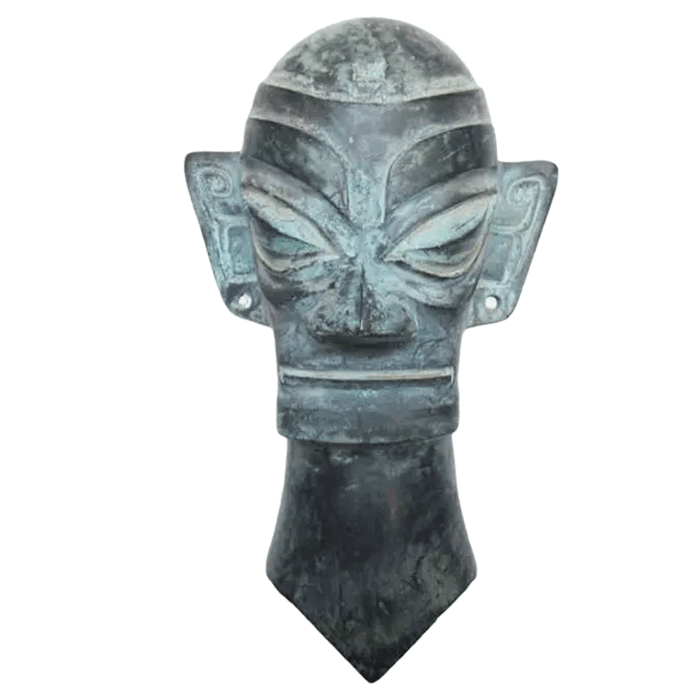
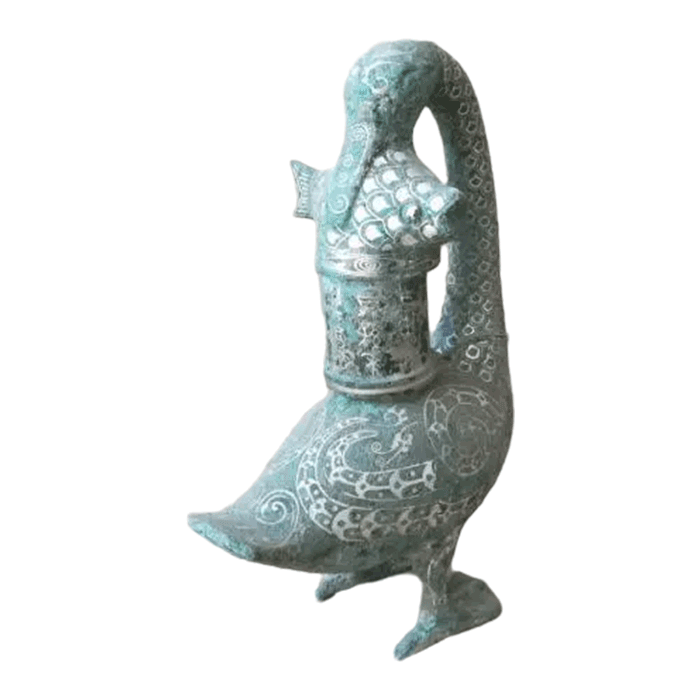
The Western Han Goose-Fish Bronze Lamp is widely recognized as a historically inspired form because it combines animal imagery, practical lighting design, and bronze craftsmanship in one object. When sourcing a modern reproduction, the appropriate objective is not to present it as an excavated artifact. Instead, buyers should verify that the supplier can explain the historical reference, identify what has been recreated, document the production process, and disclose the work honestly as a contemporary bronze artwork.
Start with the Correct Meaning of Provenance
In the strict museum and art-market sense, provenance is the documented ownership and custody history of an individual object. For an ancient bronze, that record may include excavation records, collection history, exhibition records, published references, legal export documentation, restoration reports, and ownership transfers. A product photograph or a statement that an item is “Han style” is not provenance.
For a newly commissioned or factory-produced work, the relevant documentation is different. The buyer should request production provenance: records showing who made the piece, when it was made, what material was used, which reference materials informed the design, and how the object was finished. This documentation establishes the identity of the reproduction and prevents a modern decorative item from being confused with an original archaeological object.
Importers should therefore use precise terminology in purchase orders, invoices, product listings, customs descriptions, and gallery labels. Suitable descriptions may include “contemporary bronze reproduction,” “historically referenced bronze lamp,” “Han-inspired decorative bronze,” or “custom-made bronze artwork.” Descriptions such as “excavated,” “antique,” “museum original,” or “Western Han artifact” should not be used for a newly cast object.
Separate three different sourcing categories
- Ancient original: An object represented as historically old and supported by lawful ownership, collection, and export documentation.
- Later-period collectible: An object made after the historical period it references, which still requires accurate dating and ownership history.
- Contemporary reproduction: A newly made bronze based on historical forms, drawings, photographs, or client-approved design references.
This separation is essential when a procurement team compares quotations. A supplier of contemporary bronze craft can provide manufacturing records and material information, but it should not claim to authenticate an unearthed antique unless qualified third-party evidence is available. Clear disclosure is not a limitation; it is a professional sourcing standard.
Assess the Historical Reference Behind the Design
A reliable historically referenced lamp begins with a defined visual source. Buyers should ask whether the supplier is working from a museum publication, a client-provided image, a scale drawing, a reference photograph, or a three-dimensional model. The answer affects the degree of detail that can be recreated and the level of interpretation required during sculpture, mold making, casting, and finishing.
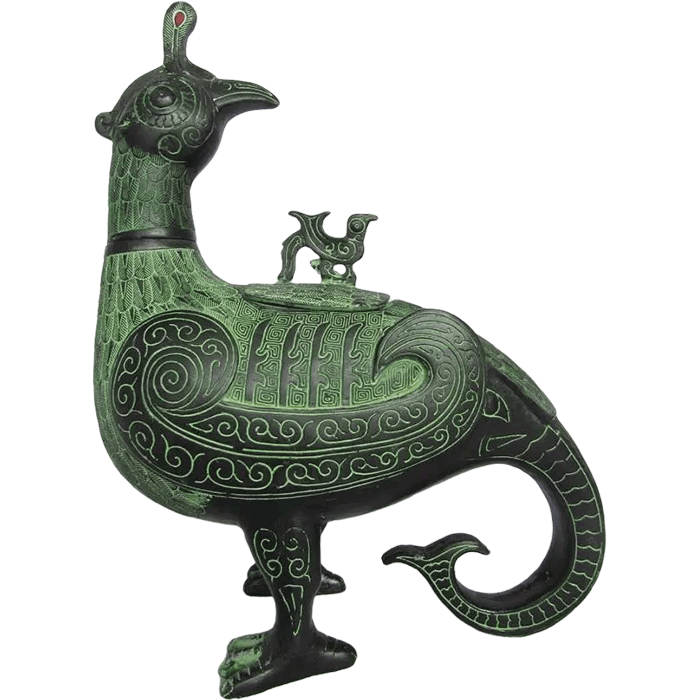
When evaluating a goose-and-fish composition, compare several visible elements rather than relying on the overall silhouette. These elements may include the posture of the bird, the treatment of feathers, the position and scale of the fish, the relationship between the neck and lamp chamber, the base construction, the lid or smoke-control features, and the patterning of the surface. A supplier should be able to identify which details are directly based on a reference and which are adjusted for casting stability, modern electrical requirements, or requested dimensions.
It is also useful to study related historical forms in context. Buyers researching Chinese ceremonial and decorative bronzes can review chinese bronze sculpture to compare broader approaches to bronze figures, vessels, and decorative forms. This wider context helps a curator identify whether a proposed lamp design uses visual language consistent with Chinese bronze traditions or simply combines unrelated motifs.
Historical reference does not mean that every feature must be copied without adjustment. A modern lamp may need internal reinforcement, an adapted opening for electrical components, or a revised proportion to suit a lobby, residential project, exhibition display, or retail collection. The key requirement is that such changes are documented and not presented as ancient construction details.
Questions to ask about the reference source
- What image, publication, drawing, or client-supplied material was used as the primary reference?
- Is the proposed design an exact visual replication, a close interpretation, or a new composition inspired by historical forms?
- Which features have been changed for scale, structural support, safety, or electrical installation?
- Can the supplier provide marked-up drawings showing requested changes before production begins?
- Will the final invoice describe the item as a contemporary reproduction or custom bronze artwork?
These questions are especially valuable for purchasing teams that need consistent documentation across multiple projects. A clear design brief reduces the risk that one shipment is described as a reproduction while another is incorrectly described as an antique-style original.
Review Material and Casting Evidence
Visual similarity alone cannot establish whether a lamp is made to a professional bronze standard. Buyers should also review the alloy, casting approach, surface treatment, assembly method, and inspection process. Luoyang Yichuan Bronze Craft Co., Ltd. uses premium Cu-Sn bronze alloy and the traditional lost-wax casting method for bronze art pieces. Lost-wax casting is appropriate for forms with sculptural surfaces, fine relief, undercuts, and detailed animal features because the wax model can capture complex contours before casting.
For an order intended to reference an ancient bronze object, request a written specification that identifies the bronze material and describes the intended finish. The request should also clarify whether the lamp will be cast as one principal form or assembled from separately cast sections. Complex animal sculptures may require carefully planned joining and finishing work, particularly where the joints must remain visually discreet after patina application.
Hand chasing, polishing, and patina finishing can influence the final interpretation of a piece. Chasing refines cast details; polishing changes highlights and surface reflectivity; patina adds color and tonal variation. A dark brown antique-style finish, a green-toned aged finish, and a cleaner modern bronze finish can make the same sculpture appear substantially different. Importers should approve the finish direction with photographs, samples, or a signed production specification where possible.
Buyers should also understand the material distinction between bronze and brass when comparing supplier offers. The article on the difference between bronze and brass can help procurement teams frame more informed questions about alloy descriptions and product positioning. A quotation should not use vague wording when the buyer requires a specific bronze alloy and a historically appropriate surface character.
| Verification Area | What to Request | Why It Matters |
|---|---|---|
| Product identity | Product name, dimensions, weight range, and reference image | Helps match the delivered piece to the approved design. |
| Historical reference | Source image, client artwork, drawing, or written design brief | Clarifies what is being reproduced or interpreted. |
| Material | Written Cu-Sn bronze alloy specification | Supports consistent purchasing and accurate product descriptions. |
| Craft process | Lost-wax casting and finishing information | Shows how sculptural detail and surface treatment are produced. |
| Patina | Approved color sample or finish reference | Reduces variation between samples and production pieces. |
| Shipping condition | Pre-shipment inspection and protective packing details | Supports safer export handling for fragile bronze forms. |
Examine Surface Details Without Mistaking Them for Age
Patina is one of the most misunderstood aspects of historically referenced bronze. Natural archaeological corrosion develops through long-term environmental conditions, burial conditions, chemical reactions, restoration history, and handling. A modern applied patina is a controlled finishing process intended to create a desired visual effect. Even when a contemporary finish resembles aged bronze, it should not be used as evidence that the object is ancient.
For a responsible product description, separate “antique-look patina” from “antique object.” The first describes a visual finish. The second makes a claim about age and historical status. This wording is particularly important for online marketplaces, museum shops, architectural procurement packages, and export paperwork, where an unclear phrase may be repeated by distributors or end customers.
Curators and buyers should inspect the consistency of the surface finish across raised feathers, recessed fish scales, narrow joints, and the underside of the base. A good review does not require every area to have identical coloration. Hand finishing naturally creates variation, and that variation can contribute to an authentic handcrafted appearance. However, the overall approved tone should remain consistent with the agreed sample or finish standard.
It is practical to request photographs under neutral lighting before shipment. Images should include front, rear, side, top, close-up, and base views. If the lamp includes a functional electrical component, request images of the cable exit, bulb area, access panel, or internal opening as applicable. Functional changes should be visible in the documentation rather than hidden in a general product description.
Build a Documentation Package for Import and Collection Records
A strong documentation package does not turn a reproduction into an antique, but it does make the work traceable, saleable, and easier to manage over time. It is particularly useful for design firms ordering multiple matching pieces, retailers selling historical-style décor, and museums acquiring clearly labeled educational reproductions.
The documentation should begin with a commercial invoice that accurately identifies the product as a newly made bronze item. The invoice may include the product title, quantity, declared material, country of origin, agreed dimensions, and order reference. For custom work, it is also helpful to retain approved drawings, email confirmations, and finish samples with the purchasing file.
Luoyang Yichuan Bronze Craft Co., Ltd. supports custom bronze work from a single prototype to bulk production runs, with final quality inspection before shipment. For buyers ordering a historically referenced lamp, this allows the approval process to focus on the issues that matter most: design accuracy, scale, color matching, structural details, and protective packaging. The company also provides free replacement for casting defects and offers after-sales support for patina touch-ups and restoration guidance.
For a deeper view of historical bronze development, buyers may consult bronze culture evolution when preparing educational labels or product background materials. Historical context can add value to a catalog, but catalog writing should always distinguish educational interpretation from verification of an individual ancient object.
Recommended records for every custom order
- Approved quotation with product description and quantity.
- Reference image, technical drawing, or client-approved artwork.
- Dimension and finish specification.
- Material statement identifying the bronze alloy.
- Production photographs where required by the buyer.
- Final inspection photographs before packing.
- Commercial invoice and shipment records.
- Care guidance for handling, cleaning, patina touch-up, and display.
For larger project orders, buyers may also assign internal product codes to each design variation. This is useful if the same goose-and-fish form is produced in several sizes, different patina colors, or both decorative and electrified versions. Product codes prevent mix-ups between prototype approval, production orders, replacement parts, and future repeat purchases.
Use Transparent Supplier Communication to Reduce Sourcing Risk
Reliable sourcing depends on questions being answered in writing. Before placing an order, importers should confirm who is responsible for final artwork approval, how finish changes will be communicated, what documentation accompanies the shipment, and how any casting defects will be handled. These details are more useful than broad claims about authenticity because they create an auditable process.
Luoyang Yichuan Bronze Craft Co., Ltd. is located in Yichuan County, Luoyang, Henan Province, with a 3,000-square-meter production area and more than 30 skilled craftsmen, including bronze-casting masters and finishing artisans. The company operates under an ISO 9001 quality management system and produces bronze art pieces for export according to art-craft quality inspection standards. This production capability supports custom sculptures, vessels, incense burners, Buddhist statues, mirrors, and related bronze artworks with requirements ranging from one custom piece to negotiated bulk quantities.
Buyers seeking a bespoke version may use the service to customize a bronze sculpture when developing a specific scale, animal pose, base, patina, or project adaptation. Clear custom instructions are especially important when the design is based on a historical image, because every added decorative element should be identified as either reference-based or newly commissioned.
A trustworthy supplier relationship should make it easier to disclose the product correctly to downstream customers. The final sales description can state that the object is a contemporary bronze reproduction or Han-inspired artwork produced through lost-wax casting and hand finishing. This is commercially useful, historically responsible, and easier for distributors to translate into accurate retail, exhibition, or project documentation.
Final Checklist for a Historically Referenced Lamp Purchase
Before confirming an order, review the following points with the supplier and your internal purchasing team:
- Confirm that the item is described as a contemporary reproduction, not as an excavated antique.
- Identify the historical image, publication, or drawing that informs the design.
- Approve dimensions, orientation, base style, and functional lamp requirements.
- Request a written Cu-Sn bronze material specification.
- Approve the patina direction as antique-look, green-toned, dark brown, or modern bronze.
- Ask for pre-shipment photographs and final inspection confirmation.
- Confirm export-compliant protective packing for fragile projections and detailed sculptural areas.
- Keep invoices, drawings, and care instructions as part of the item record.
By treating provenance as a documentation process rather than a marketing phrase, importers and curators can source historically referenced bronzes with greater confidence. The goal is not to blur the line between old and new. The goal is to obtain a well-made contemporary bronze that respects its historical inspiration, meets the buyer’s quality requirements, and can be accurately described throughout its commercial or institutional life.