Weight of a Houmuwu Ding Bronze Reproduction | Sculpmart
How Heavy Is a Houmuwu Ding Bronze Reproduction?
The Houmuwu Ding, formerly known as the Simuwu Ding, stands as one of the most significant bronze artifacts ever discovered. As the heaviest piece of ancient bronzeware in the world, its sheer mass is a testament to the power and advanced metallurgical skills of China's Shang Dynasty. For museum planners, exhibit designers, private collectors, and historical institutions looking to commission a replica of this monumental vessel, a critical logistical question arises: exactly how heavy is a reproduction? The answer is not a single number but a result of careful calculation and manufacturing choices that balance historical fidelity with practical considerations for display, transport, and budget.
Understanding the factors that influence the final weight of a replica is the first step in planning a successful acquisition. This guide breaks down the key variables, from the scale of the piece to the casting techniques employed, providing the foundational knowledge needed to specify a project that meets both aesthetic and structural requirements. At Luoyang Yichuan Bronze Craft Co., Ltd., we specialize in navigating these complexities, ensuring every custom bronze artwork is a perfect fusion of ancient artistry and modern engineering.
The Original Houmuwu Ding: A Benchmark of Mass and Scale
To appreciate the weight of a reproduction, one must first grasp the scale of the original. Unearthed in Henan province in 1939, the authentic Houmuwu Ding is an artifact of breathtaking proportions. It stands 133 cm (52 in) tall, with a mouth measuring 110 cm by 79 cm (43 by 31 in), and weighs an astounding 832.84 kilograms (1,836 pounds). This colossal weight is not incidental; it was a deliberate display of wealth and authority, requiring immense resources to mine and smelt the copper and tin, and an unprecedented level of skill to manage the massive bronze pour.
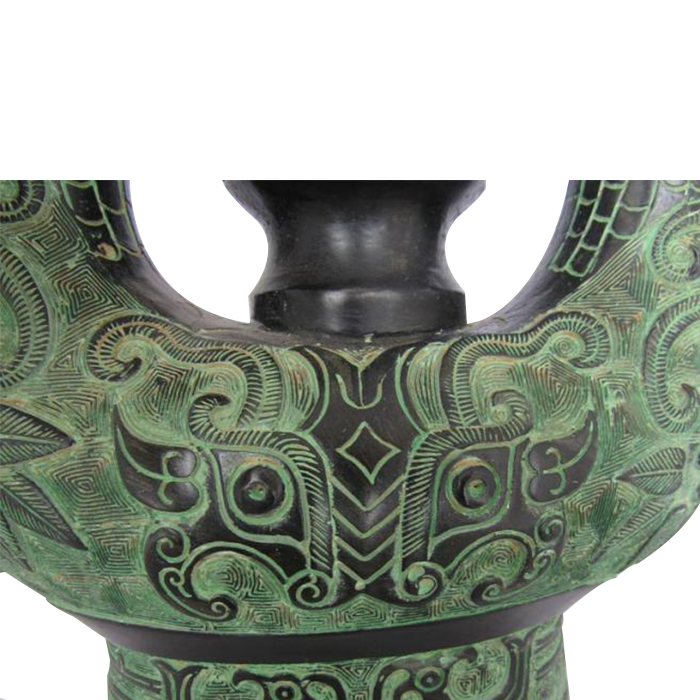
The original vessel was cast in a premium bronze alloy, primarily composed of copper and tin. The density of this metal, combined with the vessel's thick walls, contributes directly to its weight. The creation of such a large, solid piece was an incredible feat of ancient engineering, likely requiring a coordinated effort of nearly a hundred skilled craftsmen and a complex system of piece-molds. Replicating this exact mass in a 1:1 scale would present many of the same challenges today, particularly concerning material cost and handling. While a solid, full-scale reproduction is possible, it is often impractical for most modern applications. This is why understanding material properties and advanced casting methods is crucial for producing a faithful yet manageable replica. The specific choice of alloy, for instance, can impact not only the final color and patina but also the overall density. You can learn more about the difference between bronze and brass and other copper alloys to understand these nuances better.
Factors Determining the Weight of a Reproduction
The final weight of a custom-commissioned Houmuwu Ding is not a predetermined figure. It is the outcome of several key decisions made during the project's planning and design phase. As your manufacturing partner, we consult closely with you to define these variables to align with your specific goals, whether for a museum centerpiece, an educational exhibit, or a private collection.
1. Scale and Dimensions
The most significant factor influencing weight is the scale of the reproduction. The relationship between size and weight is exponential. If you reduce the linear dimensions (height, width, depth) of an object by half (a 1:2 scale), its volume—and therefore its weight, assuming a solid cast—is reduced by a factor of eight (1/2 x 1/2 x 1/2 = 1/8). A full-scale (1:1) solid bronze reproduction of the Houmuwu Ding would weigh approximately 833 kg, just like the original. However, a 1:2 scale solid model would weigh around 104 kg (230 lbs), while a 1:4 scale solid model would be a much more manageable 13 kg (29 lbs). We can produce replicas at any scale, from small tabletop models to full-size facsimiles, allowing for precise control over the final weight to suit your display space and structural load limits.
2. Material Composition and Density
Our foundry utilizes a premium bronze alloy of copper and tin (Cu-Sn), consistent with ancient Chinese casting traditions. The standard density of this type of bronze is approximately 8.8 grams per cubic centimeter (g/cm³). While slight variations in the alloy mix can cause minor fluctuations in density, we maintain consistency to ensure predictable results and historical accuracy. The total weight is a direct calculation of the object's final volume multiplied by this density. For any given size, using this high-quality bronze ensures the reproduction has the authentic look, feel, and longevity expected of a fine art piece.
3. Casting Method: Solid vs. Hollow
For large-scale reproductions, the choice between solid and hollow casting is the most critical weight-determining factor. While a solid cast offers maximum durability and historical accuracy in terms of mass, it is often prohibitively heavy and expensive for large pieces. Hollow casting, executed using the traditional lost-wax method, provides an effective solution.
In this process, a wax model of the final sculpture is created over a heat-resistant core. The thickness of the wax directly corresponds to the eventual thickness of the bronze walls. By carefully controlling this thickness—typically between 8mm and 20mm for a large vessel—we can drastically reduce the total volume of bronze required. This results in a significant weight reduction without compromising the external appearance or structural integrity of the piece. A 1:1 scale hollow-cast Houmuwu Ding, for example, might weigh between 150-250 kg instead of over 800 kg, making it far more practical to install and display. This method allows us to create a visually identical, monumental Houmuwu Ding bronze reproduction that is both cost-effective and logistically feasible for our clients.
Practical Implications of Weight for Your Project
The calculated weight of your bronze reproduction has direct and significant consequences for every stage of your project, from initial budgeting to long-term maintenance. Considering these factors early in the planning process is essential for a smooth and successful installation.
Display and Installation
A heavy bronze sculpture requires careful planning for its final placement. Key considerations include:
- Floor Load Capacity: Galleries, lobbies, and other indoor spaces have specific structural load limits. A multi-hundred-kilogram sculpture may require engineering assessments to ensure the floor can safely support its concentrated weight.
- Pedestals and Mounts: The plinth or base must be custom-designed and fabricated to not only support the weight but also secure the sculpture against tipping or shifting, especially in public areas.
- Installation Equipment: Moving and placing a heavy vessel requires specialized equipment such as gantry cranes, forklifts, or heavy-duty dollies. The installation plan must account for access routes, door clearances, and the space needed to operate this machinery safely.
Shipping and Logistics
Weight is a primary driver of shipping costs and complexity. As an experienced exporter of fine art, we manage these logistics meticulously. A heavier piece necessitates robust, custom-built crating with internal bracing to prevent movement during transit. We have developed export-compliant protective packaging solutions specifically designed to safeguard fragile and heavy sculptures, ensuring your investment arrives safely. The shipping method will typically be sea or air freight, and the total weight will influence carrier selection, insurance costs, and customs handling procedures.
Handling and Maintenance
Once installed, the weight of the sculpture continues to be a factor. Any future relocation, even within the same building, will require the same level of careful planning and equipment as the initial installation. While bronze is an exceptionally durable material, the sheer momentum of a heavy object means that accidental drops or impacts can cause significant damage. Our after-sales support includes providing guidance on safe handling techniques and patina maintenance, including touch-up and restoration advice to keep your piece in pristine condition for generations.
Partnering with Experts for Your Bronze Vessel Reproduction
Creating a large-scale bronze replica is a complex undertaking that requires a blend of artistic skill and engineering precision. At Luoyang Yichuan Bronze Craft Co., Ltd., we serve as your dedicated partner through every step, ensuring the final product perfectly aligns with your vision and practical requirements. Our 3,000-square-meter facility is staffed by over 30 skilled artisans, including bronze-casting masters who have inherited the techniques of their ancestors.
Our process begins with a detailed consultation to establish the ideal specifications for your Houmuwu Ding bronze reproduction. We discuss scale, intended placement, and budget to recommend the most appropriate casting method. Whether you require a single, museum-quality prototype or a bulk production run, our flexible manufacturing capabilities, certified under the ISO 9001 quality management system, are at your disposal. We solve common sourcing pain points by guaranteeing exact replication of historical details, achieving consistent patina color matching, and providing secure packaging for international shipment.
From the initial design to the final quality inspection before shipment, our team is committed to excellence. We understand the importance of historical accuracy and structural integrity. If you are ready to bring a piece of history to life, we invite you to customize a bronze sculpture from sculpmart.com and begin the conversation with our specialists. Beyond ritual vessels, our expertise covers a wide range of chinese bronze sculpture, allowing us to be a single-source supplier for comprehensive exhibits and collections.
Ultimately, the weight of your reproduction is a controllable variable. By partnering with an experienced and knowledgeable foundry, you can confidently commission a magnificent piece that honors its ancient inspiration while meeting the demands of the modern world.