Verify Vintage Chinese Silver Tea Set Hallmarks
Verifying a Vintage Chinese Silver Tea Set Starts with Reading Its Hallmarks Correctly
Buyers who have already located a promising piece and are preparing to make an offer face a different challenge than casual browsers. At this stage, the question is no longer "does this look authentic?" but "can I prove it, and can I defend that proof to a business partner or auditor?" A vintage Chinese silver tea set carries a story in its markings, and reading that story accurately is the single most reliable way to confirm material claims before money changes hands.
This guide walks through the hallmark systems used on Chinese export and domestic silverware, the physical inspection steps that separate genuine pieces from later reproductions, and the practical decisions you'll need to make once verification is complete.
Why Hallmark Verification Matters for Late-Stage Buyers
Once a set has passed initial visual screening — correct weight, plausible patina, matching pieces in a service — the remaining risk sits almost entirely in the markings. Sellers rarely misrepresent obvious features like shape or decoration, because those are easy for a buyer to check against reference photos. Hallmarks are different. They are small, often worn, and require specialized knowledge to interpret correctly. This is exactly where inflated claims tend to hide.
For a business buyer sourcing for resale, gifting programs, or collection inventory, an incorrect material claim is not a minor inconvenience — it is a compliance and reputational risk. Treating hallmark verification as a mandatory final step, rather than an optional nicety, protects your margin and your credibility with downstream customers.
Understanding Chinese Silver Marking Systems
Chinese silverware marking conventions evolved considerably between the late Qing period and the mid-20th century, and export pieces often follow different rules than domestically retained items. Before judging authenticity, you need to know which system you are looking at.
Export Silver Marks
Pieces made for Western markets, particularly from treaty-port cities such as Shanghai, Canton, and Hong Kong, typically carry a maker's mark in Latin letters or a stylized monogram, often accompanied by Chinese characters for the workshop name. Common purity indicators on export silver include "90" or "SILVER" stamped in English, reflecting the buyer market's expectations rather than traditional Chinese conventions.
Workshop and Retailer Marks
Domestic and higher-end export pieces frequently bear the mark of the retailing shop rather than the individual silversmith, since many wares were commissioned through established silver houses. Recognizing the difference between a workshop mark, a retailer mark, and an individual craftsman's chop is essential — conflating the three leads to incorrect dating and provenance claims. Businesses experienced in handmade silver craftsmanship can often cross-reference these marks against known workshop records from the same production regions.
Purity Marks
Look for numeric purity stamps such as "90," "900," or "SOLID SILVER," though be aware that stamped purity does not always match assayed purity on pieces made during periods of inconsistent regulation. A stamp is a starting point for investigation, not a final verdict.
Step-by-Step Hallmark Verification Process
- Photograph every mark at high resolution under raking light, which reveals stamping depth and tool wear that flat lighting hides.
- Compare stroke style and character spacing against verified reference marks from the same claimed workshop or period — genuine stamps show consistent, confident tool pressure.
- Check mark placement consistency across all pieces in the set. A genuine service usually shows the same mark position and orientation on every teapot, creamer, sugar bowl, and tray.
- Test weight-to-volume ratio against known standards for the claimed purity, since silver has a distinct density that pure or lightly plated base metals cannot replicate.
- Request or perform a non-destructive XRF (X-ray fluorescence) test if the transaction value justifies it — this is the closest a buyer can get to certainty without damaging the piece.
Each of these steps produces documentation you can retain for your own records or share with a compliance team, which matters more at the negotiation stage than a verbal assurance from the seller ever will.
Common Red Flags in Reproduction and Altered Pieces
Reproductions and later alterations tend to share recognizable characteristics once you know what to look for:
- Marks that appear crisp and uniform with no wear, despite the rest of the piece showing decades of handling.
- Mismatched marks between individual pieces claimed to be from the same original set.
- Purity stamps combined with a weight far too low for the stated dimensions, suggesting a thin plated shell over base metal.
- Soldered repairs directly over or adjacent to the hallmark area, which can indicate an added or altered stamp.
- Decorative motifs that don't match the period implied by the mark style — for instance, Art Deco design elements paired with a mark style associated with earlier Qing-era workshops.
None of these signs is automatically disqualifying on its own, but two or more appearing together should prompt a pause before finalizing any offer.
Material Verification Beyond the Hallmark
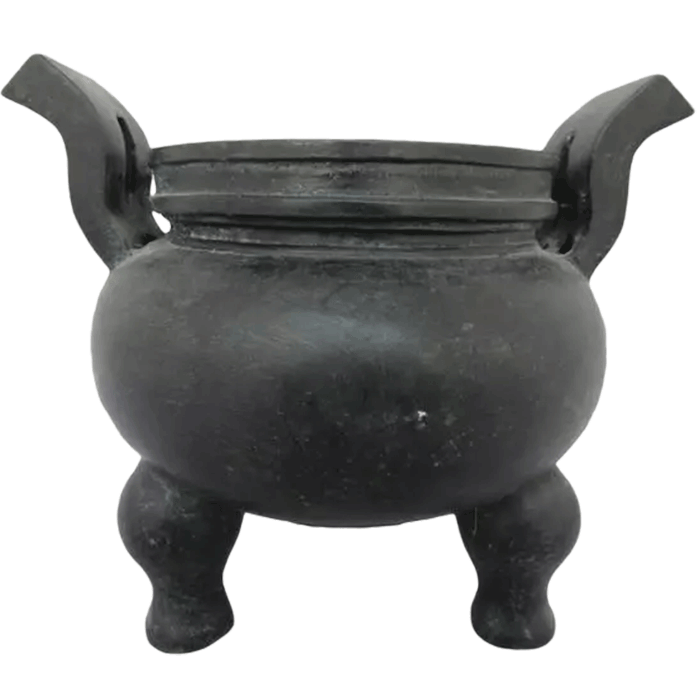
Hallmarks tell you what the maker intended to claim, but physical testing tells you what the metal actually is. This distinction matters because base-metal alloys can be finished to closely resemble silver, much the way collectors sometimes need to distinguish true bronze from brass in antique vessels — a comparison explained in more detail in this overview of bronze and brass differences. The same logic of alloy verification applies across metal categories: visual similarity is not proof of composition.
If you regularly source antique or vintage metalware for resale, building a simple in-house testing protocol — density check, magnet test for ferrous cores under plating, and periodic XRF spot checks — will save far more in avoided disputes than it costs in equipment or lab fees.
What to Do After Verification
Once a set passes inspection, document the findings alongside your purchase records: photographs of each mark, weight measurements, and any test results. This file becomes valuable not only for your own risk management but also for reassuring your own buyers if the piece moves further down the supply chain.
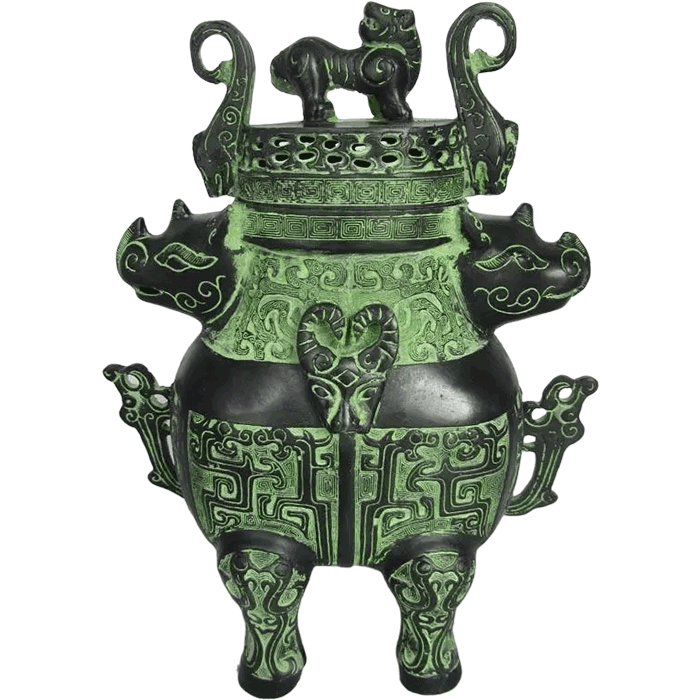
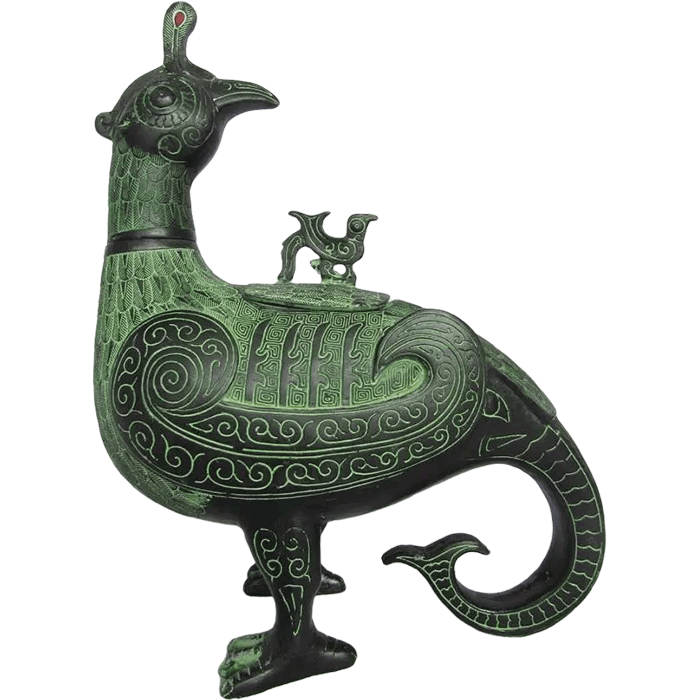
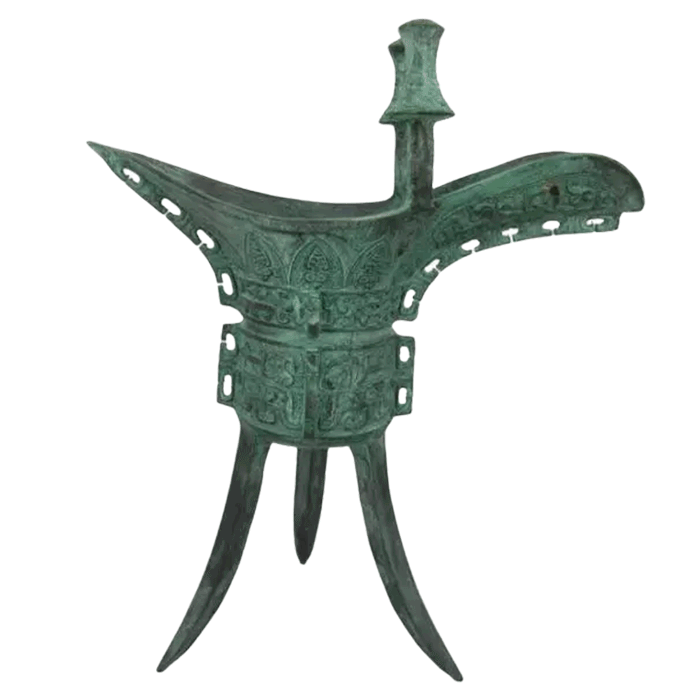
If verification raises doubts you cannot resolve, or if you're looking to complement a silver collection with authenticated cast metalwork instead, it's worth exploring alternatives with a documented production history. Luoyang Yichuan Bronze Craft Co., Ltd. produces bronze sculptures, vessels, mirrors, and incense burners using the traditional lost-wax method, with ISO 9001 quality management and pre-shipment inspection on every order. Buyers interested in pieces with verifiable craftsmanship — from replica ritual vessels to modern interpretations — can review the range of Chinese bronze handicrafts available, or view companion decorative pieces such as antique bronze mirrors that pair well with silver tea services in a curated collection.
For buyers with a specific design in mind rather than an existing antique, commissioning a new piece removes hallmark ambiguity entirely, since production records, alloy specifications, and finishing methods are documented from the start. It's possible to custom bronze artworks for this purpose, whether replicating a historical form or developing an original design, with a minimum order as small as a single prototype.
Final Considerations Before You Make an Offer
Hallmark verification is not about achieving absolute certainty — that's rarely possible with antique and vintage pieces that have passed through many hands over decades. It's about reducing risk to a level you can justify to your own stakeholders. A methodical review of marks, weight, wear patterns, and, where the transaction value warrants it, non-destructive metal testing will give you a defensible basis for your final decision.
Whether you proceed with the piece in front of you or decide to source a documented alternative, the discipline of checking material claims before committing funds is what separates confident B2B sourcing from costly guesswork. Take the time the verification process requires; the cost of skipping it is almost always higher than the time saved.