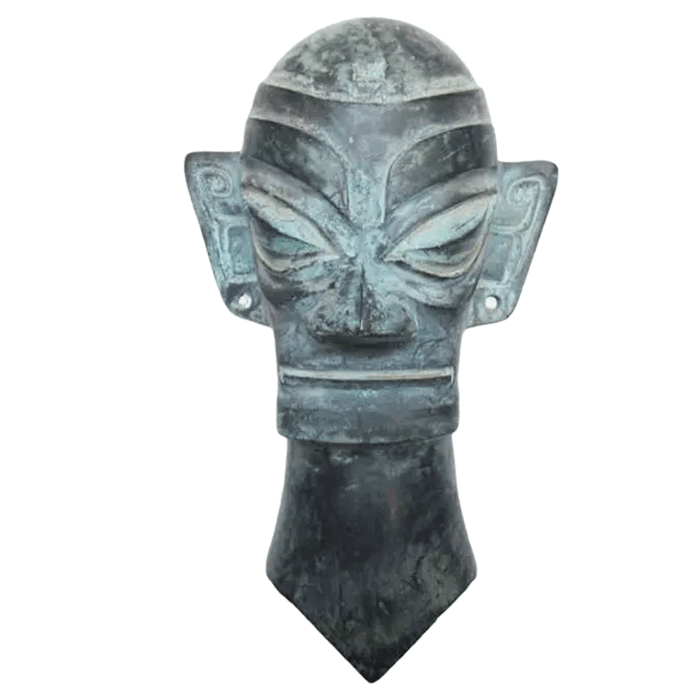
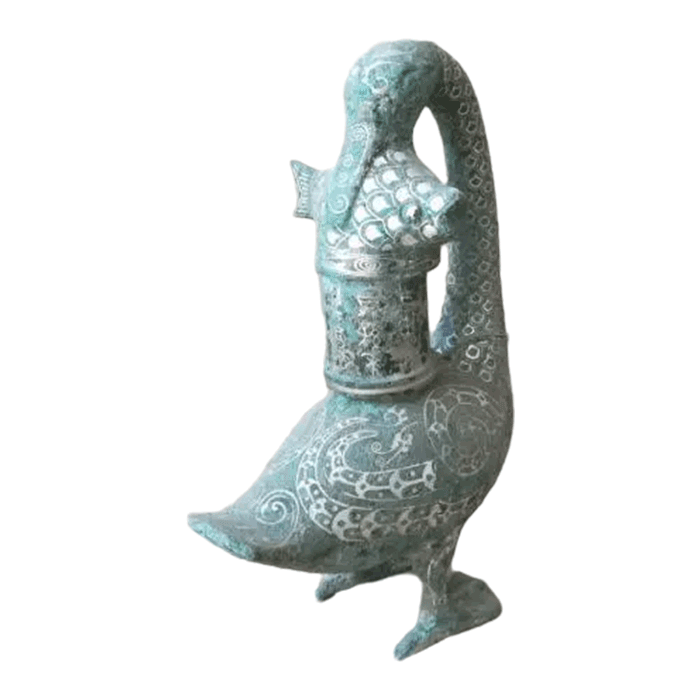
Understanding Chinese Mythology Bronze Figures
Understanding Chinese Mythology Bronze Figures Through Their Distinctive Attributes
The rich tapestry of Chinese mythology offers an expansive universe of deities, mythical beasts, legendary heroes, and symbolic objects, each imbued with unique stories and profound cultural significance. For collectors, cultural institutions, and retailers, discerning these intricate narratives through the visual attributes of bronze figures is key to appreciating their artistry and historical depth. Luoyang Yichuan Bronze Craft Co., Ltd., with its mastery of traditional bronze casting techniques and a deep understanding of Chinese cultural heritage, specializes in bringing these iconic figures to life, offering unparalleled quality in custom and bulk bronze art production.
Identifying and understanding chinese bronze sculpture, particularly those depicting mythological subjects, relies heavily on recognizing their characteristic attributes. These are not merely decorative elements but essential visual cues that communicate identity, power, and narrative. From the specific garments of an immortal to the posture of a mythical creature, every detail holds meaning, allowing viewers to "read" the stories embedded within the bronze itself.
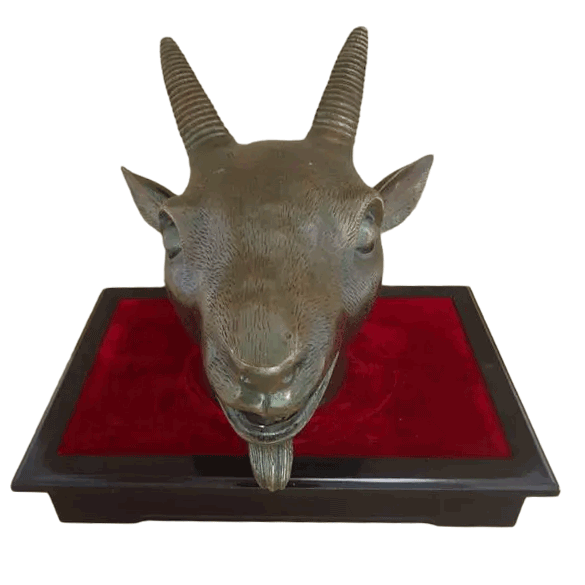
The Pantheon of Deities and Immortals in Chinese Mythology Bronze Figures
Chinese mythology is populated by a vast pantheon of gods, goddesses, and immortal beings who govern various aspects of the cosmos and human life. Bronze figures depicting these celestial beings are often characterized by their regal attire, symbolic implements, and serene expressions. Understanding these attributes is crucial for accurate identification and appreciation.
The Jade Emperor and the Queen Mother of the West
- The Jade Emperor (Yùdì): As the supreme ruler of Heaven and the earthly realm, the Jade Emperor is typically depicted with a majestic imperial robe, often adorned with dragon motifs, and wearing a flat-topped ceremonial hat with dangling beads (mianliu). He often holds a tablet or scepter, symbolizing his authority. His dignified posture and benevolent gaze convey his ultimate sovereignty. Bronze sculptures of the Jade Emperor emphasize grandeur and divine power, reflecting his status as the highest deity in the Taoist pantheon.
- The Queen Mother of the West (Xiwangmu): A powerful goddess associated with immortality, prosperity, and the celestial peach orchard, Xiwangmu is often shown with a phoenix or a crane, symbols of longevity. She might wear elaborate robes and a distinct headdress, sometimes holding a peach of immortality or a magic elixir. Her presence in bronze art signifies grace, power, and the promise of eternal life, often sought after by emperors and commoners alike.
The Eight Immortals (Baxian)
Perhaps some of the most recognizable figures in Chinese mythology, the Eight Immortals are celebrated for their unique personalities and magical abilities. Each immortal is invariably accompanied by a distinct attribute, making them easily identifiable in bronze depictions:
- Lu Dongbin: Often seen with a magic sword (fa jian) that dispels evil, and sometimes a fly-whisk. He is a scholar-official, symbolizing martial prowess and scholastic achievement.
- He Xiangu: The only female immortal, identified by her lotus flower (he hua), which symbolizes purity and virtue. She grants good fortune and health.
- Li Tieguai: Known for his iron crutch (tie guai) and a gourd (hulu) that holds magic medicine. He represents the sick and needy, and his attribute signifies healing and compassion.
- Cao Guojiu: Distinguished by his jade tablet (yu ban) or castanets, symbolizing his imperial lineage and connection to the royal court. He is the patron of actors and playwrights.
- Zhang Guolao: An elderly sage riding a white donkey, usually depicted facing backward. His attribute is a bamboo fish-drum (yu gu) or a phoenix feather. He symbolizes wisdom and the ability to foresee the future.
- Han Xiangzi: A flutist (dong xiao), his music has the power to charm animals and make flowers bloom. He represents musicians and artists, embodying harmony and natural beauty.
- Lan Caihe: Often depicted as a young, gender-ambiguous person carrying a flower basket (hua lan) or a bamboo clapper. They symbolize joy, freedom, and an appreciation for nature.
- Zhongli Quan: Portrayed with a large fan (shanzi) used to revive the dead and transform stones into gold. He is a robust figure, representing military power and prosperity.
For institutions requiring precise reproductions of these figures, Luoyang Yichuan Bronze Craft Co., Ltd. ensures that every iconic attribute is meticulously rendered. Our expert bronze statues with different themes capture the essence of these mythological beings, adhering to the highest standards of historical and artistic accuracy. We support orders from a single custom prototype to extensive bulk production runs, guaranteeing consistent quality across all pieces.
Mythical Beasts and Auspicious Creatures in Bronze Art
Beyond human and divine figures, Chinese mythology is rich with an array of mythical beasts that play significant roles in legends and beliefs. These creatures are not merely fantastical animals; they are potent symbols of power, prosperity, protection, and good fortune. Their attributes, such as scales, horns, wings, and specific postures, are crucial for their identification and understanding.
The Dragon (Long)
The most revered of all mythical creatures, the Chinese dragon is a symbol of imperial power, strength, wisdom, and good luck. Its attributes are instantly recognizable:
- Serpentine Body: Long, scaly body, often with four legs, each ending in sharp claws (five claws for imperial dragons).
- Head: Features a camel's head, deer's horns, rabbit's eyes, cow's ears, snake's neck, clam's belly, carp's scales, eagle's talons, and tiger's paws.
- Pearl: Often depicted chasing or holding a flaming pearl, symbolizing wisdom, spiritual energy, and the sun or moon.
- Posture: Dragons are frequently shown in dynamic, writhing poses, often emerging from clouds or water, signifying their control over elements.
Bronze dragons are highly sought after for their majestic presence and profound symbolism, making them central to many collections of animal bronze statues.
The Phoenix (Fenghuang)
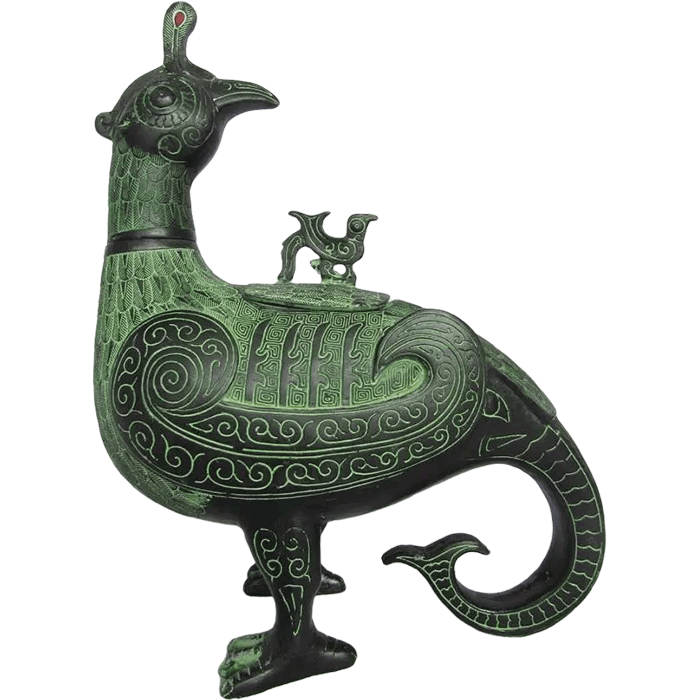
The phoenix is the king of birds, symbolizing grace, harmony, prosperity, and rebirth. It often appears during times of peace and prosperity. Its attributes include:
- Composite Features: A head like a golden pheasant, a body like a mandarin duck, a back like a turtle, wings like a roc, and a tail like a peacock.
- Fiery Appearance: Often depicted with vibrant, flowing feathers, sometimes with a flame-like aura.
- Paired Symbolism: Frequently paired with the dragon, representing the Empress and feminine power, complementing the Emperor's masculine energy.
The Qilin (Kylin) and Pixiu
- Qilin: A benevolent creature, often called the "Chinese unicorn," symbolizing good fortune, prosperity, success, and longevity. It has a deer-like body, an ox's tail, a horse's hooves, and a single horn or antlers. It is said to walk without harming a blade of grass, reflecting its gentle nature.
- Pixiu: A fierce, winged lion-like creature, known for its insatiable appetite for gold and silver, but without an anus, meaning it can only consume and never excrete wealth. It is a powerful protector against evil spirits and a magnet for wealth. Pixiu are typically depicted with a large head, a lion-like body, and often with small wings. They are usually shown in dynamic, protective stances.
Luoyang Yichuan excels in capturing the intricate details of these mythical creatures, ensuring that each bronze piece, from a single custom prototype to large-scale productions, embodies the creature's authentic attributes and symbolic power. Our commitment to customize a bronze sculpture means we can replicate even the most complex designs with precision, maintaining consistent patina color matching and ensuring export-compliant protective packaging for these fragile sculptures.
Legendary Heroes and Sage Kings in Bronze Art
Beyond the divine and the mythical, Chinese mythology also reveres legendary heroes and sage kings whose exploits shaped early civilization and moral principles. Their bronze figures serve as reminders of human ingenuity, courage, and virtue, often identifiable by the tools they wield, the animals they command, or the postures that convey their historical deeds.
The Three Sovereigns and Five Emperors
These figures are semi-mythological rulers from China's earliest history, credited with foundational inventions and moral governance. While their depictions can vary, common attributes include:
- Fuxi: Often depicted with a compass or a trigram (bagua), symbolizing his invention of writing, fishing, and trapping. He sometimes has a serpentine lower body, indicating his connection to ancient creation myths.
- Nuwa: Fuxi's sister and consort, credited with creating humanity and repairing the heavens. She is often shown with a compass and square (or a pair of calipers), symbolizing order and creation, and also sometimes with a serpentine lower body.
- Shennong (The Divine Farmer): Credited with inventing agriculture and herbal medicine. He is usually depicted with a hoe or agricultural tools, often with a bull's head, symbolizing his connection to farming and animals.
- The Yellow Emperor (Huangdi): Considered the ancestor of all Han Chinese, credited with numerous inventions including the calendar, ships, and pottery. His figures typically exude imperial majesty, sometimes shown with a dragon or a chariot, reflecting his status as a cultural hero.
Other Legendary Figures
- Hou Yi: The divine archer who shot down nine of the ten suns to save humanity. He is always identifiable by his bow and arrows, often in a heroic stance, ready for action.
- Guan Yu: While a historical figure from the Three Kingdoms period, Guan Yu has been deified as a god of war, wealth, and loyalty. His bronze statues are iconic: a red face, a long beard, and always wielding his distinctive weapon, the Green Dragon Crescent Blade (guandao). He often wears elaborate armor and a distinctive headpiece.
These bronze figures are not merely decorative; they are narratives cast in metal, preserving the stories and values of an ancient civilization. Luoyang Yichuan’s over 30 skilled craftsmen, including bronze-casting masters and finishing artisans, possess the expertise required to accurately render these complex historical and mythological figures. Our production area of 3,000 square meters in Yichuan County, Luoyang, Henan Province, allows us to handle an annual output of over 50,000 bronze art pieces, from intricate human statues to grand animal sculptures.
Symbolic Objects and Emblems in Mythological Bronzes
Beyond the direct depiction of figures, many bronze artifacts hold immense mythological and symbolic weight. These objects, often found in conjunction with figures or as standalone pieces, are integral to understanding Chinese mythology and its artistic expression. Luoyang Yichuan produces a range of these significant objects, maintaining their historical and symbolic accuracy.
Bronze Vessels (Ding, Zun, Hu)
Ancient Chinese bronze vessels were not merely utilitarian; they were ritualistic objects imbued with profound symbolic meaning, often used in ceremonies to honor ancestors or make offerings to deities. Their forms and decorations frequently carry mythological motifs:
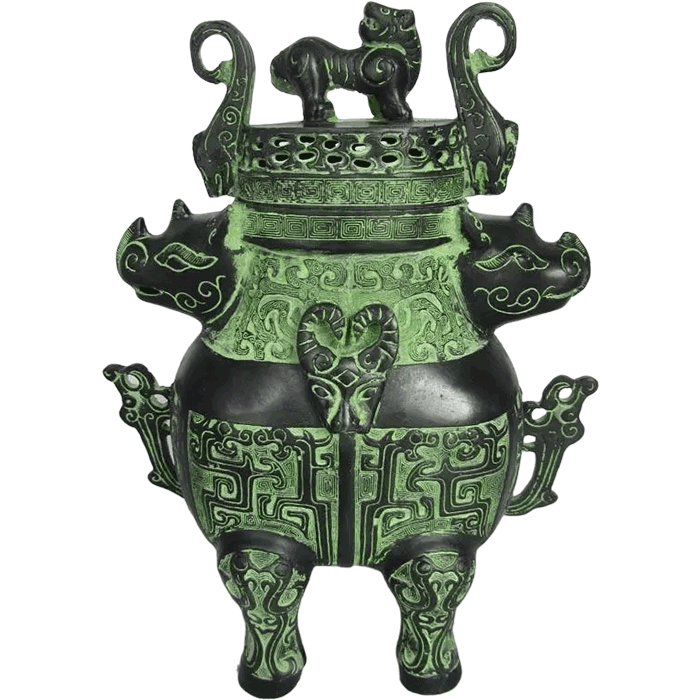
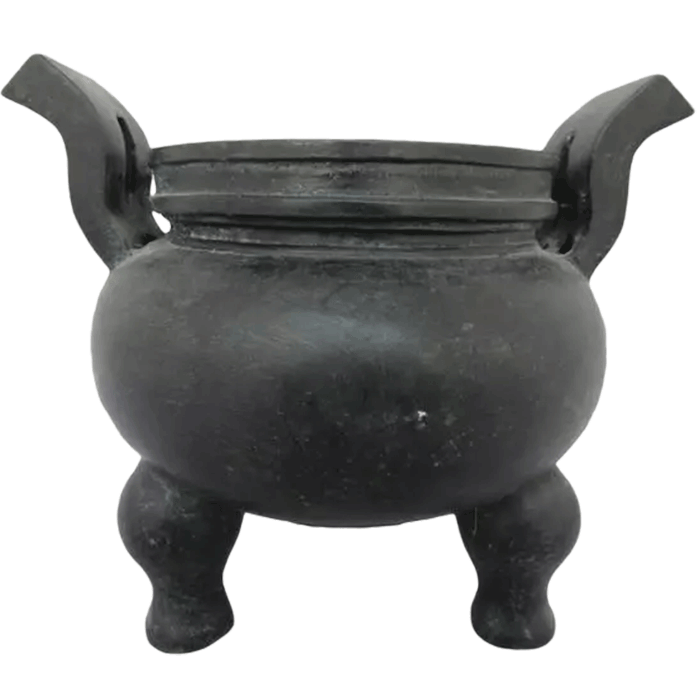
- Ding (Tripod Cauldrons): These heavy, three-legged or four-legged vessels symbolize power, authority, and stability. Often adorned with taotie (mythical beast) masks or dragon patterns, they were central to state rituals and ancestral worship.
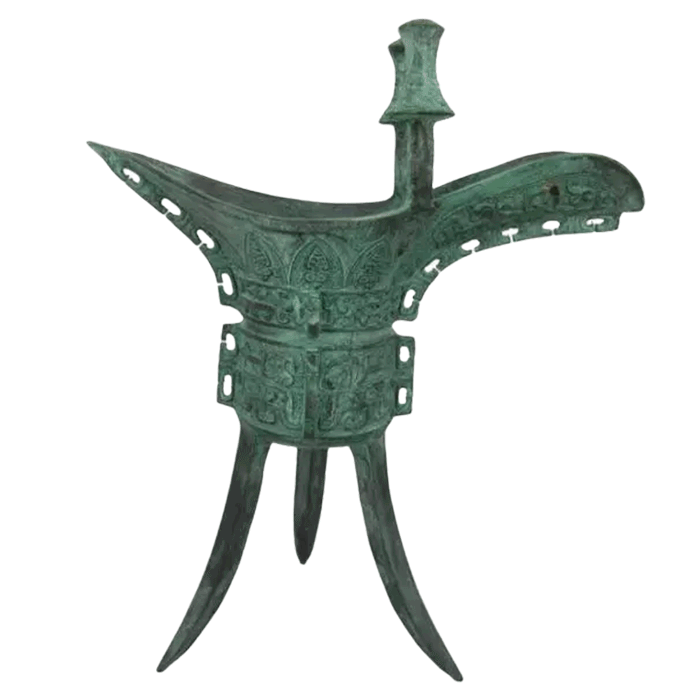
- Zun (Wine Vessels): Elaborate wine vessels, often shaped like animals (e.g., elephants, rhinos) or with intricate zoomorphic decorations, were used for ceremonial wine offerings. They symbolize connection to the divine and prosperity.
- Hu (Vases/Jars): Tall, elegant vessels used for wine or grain, often decorated with bands of mythological creatures or geometric patterns, signifying abundance and ritual purity.
The intricate craftsmanship required for these vessels, often incorporating mythological creatures and patterns, is a hallmark of Luoyang Yichuan's capabilities. Our premium bronze alloy (Cu-Sn) is cast with the traditional lost-wax method, ensuring exceptional detail and durability for all bronze decorations and ceremonial pieces.
Bronze Mirrors
Bronze mirrors, particularly from ancient dynasties, were more than reflective surfaces. They were believed to repel evil spirits, bring good fortune, and even connect to celestial powers. Their backs are often intricately decorated with mythological creatures, constellations, and auspicious symbols.
- Symbols: Dragons, phoenixes, auspicious clouds, the Four Symbols (Azure Dragon, Vermilion Bird, White Tiger, Black Tortoise), and Taoist immortals are common motifs, each carrying a specific mythological or protective meaning.
- Function: Beyond personal use, they were used in feng shui, as gifts, and buried with the dead for protection in the afterlife.
Our bronze mirrors faithfully reproduce these historical designs, capturing both their artistic beauty and their deep cultural significance. You can learn more about several bronze mirrors from ancient traditions.
Bronze Incense Burners
Incense burners (xianglu) are essential ritual objects in temples, homes, and scholarly studies, used for burning incense to purify spaces, honor deities, or aid meditation. Many are designed with mythological themes:
- Forms: Often shaped as mythical beasts (e.g., lions, qilin) or mountains (representing celestial abodes), with intricate openwork for the smoke to emanate.
- Symbolism: The rising smoke symbolizes prayers ascending to heaven, while the mythological forms provide protection and bring auspicious energy to the space.
Crafting Authenticity: The Luoyang Yichuan Approach to Mythological Bronzes
At Luoyang Yichuan Bronze Craft Co., Ltd., we understand that sourcing authentic and high-quality bronze art, especially pieces steeped in rich mythology, presents unique challenges for businesses and institutions. Our comprehensive approach addresses these pain points directly, ensuring that every Chinese mythology bronze figure or artifact we produce meets the most stringent standards of craftsmanship, historical accuracy, and export readiness.
Uncompromising Quality and Craftsmanship
Our foundation rests on centuries of bronze-casting tradition, combined with modern quality management. We are an ISO 9001 quality management system certified company, meaning our processes, from initial design to final finishing, adhere to international benchmarks. Our products consistently comply with export quality inspection standards for art crafts, guaranteeing that your order will meet regulatory requirements wherever it is destined.
- Premium Materials: We use a premium bronze alloy (Cu-Sn) as our base material, ensuring the longevity and aesthetic appeal of each piece. This alloy provides the ideal balance of strength, workability, and patina potential.
- Traditional Lost-Wax Method: Every sculpture is cast using the revered lost-wax method, a technique that allows for exceptional detail and fidelity to the original design. This ancient method is crucial for capturing the intricate attributes of mythological figures and creatures.
- Expert Artisanship: Our team comprises over 30 skilled craftsmen, including dedicated bronze-casting masters and finishing artisans. Their expertise is evident in the precision of hand chasing, the smoothness of polishing, and the artistry of patina application, available in a wide range of antique or modern looks. This meticulous handwork ensures that each piece is a unique work of art.
Solving Sourcing Challenges
We specifically address the common challenges faced by buyers of custom bronze art:
- Exact Replication: Whether you require an exact replication of antique bronzes for a museum collection or a precise interpretation of a mythological concept for a retail line, our artisans possess the skill to achieve unparalleled accuracy.
- Consistent Patina Color Matching: Achieving uniformity in patina across multiple pieces or ensuring a specific antique finish can be difficult. Our controlled processes and experienced artisans guarantee consistent patina color matching, providing a cohesive look for your collection or inventory.
- Export-Compliant Protective Packaging: Fragile bronze sculptures require specialized packaging for international transit. We provide robust, export-compliant protective packaging designed to safeguard your valuable artworks against damage during shipment, giving you peace of mind.
Reliability and Support
Our commitment extends beyond production. We believe in fostering long-term partnerships built on trust and reliability:
- Rigorous Quality Inspection: Every shipment undergoes a thorough quality inspection before dispatch, ensuring that each piece meets our high standards and your specifications.
- After-Sales Support: We offer comprehensive after-sales support, including free replacement for any casting defects. Additionally, we provide guidance for patina touch-ups and restoration, helping you maintain the beauty and integrity of your bronze art for years to come.
- Flexible Production Capacity: With an annual output of over 50,000 bronze art pieces, we are equipped to support projects of all scales, from a single custom prototype to extensive bulk production runs. Our MOQ starts from 1 piece for custom sculptures, with bulk orders negotiable based on size and design complexity.
By partnering with Luoyang Yichuan, you gain access to a partner dedicated to preserving and creating exceptional bronze art that embodies the spirit and stories of Chinese mythology. Our dedication to quality, tradition, and customer satisfaction makes us the ideal choice for businesses seeking to enrich their offerings with these magnificent cultural artifacts.
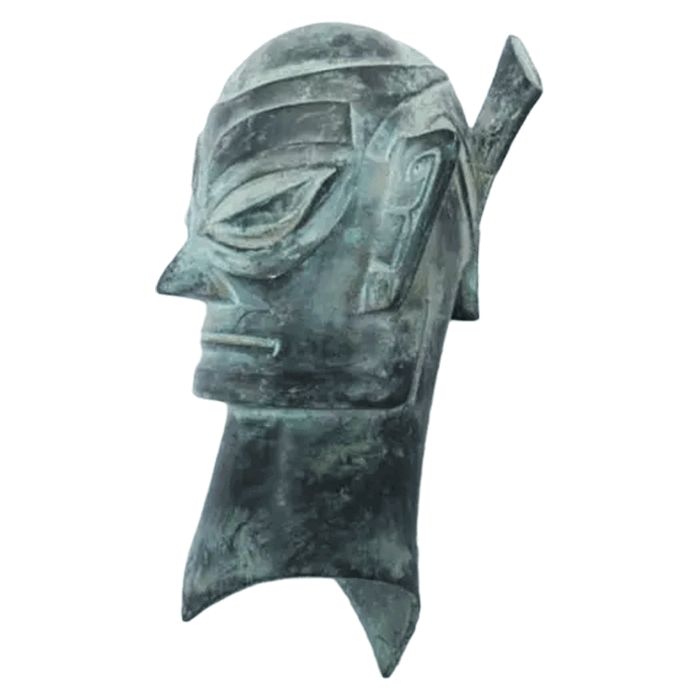
Conclusion: The Enduring Legacy of Chinese Mythology in Bronze
The intricate world of Chinese mythology, brought to life through the enduring medium of bronze, offers not just aesthetic beauty but also a profound connection to a rich cultural heritage. Each deity, mythical beast, legendary hero, and symbolic object, when meticulously rendered with its distinctive attributes, tells a compelling story. For collectors, cultural institutions, and retailers, the ability to "read" these Chinese mythology bronze figures by their visual cues unlocks a deeper appreciation for their significance and artistry.
Luoyang Yichuan Bronze Craft Co., Ltd. stands as a premier partner in this endeavor, combining time-honored techniques like the traditional lost-wax method with stringent modern quality controls. Our commitment to exact replication, consistent patina matching, robust packaging, and comprehensive after-sales support ensures that sourcing these intricate artworks is a seamless and rewarding experience. By choosing Luoyang Yichuan, you are not merely acquiring bronze art; you are investing in pieces of history, culture, and unparalleled craftsmanship, destined to inspire and captivate for generations to come. Explore the possibilities of partnering with us to bring the captivating narratives of Chinese mythology into your collection or offerings.