Understanding Chinese Bronze Artware by Vessel Function
Understanding Chinese Bronze Artware Through Ancient Vessel Functions
The world of ancient Chinese bronzes is one of profound beauty, intricate design, and deep historical significance. For collectors, museum curators, and interior designers, these objects represent the pinnacle of early metallurgical art. However, to truly appreciate these masterpieces, one must look beyond their aesthetic appeal and understand their original purpose. Each vessel, from the imposing tripod cauldron to the delicate wine cup, had a specific function rooted in the complex ritual, political, and social systems of ancient China, primarily during the Shang and Zhou dynasties. Understanding this functional context is the first step in reading the story cast into every piece.
This guide provides a foundational understanding of key vessel types, categorized by their original use. By learning to identify a vessel by its function—be it for food, wine, or water—you gain a deeper insight into its design, symbolism, and cultural importance. This knowledge is invaluable whether you are sourcing authentic reproductions for a museum exhibit, commissioning a statement piece for a luxury interior, or building a personal collection of fine chinese bronze handicrafts.
The Central Role of Food Vessels (Shiqi 食器) in Ritual and Governance
In ancient China, food was not merely for sustenance; it was a medium for communicating with ancestors and gods. Ritual feasts were elaborate ceremonies that reinforced social hierarchies and political power. Consequently, the bronze vessels used for cooking, presenting, and serving these ritual meals were among the most important and symbolically potent objects of their time. Their size, number, and ornamentation directly reflected the owner's status.
The Ding (鼎): The Ultimate Symbol of Power
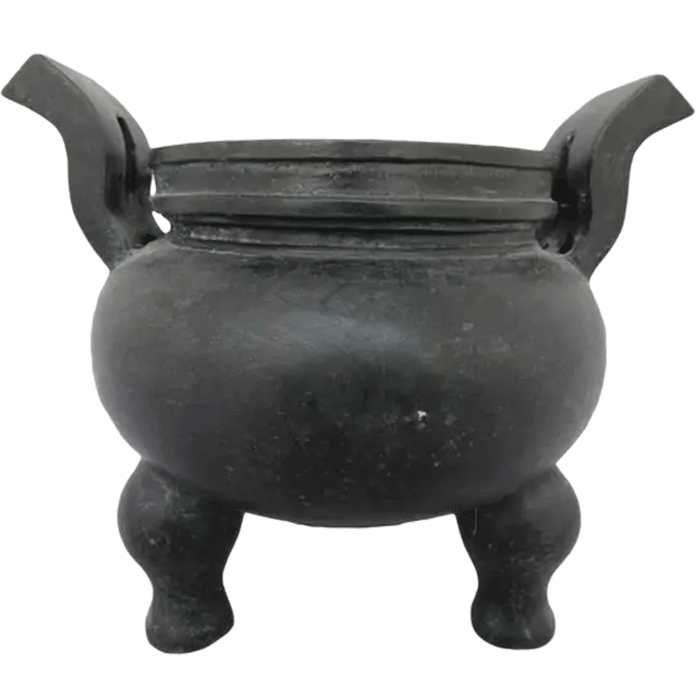
Perhaps the most iconic of all Chinese bronze vessels, the Ding is a cauldron used for cooking and holding meat offerings. It is typically characterized by a round body with two upright handles and three columnar legs (a tripod), though rectangular, four-legged versions (fangding) also exist. The sheer weight and material value of a large Ding made it a symbol of wealth and authority.
During the Zhou dynasty, a formal system known as "Lie Ding" regulated the number of Ding vessels a noble could use according to their rank. The king was entitled to nine, feudal lords seven, high officials five, and so on. To possess Ding was to possess legitimacy and state power, an idea that has permeated Chinese culture for millennia. The intricate taotie (animal-mask) motifs and inscriptions often found on these vessels are not just decoration; they are a testament to the caster's skill and the patron's prestige. A prime example of this vessel's importance can be seen in historical artifacts like bronze statue and mao gong ding, which holds the longest known bronze inscription.
The Li (鬲) and Yan (甗): Innovations in Ritual Cooking
While the Ding was the primary cooking vessel, other specialized types existed. The Li (鬲) is a tripod vessel similar to the Ding but distinguished by its hollow, udder-shaped legs that connect directly to the main cavity. This clever design increased the surface area exposed to heat, allowing for faster and more efficient cooking.
The Yan (甗) is a composite steaming vessel, essentially an ancient pressure cooker. It consists of two parts: a lower section, the Li, for boiling water, and an upper basin, the Zeng (甑), which had a perforated bottom to allow steam to pass through and cook the food held within. The two pieces could be cast separately or as a single unit. The Yan demonstrates the sophisticated understanding of culinary principles and the specialized needs of ritual food preparation.
The Sophistication of Wine Vessels (Jiuqi 酒器)
Wine, typically a fermented millet or rice beverage, was as central to Shang and Zhou rituals as food. It was used to libate the spirits of ancestors and was consumed by the living during ceremonial banquets. This cultural importance led to the development of a dazzling array of specialized bronze vessels for every stage of the wine-serving process: warming, storing, pouring, and drinking. The sheer variety of Chinese bronze artware dedicated to wine speaks to the complexity of these ancient rites.
The Jue (爵) and Gu (觚): For Pouring and Drinking
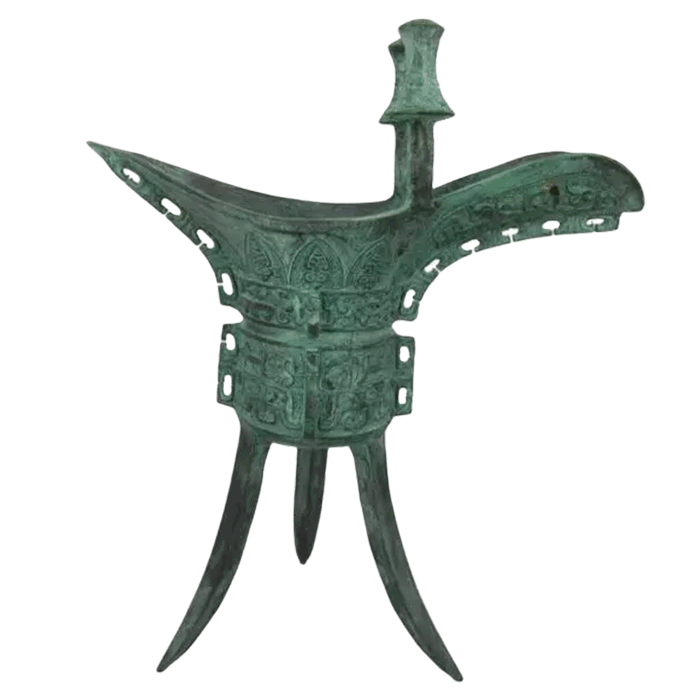
The Jue (爵) is one of the most distinctive and common bronze forms. It is a tripod cup with a prominent spout on one side, a flared tail on the other, a side handle, and two cap-topped posts rising from the rim. Its unique shape was perfectly designed for its function: the legs allowed the wine to be gently heated over a fire, the spout facilitated controlled pouring during libation ceremonies, and the posts may have been used for lifting the hot vessel with tongs or for holding filtering herbs.
The Jue was often paired with a Gu (觚), a tall, slender drinking goblet with a flared mouth and a narrow waist. Its elegant, trumpet-like form suggests it was meant to be held gracefully during formal ceremonies. The pairing of Jue and Gu vessels is common in tombs, indicating their complementary roles in the ritual consumption of wine.
The Zun (尊) and Hu (壺): For Storing and Serving
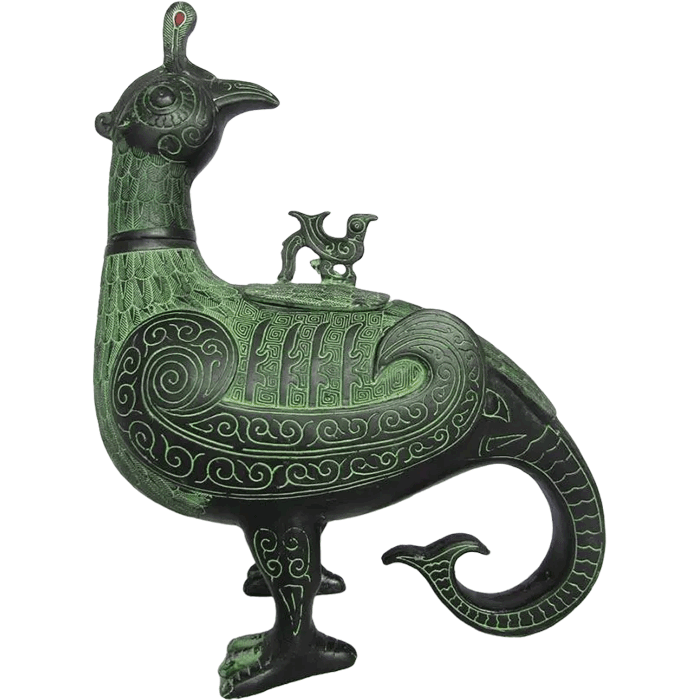
For holding larger quantities of wine during a ceremony, the Zun (尊) and Hu (壺) were used. The Zun is a large, wide-mouthed wine container, often with a rounded body and a prominent shoulder. Some of the most spectacular examples are zoomorphic, cast in the shape of elephants, rhinoceroses, or mythical beasts, showcasing the incredible creativity of ancient bronze casters.
The Hu (壺) is a pear-shaped jar or vase, typically with a lid and two handles on the neck for carrying. It was a versatile storage vessel used for wine, water, or other liquids. Over time, its form evolved from stout and simple to highly elongated and ornate, reflecting changing aesthetic tastes across different periods.
Water Vessels (Shuiqi 水器) and Ablution Rituals
Purification was a critical prerequisite for participating in ancestral worship. Before conducting a ceremony, nobles would perform a ritual hand-washing ceremony, or ablution, to cleanse themselves. This rite required a specific set of bronze water vessels, typically used as a pair.
The Pan (盤) and Yi (匜): The Ceremonial Washing Set
The Pan (盤) is a large, shallow, circular basin, often on a high ring foot. Its function was to catch the water during the hand-washing ritual. The interior of the Pan is sometimes decorated with incised motifs of fish, turtles, or birds, which would have been animated by the rippling water.
Water was poured over the hands from a Yi (匜), a ewer-like vessel. The Yi has a form reminiscent of a halved gourd, with a wide spout for pouring and a handle for holding. It often stands on four short legs, adding stability. The coordinated use of the Yi and Pan demonstrates the formalized, systematic nature of even the preparatory stages of ancient Chinese rituals.
Beyond Ritual: Bronzes in Daily Life and Art
While the majority of surviving bronzes from the Shang and Zhou are ritual vessels, the scope of Chinese bronze artware extends beyond the temple and tomb. As centuries passed, artisans applied their skills to create objects for personal use, adornment, and scholarly appreciation.
Bronze Mirrors (铜镜): Reflecting Beauty and Cosmology
Bronze mirrors were luxury items used by the elite for grooming. They consist of a highly polished, reflective front side and a decoratively cast back, which typically features a central knob for holding. The back designs are incredibly varied, reflecting the beliefs and aesthetics of their time. They often feature complex geometric patterns, mythological creatures, zodiac animals, and cosmological diagrams, transforming them from simple utilitarian objects into powerful talismans and microcosms of the universe. The craftsmanship of these ancient Chinese bronze mirrors is a testament to the advanced state of metallurgy and design.
Incense Burners (香炉): The Fragrance of Culture
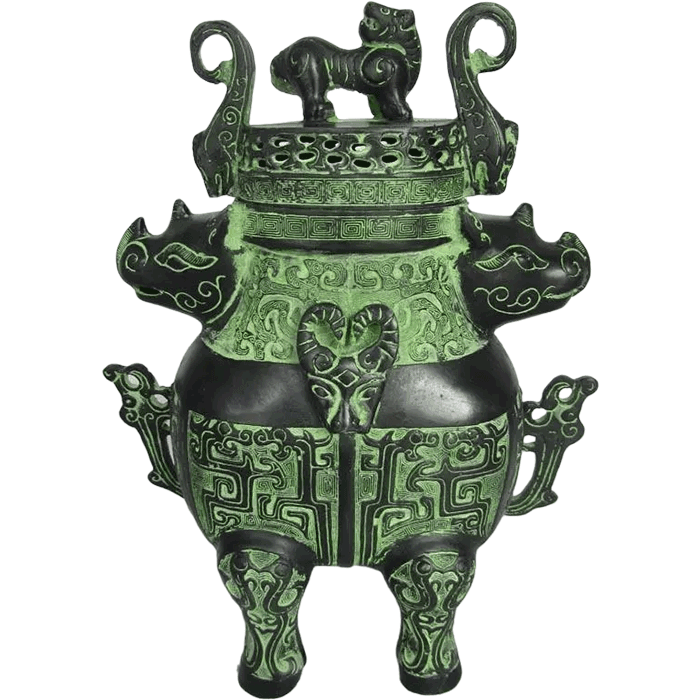
With the rise of Buddhism and Daoism during and after the Han dynasty, incense burning became an important practice. This led to the creation of bronze incense burners (xianglu). One of the most famous early forms is the Boshan Lu (博山爐), or "universal mountain censer," which features a lid cast in the form of a sacred mountain peak. When incense was burned inside, smoke would drift out through perforations, creating a miniature, mystical landscape shrouded in clouds.
Sourcing and Crafting Authentic Bronze Replicas Today
For institutions and individuals looking to acquire fine bronze reproductions, understanding these historical functions is crucial for making informed decisions. The challenge lies in finding a partner who can not only replicate the form but also capture the spirit and material integrity of the original. When sourcing modern Chinese bronze artware, authenticity, craftsmanship, and quality assurance are paramount.
At Luoyang Yichuan Bronze Craft Co., Ltd., we specialize in bridging the gap between ancient artistry and modern production standards. Our process is rooted in the traditional lost-wax casting method, the same technique used by ancient masters, which allows for unparalleled detail and accuracy. This time-honored craft is supported by a robust, ISO 9001 certified quality management system, ensuring that every piece we produce meets rigorous international standards.
We understand the common sourcing pain points: achieving an exact replication of an antique, ensuring consistent patina color across a large order, and securing fragile pieces with export-compliant packaging. Our team of over 30 skilled craftsmen, including bronze-casting masters and finishing artisans, addresses these challenges directly. With an annual output of over 50,000 pieces from our 3,000-square-meter facility, we have the capacity to support everything from a single prototype to large-scale production runs. For custom projects, our MOQ starts from just one piece, making bespoke artistry accessible. Whether you need to customize a bronze sculpture from sculpmart.com or procure a line of museum-quality vessel replicas, our expertise ensures a faithful and high-quality result.
Conclusion: From Function to Lasting Appreciation
The forms of Chinese bronzes are not arbitrary; they are a direct expression of their purpose within a highly developed civilization. By learning to identify a Ding, a Jue, or a Pan, you are not just naming an object—you are unlocking a deeper understanding of the rituals, beliefs, and social structures of ancient China. This functional knowledge transforms a simple viewing into a rich historical exploration, leading to a more profound appreciation for Chinese bronze artware.
Whether you are a seasoned collector or a professional buyer, partnering with a knowledgeable manufacturer is key. A supplier who respects the history behind these forms and possesses the technical skill to reproduce them faithfully can provide pieces that are not just decorative, but are imbued with centuries of cultural significance.