Understanding Ancient Chinese Bianzhong Bell Roles
Understanding the Roles of Bells in an Ancient Chinese Bianzhong Chime Set
The Ancient Chinese Bianzhong, an orchestral set of bronze chime bells, represents one of the pinnacle achievements of ancient Chinese metallurgy and musical artistry. Far more than mere decorative objects, these intricate instruments were central to ritual, court ceremonies, and scholarly pursuits for centuries. For exhibit designers, cultural institutions, and collectors seeking to accurately interpret and display these magnificent artifacts, understanding the distinct roles each bell plays within a complete chime set is paramount.
This article delves into the historical context, physical characteristics, and functional differentiation of bells in a Bianzhong set, providing insights crucial for accurate representation and appreciation. We will explore how size, inscription, and placement collectively define a bell's contribution to the ensemble, and how modern expertise ensures the faithful recreation of these ancient marvels.
The Historical Significance and Evolution of Chinese Chime Bells
The history of chime bells in China stretches back over three millennia, with early forms appearing during the Shang Dynasty (c. 1600–1046 BCE). However, it was during the Western Zhou (1046–771 BCE) and especially the Spring and Autumn (771–476 BCE) and Warring States (475–221 BCE) periods that the Bianzhong reached its zenith of complexity and musical sophistication. These bells were not only musical instruments but also powerful symbols of status, power, and cosmic harmony. The most famous discovery, the chime bells of Marquis Yi of Zeng, unearthed in 1978, showcased an astonishing level of metallurgical and acoustic engineering, comprising 65 bells capable of producing a full twelve-tone scale and numerous complex melodies.
Court rituals, ancestral worship, and diplomatic ceremonies all featured the majestic sound of the Bianzhong. Their melodies were believed to connect the earthly realm with the heavens, embodying the philosophical and spiritual beliefs of ancient Chinese civilization. The very act of casting these bells was a sacred process, involving precise calculations, material selection, and skilled craftsmanship. Each bell was carefully tuned to specific pitches, allowing for intricate harmonies and melodies that resonate with profound historical depth. Further exploration into the broader context of these instruments can be found in our article on ancient Chinese bronze musical instruments.
Anatomy of a Bianzhong Set: Bell Types and Configuration
A typical Bianzhong set is characterized by its organized array of bells, suspended from an elaborate wooden frame. The bells themselves are distinguished primarily by their unique lenticular (lens-shaped) cross-section, which is not circular like Western bells. This innovative design allows each bell to produce two distinct pitches, a major third or minor third apart, depending on where it is struck. This dual-pitch capability dramatically expanded the musical range and complexity achievable with a relatively smaller number of bells.
Within a set, bells are categorized by their size and the thickness of their walls, which directly correlate with their pitch. Larger, heavier bells produce lower tones, while smaller, lighter bells produce higher tones. The bells are typically arranged chromatically, from lowest pitch to highest, across multiple tiers of the suspension frame. This systematic arrangement is crucial for musicians to navigate the instrument and for observers to understand its internal logic.
While often collectively referred to as Bianzhong, the bells themselves can have subtle variations in their specific shapes and decorative motifs, reflecting different periods or regional styles. The integration of different bell sizes and their precise hanging order are fundamental to the instrument's acoustic performance and symbolic representation. For more detailed insights into specific historical findings, consider exploring our article on the Zenghouyi Chime Bell.
Identifying Bell Roles: Size, Inscription, and Placement
Identifying the specific role of each bell within an Ancient Chinese Bianzhong set involves a combination of visual and contextual cues that speak volumes about its intended function and sound. These cues are vital for anyone involved in the display, study, or replication of these historical instruments.
Bell Size and Pitch Relationship
The most straightforward indicator of a bell's role is its size. As a general rule:
- Largest Bells: These occupy the lowest register, producing deep, resonant bass notes. They are often positioned at one end of the lowest tier of the frame. Their imposing presence often grounds the entire ensemble both visually and acoustically.
- Medium Bells: These form the middle registers, providing melodic and harmonic support. They constitute the bulk of most Bianzhong sets, arranged across the middle and upper tiers to cover a wide range of musical intervals.
- Smallest Bells: These produce the highest, often piercing, treble notes. They are typically found on the uppermost tiers or at the opposite end of the lowest tier from the largest bells. Their delicate yet clear tones add sparkle and definition to the melodies.
The precise scaling of bell sizes ensures a continuous and harmonious progression of pitches across the entire set, allowing for complex musical compositions. This intricate design requires not only artistic vision but also profound metallurgical knowledge, a cornerstone of traditional Chinese bronze sculpture.
Inscriptions and Decorative Motifs
Many ancient Bianzhong bells bear inscriptions that offer invaluable clues about their origin, dedication, and even their specific pitch. These inscriptions can include:
- Pitch Names: Some bells are marked with ancient Chinese musical notation or names corresponding to their specific pitch within the scale.
- Foundry Marks/Date: Details about the workshop or the period of casting can provide historical context.
- Dedications/Patronage: Inscriptions might honor the patron who commissioned the bells, often indicating their social status.
- Philosophical Texts: Occasionally, bells bear poetic or philosophical texts, further enhancing their cultural significance.
Beyond inscriptions, the decorative motifs — such as dragons, phoenixes, or geometric patterns — can also indicate the bell's period, region of origin, and even its intended ceremonial use. The intricate designs often reflect the highest artistic standards of their time, requiring immense skill in initial mold creation and subsequent finishing processes.
Suspension and Arrangement within the Frame
The way bells are suspended and arranged within the multi-tiered wooden frame is not arbitrary; it is a meticulously planned system that reflects both musical and ceremonial considerations. Bells are typically hung from sturdy bronze hooks, which themselves are often elaborate. The arrangement often follows a strict chromatic order, making it easier for musicians to play specific melodies.
- Tiered Structure: Most large Bianzhong sets feature multiple tiers, with bells arranged horizontally on each tier. The lowest tier usually holds the largest, lowest-pitched bells, ascending to smaller, higher-pitched bells on the upper tiers.
- Lateral Placement: Within each tier, bells are generally arranged from lowest pitch to highest, or sometimes in groups corresponding to specific musical modes. This logical flow facilitates performance and helps define the bell's position within the overall musical structure.
Understanding these spatial relationships is critical for reconstructing or displaying a Bianzhong set authentically, ensuring that both its visual grandeur and acoustic integrity are preserved. The complex engineering of these frames, often adorned with additional carvings and lacquer work, further highlights the holistic artistry involved in creating these musical masterpieces.
Acoustic Properties and Tuning Precision
The dual-pitch capability of each Bianzhong bell is a marvel of ancient acoustics. This unique property stems from the almond-shaped cross-section and an asymmetrical wall thickness. When struck at the "sui" (the main striking point), one pitch is produced. When struck at the "gu" (a secondary striking point), a different, harmonically related pitch emerges. This allowed ancient musicians to play complex melodies and harmonies using fewer bells than would otherwise be required for a Western-style diatonic or chromatic scale.
Achieving these precise pitches required extraordinary skill in bronze casting and tuning. After casting, bells were tuned by filing or grinding away small amounts of metal from specific areas. This delicate process, often done by ear, demanded a profound understanding of acoustics and metallurgy. The material itself, a premium bronze alloy (Cu-Sn), was specifically chosen for its resonant qualities and durability. The quality of the alloy and the precision of the casting process were paramount to producing bells with clear, sustained tones and accurate pitches.
Our company, Luoyang Yichuan Bronze Craft Co., Ltd., understands the intricacies of this ancient craft. Our use of traditional lost-wax casting methods combined with modern quality control ensures that each replica captures the acoustic brilliance of the originals. We are ISO 9001 certified, guaranteeing that our products meet stringent quality management standards, which is especially critical when replicating instruments where acoustic fidelity is key.
The Craftsmanship Behind Authentic Bianzhong Replicas
Replicating an Ancient Chinese Bianzhong set today is a monumental undertaking that demands not only historical knowledge but also exceptional metallurgical and artistic skill. It involves a meticulous recreation of the ancient lost-wax casting process, followed by intricate finishing techniques that bring these historical instruments back to life.
At Luoyang Yichuan Bronze Craft Co., Ltd., located in Yichuan County, Luoyang, we are dedicated to preserving and recreating the artistry of ancient bronze artifacts. Our production area of 3,000 square meters houses over 30 skilled craftsmen, including revered bronze-casting masters and finishing artisans. These experts meticulously follow the traditional lost-wax method, a multi-stage process that ensures the faithful reproduction of even the most intricate details and the precise acoustic properties of the original bells:
- Mold Making: Detailed molds are created, often based on historical artifacts or archaeological data, capturing every curve, inscription, and decorative motif.
- Wax Pattern Creation: A wax replica of the bell is formed within the mold, which is then carefully refined by hand chasing.
- Shelling: The wax pattern is coated with refractory materials to create a sturdy ceramic shell.
- Dewaxing and Pouring: The wax is melted out, leaving a hollow cavity into which molten premium bronze alloy (Cu-Sn) is poured at precise temperatures.
- Finishing: After cooling, the ceramic shell is removed, and the raw bronze bell undergoes extensive hand chasing, polishing, and patina application. Our artisans can achieve a range of finishes, from antique looks that mimic centuries of aging to modern aesthetics.
This dedication to traditional techniques, combined with an annual output of over 50,000 bronze art pieces, allows us to support everything from a single custom prototype—such as a specific bell for a museum exhibit—to bulk production runs for large cultural projects. Our MOQ for custom sculptures starts from just one piece, making high-quality replicas accessible for diverse needs. We specialize in solving common pain points for custom bronze art sourcing, including exact replication of antique bronzes and consistent patina color matching across multiple pieces, ensuring a cohesive and historically accurate ensemble.
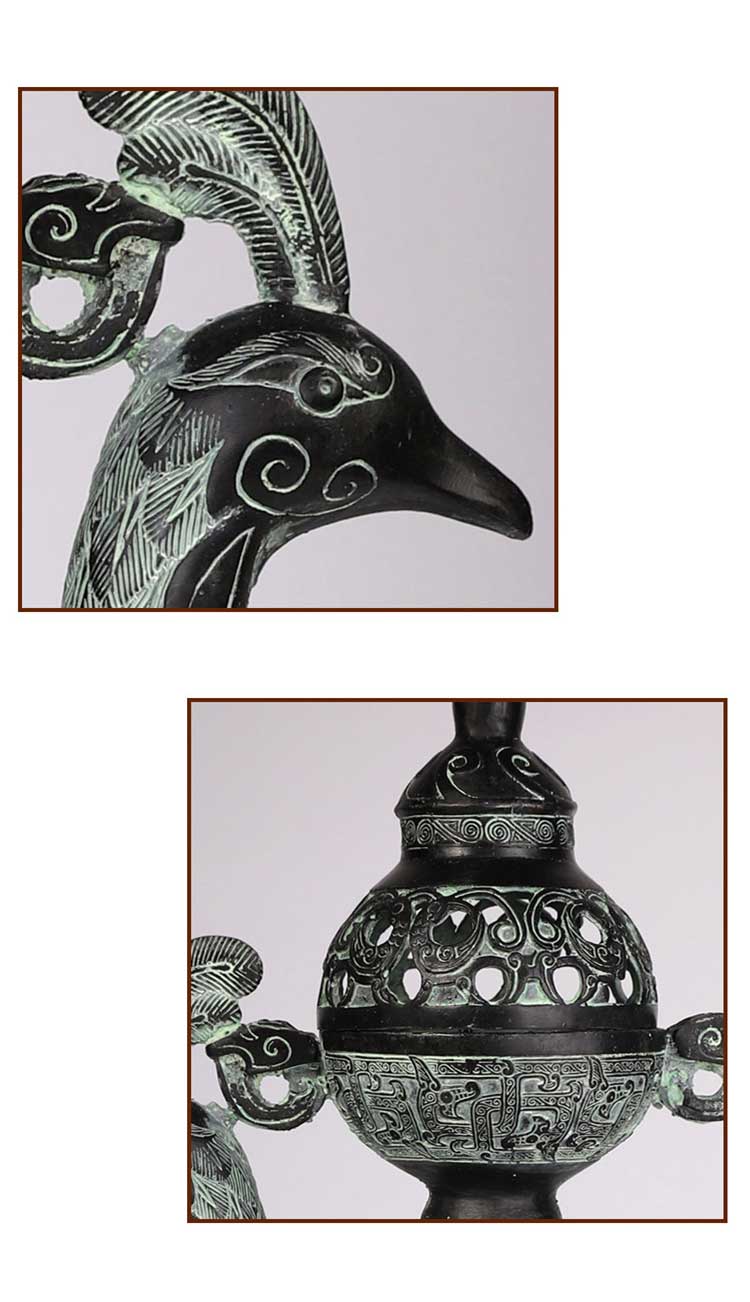
Every piece, including our custom bronze artworks and Chinese bronze sculptures, undergoes rigorous quality inspection before every shipment to ensure compliance with export quality inspection standards for art crafts. We also provide export-compliant protective packaging for fragile sculptures and offer free replacement for any casting defects. Our commitment extends to after-sales support, including guidance for patina touch-ups and restoration, ensuring the longevity and continued beauty of these timeless pieces.
Conclusion
The Ancient Chinese Bianzhong stands as a powerful testament to the ingenuity, artistic vision, and musical sophistication of ancient Chinese civilization. Identifying the roles of individual bells within these magnificent chime sets is not merely an academic exercise; it is essential for anyone seeking to understand, display, or replicate these instruments authentically. Through careful attention to size, inscription, placement, and acoustic properties, the intricate narrative of each bell and its contribution to the larger ensemble can be fully appreciated.
For institutions, collectors, and designers aiming to acquire or commission historically accurate and acoustically resonant Bianzhong replicas, partnering with a manufacturer that possesses deep expertise in traditional bronze casting and a commitment to meticulous craftsmanship is crucial. Our dedication to quality, from the selection of premium bronze alloy to the skilled hands of our master artisans, ensures that the legacy of these extraordinary musical instruments continues to resonate for generations to come. Explore the possibilities of custom bronze artworks by visiting our customize a bronze sculpture page.