The Ingenious Design of the Western Han Goose-Fish Bronze Lamp
Understanding the Ingenious Design of the Western Han Goose-Fish Bronze Lamp
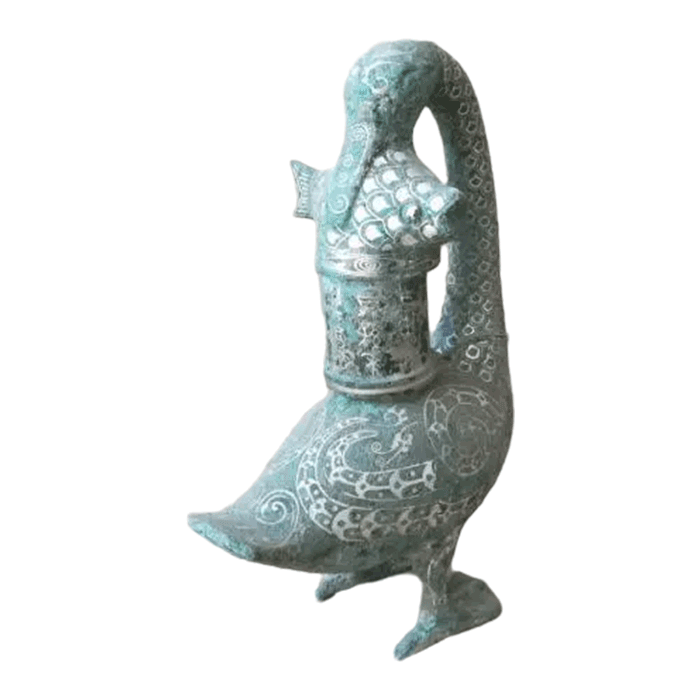
The Han Dynasty (206 BCE – 220 CE) represents a zenith in Chinese bronze casting, an era where utilitarian objects were transformed into masterpieces of art and engineering. Among the most celebrated artifacts from this period is a bronze lamp ingeniously shaped like a wild goose holding a fish in its beak. For product developers, museum curators, and buyers of heritage-style decor, understanding the intricate details of this piece is crucial for sourcing or commissioning authentic reproductions. This artifact is more than a decorative item; it is a testament to the advanced metallurgy, artistic sensibility, and environmental consciousness of its time.
At Luoyang Yichuan Bronze Craft Co., Ltd., located in the heart of a region with deep historical roots in bronze craftsmanship, we specialize in deconstructing such historical masterpieces to create faithful replicas. This analysis compares the primary components of the goose-and-fish lamp with other Han-era examples, providing a blueprint for what to look for in a high-fidelity reproduction. We will explore its form, function, and finish—the three pillars that define its historical and aesthetic value.
The Anatomy of a Han Dynasty Masterpiece: Core Components
The genius of the goose-fish lamp lies in its modular and functional design. The entire piece can be disassembled into several core parts: the goose's head and neck, the goose's body, the fish, and the circular lampshade. This construction was not merely for artistic effect; it served a practical purpose for cleaning and maintenance. This modularity is a hallmark of high-end Han Dynasty bronzes, reflecting a sophisticated understanding of product design and user needs.
When evaluating a reproduction, the precision of these interlocking parts is a primary indicator of quality. Ill-fitting components suggest a lack of attention to the original engineering, likely resulting from inferior casting or finishing processes. Our production facility, spanning 3,000 square meters, is equipped to handle the complexities of such multi-part assemblies. Utilizing the traditional lost-wax method, our master craftsmen ensure that each component is cast with the exact tolerances required for a seamless fit, mirroring the precision of the original Han artisans.
The lamp’s overall composition tells a story of harmony between nature and innovation. The elegant, serpentine curve of the goose's neck flows organically, while the mechanical ingenuity of the lampshade and smoke-capture system remains cleverly concealed. This blend of naturalism and technical prowess is a recurring theme in Han art, seen in artifacts ranging from intricate several bronze mirrors to large-scale sculptures.
The Goose Body and Head: A Study in Form and Fluidity
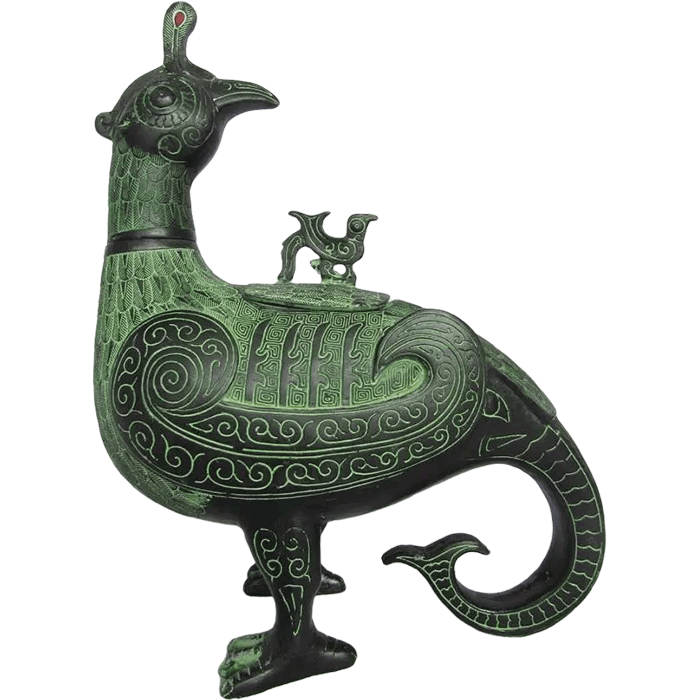
The primary structure of the lamp is the goose, a creature revered in Han culture for its migratory faithfulness and elegant form. The artist captured the bird in a dynamic, turning pose, creating a sense of life and movement that elevates it beyond a simple lighting fixture.
The Serpentine Neck and Head
The S-shaped curve of the goose's neck is arguably the most striking artistic feature. This graceful line is not just decorative; it functions as a conduit. Crafting this element requires immense skill. In the lost-wax casting process, creating a long, hollow, and perfectly curved shape without imperfections is a significant challenge. It demands a precisely made wax model and a flawless pour of premium bronze alloy (Cu-Sn). Our team of over 30 skilled artisans, including bronze-casting masters, has perfected this technique, ensuring that the fluid lines intended by the ancient designers are replicated without distortion.
This aesthetic is not unique to the goose-fish lamp. It echoes the dynamism found in other famous Han sculptures, such as the celebrated "Bronze Galloping Horse," where energy and movement are conveyed through flowing, powerful lines. For buyers seeking to curate a collection of chinese bronze sculpture, recognizing these shared artistic conventions is key to selecting pieces that are historically coherent.
The Hollow Body Reservoir
The body of the goose serves as the lamp's base and a key part of its functional system. It is hollowed out to hold water. This detail is critical for the lamp's most innovative feature: smoke control. When commissioning a reproduction, confirming that the body is hollow and water-tight is essential if functional accuracy is desired. Many lower-quality replicas are cast solid to save on complexity and cost, completely missing the engineering brilliance of the original. Our ISO 9001 certified quality management system includes rigorous testing, including pressure tests for vessels intended to hold liquid, ensuring that functional replicas perform as designed.
The Fish and Lampshade: Ingenuity in Light and Smoke Control
The true innovation of the goose-fish lamp is revealed in the interaction between the fish, the lampshade, and the goose's body. This integrated system addresses a common problem in the ancient world: indoor air pollution from oil lamps.
The Adjustable Lampshade
The lamp features two semi-circular panels that form the lampshade. These panels are typically designed to slide or pivot on a central axis, allowing the user to control the direction and intensity of the light. This was a significant advancement over simple open-flame lamps. A high-quality reproduction must replicate this mechanism flawlessly. The movement should be smooth, without catching or wobbling, which requires precise casting and hand-finishing of the adjoining parts. This is a detail our artisans focus on during the hand-chasing and polishing phases, ensuring mechanical function aligns with aesthetic form.
The Smoke Abatement System
The most celebrated feature is the environmentally conscious design. Smoke and soot from the burning wick would rise and be channeled through the fish and down the goose's long neck, eventually being trapped in the water-filled body. The fish is not merely a decorative element; it acts as the intake flue for this system. The smoke, upon meeting the water, would dissolve, effectively filtering the air and preventing the accumulation of soot on interior walls and ceilings.
This concept of smoke management is also seen in another famous Han artifact, the Changxin Palace Lantern, which features a noblewoman whose sleeve acts as a smoke flue. The existence of multiple examples of this technology indicates it was a deliberate and valued innovation during the Han Dynasty. For product developers, replicating this function can be a major unique selling proposition, transforming a decorative object into a talking point about ancient engineering. Luoyang Yichuan Bronze Craft Co., Ltd. supports projects from a single custom prototype to full production runs, making it possible to test and perfect such functional features before committing to a bulk order.
Materiality and Finishing: Achieving Authentic Han Dynasty Aesthetics
The final layer of authenticity lies in the material and surface treatment. The visual and tactile quality of the bronze itself, along with its patina, determines whether a reproduction feels like a genuine homage or a cheap imitation.
Bronze Alloy and Casting
Han bronzes were typically cast from a copper-tin alloy (Cu-Sn). The specific ratio of metals could vary, affecting the color and hardness of the final piece. We use premium bronze alloys that match the material characteristics of the period, ensuring the reproduction has the correct weight, color, and structural integrity. Every piece we produce complies with export quality inspection standards for art crafts, guaranteeing material consistency across all units in an order.
The Art of the Patina
Perhaps the most difficult aspect to replicate is the patina—the surface layer that develops on bronze over centuries of oxidation and interaction with the environment. Authentic Han bronzes often exhibit a rich, complex patina with shades of green, blue, and black. Achieving this look artificially is an art form in itself.
One of the key pain points for B2B buyers is inconsistent patina color matching, especially in bulk orders. A batch of 100 lamps with widely varying colors looks unprofessional and inauthentic. Our finishing artisans are masters of patina application, using a controlled chemical process to create beautiful and, crucially, consistent finishes. Whether an antique green or a more modern polished bronze look is required, we can match color samples with precision, ensuring uniformity across your entire order. We also provide after-sales support, including guidance for patina touch-ups, to ensure the long-term beauty of the artwork.
Partnering for Authentic Bronze Reproductions
Recreating a historical artifact as complex as the goose-fish lamp requires more than just a foundry; it requires a deep understanding of the original's art, engineering, and cultural context. From the graceful curve of the neck to the functional smoke-trapping mechanism and the nuanced patina, every detail matters.
Luoyang Yichuan Bronze Craft Co., Ltd. is a dedicated partner for businesses seeking to source high-fidelity bronze reproductions. Our annual output of over 50,000 pieces demonstrates our capacity for large-scale projects, while our minimum order quantity of just one piece for custom work allows for meticulous prototyping. We address common sourcing challenges head-on:
- Authenticity: Our use of the traditional lost-wax method and premium alloys ensures historical accuracy.
- Consistency: Our skilled artisans and strict quality control guarantee uniform patina and finish across bulk orders.
- Security: We conduct a thorough quality inspection before every shipment and use export-compliant protective packaging specifically designed for fragile sculptures to prevent damage during transit. In the rare event of a casting defect, we offer a free replacement.
By combining ancient techniques with modern quality management, we provide a reliable solution for bringing the treasures of the Han Dynasty to a contemporary audience. If you are looking to develop a product line based on historical bronzes or wish to customize a bronze sculpture from sculpmart.com, our team has the expertise and capacity to bring your vision to life with unparalleled quality and historical integrity.