Symbolism of Ancient Chinese Ritual Wine Vessel Jue
Understanding the Profound Symbolism of the Ancient Chinese Ritual Wine Vessel Jue and its Taotie Decoration
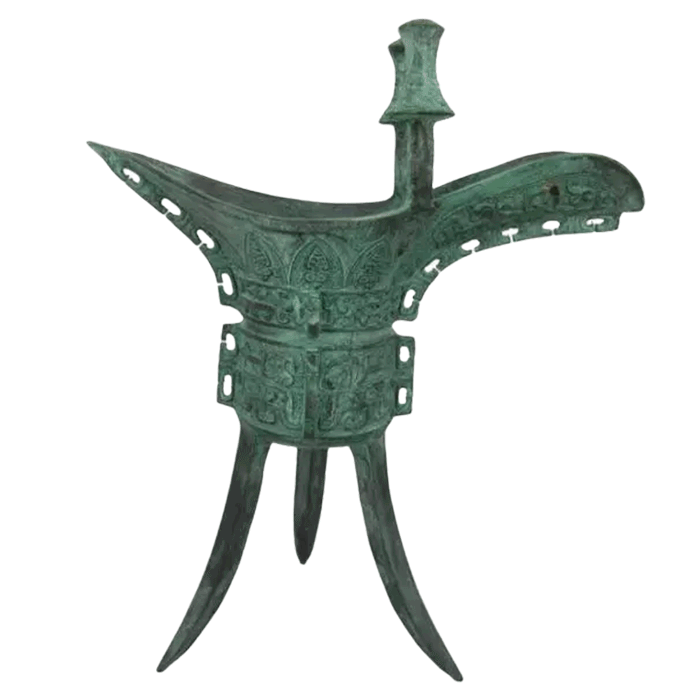
The study of ancient Chinese bronzeware offers a unique window into the sophisticated worldview, religious practices, and societal structures of early Chinese dynasties. Among the myriad forms of bronze vessels, the Jue stands out as a distinctive and historically significant piece. As an ancient Chinese bronze wine vessel, the Jue was primarily used for heating and pouring wine during ritual ceremonies, playing a crucial role in ancestral worship and state affairs. Its elegant tripod form, often featuring an extended spout, a pointed tail, and two prominent posts on the rim, makes it instantly recognizable. Beyond its functional design, the Jue is frequently adorned with intricate decorative motifs, none more iconic or enigmatic than the Taotie.
For collectors, museum curators, cultural product importers, and interior designers specializing in authentic historical décor, understanding the deep cultural and spiritual language embedded within these pieces is paramount. The Taotie motif, often described as a zoomorphic mask, is not merely decorative; it is a complex symbol believed to have held significant meaning for the Shang and Zhou dynasties, periods renowned for their exquisite bronze craftsmanship. Deciphering what a Jue’s Taotie decoration communicates allows for a deeper appreciation of these artifacts and informs the selection and display of high-quality replicas.
The Jue: A Cornerstone of Early Chinese Ritual
The Jue emerged as a prominent bronze vessel during the Erlitou culture (c. 1900–1500 BCE) and reached its peak of artistic and ritualistic importance during the Shang (c. 1600–1046 BCE) and Western Zhou (1046–771 BCE) dynasties. Its design, characterized by a deep bowl, three splayed legs, a long pouring spout, and a counterbalancing tail, was perfectly suited for its ritual function. Wine, often fermented millet or rice, was warmed in the Jue over a fire and then poured as an offering to ancestors or deities. The two small posts on the rim, sometimes topped with mushroom-shaped caps, are believed to have been used for lifting the vessel with tongs or possibly for securing a lid, although their exact purpose remains a subject of scholarly debate.
The significance of the Jue extends beyond its utilitarian role. It was a symbol of status, power, and connection to the divine. The bronze itself, a precious alloy of copper and tin (Cu-Sn), was a rare and valuable material, and its casting required immense skill and labor, often controlled by the ruling elite. Possessing a Jue, especially one intricately decorated, signified the owner's elevated position within society and their ability to commune with the spiritual realm. The meticulous craftsmanship involved in producing these vessels, from mold-making to the final finishing, reflected the reverence for the rituals they served.
At Luoyang Yichuan Bronze Craft Co., Ltd., we understand the profound historical and cultural value of such pieces. Our commitment to preserving this heritage means that every replica Jue is cast using the traditional lost-wax method, ensuring fidelity to the original forms and intricate details. Our skilled craftsmen, including revered bronze-casting masters and finishing artisans, meticulously recreate the nuances of these ancient vessels, making them suitable for discerning collectors and institutions seeking authentic representations of Chinese bronze sculpture.
Decoding the Enigmatic Taotie Motif
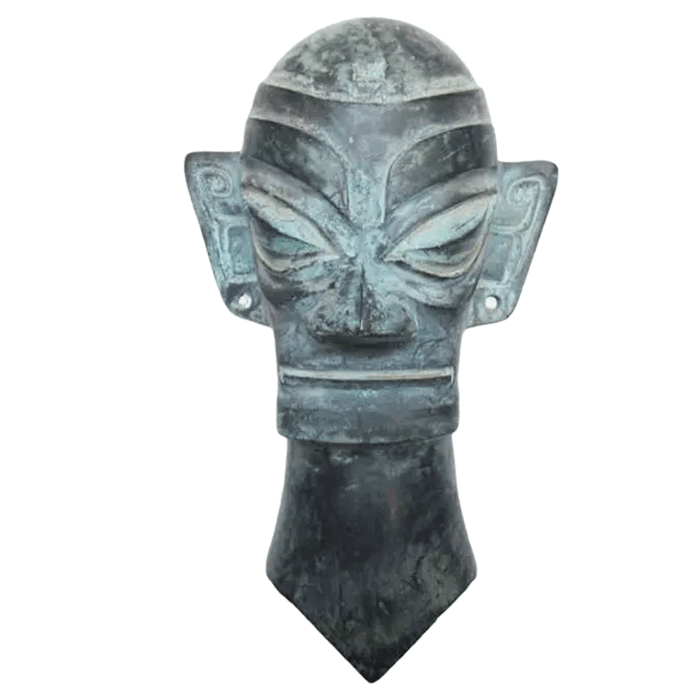
The Taotie, often translated as "gluttonous ogre" or "monster mask," is the most pervasive and iconic decorative motif found on Shang and early Western Zhou ritual bronzes, including the Jue. It typically features a symmetrical, zoomorphic face with prominent eyes, eyebrows, horns, a nose, and sometimes jaws with fangs. While the full body of the creature is often depicted in a split form, with two profile bodies extending from either side of the central mask, the Taotie is most striking for its intense, staring gaze. The motif can vary greatly in elaboration, from abstract patterns to highly detailed representations, but its core elements remain consistent.
Origins and Interpretations of the Taotie
The exact origins and meaning of the Taotie have been debated by scholars for centuries. Some theories suggest its roots lie in Neolithic jade carvings, where similar stylized animal faces appear. During the Shang dynasty, the Taotie became a dominant motif, evolving into the complex and often fearsome image seen on bronzes. Various interpretations have been proposed:
- Protective Guardian: One prevalent theory suggests the Taotie served as a protective guardian, warding off evil spirits and ensuring the sanctity of the ritual. Its fearsome appearance was intended to intimidate malevolent forces.
- Communication with the Divine: Another interpretation posits that the Taotie acted as an intermediary between the human and spirit worlds. Its intense gaze might have been seen as a conduit for communication with ancestors or deities during rituals.
- Symbol of Power and Authority: Given its prominence on elite ritual vessels, the Taotie could also have symbolized the power and authority of the ruling class, reinforcing their divine mandate to govern.
- Sacrificial Beast: Some scholars link the Taotie to sacrificial animals, suggesting it represents a beast consumed during rituals, or perhaps a warning against gluttony, though this latter interpretation is less widely accepted for its ritualistic context.
- Ancestral Totem: It has also been suggested that the Taotie might represent a clan or ancestral totem, embodying the spirit of a founding ancestor or mythical beast associated with the lineage.
Regardless of the definitive interpretation, it is clear that the Taotie held profound religious and symbolic significance for the people of the Shang and Zhou dynasties. Its presence on an Ancient Chinese Ritual Wine Vessel Jue elevated the object beyond mere utility, transforming it into a powerful artifact imbued with spiritual meaning.
The Communication of Taotie on a Jue
When the Taotie motif is applied to an Ancient Chinese Ritual Wine Vessel Jue, its message is amplified and contextualized by the vessel's function. The combination of form and decoration creates a cohesive statement about the nature of the ritual and the forces at play. Here’s what the Taotie on a Jue communicates:
- Sacredness of the Ritual: The Taotie's imposing presence imbues the Jue with an aura of sacredness. It visually reinforces that the act of offering wine is not an ordinary event but a solemn ceremony connecting the mortal realm with the spiritual. The fearsome eyes staring out from the vessel demand reverence and attention, ensuring the ritual is performed with due solemnity.
- Protection during Offerings: As a protective guardian, the Taotie on a Jue would guard the precious wine offering and the participants from malevolent spirits or disruptions during the ritual. Its presence ensures the purity and efficacy of the offering.
- Legitimacy of the Offerer: For the person performing the ritual, often a king or a high-ranking noble, the Taotie on their Jue signaled their legitimate authority and connection to the divine. It symbolized that they were sanctioned to interact with ancestral spirits and deities, reinforcing their social and political power.
- A Bridge to the Ancestors: The Taotie, with its intense gaze, could be seen as facilitating communication between the living and the dead. As wine was poured from the vessel, the Taotie might have been perceived as opening a channel, guiding the offering and the supplicant's prayers to the ancestors. It acted as a visual prayer or invocation.
- Cosmic Order and Harmony: The symmetrical and often intricate nature of the Taotie, alongside other geometric patterns on the Jue, reflects an ancient Chinese desire for cosmic order and harmony. The meticulous design signifies a world where everything has its place, including the interaction between humans and the divine.
Thus, a Jue adorned with the Taotie decoration is more than just a beautiful object; it is a profound statement of belief, power, and ritualistic intent. It speaks of a culture deeply intertwined with its spiritual world, where art and craft served to reinforce the fundamental order of the universe.
Crafting Authentic Bronze Replicas: Yichuan’s Expertise in Bronze Art
Replicating an Ancient Chinese Ritual Wine Vessel Jue with its intricate Taotie motif requires not only exceptional artistic skill but also a profound understanding of traditional bronze casting techniques and cultural nuances. Luoyang Yichuan Bronze Craft Co., Ltd. is uniquely positioned to meet the demands of museums, cultural institutions, and discerning collectors globally, thanks to our heritage, expertise, and commitment to quality.
Our company is ISO 9001 quality management system certified, ensuring that every piece produced aligns with the highest international standards. All our products comply with export quality inspection standards for art crafts, guaranteeing that clients receive pieces ready for international display or sale. With an annual output exceeding 50,000 bronze art pieces, we possess the capacity to support diverse client needs, whether it's a single custom prototype for a specific exhibition or bulk production runs for large-scale cultural product lines.
Located in Yichuan County, Luoyang, in Henan Province, our production area spans 3,000 square meters. This region boasts a rich 3,000-year bronze culture, a heritage that deeply influences our craftsmanship. Our team comprises over 30 skilled craftsmen, including revered bronze-casting masters and finishing artisans, who bring generations of knowledge and precision to their work. We utilize premium bronze alloy (Cu-Sn) and the traditional lost-wax method, a technique perfected over millennia, to ensure the authenticity and durability of our replicas. Following casting, each piece undergoes meticulous hand chasing, polishing, and patina finishing, available in both antique and modern looks, to capture the distinct character of ancient bronzes.
We specialize in solving common pain points for custom bronze art sourcing. This includes exact replication of antique bronzes, ensuring that the intricate details of a Taotie or other motifs are faithfully reproduced. We also guarantee consistent patina color matching across multiple pieces, an essential factor for large collections or interior design projects. Furthermore, we provide export-compliant protective packaging specifically designed for fragile sculptures, mitigating the risks associated with international shipping.
Our commitment to quality extends beyond production. Every shipment undergoes rigorous quality inspection before dispatch. In the rare event of casting defects, we offer free replacements. Our after-sales support includes guidance for patina touch-ups and restoration, ensuring the longevity and preservation of these magnificent art pieces. From bronze statues with different themes to intricate bronze vessels like the Jue, we offer comprehensive solutions for your bronze art needs. For those interested in customized projects, our customize a bronze sculpture from sculpmart.com page provides more details on how we can bring your specific vision to life, with an MOQ starting from just one piece for custom sculptures and bulk orders negotiable based on complexity.
The Enduring Legacy of Chinese Bronze Craftsmanship
The symbolism of the Taotie on an Ancient Chinese Ritual Wine Vessel Jue represents a profound connection to a bygone era, reflecting the spiritual and social foundations of ancient Chinese civilization. These vessels are more than mere artifacts; they are windows into a worldview where the sacred and the secular were deeply intertwined, and art served as a powerful medium for communication with the divine.
At Luoyang Yichuan Bronze Craft Co., Ltd., we are dedicated to keeping the art of Chinese bronze alive. By blending traditional craftsmanship with modern design principles, we continue the heritage of Luoyang's bronze culture, producing pieces that honor the past while meeting contemporary demands. Our range includes bronze sculptures, exquisite bronze vessels like ding, zun, and hu tripods and vases, elegant bronze mirrors, solemn bronze incense burners, and revered bronze Buddhist statues, alongside our custom bronze artworks.
For those who appreciate the depth of cultural narrative and the mastery of ancient artistry, a meticulously crafted replica of an Ancient Chinese Ritual Wine Vessel Jue with its enigmatic Taotie decoration offers an unparalleled opportunity to connect with one of humanity's most fascinating civilizations. We invite you to explore the possibilities of incorporating these magnificent pieces into your collections or projects, confident in the knowledge that each item from Yichuan Bronze Craft is a testament to enduring quality and profound historical respect. Learn more about our company and our commitment to tradition on our about sculpmart page, or delve deeper into the rich history of these artifacts by reading about the evolution of bronze culture over 2000 years.