Sourcing Antique Style Chinese Bronze: Patina Red Flags
Our guide helps you source masterfully crafted antique style Chinese bronze with confidence.
The allure of Chinese bronze art lies not only in its intricate forms and historical significance but also in its captivating surface—the patina. This complex layering of colors, developed over centuries of burial and exposure, tells a story of time, environment, and chemistry. For sourcing managers, resellers, and interior designers, distinguishing an authentic, age-worn surface from a modern, artificially created one is a critical first-pass skill. A convincing patina can be the difference between a priceless artifact and a clever replica, while an unconvincing one is an immediate red flag.
Understanding these subtleties is paramount. An error in judgment can lead to significant financial loss and damage to a brand's reputation. This guide is designed for professionals who need a practical framework for evaluating the patina on bronze objects. We will delve into the characteristics of authentic patination and highlight the most common red flags that signal modern production or deliberate forgery. As masters of bronze craft located in Luoyang—the heart of China's 3,000-year bronze heritage—we understand these processes intimately. Our expertise in replicating historical finishes using traditional methods gives us a unique perspective on what defines a truly authentic surface.
Understanding Authentic Patina Formation
Before identifying red flags, it is essential to understand how a genuine patina forms. It is not a coating applied to the bronze; it is an integral part of the object, a result of slow, complex electrochemical reactions between the copper alloy and its surrounding environment. Over hundreds or thousands of years, typically in a burial context, the metal corrodes in a stable, structured manner.
The Science of Natural Aging
The process begins with the base metal, a premium bronze alloy of copper and tin (Cu-Sn). The first layer of corrosion to form is often a thin, reddish-brown or black film of cuprite (copper oxide). This layer is typically very hard, stable, and well-adhered to the underlying bronze. It acts as a protective barrier, slowing further corrosion.
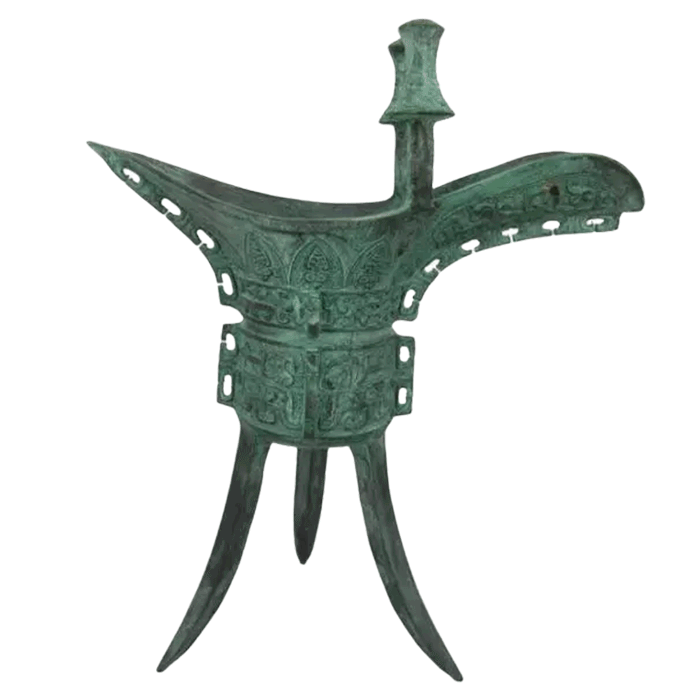
Over time, and with the presence of water and minerals in the soil (like carbonates, sulfates, and chlorides), secondary corrosion layers form on top of the cuprite. These are the vibrant greens and blues that are most associated with ancient bronzes:
- Malachite: A green copper carbonate, it is one of the most common components of a mature patina. It can range from a pale, minty green to a deep, rich emerald.
- Azurite: A blue copper carbonate, it often appears as crystalline deposits or deep blue patches, frequently intermingled with malachite.
The final appearance of an authentic patina is a unique fingerprint of the object's history. The specific soil chemistry, pH levels, humidity, and oxygen availability all influence the final colors, textures, and layering. This is why bronzes excavated from different regions of China can exhibit vastly different patinas. This deep knowledge of material science and history informs our understanding of the evolution of bronze culture over 2000 years and allows for the faithful recreation of historical pieces.
The key takeaway is that authentic patina is a crystalline growth, rooted in the metal itself. It is hard, stable, and exhibits a natural, layered complexity that is incredibly difficult to fake convincingly.
Red Flag #1: Unnatural Color and Uniformity
One of the most immediate giveaways of an artificial patina is its color. Forgers often use modern pigments or harsh chemicals to accelerate the corrosion process, resulting in colors that are visually "off."
Suspicious Hues and Tones
Be wary of colors that appear too bright, garish, or synthetic. This includes:
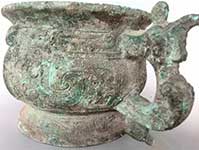
- Powdery, Light Blue: While azurite is blue, it is typically a deep, crystalline blue. A soft, powdery, sky-blue color is often the result of applying crushed minerals or using specific chemical treatments that do not replicate natural processes.
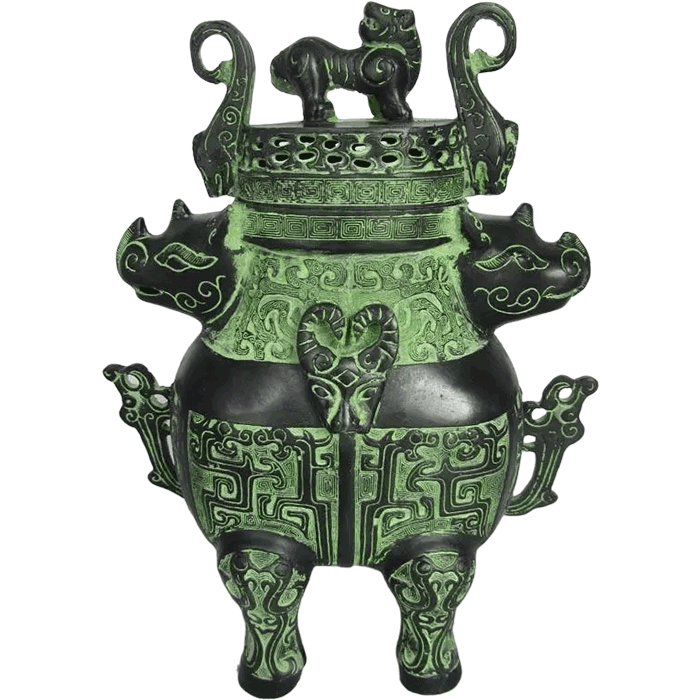
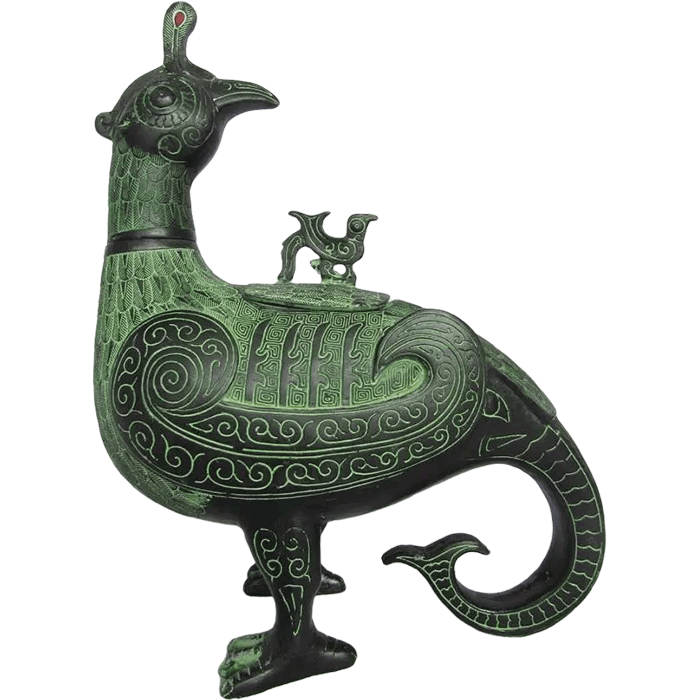
- Bright, Uniform Green: A single, homogenous layer of bright "grass green" across the entire object is highly suspect. Natural malachite formations have variations in shade and depth. A piece that looks like it was painted or dipped in a single vat of color lacks the organic subtlety of true age.
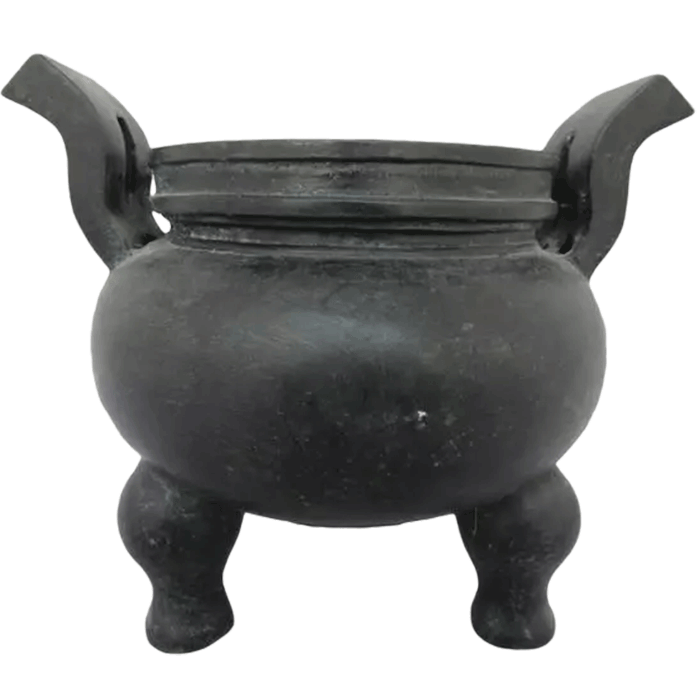
- Excessive Black or Gray: While dark cuprite layers are common, a piece covered in a soft, sooty black material that easily rubs off might have been artificially aged with chemicals like liver of sulfur or simply painted to simulate age.
The Flaw of Perfection
Nature is rarely uniform. An authentic patina will almost always show variation across the surface of the object. Some areas will have thicker deposits, while others might be thinner. Colors will blend and transition into one another. A surface that is perfectly even in color and texture is a significant red flag. Look for signs of artificial application, such as brush strokes, drip marks, or a stippled or sprayed-on appearance, especially in recessed areas of the design. A forger's goal is often to create a visually impactful piece quickly, and this haste often betrays them through a lack of natural randomness.
Red Flag #2: Poor Texture and Physical Properties
Beyond color, the physical feel and stability of the patina provide crucial clues. An authentic patina is a hardened, mineralized layer that has become one with the metal. Artificial patinas often fail to replicate this fundamental quality.
The Stability Test
A genuine patina is generally hard and will not easily come off. While you should never intentionally damage a potential artifact, a simple observation can reveal much. Red flags include:
- Powdery or Chalky Surface: If the patina looks dusty or leaves significant color residue on your hands or a cloth with light handling, it is likely a surface application of pigments rather than true corrosion.
- Flaking or Peeling: An artificial patina, created by applying chemicals or paints, may chip or flake away, especially at edges or high points. This action resembles paint peeling off a surface, rather than a mineral layer breaking.
- Lack of Adherence: If you can see areas where the patina has chipped off, look at the exposed surface. If it reveals bright, fresh, shiny bronze directly underneath with no transitional layers (like the red cuprite), the patina was almost certainly applied recently. A scratch on an authentic piece would likely reveal different layers of corrosion before reaching the base metal.
Smell and Substance
In some cases, a freshly faked bronze may retain a distinct chemical odor. Authentic bronzes should smell earthy, metallic, or have no smell at all. A sharp, acidic, or chemical smell can indicate a recent and aggressive chemical treatment used to force a patina. Furthermore, forgers sometimes coat their creations in wax or lacquer to "seal" the fragile, fake patina. This can give the piece an unnatural sheen or a slightly sticky feel that is inconsistent with a naturally aged object.
Red Flag #3: Inconsistent Aging and Wear Patterns
An object's history is written in its patterns of wear, and the patina should logically correspond to this history. Forgers often overlook this, applying a uniform patina that defies common sense.
Logical Wear and Tear
Consider how an object would have been used and handled over centuries. Raised surfaces, handles, rims, and decorative high points would be subject to more friction and handling. On an authentic piece, the patina in these areas is often thinner, smoother, or worn away entirely, revealing the darker cuprite layer or even the bronze beneath. Conversely, recessed areas, crevices, and the inside of vessels should harbor the thickest, most well-preserved patina, as they were protected from wear.
A major red flag is when this logic is reversed or ignored. If the patina is thick and pristine on a handle while the protected crevices are bare, something is wrong. Similarly, if the "wear" looks unnaturally uniform, such as perfectly straight lines or sanded-down areas that don't correspond to logical points of contact, it was likely created artificially to mimic age.
Patina Over Damage
This is one of the most definitive tests. Examine any dents, deep scratches, or breaks on the piece. On an authentic artifact, such damage would have occurred at some point in its long history. The exposed metal within the damaged area would either be fresh and unpatinated (if recent) or would have begun to form its own, newer, and different-looking patina.
If you find a piece where the patina is perfectly uniform and continuous *inside* a dent or scratch, flowing unbroken from the surrounding surface, it is almost certainly a fake. This proves that the damage occurred first, and the patina was applied artificially over the entire object afterward.
Sourcing High-Quality Reproductions: The Reliable Alternative
Navigating the market for genuine antiquities is fraught with risk. For businesses that require the timeless beauty and cultural weight of Chinese bronzes for decor, collections, or resale, sourcing high-quality, authentic reproductions offers a reliable and transparent alternative. This is where the expertise of a dedicated bronze foundry becomes invaluable.
At Luoyang Yichuan Bronze Craft Co., Ltd., we combine a deep respect for China's bronze heritage with modern quality control. Our facility, certified under the ISO 9001 quality management system, is staffed by over 30 skilled artisans who are masters of the traditional lost-wax casting method. This process allows for the creation of incredibly detailed chinese bronze sculpture and vessels that are true to their historical origins.
We specifically address the most common sourcing pain points:
- Authentic Finishing: Our artisans are experts in hand chasing, polishing, and creating complex, historically accurate patinas. We solve the problem of inconsistent or fake-looking finishes by mastering the very techniques forgers try to imitate.
- Exact Replication: Whether you need to replicate a museum piece or develop a new design in an ancient style, our team can deliver with precision.
- Scalable Production: With an annual output of over 50,000 pieces, we can support your needs from a single prototype to large-scale production runs. We offer a flexible MOQ starting from just one piece for custom projects. If you want to customize a bronze sculpture from sculpmart.com, our team is ready to assist.
- Guaranteed Quality: Every piece undergoes a strict quality inspection before shipment, and we provide export-compliant packaging to ensure your order arrives safely. We stand behind our work with after-sales support and free replacement for any casting defects.
By partnering with a specialized manufacturer, you gain access to the aesthetic and craftsmanship of antique style Chinese bronze without the risks of the antiquities market. You receive a product of known quality, consistent finish, and verifiable origin, allowing you to build your inventory with confidence.