Sizing a Houmuwu Ding Bronze Reproduction | A B2B Guide
Procuring an Authentic Houmuwu Ding Bronze Reproduction: A Guide to Sizing and Proportions
The Houmuwu Ding, formerly known as the Simuwu Ding, stands as a titan of ancient metallurgy. As the heaviest and one of the largest bronze ritual vessels ever discovered, this Shang Dynasty masterpiece is a profound symbol of power, artistry, and technological achievement. For museum curators, interior designers, and discerning collectors, acquiring a reproduction of this iconic artifact is a significant undertaking. While the intricate taotie masks and dragon motifs are critical, the true essence of the Ding lies in its monumental scale and perfect proportions. An incorrectly sized or poorly proportioned replica can diminish its historical gravitas and aesthetic impact.
Understanding how a reproduction is sized—from a museum-grade 1:1 replica to a tastefully scaled version for a corporate headquarters—is the first step in commissioning a piece that honors the original's legacy. This guide explores the critical considerations of dimension, scale, and proportion, detailing the technical and artistic processes required to create a faithful and commanding reproduction. We will delve into the original artifact's measurements, the challenges of full-scale replication, the principles of proportional scaling, and the bespoke customization process that brings these magnificent vessels to life.
The Historical Dimensions of the Original Houmuwu Ding
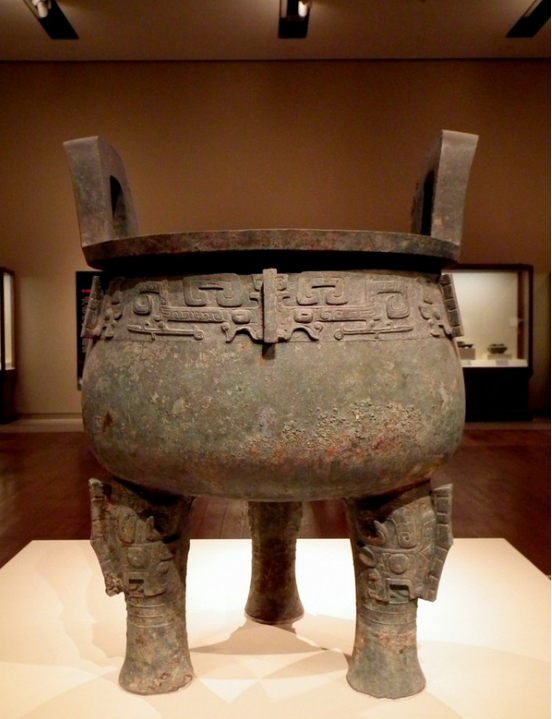
To appreciate the challenge of reproduction, one must first grasp the sheer scale of the original. Excavated in 1939 in Anyang, Henan province, the authentic Houmuwu Ding is a testament to the sophisticated bronze-casting capabilities of the late Shang Dynasty (c. 1300–1046 BCE). Its precise dimensions serve as the foundational blueprint for any high-fidelity replica.
- Overall Height: 133 cm (52.4 inches) from the base of its feet to the top of its handles.
- Mouth Dimensions: 110 cm (43.3 inches) in length by 79 cm (31.1 inches) in width.
- Weight: An astounding 832.84 kg (1,836.1 pounds).
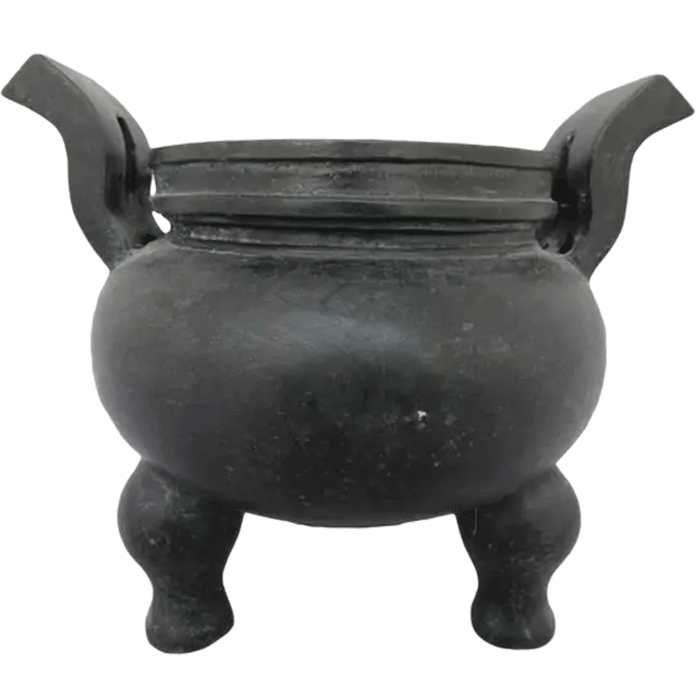
These are not just numbers; they represent a deliberate and harmonious design. The vessel consists of a deep, rectangular body supported by four robust, cylindrical legs. Two massive, upright loop handles emerge from the rim, adding to its imposing height and facilitating its use in ritual ceremonies. The relationship between these components—the ratio of the leg height to the body depth, the handle size relative to the mouth opening, and the thickness of the vessel walls—is what gives the Ding its balanced and powerful aesthetic. Any reproduction, regardless of its final size, must preserve these critical proportional relationships to be considered authentic in spirit. The original is one of the most famous examples of a houmuwu square cauldron, and its form has defined the archetype for this type of ritual vessel.
Full-Scale Replicas: The Pursuit of 1:1 Authenticity
Creating a full-scale, 1:1 reproduction of the Houmuwu Ding is a monumental endeavor reserved for major cultural institutions, museums, and flagship corporate displays. This process pushes the boundaries of modern craftsmanship and requires a foundry with exceptional technical capacity and artistic expertise. The goal is not merely to create a copy but to replicate the original's commanding presence and material integrity.
Material and Structural Challenges
A 1:1 replica must weigh over 800 kg, demanding a premium bronze alloy (typically a copper-tin or Cu-Sn blend) that can withstand immense structural stress. The four legs must be cast and joined with absolute precision to support the massive weight of the body without any risk of fracture or instability. The foundry's process must be governed by a rigorous quality management system, such as ISO 9001, to ensure every stage—from alloy composition to casting and finishing—meets exacting standards.
The Casting Process
The traditional lost-wax casting method, a technique refined over millennia, is essential for capturing the fine details of the taotie and dragon motifs. For a piece of this magnitude, the process is incredibly complex. It involves creating a perfect full-size model (often in clay or wax), building a multi-part mold around it, melting out the wax, and then pouring hundreds of kilograms of molten bronze in a carefully orchestrated operation. This requires a large, highly coordinated team of over 30 skilled craftsmen, including bronze-casting masters who understand the unique fluid dynamics and cooling properties of such a massive pour. Any error, such as trapped air or uneven cooling, could compromise the entire casting.
Artisanal Finishing
Once cast, the raw bronze piece begins a long journey of hand-finishing. Master artisans engage in chasing (refining surface details with specialized tools), grinding, and polishing to smooth the surface and sharpen the decorative patterns. The final, crucial step is patination. Replicating the mottled green, blue, and earthen tones of a 3,000-year-old artifact is an art form in itself, requiring the careful application of chemicals and heat to achieve an authentic, time-worn appearance.
Scaled Reproductions: Balancing Presence with Practicality
While a full-scale replica is awe-inspiring, it is often impractical for private collections, corporate offices, or home decor. Scaled reproductions offer a solution, capturing the essence and design integrity of the Houmuwu Ding in a more manageable size. The key to a successful scaled piece is strict adherence to proportional scaling.
The Principle of Proportional Scaling
Simply shrinking the height is not enough. Every feature of the original must be reduced by the same factor. If a 1:2 scale reproduction is commissioned (resulting in a height of 66.5 cm), then the mouth length must also be halved (to 55 cm), the handle dimensions reduced proportionally, and even the thickness of the vessel walls appropriately thinned. The decorative motifs must also be scaled down with precision to maintain their clarity and visual relationship with the overall form. This mathematical rigor ensures that the smaller version retains the balanced, powerful aesthetic of the original.
Common scaling ratios include:
- 1:2 Scale (approx. 66.5 cm high): A significant, commanding piece suitable for a large lobby or executive office.
- 1:4 Scale (approx. 33.25 cm high): A substantial tabletop or pedestal piece that allows for close appreciation of its details.
- 1:10 Scale (approx. 13.3 cm high): A beautiful decorative object for a bookshelf or desk, still large enough to convey the original's form.
Technical Considerations in Scaling
Scaling down introduces its own set of challenges. The intricate lines of the taotie masks can be lost if the mold-making and casting process is not precise enough. The lost-wax method is again indispensable here, as it excels at reproducing fine details even at smaller sizes. The hand-chasing and finishing stages become even more critical, requiring artisans with a delicate touch to refine the miniaturized patterns. Furthermore, the patina application must be adjusted for a smaller surface area to avoid a heavy or unnatural appearance, ensuring the finish complements the piece's new scale.
The Custom Sizing Process: From Concept to Casting
For many clients, a standard scale may not fit their specific needs. A designer might require a vessel of a precise height to complement a custom-built pedestal, or a collector may want a unique size for their collection. This is where a bespoke, custom sizing process becomes essential, and it is a core part of creating any high-quality chinese bronze sculpture.
At Luoyang Yichuan Bronze Craft Co., Ltd., we specialize in turning these unique requirements into reality, supporting projects from a single prototype with an MOQ of just one piece. The process to customize a bronze sculpture from sculpmart.com begins with a detailed consultation to transform a client's vision into a tangible masterpiece.
- Consultation and Specification: The process starts with the client's vision. They may provide exact dimensions or a contextual goal (e.g., "a piece that is 1 meter tall to serve as a focal point"). Our experts then advise on the corresponding proportional dimensions for the body, legs, and handles to ensure historical and aesthetic accuracy.
- Digital Modeling and Validation: We often create a 3D digital model based on the agreed-upon custom size. This allows the client to review and approve the final proportions from all angles before any physical work begins, eliminating guesswork and ensuring complete satisfaction with the final form.
- Master Model and Mold Creation: Once the design is approved, our master craftsmen create a physical model in clay or a similar medium. This model is a perfect representation of the final product, from which the production mold is made. This stage is where artistic interpretation and technical precision merge.
- Casting and Finishing: The piece is then cast using our traditional lost-wax technique. After casting, it undergoes the same meticulous hand-chasing, polishing, and patination as our other artworks. We specialize in achieving consistent patina color matching, ensuring that if the piece is part of a larger collection, it fits in seamlessly.
Quality Assurance in Sizing and Production
Precision is non-negotiable when creating a replica of a national treasure. A deviation of even a few millimeters in a key proportion can disrupt the visual harmony of the entire piece. A professional foundry implements multi-stage quality control to guarantee that the final product is a faithful representation of the approved design.
This begins with precise measurements and calibrations at every step, from the digital model to the physical master pattern and the final cast bronze. Throughout the process, structural integrity checks are performed to ensure the piece is stable and perfectly balanced. Before any artwork leaves our 3,000-square-meter facility, it undergoes a thorough quality inspection to verify dimensions, detail fidelity, finish consistency, and structural soundness. This commitment to excellence is backed by our guarantee of a free replacement for any casting defects. Finally, the finished sculpture is encased in export-compliant protective packaging, specifically designed to protect fragile elements during international shipment, ensuring it arrives in pristine condition, ready for display.
Ultimately, sizing a Houmuwu Ding bronze reproduction is a sophisticated discipline that marries historical reverence with advanced manufacturing. Whether a client requires a monumental 1:1 replica that echoes the grandeur of the Shang Dynasty or a custom-scaled piece tailored to a specific environment, the foundational principles remain the same: unwavering respect for the original's proportions, meticulous attention to detail, and a deep commitment to artisanal craftsmanship.