Simuwu Ding Replica: Names, Dates and Vessel Facts
Simuwu Ding Replica: Correct Names, Historical Dates and Vessel Facts for Buyers
Educators, museum shops, and bronze resellers frequently encounter conflicting information about the original vessel behind any Simuwu Ding replica. Names change across translations, dates shift depending on the source, and casting details are often simplified or misquoted online. For buyers who need accurate descriptions before listing a product or teaching from it, getting these facts right matters as much as the quality of the casting itself. This guide walks through the naming history, dating consensus, and vessel specifications that should inform how a replica is described, priced, and presented to customers.
Understanding the Original Vessel's Name
The bronze now commonly called the Houmuwu Ding was, for decades, referred to in English-language sources and museum labels as the "Simuwu Ding." This naming confusion stems from an ambiguous inscription cast into the vessel's interior wall. The three characters can be read as either "Si Mu Wu" (offering to Mother Wu) or "Hou Mu Wu" (Queen Mother Wu), depending on how the first character is interpreted. Chinese academic institutions, including the National Museum of China, formally adopted "Houmuwu" as the standard reading in 2011, though "Simuwu" remains widely used in older publications, auction catalogs, and product listings worldwide.
For B2B buyers, this matters practically. A listing titled only "Simuwu Ding replica" may miss customers searching under the newer name, while a listing using only "Houmuwu" may lose traffic from buyers still using the older term. The safest approach for resellers is to reference both names in product copy, with a short note explaining the naming shift — this signals accuracy to educators and collectors who already know the debate exists. You can review a dedicated breakdown of this vessel's inscription and naming history on our page about the Houmuwu square cauldron.
Why the Naming Debate Persists
Oracle bone script and early bronze inscriptions did not always separate characters with the clarity modern Chinese does, so scholars continue to debate certain readings on a case-by-case basis. This is not unique to this vessel — similar naming revisions have occurred with other Shang and Zhou bronzes as epigraphic research advances. Buyers sourcing a Simuwu Ding replica should treat the name as a historical label under active scholarly discussion, not a fixed, uncontested title.
Dating the Original Bronze
The original vessel is dated to the late Shang dynasty, generally placed in the reign of King Wu Ding or shortly after, roughly the 13th to 12th century BCE. It was excavated in 1939 near Anyang, Henan Province — the site of the last Shang capital — and is considered one of the heaviest ancient bronze vessels discovered in China, weighing over 800 kilograms in its original form.
This dating places the vessel firmly within the Bronze Age tradition that also produced ceremonial vessels documented in our overview of the evolution of bronze culture over 2000 years. Buyers producing educational materials or catalog descriptions should cite the Shang dynasty date range rather than rounding it to a generic "ancient China" label, since precision on this point is often what distinguishes a credible product description from a vague one.
Common Dating Errors to Avoid
- Labeling the vessel as Zhou dynasty — it predates the Zhou by several centuries.
- Citing an exact single year of casting — no inscription records a specific casting date.
- Confusing the 1939 excavation date with the vessel's manufacture date.
Vessel Facts Relevant to Replica Production
When commissioning or reselling a Simuwu Ding replica, several original vessel specifications directly affect how the reproduction should be described and priced:
| Feature | Original Vessel | Typical Replica Consideration |
|---|---|---|
| Material | Bronze alloy (copper-tin-lead) | Cu-Sn bronze alloy, lost-wax cast |
| Weight | Approx. 832.84 kg | Scaled down; full-size replicas require reinforced casting |
| Dimensions | Approx. 133 cm tall | Available in multiple scale ratios |
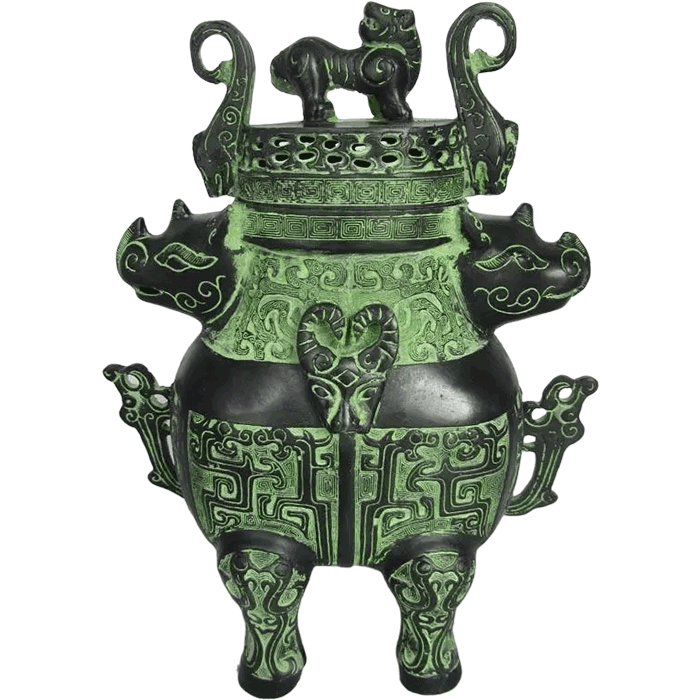
| Surface | Taotie motifs, animal-face reliefs | Hand-chased detail work, patina finishing |
| Inscription | Three-character mark inside the belly | Reproduced for authenticity in museum-grade pieces |
These specifications are why a well-made Simuwu Ding replica requires more than surface decoration — the proportions of the legs, the depth of the relief, and the placement of the inscription all affect whether a piece reads as historically credible to an informed buyer. Sculptors and foundries working from photographs alone often miss the subtle asymmetries present in the original casting, which was produced using sectional piece-mold techniques rather than the lost-wax method common in later Chinese bronze work.
Casting Techniques Behind an Accurate Replica
Most contemporary bronze workshops, including our own facility in Yichuan County, Luoyang, produce ceremonial vessel reproductions using the lost-wax casting method, which allows for finer surface detail and more consistent wall thickness than the original piece-mold process used in the Shang dynasty. This is an important distinction for resellers to communicate: a replica is not manufactured the same way as the original, and describing it as such would be inaccurate. What matters for buyers is that the visual and dimensional fidelity to the historical form is preserved, even when the underlying casting process differs.
After casting, hand chasing is used to sharpen the taotie motifs and geometric borders that define the vessel's surface. Patina finishing is then applied to replicate the oxidized green-black surface associated with excavated Shang and Zhou bronzes. Consistent patina color matching is one of the more technically demanding parts of producing a museum-quality Simuwu Ding replica, since uneven tone across a batch can make bulk orders look inconsistent on a retail shelf or in an educational display set.
Finishing Options for Different Buyer Needs
- Antique finish — darker, weathered patina suited for museum shops and history-focused retailers.
- Modern finish — polished or lightly toned bronze suited for corporate gifting or contemporary interior settings.
- Custom scale — tabletop replicas for classrooms versus larger display pieces for galleries.
For buyers who want to compare vessel forms beyond this single example, our catalog of Chinese bronze sculpture includes ding, zun, and hu vessel types cast using the same alloy and finishing standards.
Sourcing Considerations for Educators and Resellers
Buyers purchasing a Simuwu Ding replica for classroom use, museum retail, or resale should confirm several details with any supplier before placing an order:
- Whether the replica dimensions are true-to-scale or adjusted, and at what ratio.
- Whether the inscription is reproduced accurately or omitted for simplified versions.
- What alloy is used, since Cu-Sn bronze behaves differently from brass or resin composites in weight and patina response.
- Whether quality inspection occurs before shipment, and what recourse exists for casting defects.
- How the piece is packaged for export, given the fragility of raised relief surfaces during transit.
At Luoyang Yichuan Bronze Craft Co., Ltd., every vessel undergoes quality inspection before shipment, with free replacement offered for casting defects and after-sales guidance available for patina touch-ups. Our facility operates under an ISO 9001 quality management system, and our team of more than 30 craftsmen — including bronze-casting masters and finishing artisans — supports orders ranging from a single custom prototype to full production runs, with minimum order quantities starting at one piece for custom sculptures.
Buyers who need dimensional accuracy for teaching materials, or consistent patina tone across a bulk retail order, should treat these sourcing questions as standard due diligence rather than optional extras. A supplier who can answer them clearly is more likely to deliver a Simuwu Ding replica that holds up to scrutiny from historically informed customers.
Comparing the Simuwu Ding to Other Ceremonial Bronzes
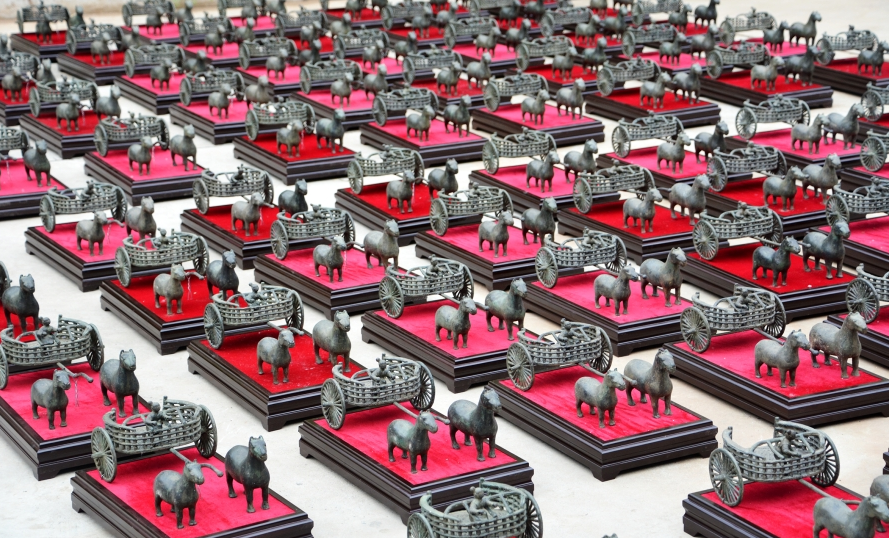
Buyers building a broader product line often place this vessel alongside other well-documented Chinese ceremonial bronzes. Comparative pieces worth stocking or referencing include the Mao Gong Ding and the bronze vessels associated with the Zenghouyi tomb finds. Our articles on bronze statue and Mao Gong Ding and Zenghouyi chime bell and Qinshihuang mausoleum bronze chariots and horses provide additional historical context useful for catalog descriptions or classroom handouts.
Vessels from this period are typically grouped by function — ding for cooking and ceremonial offerings, zun and hu for wine and liquid storage, and gui or fangyi for grain offerings. Understanding these categories helps buyers position a Simuwu Ding replica accurately within a wine, offering, or ceremonial vessel display rather than mislabeling it under a generic "ancient vase" description, a common error in non-specialist retail listings.
For buyers assembling a themed collection, exploring our full range of bronze statues with different themes alongside vessel reproductions can help build a more complete historical narrative for gallery or museum shop customers. Custom sizing and finish adjustments are also available for buyers who want to customize a bronze sculpture to match specific display requirements or budget constraints.
Final Notes for Buyers
Accurate naming, correct dating, and honest casting descriptions protect resellers and educators from customer disputes and reputational risk. A Simuwu Ding replica sold with vague or incorrect historical claims can undermine buyer trust once a customer does independent research — a common occurrence given how well-documented this vessel is in Chinese archaeology. Suppliers who provide clear specification sheets, consistent alloy composition, and verifiable finishing processes make it easier for downstream buyers to represent the product honestly and confidently in their own listings or lesson materials.