Simuwu Ding Replica: A Guide to Sizing for Your Space
Sourcing the Perfect Simuwu Ding Replica Starts with Your Display Space
The Houmuwu Ding (formerly Simuwu Ding) is more than an ancient artifact; it is a monumental symbol of power, ritual, and the pinnacle of Bronze Age craftsmanship. As the heaviest piece of ancient bronzeware ever discovered, its commanding presence has captivated historians and art connoisseurs for decades. For corporations, cultural institutions, and private collectors, acquiring a high-quality replica offers an opportunity to bring a piece of this profound history into a modern setting. However, the success of such an installation hinges on a critical, often underestimated factor: scale. Choosing a size that complements, rather than overwhelms, its environment is the first step toward a truly impactful display.
This guide is designed for project specifiers, interior designers, and procurement managers tasked with sourcing a significant bronze artwork. We will explore the practical considerations of matching the replica's dimensions to your physical space, ensuring the final piece not only fits but thrives in its intended home. From assessing floor loads for a grand centerpiece to selecting a patina for a subtle office accent, understanding the relationship between the object and its environment is key. At Luoyang Yichuan Bronze Craft Co., Ltd., we leverage our deep expertise in traditional casting to create pieces that honor their historical origins while meeting the precise spatial and aesthetic requirements of our clients.
The Significance of the Houmuwu Ding and Its Modern Replicas
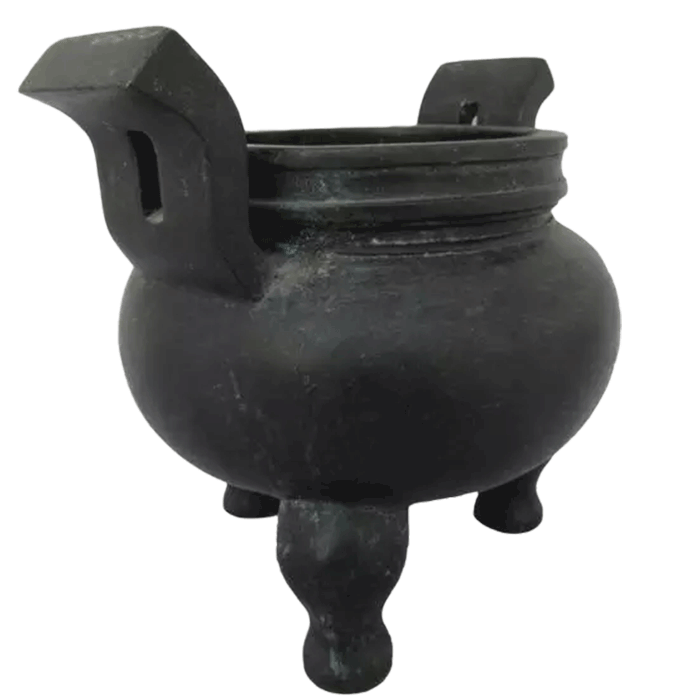
To appreciate the challenge of replicating this masterpiece, one must first understand the original's historical weight. The houmuwu square cauldron, dating back to the Shang Dynasty (c. 1300–1046 BC), was a ritual food vessel used in ceremonies honoring ancestral spirits. Its discovery in 1939 revealed a level of metallurgical and artistic sophistication previously unimagined for the period. The vessel's massive size—standing 133 cm tall and weighing 832.84 kg—and the intricate taotie (zoomorphic mask) motifs decorating its surface speak to the immense resources and spiritual authority of the Shang kings.
A modern replica is not merely a copy; it is a tribute. For businesses, it can symbolize stability, heritage, and strength. For museums and educational bodies, it serves as an accessible stand-in for a national treasure. For collectors, it is the centerpiece of a distinguished collection of chinese bronze sculpture. The creation of such a piece requires more than just technical skill; it demands a reverence for the original's form and spirit. This is achieved through meticulous adherence to traditional techniques, such as the lost-wax casting method—a process our master craftsmen have perfected over years of dedicated practice. Our ISO 9001 certified quality management system ensures that every replica, regardless of size, meets stringent standards for historical accuracy and artistic integrity.
A Practical Guide to Measuring Your Display Environment
Before you can specify the dimensions of your replica, a thorough assessment of the intended display location is essential. An object of significant size and weight introduces logistical and engineering considerations that must be addressed at the outset of the project. A miscalculation can lead to costly installation problems or a final result that feels disharmonious and out of place.
Evaluating Floor Space and Load-Bearing Capacity
Bronze is an exceptionally dense and heavy material. A full-scale replica of the Houmuwu Ding would weigh over 800 kg, exerting immense pressure on the floor beneath it. Even smaller, half-scale versions can easily weigh several hundred kilograms.
- Measure the Footprint: Begin by measuring the length and width of the available floor space. Don't just measure the exact dimensions you think the replica will occupy. You must also account for "breathing room"—a clear perimeter around the piece that allows viewers to appreciate it from multiple angles without feeling crowded. A general rule is to allow for a clearance of at least 1.5 to 2 times the object's widest dimension.
- Assess Load Capacity: This is a non-negotiable step for any large-scale piece, especially if it will be placed on an upper floor, a mezzanine, or a specially constructed platform. Consult with a structural engineer or the building's architect to confirm the maximum floor load, typically expressed in kilograms per square meter (kg/m²). Provide them with the estimated weight and footprint of your proposed replica to get a clear confirmation. Ground-floor installations on a concrete slab foundation are generally safer, but confirmation is always best practice.
Assessing Vertical Space and Sightlines
The vertical dimension is just as important as the horizontal. A tall piece in a room with a low ceiling can create a sense of claustrophobia, while a small piece in a cavernous hall can feel lost and insignificant.
- Ceiling Height: Measure the distance from the floor to the lowest point of the ceiling, accounting for any hanging light fixtures, sprinkler heads, or decorative elements. For a commanding piece like a ding, you want a generous amount of space above it to prevent it from feeling "stuffed" into the room.
- Establish Key Sightlines: Consider where people will be when they first see the sculpture. Will it be from a main entrance, a staircase landing, or a seating area? The primary sightline should offer an unobstructed, compelling view of the piece. The center of the artwork should ideally be positioned at or slightly above the average person's eye level (around 1.5-1.7 meters) to create a sense of grandeur.
- Consider the Pedestal: Most large vessels are displayed on a pedestal or base. This must be factored into your overall height calculation. The base not only adds height but also helps to define the artwork's space and protect it from foot traffic. The design of the base—whether it's a simple stone block or an ornate wooden stand—should complement both the replica and the room's decor.
Considering Entryways, Hallways, and Installation Paths
The most perfectly sized replica is useless if it cannot be delivered to its final location. The path from the delivery truck to the display spot must be meticulously planned and measured.
- Measure All Access Points: Document the height and width of every doorway, elevator, and corridor on the installation path. Remember to measure the diagonal opening of doorways, as tilting a large object is often necessary.
- Identify Tight Corners: Navigate the path and identify any sharp turns, stairwells, or narrow passages that could pose a challenge. Large sculptures often require specialized equipment like dollies, cranes, or even scaffolding to maneuver safely.
- Plan for Professional Installation: For any replica of significant size and weight, professional art handlers are essential. They have the expertise and equipment to move heavy, valuable objects without damaging the artwork or the building. We provide export-compliant protective packaging for all our pieces to ensure they arrive safely, but the final on-site placement requires careful planning.
Selecting the Ideal Replica Scale for Different Settings
With precise measurements of your space in hand, you can confidently select a scale that achieves your desired aesthetic and symbolic goals. Our facility, with a production area of 3,000 square meters and an annual output of over 50,000 bronze pieces, is equipped to handle everything from a single custom prototype to large-scale production runs, allowing for complete flexibility in sizing.
Grand Replicas for Corporate Lobbies and Public Spaces
For a large corporate headquarters, hotel lobby, or museum atrium, a large-scale or even near-full-size replica makes an unforgettable statement. In these settings, the goal is to create a powerful focal point that conveys permanence, tradition, and gravitas.
- Scale: 75% to 100% of the original size (approx. 100-133 cm in height).
- Considerations: These pieces demand high ceilings and a substantial footprint. The surrounding architecture should be able to support its visual weight without being overshadowed. Lighting is critical; a combination of ambient and spotlighting can be used to highlight the intricate surface details and create dramatic shadows.
Mid-Sized Replicas for Executive Offices and Galleries
In a senior executive's office, a boardroom, or a private gallery, a mid-sized replica serves as a sophisticated and impressive decorative element. It is large enough to have a strong presence and command attention but not so large that it dominates the entire space.
- Scale: 30% to 50% of the original size (approx. 40-65 cm in height).
- Considerations: This scale is ideal for placement on a large credenza, a dedicated pedestal in a corner, or as the centerpiece of a meeting table. It allows for close-up appreciation of the craftsmanship and details, making it a conversation starter. The weight is still considerable, so ensure the supporting furniture is robust.
Desktop and Shelf-Sized Replicas for Private Collections
For personal offices, studies, or display cabinets, a smaller, more intimate scale is appropriate. These pieces allow a collector to appreciate the iconic form and symbolism of the ding on a personal level. They are excellent for curated collections of bronze home decor arts.
- Scale: 10% to 25% of the original size (approx. 13-33 cm in height).
- Considerations: At this scale, the fineness of the casting and finishing is paramount. Our ability to produce custom sculptures with an MOQ of just one piece makes it possible to commission a highly detailed small-scale version tailored to your exact specifications. These pieces are perfect for display on a sturdy bookshelf, a mantelpiece, or a desk, where they add a touch of historical elegance.
Beyond Size: The Art of Customization and Finishing
A successful replica is more than a correctly sized object. It is a work of art where proportion, detail, and surface finish come together to create a cohesive and authentic whole. Working with a specialized manufacturer is crucial to achieving this level of quality.
The Importance of Proportional Accuracy
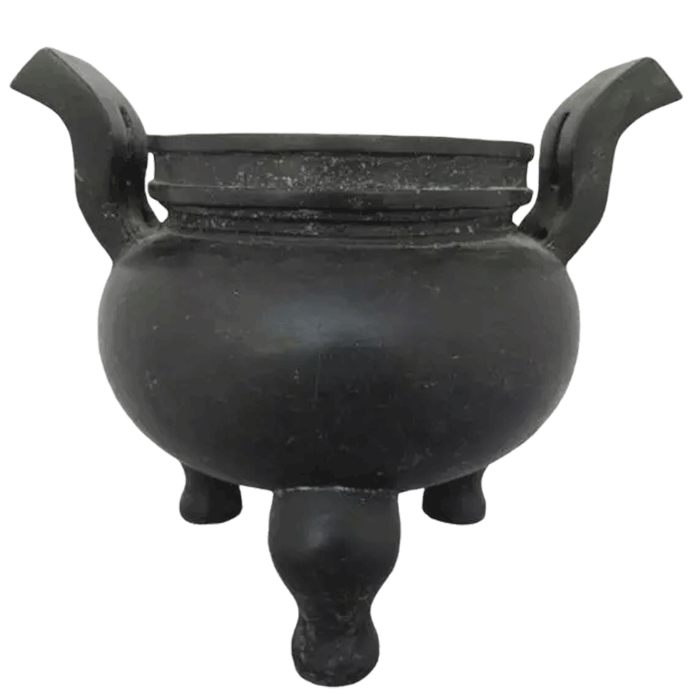
Scaling an object down is not as simple as shrinking its dimensions. Every element—the thickness of the legs, the curve of the handles, the depth of the relief on the taotie masks—must be scaled in perfect proportion to maintain the artifact's powerful aesthetic. Our use of the traditional lost-wax casting method, overseen by more than 30 skilled artisans, allows for exceptional fidelity to the original's form, ensuring that even a small-scale replica retains the visual balance and strength of the monumental original.
Choosing the Right Patina and Finish
The patina—the surface coloration that develops on bronze over time—dramatically affects the replica's character. We offer a range of finishing options to suit different environments:
- Antique Green/Blue Patina: This finish mimics the natural oxidization of ancient bronzes that have been buried for centuries. It lends an immediate sense of age and authenticity, making it ideal for historical or traditional settings. We specialize in consistent patina color matching, a common pain point for buyers, ensuring uniformity across multiple pieces if required.
- Polished or Brushed Bronze: A modern finish that highlights the natural luster of the premium bronze alloy. This look is well-suited for contemporary corporate environments, where it can complement steel, glass, and stone elements.
- Dark Brown/Black Patina: A classic, sophisticated finish that provides a strong silhouette and emphasizes the vessel's form. It is highly versatile and works well in both modern and traditional interiors.
Partnering with a Specialist for Flawless Execution
Sourcing a high-quality bronze replica requires a partner with proven expertise in historical art, metallurgy, and logistics. At Luoyang Yichuan Bronze Craft Co., Ltd., we provide an end-to-end solution for B2B clients worldwide. Our commitment to quality is validated by our ISO 9001 certification and a rigorous inspection process before every shipment. We stand behind our work, offering free replacement for any casting defects and providing after-sales support for patina touch-ups and restoration guidance.
Whether you require a single, exquisitely detailed desktop model or a monumental centerpiece for a public plaza, our team is equipped to bring your vision to life. We invite you to customize a bronze sculpture from sculpmart.com and experience the quality and craftsmanship that define our work.