Shang Dynasty Style Bronze Vessel Identification
How to Identify a Shang Dynasty Style Bronze Vessel by Its Form
For museum buyers, educators, replica retailers, and cultural-product sourcing teams, identifying an authentic Shang-inspired vessel form begins with more than recognizing a dark bronze surface or an animal-mask pattern. The overall silhouette, proportion, structural elements, decorative placement, and intended vessel category all provide important clues. A well-made historical-style reproduction should communicate the visual language of early Chinese bronze culture while remaining clear about its status as a modern crafted object.
The Shang period is widely associated with important developments in ritual bronze casting. Many vessel types were created for offerings, ceremonial food service, wine service, and ancestral rites. Their forms can appear powerful, compact, symmetrical, and highly controlled. Understanding these characteristics helps buyers evaluate whether a product description, display label, educational resource, or replica selection accurately reflects the visual traditions associated with Shang bronzes.
When reviewing a vessel, begin with its form rather than its surface color alone. Patina can be recreated in many ways, but a vessel’s profile, feet, body shape, handles, and opening structure are more fundamental to its identity. Buyers who assess these physical features systematically can make more informed sourcing decisions for museums, educational collections, gift programs, and decorative retail ranges.
Start With the Overall Silhouette and Vessel Category
The first step is to identify the vessel’s broad category. Shang-inspired bronzes are often based on established ritual forms, including ding tripods, zun wine vessels, jue wine warmers, gu beakers, you covered vessels, and fangyi-style rectangular containers. Each category has a recognizable structure, and an accurate-style replica should preserve the basic logic of that structure.
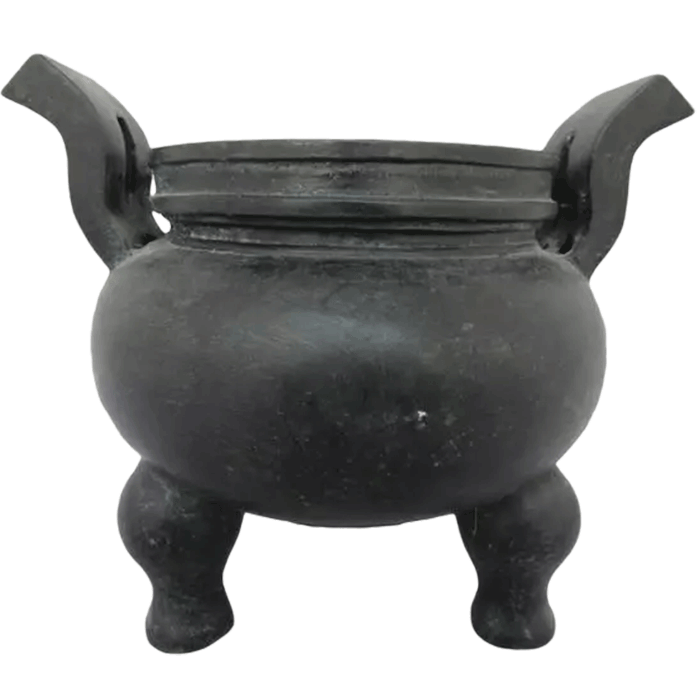
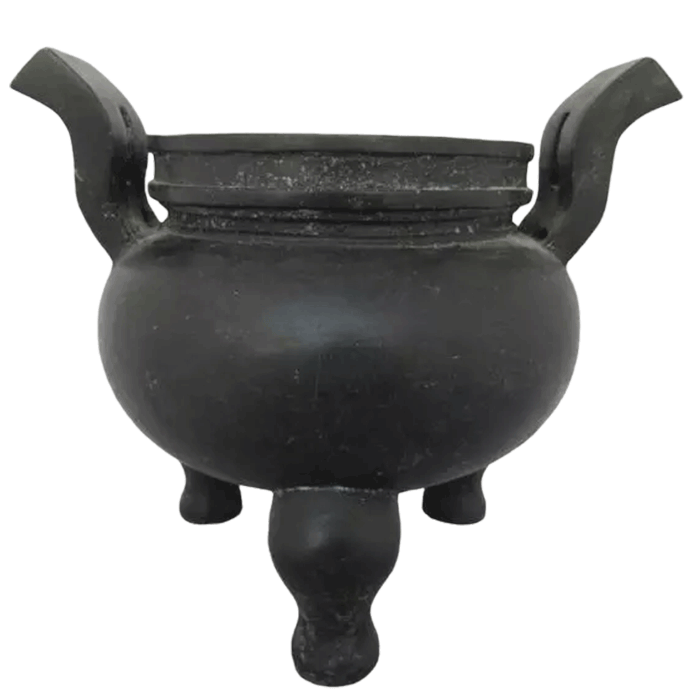
A ding is among the most recognizable ancient Chinese bronze vessel forms. It commonly has a round or rectangular body supported by legs. A round ding often uses three legs, while a square ding may use four. The upper rim may include upright handles, and the body generally presents a stable, weighty visual impression. The legs are not simply decorative supports; they are central to the vessel’s identity and ceremonial character.
A zun generally has a more vertical profile and may widen toward the mouth. Its body can range from rounded to more angular depending on the design reference. A zun is often visually taller and more open than a ding. When identifying this form, assess the relationship between the foot, lower body, shoulder, neck, and flared rim. If these transitions appear deliberate and balanced, the vessel is more likely to convey an appropriate historical-style structure.
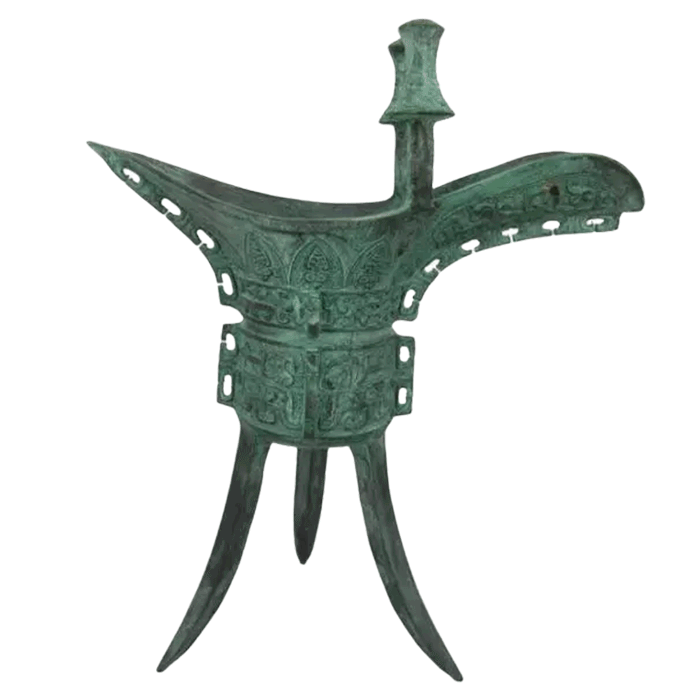
A gu is typically distinguished by a narrow waist between a flared upper section and a wider lower section. This creates an elegant, trumpet-like or beaker-like outline. By contrast, a jue is usually smaller and more complex, often showing a bowl-shaped body, pointed pouring spout, tail-like extension, legs, and sometimes upright posts near the rim. These forms may be especially useful in education because their functional elements are easy to explain in classroom or exhibition settings.
For a useful introduction to the variety of historical vessel categories, buyers can consult several bronze wares when preparing product descriptions or educational materials. Comparing several forms side by side is often the fastest way to recognize how each silhouette differs.
Examine Legs, Feet, Handles, and Rim Construction
After identifying the main vessel category, inspect the structural features. In Shang-style design, legs, handles, and rims are usually integrated into the overall composition rather than added as unrelated accessories. Their placement should support the vessel’s visual balance.
Tripod and Quadruped Supports
Tripod legs are a defining feature of many ding vessels. On a round vessel, three legs create a stable triangular arrangement. On a square vessel, four legs may correspond to the corners of the body. The legs may be cylindrical, tapered, blade-like, or shaped with stylized animal features. However, they should appear proportionate to the vessel’s body. Legs that are too thin can make a heavy ritual form look visually unstable, while excessively large supports can overwhelm the body and reduce the refined balance of the design.
When assessing a replica, check whether the legs align naturally with decorative divisions on the body. In many historical-style compositions, the placement of feet relates to panels, corners, or face-like motifs above them. This continuity gives the vessel a coherent appearance.
Handles and Lugs
Upright handles on a ding are often placed at opposing points along the rim. They may be rectangular, arched, squared, or slightly curved. On other vessel types, loop handles, side handles, or animal-head lugs may appear. These elements should look cast as part of the vessel rather than attached without a clear structural purpose.
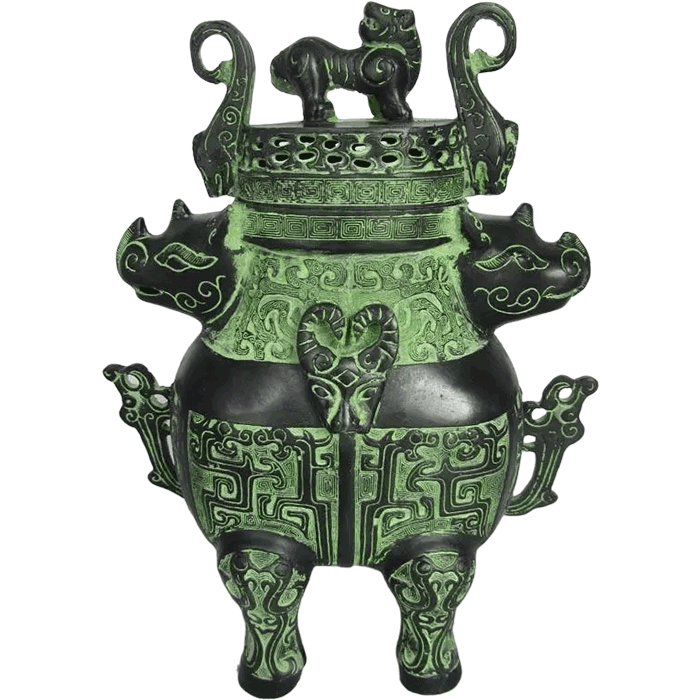
Animal-head handles are especially important to inspect because they can easily become overly decorative in less disciplined reproductions. On a well-proportioned historical-style piece, animal elements should reinforce the vessel’s form. They may project from the shoulder, frame a handle, or mark a transition between decorative zones, but they should not distract from the body’s main shape.
Rims, Necks, and Openings
The upper edge of a bronze vessel is another useful identifier. Shang-inspired forms may have a simple thickened rim, a flared mouth, a sharply defined neck, or an opening framed by upright posts. A broad flared mouth may suggest a gu or zun profile, while a straighter opening with paired handles may be more consistent with a ding.
Buyers should look for a clear relationship between the rim and the body below it. A successful design normally shows a controlled transition rather than an abrupt or arbitrary change in width. This matters when selecting replicas for close viewing, because the opening is often seen from above in museum displays and retail photography.
Read Decorative Bands as Part of the Form
Surface decoration is important, but it should be evaluated in connection with vessel structure. Shang-style bronze decoration commonly appears in horizontal bands, framed panels, or carefully organized zones. These visual divisions may follow the shoulder, neck, lower body, foot, or rim. Rather than treating patterns as random ornament, consider how they emphasize the shape of the object.
One frequently recognized feature is the taotie-inspired mask motif, often presented as a symmetrical face-like design. It may include prominent eyes, curled lines, horns, or abstract animal features. In historical-style interpretation, this motif is usually organized around a central vertical axis. A buyer should examine whether the left and right sides maintain visual balance and whether the motif fits the available surface area.
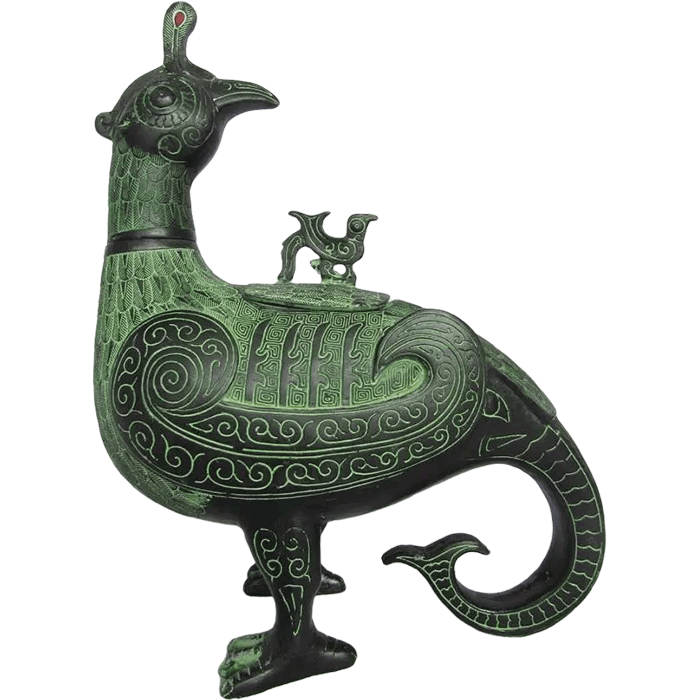
Other decorative vocabulary may include dragons, birds, cicada-like forms, geometric spirals, raised bosses, and narrow border patterns. These motifs may vary in scale and complexity. On a smaller vessel, overly dense relief can make the object appear crowded. On a large ceremonial-style vessel, broader decorative bands can support the weight and authority of the silhouette.
The decoration should also respect the vessel’s major zones. For example, the shoulder may carry a principal motif band, while the lower body may use simpler patterns or vertical divisions. Handles and legs may continue the animal imagery, but their decoration should remain connected to the main body design. A meaningful reference point for studying major ancient ritual forms is the houmuwu square cauldron, which illustrates why structure and surface treatment should be considered together.
For museum and education buyers, it is helpful to distinguish between “inspired by” and “replica of” in catalog text. If an item combines motifs from several periods or uses a simplified decorative interpretation, it should be described accurately as a Shang-inspired or ancient Chinese bronze-style work rather than as an exact reproduction of a specific artifact.
Assess Proportions, Symmetry, and Visual Weight
Shang-style vessel recognition depends heavily on proportion. Even when a vessel has correct-looking motifs, it may not present a convincing historical silhouette if the body is too tall, the neck is too narrow, the legs are too short, or the handles are too large. Proportion is the relationship among all major elements.
Many Shang-inspired ritual vessels feel grounded and substantial. A ding may have a broad body and firm legs. A zun may appear upright but not fragile. A gu may have an elegant waist while retaining enough mass in the base and mouth to feel stable. These objects were conceived as cast metal forms, so their design language often communicates durability and presence.
- Body-to-leg relationship: Supports should visually carry the body without appearing undersized or excessively heavy.
- Rim-to-shoulder relationship: The opening should transition naturally into the upper body.
- Handle placement: Handles should be symmetrical where the vessel type calls for paired handles.
- Decorative scale: Principal motifs should fit the available panel or band rather than spilling into unrelated areas.
- Foot and base: The lower portion should provide visual stability and match the vessel’s intended profile.
Symmetry is particularly important in formal ritual vessel forms. While handmade finishing can create subtle variation, the central composition should remain balanced. This is especially relevant for buyers sourcing pieces for museum shop displays, institutional interiors, or formal gift programs where visual consistency across a collection matters.
It is also useful to compare the form against period-specific design tendencies rather than assuming every ancient bronze shares the same style. Later periods may show different proportions, more elaborate narrative imagery, changed vessel functions, or different decorative rhythms. The article on bronze culture evolution can help educators explain that Chinese bronze design developed across many centuries rather than remaining visually fixed.
Use Material and Casting Details Carefully
Material and manufacturing details can support an evaluation, but they should not replace form analysis. A modern vessel can use bronze alloy and still be historically inaccurate in profile. Conversely, a carefully researched silhouette may be finished in a modern patina selected for display needs. For this reason, museum buyers and replica retailers should review both the artistic reference and the production specification.
Luoyang Yichuan Bronze Craft Co., Ltd. produces bronze vessels and custom bronze artworks using premium Cu-Sn bronze alloy and the traditional lost-wax casting method. Hand chasing, polishing, and patina finishing can be applied according to the selected design direction. Antique-style and modern finishing options can therefore be considered separately from the vessel’s underlying form.
Lost-wax casting is suitable for reproducing relief patterns, sculptural legs, handles, and controlled surface details. However, buyers should provide clear reference materials when historical accuracy is important. Useful materials include front, side, rear, and top photographs; museum collection references; line drawings; desired dimensions; weight expectations; decorative close-ups; and notes about whether the piece is intended as a display replica, educational handling model, decorative object, or retail product.
For broader context on material terminology, the resource on bronze and brass differences may help procurement teams use more precise language in specifications and product listings.
Create a Clear Checklist for Replica Selection
A structured checklist helps procurement teams compare different supplier proposals without relying only on general impressions. It also helps educators and retailers write accurate descriptions that explain why a vessel belongs to a particular historical-style category.
- Identify the vessel type. Confirm whether the design is a ding, zun, gu, jue, hu, or another recognized form.
- Review the silhouette. Check the body, shoulder, neck, rim, and base from multiple views.
- Check structural features. Assess the number, placement, and shape of legs, handles, lugs, spouts, and lid elements.
- Evaluate decorative organization. Confirm that mask motifs, animal forms, borders, and raised patterns follow the vessel’s structural zones.
- Assess proportion. Compare the visual weight of the body, rim, handles, and supports.
- Clarify the reference level. State whether the object is an exact replica based on documented reference material or an interpretation inspired by Shang bronze traditions.
- Specify finish requirements. Define whether an antique patina, dark brown tone, green patina effect, polished highlights, or modern finish is required.
- Confirm packaging needs. Fragile handles, projecting animal forms, and tall legs should receive export-compliant protective packaging.
For organizations requiring a specific scale, inscription-free interpretation, revised decorative band, or bespoke display base, it is possible to customize bronze sculptures and vessel-based artworks from a supplied concept or reference package. Custom production can begin from a single prototype, while bulk order arrangements depend on the size and complexity of the design.
Choose a Supplier That Can Translate References Into Cast Form
Historical-style vessel sourcing requires both design understanding and practical casting capability. A supplier should be able to discuss the relationship between reference images and three-dimensional construction, particularly when a flat museum photograph must be translated into a complete object with correct side profiles, leg placement, handles, and decorative continuity.
Luoyang Yichuan Bronze Craft Co., Ltd. is located in Yichuan County, Luoyang, Henan Province, an area connected to a long Chinese bronze heritage. The company operates a 3,000-square-meter production area with more than 30 skilled craftsmen, including bronze-casting masters and finishing artisans. Its annual output exceeds 50,000 bronze art pieces, supporting projects ranging from single custom prototypes to bulk production runs.
For B2B buyers, the practical review process should include design confirmation, dimensions, finish approval, packaging expectations, and inspection requirements before shipment. The company follows an ISO 9001 quality management system and conducts quality inspection before every shipment. Casting defects are covered by free replacement, and after-sales support is available for patina touch-ups and restoration guidance.
By focusing on vessel category, profile, structural elements, decorative organization, and proportion, buyers can identify Shang-inspired forms with greater confidence. This approach supports more accurate museum labels, stronger educational interpretation, and clearer product descriptions for replica retail collections. A successful vessel is not defined only by an ancient-looking surface; it is defined by a coherent form that respects the visual logic of Chinese ritual bronze traditions.