Shang Dynasty Style Bronze Vessel Forms Explained
Crafting the Perfect Shang Dynasty Style Bronze Vessel: Understanding Ding, Gui, and Gu Forms
The profound artistic and historical legacy of ancient China is perhaps nowhere more vividly expressed than through its bronze vessels. Among these, the artifacts of the Shang Dynasty (c. 1600–1046 BCE) stand as towering testaments to an advanced civilization's metallurgical prowess, ritualistic complexity, and aesthetic sophistication. For collectors, museums, and cultural institutions seeking to acquire or commission authentic reproductions, understanding the foundational forms of Shang bronze ware is paramount. Luoyang Yichuan Bronze Craft Co., Ltd. specializes in bringing this ancient heritage to life, meticulously crafting Chinese bronze sculpture that adheres to the highest standards of historical accuracy and artistic integrity. Our expertise spans everything from custom prototypes to extensive bulk production runs, ensuring that each Shang Dynasty Style Bronze Vessel we create embodies the spirit of its ancient predecessors.
The region of Luoyang, where our facilities are located, boasts a heritage of 3,000 years deeply intertwined with bronze culture. This enduring connection informs every aspect of our work, allowing us to blend traditional craftsmanship with modern design principles. Our skilled craftsmen, including revered bronze-casting masters and finishing artisans, are dedicated to keeping the art of Chinese bronze alive, meticulously recreating pieces that echo the power and elegance of the Shang era. This article will delve into three of the most iconic forms from this period—the Ding, Gui, and Gu—providing a knowledgeable guide for those who appreciate the intricacies of ancient Chinese bronze art and seek to acquire such magnificent pieces.
The Enduring Legacy of Shang Dynasty Bronze Craftsmanship
The Shang Dynasty marked a pivotal era in Chinese history, characterized by significant advancements in metallurgy. Bronze, a premium alloy of copper and tin (Cu-Sn), was not merely a material but a medium of expression, power, and ritual. Shang bronze vessels were central to ancestral worship, state ceremonies, and funerary practices, imbued with deep symbolic meaning. Their intricate designs, robust forms, and often enigmatic decorative motifs like the taotie (monster mask) reflect a sophisticated cosmology and social hierarchy.
At Luoyang Yichuan Bronze Craft Co., Ltd., we are custodians of this rich tradition. Our production area of 3,000 square meters houses over 30 skilled craftsmen who are experts in the traditional lost-wax casting method—a technique that was already highly refined during the Shang era. This method allows for exceptional detail and fidelity to original designs, which is critical when replicating artifacts of such historical significance. We pride ourselves on our ISO 9001 quality management system certification, ensuring that all our products comply with export quality inspection standards for art crafts. Our commitment to quality and authenticity means that a commissioned customize a bronze sculpture or vessel will not only be a beautiful object but also a historically accurate representation of its ancient counterpart.
Deciphering the Ding: A Foundation of Ritual and Power
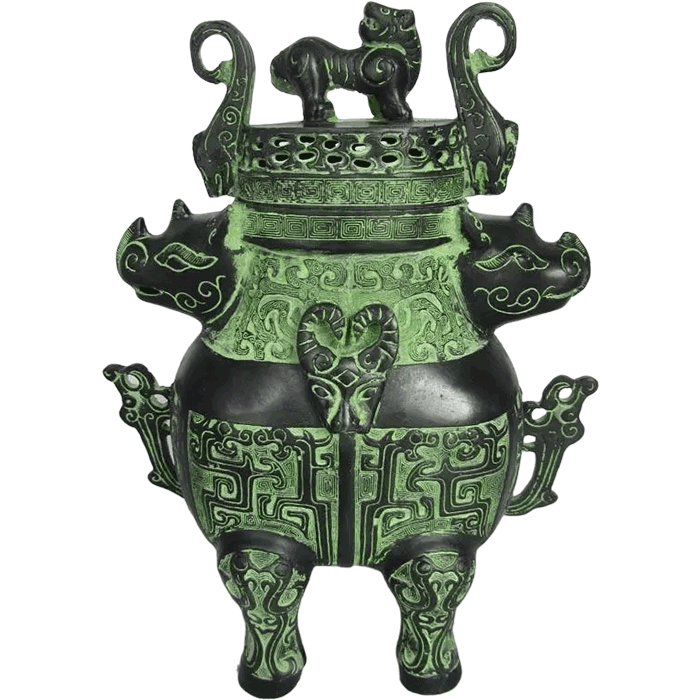
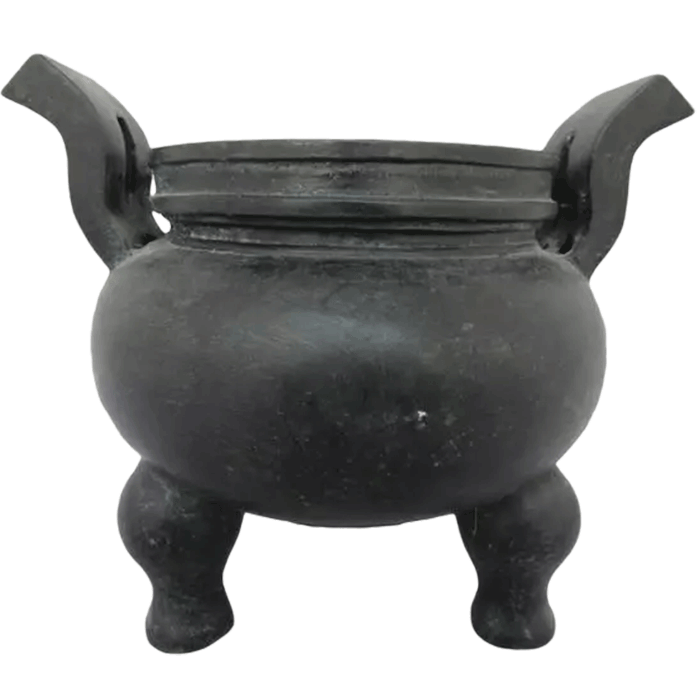
The Ding vessel is arguably the most iconic and significant form of Shang Dynasty bronze ware. Characterized by its sturdy, cauldron-like body, typically supported by three legs (tripod Ding) or four legs (rectangular Ding), and often featuring two upright handles, the Ding served various crucial functions. Primarily, it was used for cooking and ritualistic offerings of food, particularly meat, to ancestors and deities. Beyond its practical use, the Ding quickly evolved into a powerful symbol of authority, status, and dynastic legitimacy. The possession of a large, finely crafted Ding denoted immense prestige and political power.
Characteristics of the Ding Vessel
- Form: The most common form is the tripod Ding, with a deep, rounded bowl and three sturdy legs. Rectangular Ding vessels, often with four legs, were also prominent, particularly larger examples like the famous Houmuwu Ding. The legs could be columnar, blade-like, or zoomorphic.
- Decoration: Shang Ding vessels are renowned for their elaborate surface decoration. The most prominent is the taotie motif, a stylized, zoomorphic mask that appears on the main body of the vessel. Other common patterns include geometric thunder patterns (leiwen), dragon motifs, and sometimes animal heads adorning the legs or handles.
- Function: Ritualistic cooking and food offerings. Symbol of political power and social status.
At Luoyang Yichuan Bronze Craft Co., Ltd., we excel in the exact replication of antique bronzes, ensuring that the specific contours, weight, and intricate details of a Ding vessel are faithfully reproduced. Our artisans can achieve consistent patina color matching, whether an antique or modern look is desired, addressing a key pain point for sourcing custom bronze art. Each houmuwu square cauldron, or any other Shang Dynasty Style Bronze Vessel, undergoes rigorous quality inspection before every shipment, and we offer free replacement for any casting defects, underscoring our commitment to unparalleled craftsmanship.
The Gui Vessel: Serving Ancestors and Feasting Nobles
The Gui is another fundamental Shang Dynasty bronze vessel, primarily functioning as a serving dish for grains during rituals and feasts. Its form is distinct from the Ding, often featuring a deep, rounded bowl, typically supported by a high ring foot, and frequently adorned with two prominent handles. While less imposing than the Ding, the Gui played an equally important role in the elaborate ritual system of the Shang elite, symbolizing the abundance and proper conduct of ancestral veneration.
Understanding the Gui's Unique Design
- Form: Typically a wide-mouthed, deep bowl, often resting on a flared ring foot. Many Gui vessels feature substantial loop handles, sometimes terminating in animal heads or stylized ears. The ring foot often has cut-out sections or additional decorative bands.
- Decoration: Like the Ding, Gui vessels frequently feature the taotie mask, though it might be presented in a more elongated or abstract form. Geometric patterns, spiral motifs, and sometimes bird or animal figures are also common.
- Function: Serving cooked grains (millet, rice) in ancestral sacrifices and banquets.
Our skilled craftsmen at Luoyang Yichuan are adept at replicating the subtle curves and balanced proportions of the Gui vessel. The hand chasing, polishing, and patina finishing available ensure that each reproduction captures the tactile and visual essence of an original artifact. For clients who require bulk production runs, our annual output of over 50,000 bronze art pieces demonstrates our capacity to meet large-scale demands while maintaining the highest levels of individual piece quality, whether it's for bronze home decor arts or museum collections.
The Gu Vessel: Elegance in Wine and Ritual
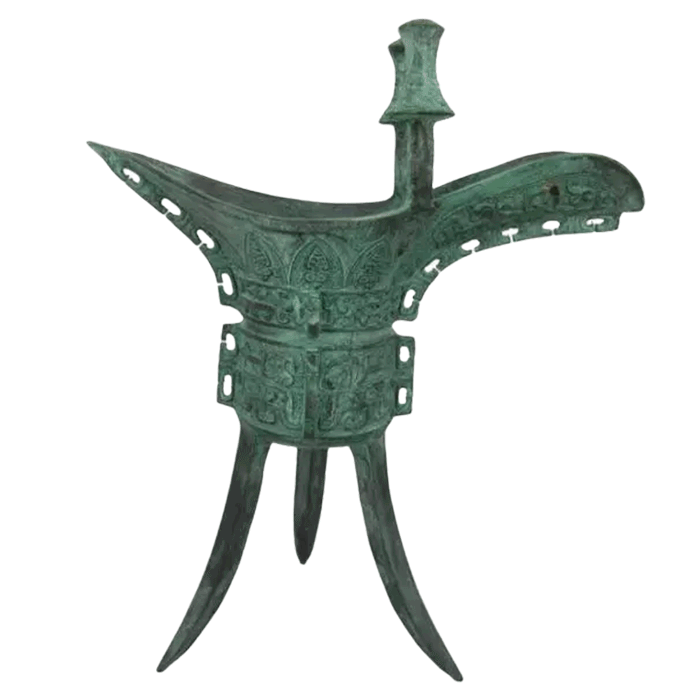
In contrast to the robust and grounded forms of the Ding and Gui, the Gu vessel embodies a more refined and elegant aesthetic. This tall, slender beaker with a dramatically flared mouth and foot was primarily used for drinking or pouring wine during ritual ceremonies. Its elongated silhouette and balanced proportions speak to a sophisticated sense of design, reflecting the Shang elite's appreciation for both form and function in their ritual objects.
The Slender Form and Purpose of the Gu
- Form: Characterized by a narrow waist between a wide, flared mouth and a similarly flared foot. The body is often segmented into registers.
- Decoration: Decorative bands typically appear on the flared mouth, the central waist, and the foot. The taotie motif, geometric patterns, and sometimes vertical flanges are common. The slender form often accentuates the verticality of the design elements.
- Function: A ritual wine goblet, used for consuming or offering fermented beverages to ancestors and deities.
Replicating the delicate balance and precise flaring of a Gu vessel requires exceptional skill and attention to detail. Our bronze-casting masters possess the nuanced understanding necessary to execute these complex forms flawlessly using the traditional lost-wax method. We address custom bronze art sourcing pain points by offering exact replication, consistent patina matching, and export-compliant protective packaging for fragile sculptures, ensuring that even the most delicate ancient Chinese bronze wine vessel arrives in pristine condition. Our after-sales support, including guidance for patina touch-ups and restoration, further ensures the longevity and beauty of your commissioned pieces.
The Art and Precision of Bronze Replication at Luoyang Yichuan
Luoyang Yichuan Bronze Craft Co., Ltd. stands as a beacon of excellence in the creation of custom bronze artworks, from human and animal sculptures to intricate bronze vessels, mirrors, incense burners, and Buddhist statues. Our commitment to quality is unwavering, backed by our ISO 9001 certification and adherence to stringent export quality inspection standards. With an annual output exceeding 50,000 bronze art pieces, we are equipped to handle projects of any scale, from a single custom prototype to extensive bulk production runs. Our minimum order quantity for custom sculptures is just one piece, offering unparalleled flexibility for our clients.
Located in Yichuan County, Luoyang, Henan Province, our 3,000 square meter facility is a hub of traditional craftsmanship and modern innovation. Our team of over 30 skilled craftsmen, including revered bronze-casting masters and finishing artisans, utilizes premium bronze alloy (Cu-Sn) and the time-honored lost-wax method. This ensures that every piece, whether an exact replication of an antique or a contemporary design, possesses exceptional detail and durability. We offer a range of finishing options, including hand chasing, polishing, and various patina applications to achieve antique or modern looks, all executed with meticulous care.
We understand the unique challenges associated with sourcing custom bronze art. Our solutions directly address these pain points: achieving exact replication of antique bronzes, ensuring consistent patina color matching across multiple pieces, and providing export-compliant protective packaging specifically designed for fragile sculptures. Every shipment undergoes a thorough quality inspection, and we provide free replacement for any casting defects. Furthermore, our dedicated after-sales support extends to guidance for patina touch-ups and restoration, ensuring that your investment retains its value and beauty for generations.
Our work is not just about manufacturing; it's about preserving and perpetuating a rich cultural heritage. By blending the profound heritage of Luoyang's 3,000-year bronze culture with modern design sensibilities, we offer clients worldwide the opportunity to own pieces that are both historically resonant and exquisitely crafted. Whether your project involves a grand bronze statue with different themes or a meticulously reproduced Shang Dynasty style bronze vessel, Luoyang Yichuan Bronze Craft Co., Ltd. is your trusted partner for unparalleled quality and artistic integrity.