Shang Dynasty Bronze Ding Vessel Replica Guide
A Shang Dynasty Bronze Ding Vessel Replica Connects Ritual History with Decorative Bronze Craft
The Shang ding is one of the most recognizable forms in the history of Chinese bronze art. With its deep bowl, upright legs, heavy silhouette, and richly cast surface, the ding was far more than a practical container. It served as a ceremonial vessel, a visible expression of social rank, and a lasting symbol of ritual culture. For museums, cultural retailers, interior designers, collectors, educational institutions, and heritage-focused projects, a carefully made reproduction can help communicate this historical significance in a tangible format.
Understanding a Shang-style ding requires more than identifying its three or four legs. Buyers often need reliable cultural context for catalog descriptions, exhibition labels, product pages, and customer questions. The vessel’s form, decorative motifs, surface color, and visual weight all contribute to its meaning. A well-planned reproduction should therefore balance historical reference, artistic readability, practical installation needs, and the intended display environment.
Luoyang Yichuan Bronze Craft Co., Ltd. produces bronze vessels, sculptures, incense burners, Buddhist statues, mirrors, and custom bronze artworks using Cu-Sn bronze alloy and traditional lost-wax casting methods. From a single custom prototype to negotiable bulk production, the workshop can support projects that require a specific size, finish, or interpretation of an ancient vessel form.
Why the Ding Became a Central Ritual Vessel
In ancient China, bronze vessels were closely connected with ceremony, lineage, political authority, and ancestral remembrance. The ding is commonly associated with offerings of food during formal rites. Its substantial body and stable legs made it suitable for holding or presenting prepared offerings, while its elaborate decoration transformed it into an object of visual and symbolic importance.
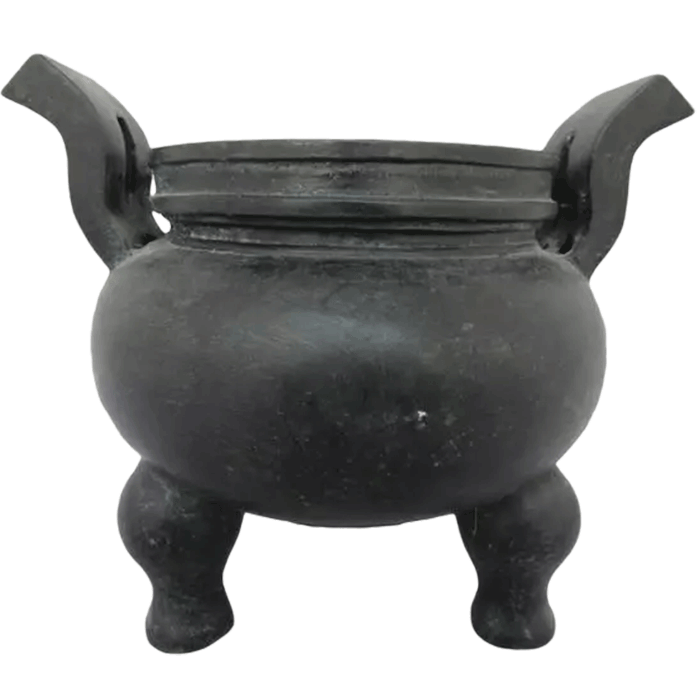
The form itself communicates permanence. A typical Shang-style ding has a rounded or slightly angular body, a broad rim, a pair of handles, and three legs. Some later or special forms may use four legs and a more rectangular body. The balanced structure gives the vessel a commanding presence, whether it is displayed on a pedestal, incorporated into a cultural landscape, or used as a focal point in a traditional-style interior.
For ancient elites, ritual bronzes were not ordinary household objects. They were associated with ceremonies that reinforced family continuity and social order. The making and possession of bronze vessels required access to skilled labor, metal resources, and ceremonial knowledge. As a result, the ding came to represent prestige as well as ritual purpose.
Modern reproductions do not need to imitate every historical object exactly to communicate this meaning. A display piece may be designed as an interpretive work inspired by Shang forms, while a research-oriented project may require closer attention to proportions, motifs, and surface treatment. The intended use should guide the level of historical replication required.
Recognizing Shang-Style Ding Form and Proportion
The strongest reproductions begin with a clear understanding of proportion. A ding should appear visually grounded. Its bowl must have sufficient depth and thickness, its legs should support the weight of the form convincingly, and its handles should feel integrated rather than added as decorative accessories.
Buyers evaluating a bronze vessel design can consider several basic visual elements:
- Body profile: Shang-inspired dings often have rounded, deep bodies that create a sense of volume and ceremonial weight.
- Rim treatment: A defined rim can establish a clear boundary between the vessel opening and the decorated body.
- Handles: Upright loop handles provide a recognizable silhouette and can be simple or ornamented.
- Leg structure: Three legs create the classic tripod identity, while each leg should transition naturally from the lower body.
- Decorative zones: Motifs are often arranged in horizontal bands, allowing the body to remain organized and legible from different viewing angles.
Scale should also be considered early in the sourcing process. A compact vessel may be intended for shelves, display cabinets, reception counters, or private collections. A larger reproduction may be used in hotel lobbies, cultural venues, gardens, themed restaurants, or institutional spaces. When selecting dimensions, buyers should account for pedestal height, sightlines, door access, final installation location, and protective packaging requirements.
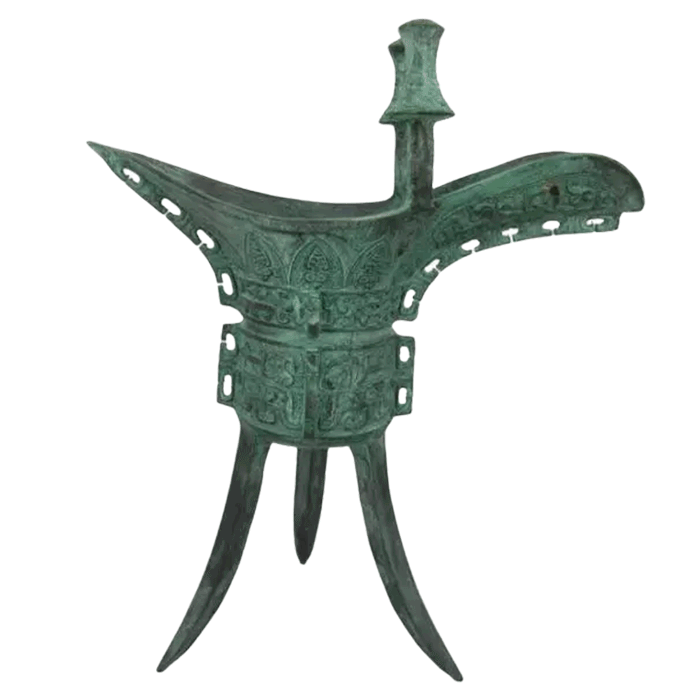
For broader historical context around ancient vessel categories, buyers may consult this introduction to bronze wares. Understanding the distinctions between ceremonial vessel types can help a project team explain why a ding differs from a zun, hu, gu, or other traditional bronze form.
Motifs on a Shang Dynasty Bronze Ding Vessel Replica
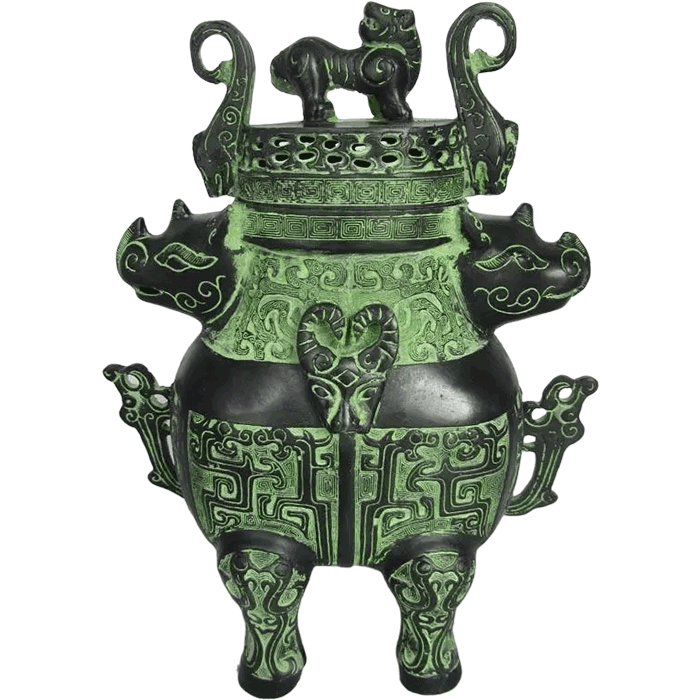
Decoration is one of the most important factors in identifying a Shang-inspired bronze vessel. These designs are often bold, symmetrical, and highly structured. Instead of treating ornament as a surface pattern alone, traditional bronze decoration uses relief, repetition, framing lines, and animal imagery to create an intense visual rhythm across the vessel body.
Taotie-Style Animal Masks
The taotie is among the most widely recognized motifs associated with ancient Chinese bronzes. It is commonly described as a stylized animal mask, often organized around a central vertical axis. The two sides of the design may suggest eyes, horns, brows, fangs, ears, or a snout, although the exact interpretation of the motif has long been discussed by scholars.
For a reproduction, the important design consideration is not simply adding a face-like pattern. The motif should follow the geometry of the vessel. It may be positioned as a central panel, repeated around the body, or framed by bands of smaller patterns. Proper placement helps preserve the sense of order characteristic of ritual bronze decoration.
Leiwen and Background Patterning
Leiwen, often described as a thunder-pattern motif, consists of repeated squared spirals or angular lines. It may appear as a background texture behind larger animal masks or as a border separating decorative zones. On a bronze vessel, this pattern adds density without distracting from the primary imagery.
When rendered through casting and hand finishing, leiwen should remain visible but not overly sharp. Excessively deep or mechanically uniform lines can make a vessel look modern rather than historically inspired. A more considered surface uses relief variation to create shadows and visual depth.
Flanges and Raised Divisions
Raised vertical flanges are another significant feature found on many ancient bronze forms. These projecting lines divide the vessel body into sections and strengthen the formal symmetry of the design. On a ding, flanges can visually connect the rim, body, and lower leg areas.
In a custom project, flange height and sharpness can be adjusted according to the desired appearance. A stronger relief may suit a large outdoor or architectural display, where motifs must remain readable at a distance. A more restrained treatment may be appropriate for an indoor collection or refined decorative setting.
Animal and Bird Elements
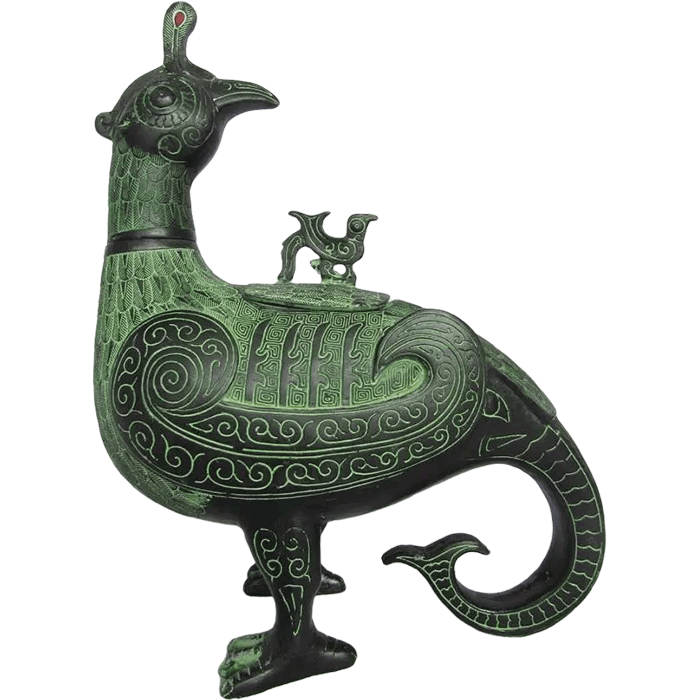
Animal imagery on Shang bronzes can include stylized birds, dragons, bovine forms, and other zoomorphic elements. These motifs are not merely decorative additions. Their arrangement can create a sense of power, mystery, and ceremonial presence. Depending on the reference source, a custom vessel may feature animal heads at the legs, relief animals along the body, or birds integrated into the handles.
Before commissioning a reproduction, buyers should identify whether they want a close interpretation of a known object or a new design drawing from several historical visual elements. This distinction affects research, model development, casting preparation, and the final product description.
Patina Choices and Their Effect on Historical Character
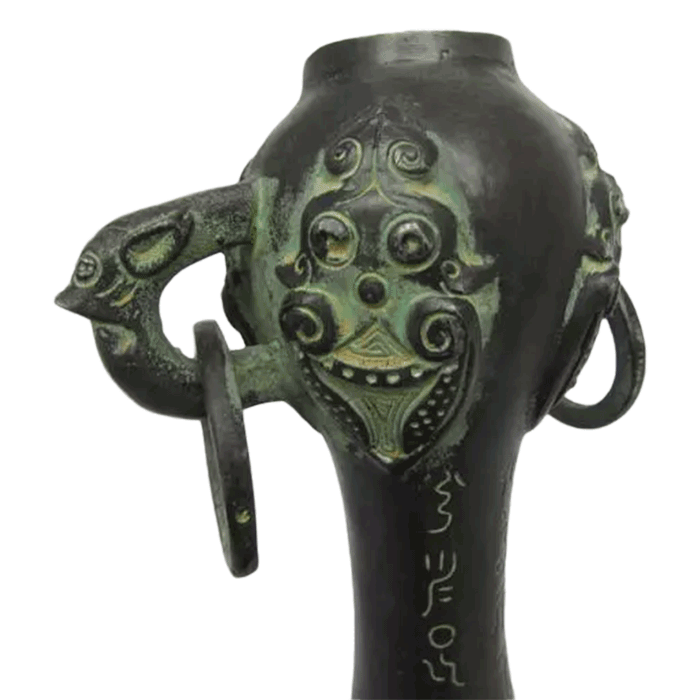
Patina is central to the final appearance of a bronze vessel. It affects how the relief reads, how the object relates to surrounding materials, and whether the finished piece feels ancient, modern, dramatic, subtle, or architectural. Buyers should not treat color as a final minor decision; it should be established during design approval because it influences the overall visual direction.
A natural antique bronze surface may show layered tones of brown, dark umber, black, green, or muted red-brown. In ancient bronzes, color changes developed over long periods through environmental exposure and corrosion processes. Modern artistic patina aims to create a controlled visual effect rather than claim to reproduce archaeological aging.
| Patina Direction | Visual Character | Suitable Applications |
|---|---|---|
| Dark brown antique | Warm, traditional, and visually stable | Interior collections, traditional décor, cultural displays |
| Blackened bronze | Formal, high-contrast, and architectural | Modern interiors, reception areas, large display pieces |
| Green antique finish | Weathered and historic in appearance | Museum-style interpretation, garden displays, heritage-themed spaces |
| Polished highlights with dark recesses | Emphasizes motifs and relief depth | Retail displays, decorative focal points, collector presentations |
Patina selection should take lighting into account. A deep black or brown finish may reveal subtle highlights under directed gallery lighting, while a green finish can offer stronger visual contrast against stone, wood, or neutral walls. In outdoor settings, buyers should also consider how changing weather, dust, moisture, and maintenance practices may affect appearance over time.
Luoyang Yichuan Bronze Craft Co., Ltd. provides hand chasing, polishing, and patina finishing in antique or modern styles. Consistent patina color matching can be important when a buyer requires multiple vessels, complementary sculptures, or a phased installation with separate shipments. Quality inspection is completed before shipment, and after-sales support is available for patina touch-ups and restoration guidance.
From Historical Reference to Custom Bronze Production
A successful custom bronze vessel project begins with accurate reference materials. These may include museum photographs, archaeological publications, hand sketches, dimensional drawings, 3D files, or a physical sample. The clearer the reference package, the easier it is to determine which features are essential and which can be adapted for the final setting.
A practical development process may include the following stages:
- Reference review: Confirm vessel type, intended historical period, key motifs, dimensions, and installation environment.
- Design clarification: Define whether the project is an exact-style reproduction, an inspired interpretation, or a modern work using traditional elements.
- Model preparation: Build the master model or wax pattern with attention to body thickness, relief, handles, legs, and casting feasibility.
- Lost-wax bronze casting: Cast the vessel using premium Cu-Sn bronze alloy.
- Hand finishing: Chase casting details, refine seams, adjust relief, polish selected areas, and prepare the surface for patina.
- Patina approval and inspection: Confirm the color direction and inspect the finished object before export-compliant packing.
Lost-wax casting is especially suitable for vessels with complex relief, raised flanges, animal details, and irregular hand-finished surfaces. It enables decorative elements to be formed as part of the casting rather than attached as superficial embellishments. Skilled finishing remains essential because casting alone does not determine the final clarity of the motifs.
With a 3,000-square-meter production area and more than 30 skilled craftsmen, including bronze-casting masters and finishing artisans, Luoyang Yichuan Bronze Craft Co., Ltd. can support both custom prototypes and larger production requirements. The company operates under an ISO 9001 quality management system and its art crafts comply with export quality inspection standards.
For buyers sourcing related cultural artworks, the company’s Chinese bronze sculpture collection provides additional examples of traditional bronze-inspired artistic categories. Projects involving multiple object types can combine vessels with human figures, animal statues, decorative objects, or architectural bronze elements while maintaining a coordinated finish direction.
Questions Buyers Should Ask Before Ordering
Educational-stage buyers often need to compare historical appearance, practical usability, and sourcing requirements before requesting a quotation. Asking focused questions early can reduce revisions later in the process.
- Is the vessel intended for indoor display, outdoor placement, retail presentation, or a museum-style educational environment?
- Should the design closely follow a particular historical reference, or should it use Shang-inspired motifs in a new composition?
- What overall dimensions, approximate weight range, and base or pedestal requirements are needed?
- Which patina direction best suits the lighting, wall color, and nearby materials?
- Will the order include one prototype, multiple matching pieces, or a broader themed collection?
- Are there logo, inscription, plaque, or packaging requirements for the destination market?
- Does the final site require special handling, mounting points, or installation support?
For custom work, the minimum order quantity can begin from one piece, while bulk order arrangements are negotiable according to size and design complexity. Fragile sculptures and vessels require appropriate protection during transport, so export-compliant protective packaging should be included in the planning discussion, especially for high-relief handles, legs, and projecting decorative features.
Buyers who want to develop an original historical-style vessel, rather than choose a standard design, can review options to customize bronze sculpture for their project. A clear specification sheet with images, desired dimensions, finish samples, and quantity expectations will help establish a more efficient production path.
Using Ding Replicas in Educational and Commercial Displays
A bronze ding reproduction can serve many purposes beyond private collecting. In cultural exhibitions, it can support explanations of ancient ritual practice and early metalworking traditions. In hospitality spaces, it can create a memorable focal point that references Chinese heritage. In retail settings, it can provide a premium display object with a strong visual story. In landscape and architecture, a larger vessel can anchor an entrance court, courtyard, or themed garden.
For the best educational value, a display label can explain the vessel’s basic form, its relationship to food offerings and ritual practice, the significance of animal-mask ornament, and the distinction between ancient originals and modern reproductions. This approach gives viewers useful context without overstating what is known about every motif or object.
The ding also works well alongside other bronze categories. A coordinated display might include a ritual vessel, bronze animal sculpture, incense burner, mirror, or human figure. These combinations can help visitors understand the breadth of Chinese bronze traditions across ceremonial, decorative, spiritual, and artistic contexts. For additional cultural reference, explore bronze culture evolution across different historical periods.
Choosing a Knowledgeable Bronze Craft Partner
When sourcing a historically inspired bronze vessel, the supplier should understand both the practical demands of casting and the visual language of the reference period. Details such as the depth of a taotie relief, the angle of a tripod leg, the placement of a flange, and the tone of a patina can significantly affect the finished result.
Luoyang Yichuan Bronze Craft Co., Ltd. draws on Luoyang’s long bronze-craft heritage while combining traditional methods with modern production coordination. The company’s annual output exceeds 50,000 bronze art pieces and includes bronze vessels such as ding, zun, hu tripods, and vases. Each order is inspected before shipment, and free replacement is provided for casting defects.
For buyers at the research stage, the value of a bronze ding lies in both its visual impact and its cultural depth. By considering form, motif, patina, ritual meaning, display setting, and production method together, it becomes easier to select or develop a vessel that communicates the enduring character of Shang bronze art with clarity and respect.