Sanxingdui Bronze Human Statues: Types & Craftsmanship
How Do Sanxingdui Bronze Human Statues Differ by Type?
The archaeological site of Sanxingdui in Sichuan, China, has unveiled a civilization of profound mystery and unparalleled artistic achievement, particularly in its bronze craftsmanship. Among the most striking discoveries are the distinct bronze human figures, which captivate scholars, collectors, and art enthusiasts worldwide. These artifacts provide a rare glimpse into a sophisticated culture that flourished over 3,000 years ago, challenging previous understandings of ancient Chinese civilization. For institutions, museums, and private collectors seeking to acquire or commission historically accurate reproductions, understanding the nuances of these figures is paramount. Luoyang Yichuan Bronze Craft Co., Ltd. specializes in producing high-quality bronze artworks, drawing upon traditional techniques to replicate the grandeur and intricate details of ancient masterpieces, including these iconic Sanxingdui Bronze Human Statues. Our commitment to ISO 9001 quality management ensures that every piece, from a single custom prototype to large-scale production runs, meets stringent export quality inspection standards for art crafts.
The Enigmatic Origins and Significance of Sanxingdui Bronze Art
Discovered in the 1980s, the Sanxingdui site revealed two sacrificial pits filled with thousands of artifacts, predominantly made of bronze, jade, and gold. Dating back to the Shang Dynasty (c. 1600–1046 BCE), the bronze finds, in particular, stand out for their monumental scale, unique iconography, and advanced metallurgical techniques, which differ significantly from contemporaneous bronze traditions in the Central Plains of China. The peculiar artistic style—featuring exaggerated facial features, elaborate headwear, and distinctive ritualistic poses—suggests a highly developed spiritual and social structure unlike any other known ancient Chinese culture. These bronze artifacts are not merely decorative; they are believed to have played crucial roles in religious ceremonies, ancestral worship, or as symbols of power and authority within the Sanxingdui civilization. Their very existence poses questions about cultural exchange, independent development, and the diversity of ancient Chinese societies. For researchers and cultural institutions, these pieces offer invaluable insights into pre-Qin history and art. For institutions, museums, and private collectors, a deeper understanding of Sanxingdui Bronze Human Statues is essential for accurate representation and appreciation. To delve deeper into the cultural context of these remarkable artifacts, explore the wonders of sanxingdui.
Distinct Categories of Sanxingdui Human Figures
The human figures unearthed at Sanxingdui are not monolithic; they exhibit a fascinating array of types, each with unique characteristics that hint at diverse roles and meanings within the ancient society. These variations are crucial for anyone looking to accurately represent or interpret the Sanxingdui culture through its bronze art, particularly the Sanxingdui Bronze Human Statues.
The Grand Standing Figure
Perhaps the most iconic of all Sanxingdui bronzes is the colossal standing human figure, often referred to as the "Bronze Grand Figure" or "Standing Priest." Standing over 2.6 meters tall (including its pedestal), this statue is an unparalleled example of ancient bronze casting. Its distinct features include a tall, slender body, elongated limbs, and a solemn, almost otherworldly facial expression with prominent eyes. The figure's hands are clasped in a ritualistic gesture, and it wears an elaborate robe, possibly adorned with patterns now lost to time. The precise meaning of its gesture and attire remains a subject of academic debate, with theories suggesting it represents a king, a shaman, or a deity, acting as an intermediary between the human and spirit worlds. Its sheer size and intricate details make it a centerpiece for any collection or exhibition aiming to showcase the pinnacle of Sanxingdui artistry. Replicating such a large and complex piece requires not only mastery of bronze casting but also meticulous attention to historical accuracy in form and finish.
Large Bronze Heads with Masks
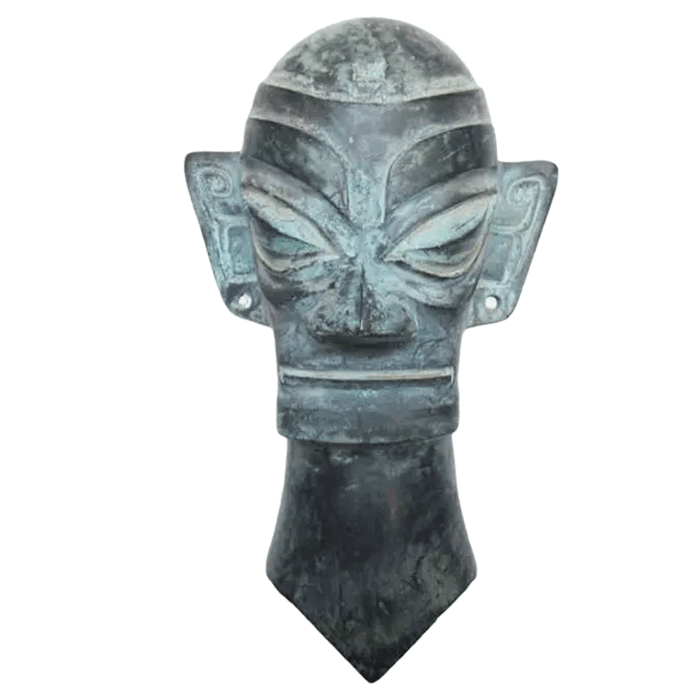
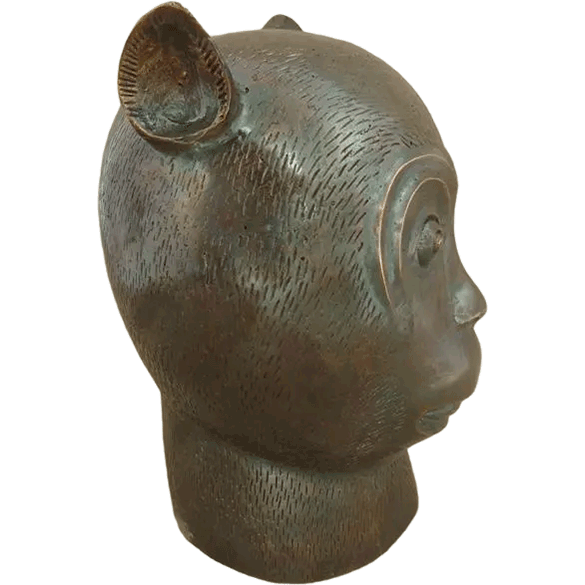
Another prevalent and equally captivating category includes numerous large bronze heads, often adorned with a variety of masks. These heads, ranging in size but consistently larger than life, typically feature exaggerated features:
- Protruding Eyes: Some heads have cylindrical "eyes" that extend significantly outwards, sometimes on stalks, giving them a surreal, almost alien appearance. These are often interpreted as representing supernatural vision or the ability to see beyond the mundane.
- Large, Flared Ears: Many heads possess oversized ears, suggesting an emphasis on hearing or receptive qualities, perhaps for divine messages.
- Prominent Noses and Mouths: While stylized, these features contribute to the overall imposing and unique aesthetic.
- Intricate Headwear: Some heads wear elaborate headgear, often rectangular or trapezoidal, sometimes decorated with geometric patterns or symbolic motifs.
- Masks: A significant number of these heads are fitted with separate, often ornate masks. These masks vary from relatively plain to highly decorated, including those covered in gold foil, indicating immense wealth and ritualistic importance. The masks themselves sometimes feature serpent-like eyebrows, open mouths, or other symbolic elements.
These heads, often found without bodies, are thought to have been mounted on wooden or other perishable materials, or perhaps used as standalone ritual objects. Their diversity in features and adornment suggests a hierarchy of figures or different roles within the Sanxingdui pantheon or priesthood.
Kneeling or Squatting Figures
In contrast to the monumental standing figure and the imposing masked heads, Sanxingdui also yielded smaller, more numerous bronze figures depicted in kneeling or squatting postures. These figures are generally less elaborate in their attire and facial features, often appearing more human-like, though still stylized. Their common characteristics include:
- Smaller Scale: Typically much smaller than the grand standing figure, these pieces are often found in groups or alongside larger artifacts.
- Submissive or Attendant Poses: The kneeling or squatting postures are often interpreted as gestures of reverence, submission, or servitude. They might represent attendants, supplicants, or ordinary people participating in rituals.
- Simpler Adornment: While some may have simple headbands or robes, they lack the elaborate regalia of the larger figures.
- Diverse Hand Gestures: Their hands might be clasped, held open, or performing other gestures, possibly indicating different ritualistic roles or prayers.
These smaller figures provide a broader context for the Sanxingdui society, suggesting a structured religious or social hierarchy where different bronze figures represented different statuses or functions. Their relatively consistent form makes them ideal for bulk production runs, while still requiring precision to capture their subtle expressions and postures.
Other Less Common or Interpretive Figures
While the grand standing figure, large masked heads, and kneeling figures form the primary categories, Sanxingdui also presented other unique bronze human representations. These might include:
- Fragments of human-animal hybrids: Although less fully preserved, some fragments suggest figures with human torsos and animalistic lower bodies or features, pointing to a rich mythological landscape.
- Figures holding specific objects: Some smaller figures or fragments depict individuals holding objects, possibly ritual tools or offerings, further elaborating on their functional roles.
The intricate details and varied forms across all these types underscore the advanced artistic and metallurgical skills of the Sanxingdui artisans. Replicating these varied bronze statues with historical fidelity is a testament to the skill of modern bronze craft masters.
Craftsmanship and Production: Replicating Sanxingdui Masterpieces
At Luoyang Yichuan Bronze Craft Co., Ltd., we understand that reproducing artifacts of Sanxingdui's caliber demands not just technical expertise but also a deep respect for historical methodology. Our production process honors the traditions that gave birth to these ancient wonders, ensuring that each reproduction captures the spirit and detail of the original.
We utilize the traditional lost-wax casting method, a technique that has remained largely unchanged for millennia and was central to the creation of the original Sanxingdui bronzes. This method allows for exceptional detail and fidelity, crucial when replicating complex forms like the elaborate headwear or intricate hands of the grand standing figure. Our process begins with a precise model, followed by the creation of a wax replica, which is then encased in a refractory mold. Once the wax is melted out, molten premium bronze alloy (Cu-Sn) is poured into the cavity. This specific alloy choice is critical for achieving the correct metal properties and aesthetic qualities suitable for fine art reproductions.
After casting, our skilled artisans engage in hand chasing and polishing. This meticulous work involves refining the surface, sharpening details, and removing any imperfections, ensuring that every contour and texture aligns with the intended design. The final stage involves patina finishing, where chemical treatments are carefully applied to achieve the desired color and texture. We offer a range of options, from antique looks that mimic millennia of natural aging to more modern looks for contemporary interpretations, ensuring consistent patina color matching across entire collections or custom orders.
Our facility in Yichuan County, Luoyang, Henan Province, spans 3,000 square meters and houses over 30 skilled craftsmen, including revered bronze-casting masters and finishing artisans. This enables us to support everything from a single custom prototype to bulk production runs, with a MOQ from 1 piece for custom sculptures. Bulk orders are negotiable based on size and design complexity, ensuring flexibility for diverse client needs.
We are acutely aware of the pain points faced by museums and collectors when sourcing custom bronze art. Our expertise specifically addresses:
- Exact replication of antique bronzes: Our craftsmen possess the historical knowledge and technical skill to reproduce intricate details and forms with high accuracy.
- Consistent patina color matching: We ensure uniformity across multiple pieces, critical for cohesive exhibitions or collections.
- Export-compliant protective packaging: Fragile sculptures are meticulously packed to withstand international shipping, guaranteeing safe arrival.
- Quality inspection before every shipment: Each piece undergoes rigorous checks to meet our stringent standards.
- Free replacement for casting defects: We stand by the quality of our work.
- After-sales support: Including guidance for patina touch-ups and restoration, ensuring the longevity and continued beauty of your investment.
Whether you need to customize a bronze sculpture for a new exhibit or expand an existing collection, our team is equipped to deliver unparalleled quality.
The Value Proposition for Museums, Collectors, and Researchers
For museums curating exhibitions on ancient civilizations, for private collectors building comprehensive art portfolios, and for researchers requiring accurate models for study, the availability of high-fidelity bronze reproductions is invaluable. Luoyang Yichuan Bronze Craft Co., Ltd. serves as a critical partner in bridging the gap between original artifacts and accessible, high-quality replicas.
Our commitment to an ISO 9001 quality management system means that every bronze piece, from a small kneeling figure to a grand standing statue, is produced under strict quality controls. This certification, along with compliance with export quality inspection standards for art crafts, provides assurance to international clients regarding the reliability and integrity of our products.
We efficiently address the specific needs of our B2B clientele:
- Historical Accuracy: Our skilled artisans are adept at translating historical data and images into tangible bronze forms, ensuring that reproductions are educationally and aesthetically true to their ancient counterparts. This is crucial for both academic study and public display.
- Durability and Longevity: Crafted from premium bronze alloy and finished with expert patinas, our sculptures are built to last, making them suitable for long-term exhibition and outdoor installations.
- Scalability and Customization: With an annual output exceeding 50,000 bronze art pieces and the capacity to handle MOQs from 1 piece for custom sculptures, we can accommodate diverse project scopes, from unique commissions to large-scale institutional orders. Our ability to create bronze statues with different themes ensures versatility in meeting client requirements.
- Risk Mitigation: Our comprehensive quality inspection process, coupled with free replacement for casting defects and robust protective packaging, minimizes risks associated with sourcing fragile art pieces internationally. This translates into peace of mind for buyers concerned about damage during transit or manufacturing flaws.
- Ongoing Support: Our after-sales service, including guidance for patina maintenance, underscores our dedication to long-term client satisfaction and the preservation of the artwork.
Partnering with Luoyang Yichuan means collaborating with a manufacturer that not only understands the intricacies of bronze casting but also appreciates the profound cultural significance of pieces like the Sanxingdui Bronze Human Statues. We are dedicated to delivering bronze art that not only meets but exceeds the expectations of the most discerning clients.
Conclusion
The Sanxingdui civilization left behind an extraordinary legacy of bronze art, with its distinctive human figures offering a captivating window into a lost world. From the towering Grand Standing Figure to the enigmatic masked heads and the reverent kneeling figures, each type tells a part of a larger story, characterized by unique stylistic elements and profound ritualistic implications. Understanding these differences is key for anyone engaging with this ancient culture. Luoyang Yichuan Bronze Craft Co., Ltd. stands as a premier partner for those seeking to acquire or commission meticulously crafted reproductions of these magnificent artifacts. Our adherence to traditional lost-wax casting, use of premium materials, skilled craftsmanship, and comprehensive quality assurance ensures that every reproduction of Sanxingdui Bronze Human Statues contributes to preserving and sharing this incredible heritage with the world, offering an unparalleled blend of historical fidelity and artistic excellence.