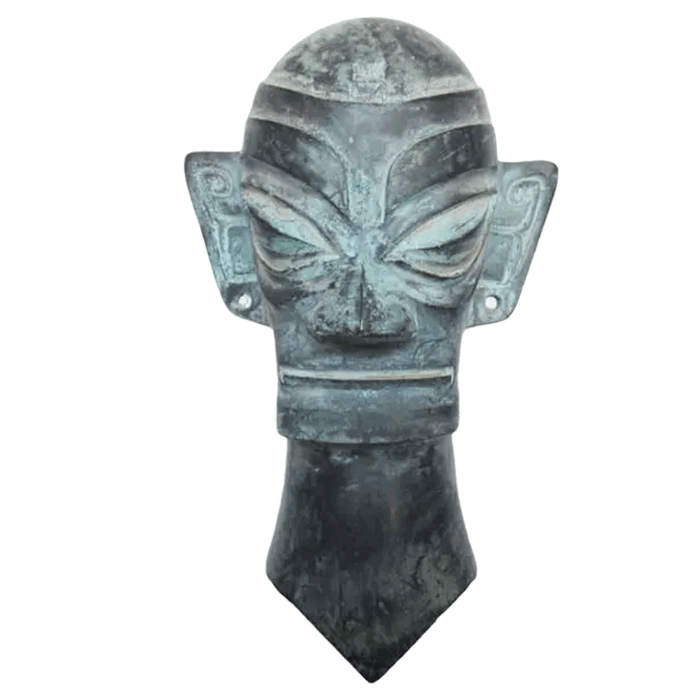
Sanxingdui Bronze Human Statues: Pose Guide
Sanxingdui Bronze Human Statues Can Be Read Through Pose
When studying ancient bronze figures, pose is often the first visual language to examine. A raised arm, a forward-facing chest, an open hand, or an upright standing posture can suggest that a figure was designed for an action rather than simply for display. For culturally curious readers, this approach offers a practical way to look beyond a statue’s dramatic face, large eyes, or complex surface decoration.
Sanxingdui bronze figures are especially useful for pose-based interpretation because many of them present strong, deliberate body positions. Their gestures can appear formal, ceremonial, controlled, or symbolic. Although modern viewers may not know every original meaning, they can still make careful observations by asking what the body is doing, where the hands are directed, how the weight is balanced, and whether the figure seems to address an unseen object, person, or sacred space.
This guide explains how to read human bronze figures by pose without turning visual observations into unsupported conclusions. It is also useful for collectors, museum visitors, designers, and buyers researching historically inspired bronze artworks. A well-made reproduction or custom interpretation should preserve the visual logic of the original pose, not merely copy a face or surface pattern.

Start With the Figure’s Overall Stance
The most productive first question is simple: how does the figure stand? Before focusing on the head or ornament, observe the relationship between the feet, legs, torso, and arms. A standing bronze figure may appear stable and frontal, or it may suggest movement, presentation, support, command, or participation in a ritual act.
An upright, symmetrical stance often creates a formal impression. When both sides of the body are balanced, the figure may seem composed for viewing from the front. This does not automatically prove that the figure represents authority, worship, or a particular social role. However, it does show that the maker gave importance to frontal presence and controlled posture.
A figure with straight legs and a centered torso can communicate permanence. The body becomes an architectural element: vertical, fixed, and deliberate. In bronze art, this stable structure is particularly important because it supports both the physical weight of the cast object and the visual weight of the image. A tall figure may therefore combine practical casting requirements with ceremonial visual effect.
Look closely at whether the knees are bent, whether one leg leads, and whether the hips shift. These details help distinguish a static figure from one that implies action. A slight forward lean may create the sense of offering, receiving, or approaching. A backward-set torso may suggest restraint, display, or a response to another element in a larger composition.
Questions to Ask About Stance
- Is the body perfectly frontal, or does it turn slightly to one side?
- Are the legs equally placed, or is one leg positioned forward?
- Does the figure seem grounded, elevated, supported, or in motion?
- Is the torso open toward the viewer, or directed toward an implied object?
- Does the pose look naturalistic, formalized, or intentionally exaggerated?
These questions encourage observation before interpretation. This is important because ancient artworks often use stylized proportions and gestures that do not correspond directly to modern body language. A formal body position may be meaningful, but its precise original meaning should be discussed with care.
Read the Hands Before Assigning Meaning
Hands are among the most informative parts of a bronze figure. They can point, hold, present, grasp, support, cover, or frame an absent object. In many ancient sculptures, the hands make sense only when considered with the arms, chest direction, and surrounding structure.
Open hands may suggest readiness to receive or display something, while closed hands may imply holding, gripping, or maintaining control. Yet the most important observation is not simply whether a hand is open or closed. It is the direction of the palm, the spacing between the fingers, the angle of the wrist, and the distance between the hands.
For example, two hands extending forward at a similar height may form a visual platform. That arrangement can lead viewers to consider whether the figure was made to hold an object, support a symbolic element, or participate in a larger ceremonial composition. If no object survives, it is better to describe the visible evidence than to state a definite conclusion.
A raised hand changes the visual hierarchy of the body. The viewer’s eye moves upward from the feet to the torso and then to the gesture. This can make the figure feel communicative or performative. A lowered hand, by contrast, may stabilize the composition and draw attention to clothing, belt forms, or objects near the waist.
When examining a reproduction, hand anatomy deserves special attention. Poorly copied fingers can make a ritual gesture look casual or distorted. Fine lost-wax bronze work allows sculptors to preserve narrow finger spacing, nail indications, hand tension, and subtle wrist angles. These small details often determine whether a pose feels convincing from close range.
For broader context on regional bronze traditions and visual motifs, readers can explore Sanxingdui bronze ware history. Historical context can support visual study, but close observation should remain the foundation of any pose reading.
Observe the Relationship Between Head, Chest, and Arms
A pose is not created by the arms alone. The head, chest, shoulders, and arms work together to establish direction. When the head faces forward but the arms extend outward, the figure may create a broad, public-facing presence. When the head turns or tilts in relation to the arms, the composition may feel more directed toward a particular side or focal point.
Start with the line of the shoulders. Level shoulders often reinforce stability and ceremony. Sloping shoulders can soften the figure or imply the transfer of weight. Broad, horizontal shoulder lines can make the body appear powerful and expansive, especially when paired with extended arms or elaborate sleeves.
Then consider the chest. A raised chest can make a figure seem alert and formal. A flat, compressed torso can create a more graphic, symbolic appearance. On ancient bronze figures, anatomy may be simplified in favor of strong silhouette and ritual emphasis. This is why pose should not be judged only by naturalistic standards.
The head may also be designed as an independent focal point. Large eyes, pronounced ears, masks, crowns, or headdresses can dominate the upper body. Still, a visually powerful head should be read in relation to the pose. A forward gaze combined with balanced arms produces a different effect from a forward gaze above hands that reach out or support an implied object.
For buyers commissioning a historically inspired sculpture, the head-to-body relationship should be specified in the design brief. A supplier may need reference images showing front, side, and rear views, together with the intended scale. This helps ensure that the head angle, shoulder width, and arm position remain coherent after the sculpture is enlarged or reduced.

Use Costume and Surface Details to Support Pose Analysis
Pose provides the structure of interpretation, but costume and surface details add supporting evidence. Belts, sleeves, bracelets, headdresses, footwear, and patterned surfaces can change the way a gesture is understood. A long sleeve may amplify arm movement. A wide belt may emphasize the torso’s central axis. A tall headdress can extend the vertical force of an upright body.
Do not treat decoration as separate from posture. In successful bronze sculpture, ornament often follows the body’s directional lines. Repeated patterns may frame the shoulders, lead the eye down the arms, or create emphasis around the waist. The result is a figure whose visual rhythm supports the physical gesture.
Surface finish is also relevant when viewing modern casts. Antique-style patina can deepen recesses and highlight raised details, helping the viewer see the transitions between fingers, garment edges, facial features, and ornaments. A modern patina may produce clearer contrast or a more contemporary display effect. Neither approach is automatically better; the choice should match the intended setting and interpretive purpose.
When comparing bronze with brass for a sculpture project, material selection should be discussed early. The article on bronze and brass differences offers useful background for readers considering material appearance and terminology. For culturally informed reproduction work, bronze alloy selection, finishing process, and patina direction all affect the final visual result.
Details Worth Recording During Study
- Measure or estimate the figure’s height-to-width proportion.
- Note the orientation of the head, shoulders, elbows, wrists, and palms.
- Identify whether costume elements emphasize vertical, horizontal, or diagonal movement.
- Look for missing, damaged, or implied objects near the hands.
- Observe whether the statue was likely intended for frontal viewing or viewing in the round.
- Separate what is directly visible from what is only a possible interpretation.
This process is particularly valuable for artists and institutions preparing an interpretive display. It creates a record that can be shared with a bronze manufacturer when developing a scaled replica, an educational model, or a newly designed work influenced by ancient visual language.
Compare Poses Without Assuming Every Figure Has the Same Role
Comparative viewing is useful because it helps identify repeated visual principles. One figure may be upright with hands positioned forward, while another may use a different arm angle, headpiece, or body proportion. Comparing these elements can reveal differences in emphasis without forcing every object into a single explanation.
Begin by grouping figures according to clear visual characteristics: frontal standing figures, figures with extended arms, figures with hands near the torso, and figures associated with bases, supports, or larger sculptural structures. Then compare each group according to symmetry, gesture range, costume complexity, and surface treatment.
| Pose Feature | What to Observe | Careful Interpretation Approach |
|---|---|---|
| Frontal stance | Centered torso, balanced legs, direct orientation | May indicate formal presentation or visual authority |
| Extended arms | Arm height, elbow bend, palm direction, hand spacing | May suggest interaction with an object or ceremonial action |
| Raised gesture | Vertical direction, relation to head and headdress | May create emphasis, address, or symbolic focus |
| Rigid symmetry | Matching limbs and aligned body elements | May prioritize order and frontal impact over natural movement |
| Asymmetrical posture | Unequal arms, turned torso, shifted weight | May introduce movement or direct attention to one side |
Comparison also helps buyers recognize the difference between a generic “ancient-style” statue and a carefully developed artistic reproduction. A generic piece may borrow large eyes or a green patina but overlook the posture that gives the original visual language its force. A stronger custom project considers stance, hand placement, silhouette, decorative details, and intended display angle together.
Readers interested in other examples of Chinese bronze form may consult Chinese bronze sculpture. Studying vessels, animal figures, and human imagery together can sharpen awareness of how bronze artists use balance, symmetry, ornament, and surface depth.
Turn Pose Research Into a Custom Bronze Brief
For museums, designers, hospitality projects, collectors, and cultural retailers, pose research can become a practical commissioning tool. A clear brief reduces uncertainty during sculpting, molding, casting, patina selection, and final inspection. It is especially useful when the requested sculpture is based on reference materials rather than a ready-made model.
Luoyang Yichuan Bronze Craft Co., Ltd. produces bronze sculptures, vessels, mirrors, incense burners, Buddhist statues, and custom bronze artworks. The company uses Cu-Sn bronze alloy and traditional lost-wax casting, with hand chasing, polishing, and antique or modern patina finishing available. Its production team can support projects from a single custom prototype to bulk production runs, with custom sculpture orders available from one piece.
When commissioning a pose-focused figure, provide reference images and identify the visual priorities. State whether the goal is an exact replication of an antique bronze, an interpretive museum display model, or a new work inspired by ancient design. This distinction matters because exact replication requires close control of proportion, missing details, surface texture, and patina consistency, while an inspired work may allow more design flexibility.
- Desired overall height, width, depth, and installation environment
- Front, side, rear, and close-up references for hands and facial details
- Required pose, including arm direction, finger position, and body orientation
- Preferred finish, such as dark antique brown, green patina, or a modern bronze tone
- Whether a base, mounting points, or indoor and outdoor display requirements are needed
- Packaging and export requirements for fragile projections such as fingers, ornaments, or extended arms
Because hands, headdresses, and extended elements can be vulnerable during transport, protective packaging should be planned as part of the production process. Quality inspection before shipment is also important for checking casting integrity, surface finish, dimensions, and fragile details. Luoyang Yichuan Bronze Craft Co., Ltd. provides free replacement for casting defects and offers after-sales support for patina touch-ups and restoration guidance.
For a project requiring a sculpture developed from supplied references, use the option to customize a bronze sculpture. A structured inquiry can help align the chosen pose, casting scale, finish, and packaging method before production begins.
Look Carefully, Then Interpret Responsibly
The most valuable way to study pose is to move from visible fact to cautious meaning. First, describe what the figure does physically: it stands upright, extends its arms, faces forward, raises a hand, or holds its palms at a particular height. Next, examine how costume, headdress, and surface patterns reinforce that movement. Only then consider possible ceremonial, symbolic, or social implications.
This method respects both the sophistication of ancient bronze art and the limits of modern interpretation. It also gives viewers a repeatable tool for studying many kinds of historical sculpture. Rather than seeing a bronze human figure as a static object, viewers can recognize it as a carefully arranged body whose stance, hands, and directional energy contribute to its meaning.
By reading pose with patience, visitors and researchers can better appreciate why these figures remain visually compelling. Their power comes not only from unusual features or elaborate surfaces, but also from the disciplined way the human form is organized into gesture, balance, and presence.