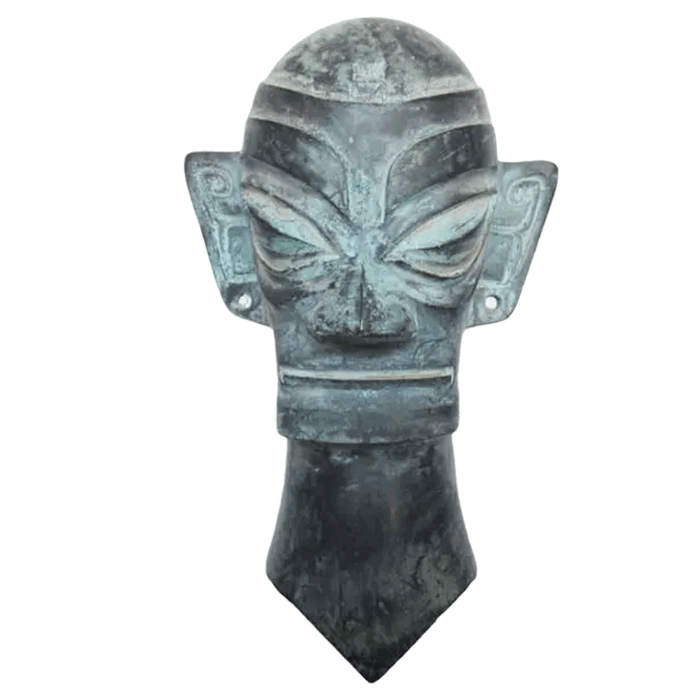
Sanxingdui Bronze Human Statues: Dating FAQs
Sanxingdui Bronze Human Statues Raise Important Dating Questions
Sanxingdui bronzes are widely recognized for their extraordinary scale, stylized facial features, elaborate headdresses, and technical complexity. Yet the question most often asked by museum visitors, collectors, researchers, and replica buyers is straightforward: how old are these objects? The answer requires more than looking at the bronze itself. Archaeologists date ancient metal artworks through excavation context, associated organic materials, ceramic sequences, manufacturing evidence, and comparisons with other securely dated sites.
This guide addresses the most common dating questions in clear terms. It is intended for readers who need a practical starting point before conducting deeper academic research, planning an exhibition, commissioning an interpretive reproduction, or evaluating historical descriptions used in bronze-art projects.

Why dating Sanxingdui artifacts requires careful language
Ancient bronzes usually cannot be dated by a direct test in the same way that wood, bone, charcoal, textiles, or seeds can. Bronze is an alloy primarily made from copper and tin, and it does not contain the organic carbon needed for radiocarbon dating. Therefore, statements that a specific bronze figure was “carbon dated” should be treated carefully unless they refer to organic material recovered from the same archaeological context.
The dating of Sanxingdui objects is generally based on a combined archaeological approach. Researchers examine where an artifact was discovered, the layer or feature in which it appeared, objects deposited alongside it, and the dates of organic remains connected with that feature. They also compare vessel forms, decorative motifs, casting practices, and other material characteristics with bronzes from related Bronze Age cultures.
This distinction is important because an artifact’s manufacturing date, period of use, and deposition date may not be identical. A bronze statue could have been made years or decades before it was placed into a pit. It may also have been repaired, reused, intentionally broken, burned, or altered before deposition. For that reason, responsible descriptions should identify what exactly a proposed date refers to.
For broader background on regional metalworking traditions, readers may consult this overview of Sanxingdui bronze wares, which introduces the distinctive visual language associated with the site.
What time period are the Sanxingdui finds generally associated with?
Sanxingdui is generally associated with the Bronze Age civilization that developed in the Chengdu Plain of present-day Sichuan. The site is commonly discussed in relation to the late second millennium BCE, broadly overlapping with periods conventionally described as the Shang dynasty in the Central Plains. However, a broad cultural date should not be simplified into a single exact year for every object.
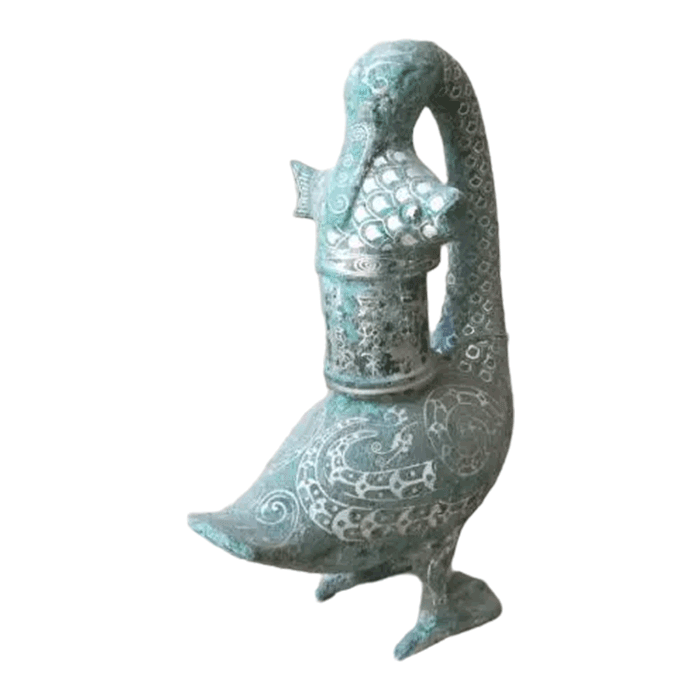
The famous sacrificial pits, including the well-known early discoveries and the more recently investigated pits, contain complex deposits. Their contents include bronze masks, human figures, trees, birds, animal forms, jades, ivories, ceramics, gold objects, and organic remains. These deposits are crucial to the chronology of the site, but their formation processes continue to be studied. Archaeological interpretations may be refined as laboratory testing, excavation reports, and comparative research develop.
In short, it is appropriate to describe many major Sanxingdui bronzes as belonging to the late second millennium BCE. It is less responsible to assign an exact calendar year to an individual human figure unless a published archaeological study provides a clearly defined basis for doing so.
How archaeologists establish dates for bronze figures
Dating a bronze artwork is strongest when several lines of evidence agree. No single method should be treated as automatically decisive. The following evidence is especially important when assessing major ritual bronzes from excavated contexts.
Excavation context and stratigraphy
Stratigraphy studies the sequence of soil layers, features, and deposits at an archaeological site. When an object is found in a sealed or well-recorded feature, its position can help establish whether it belongs to an earlier or later phase of activity. A carefully excavated pit is more informative than an object without documented provenance.
However, pit deposits can be complicated. Objects may have been moved before burial, deposited together after different periods of use, or disturbed by burning, collapse, water movement, or later activity. Archaeologists must therefore record relationships among artifacts, sediments, ash, charcoal, ceramics, and structural remains rather than relying on a single find position.
Radiocarbon dates from associated organic material
Radiocarbon dating is often used on organic remains such as charcoal, wood, plant fibers, bone, or other carbon-bearing material. If these materials are securely associated with a bronze deposit, they can help estimate when that deposit was formed. The resulting date range must be calibrated and interpreted in relation to the archaeological context.
Associated organic material provides a date for the material tested, not necessarily for the moment when a bronze sculpture was cast. For example, charcoal in a pit may relate to burning or deposition. It may offer valuable chronological evidence, but it does not prove that the bronze was newly made at that exact time.
Typology and comparison
Typology compares an object’s shape, decoration, technology, and stylistic features with other dated examples. Bronze vessel forms, animal motifs, casting details, and surface patterns can indicate relationships among regions and periods. This method is particularly useful for placing an object within a cultural sequence.
Sanxingdui’s visual tradition is distinctive, so comparisons must be made thoughtfully. Its large masks, protruding eyes, tall crowns, and monumental human forms do not simply duplicate Central Plains styles. At the same time, material, technical, and decorative comparisons can still help archaeologists understand connections and chronological overlap. An overview of bronze cultural development can provide helpful context for understanding why stylistic comparison is used alongside scientific testing.
Metallurgical and manufacturing study
Scientific examination of alloy composition, casting seams, core supports, joins, repairs, and corrosion can reveal how an object was produced. These studies are valuable for understanding workshop practices and technological choices. They may also identify whether separate sections were cast and assembled, a significant issue for large-scale figures.
Metallurgical analysis is not normally a stand-alone calendar dating method. A particular alloy composition does not automatically correspond to one year or one dynasty. Instead, production evidence supports broader interpretations when considered together with context, typology, and associated materials.
| Evidence Type | What It Can Help Date | Important Limitation |
|---|---|---|
| Stratigraphy | Sequence of layers and deposits | Deposits may have been disturbed or mixed |
| Radiocarbon testing | Associated organic material | Does not directly date bronze alloy |
| Typological comparison | Relative cultural and stylistic position | Styles can overlap across regions and time |
| Metallurgical study | Manufacturing methods and workshop practices | Usually cannot provide an exact calendar date |
| Documented provenance | Archaeological reliability of an object | Absent for unexcavated or poorly recorded pieces |
Dating FAQs for Sanxingdui Bronze Human Statues
Can the bronze itself be radiocarbon dated?
No. Radiocarbon dating requires organic carbon, while bronze is a metal alloy. Researchers can radiocarbon date organic remains associated with a bronze figure, such as charcoal or wood recovered from the same documented deposit. The interpretation must then distinguish between the age of the tested material, the formation of the deposit, and the possible production period of the bronze.
Do all figures from one pit have exactly the same date?
Not necessarily. Objects placed in a single pit may have been produced over different periods before being deposited together. A shared pit can establish an important terminus for deposition, but it does not automatically mean each artifact was created in the same year or even the same decade. Archaeologists examine object histories, damage patterns, associated materials, and deposit formation when considering this issue.
Does an old-looking patina prove ancient age?
No. Patina is not sufficient proof of age. Natural burial corrosion can create complex surfaces, but color and texture alone cannot establish authenticity or a precise date. Surface appearance may be affected by cleaning, conservation treatments, soil chemistry, handling, or deliberate artificial aging. Authenticity assessment requires documented provenance and specialist examination, not visual impressions alone.
Can stylistic features provide a precise calendar year?
Usually not. Style can help identify a relative period, workshop tradition, or cultural connection, but it rarely proves an exact year of manufacture. A tall crown, elongated arms, large eyes, or ritual posture may identify a visual tradition, yet these features should be interpreted together with excavated context and scientific evidence.
What does a date range mean?
A date range reflects uncertainty and probability. It may result from calibrated radiocarbon results, a known cultural phase, or the limits of comparative evidence. A range is not a weakness in research; it is often the most accurate way to communicate what the available evidence can support. Museums, publications, and product descriptions should preserve that uncertainty instead of presenting unsupported precision.
Why is provenance essential when evaluating a bronze?
Provenance records where an object came from and how it entered a collection. Excavated objects with detailed field documentation offer much stronger historical evidence than objects without a recorded origin. Without provenance, it is difficult to connect a bronze to a particular site, period, or archaeological event. It is also difficult to test historical claims responsibly.
How to write accurate dates in exhibitions, catalogs, and replica briefs
When preparing an exhibition label, educational catalog, architectural artwork brief, or replica specification, use language that matches the available evidence. A well-written description is clear without overstating certainty. For example, a label may state that an object is “associated with the Sanxingdui culture of the late second millennium BCE” when that is the appropriate archaeological level of confidence.
Avoid wording such as “made in exactly 1200 BCE” unless an authoritative published source specifically supports that claim for the object in question. Likewise, avoid claiming that a reproduction is an “ancient original,” “museum-authenticated,” or “archaeologically exact” unless those statements can be verified. A reproduction may accurately reference visible features while still being a modern interpretive work.
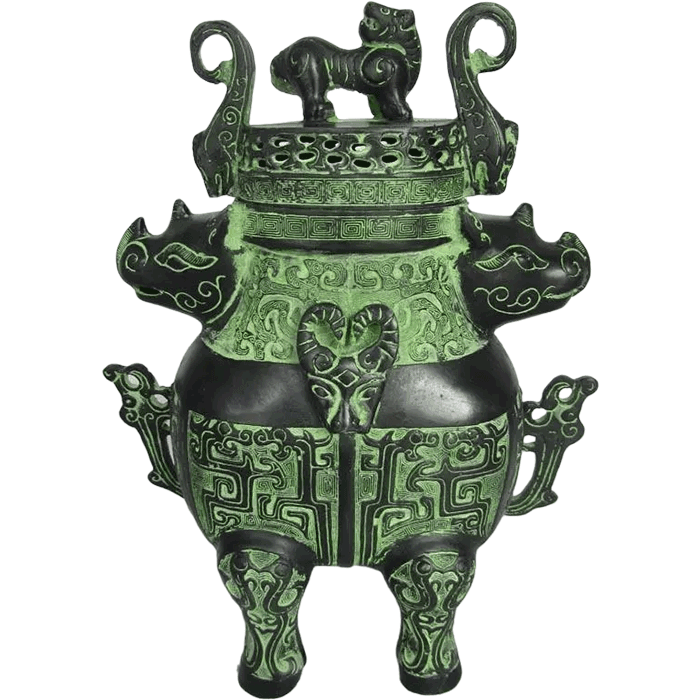
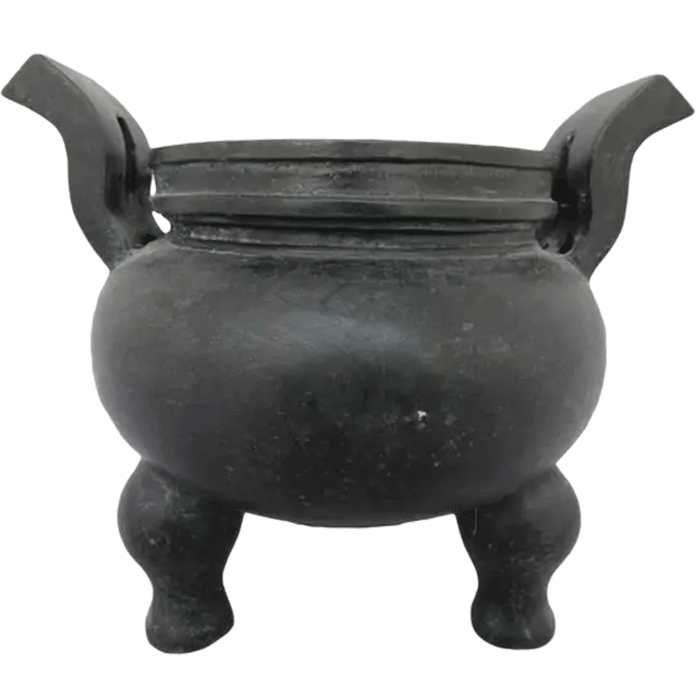
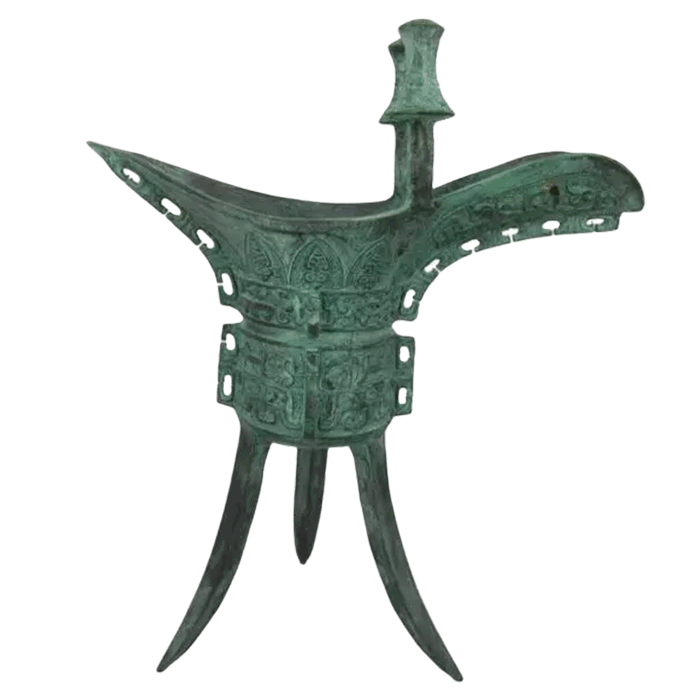
For a comparative educational display, it can also be useful to distinguish human sculptures from ritual vessels. The history of Chinese vessels includes major forms such as ding, zun, and hu, each with its own terminology and chronology. This introduction to ancient bronze wares is useful for readers who need basic vocabulary before comparing figures and vessels.
Recommended wording for a historically informed reproduction
- “Inspired by excavated bronze human figures associated with Sanxingdui.”
- “A modern bronze interpretation based on late second-millennium BCE visual traditions.”
- “Designed with reference to published archaeological imagery and documented stylistic features.”
- “Patina and dimensions selected for contemporary display requirements.”
This approach protects historical accuracy while making clear that a commissioned sculpture is a modern artwork rather than an excavated artifact.
Questions to ask before commissioning a Sanxingdui-inspired bronze
Historical research should inform every serious reproduction project. Buyers should provide clear reference materials, specify whether the goal is close visual replication or a contemporary adaptation, and identify which features must be retained. These may include the head shape, eyes, facial proportions, crown, hand position, garment details, pedestal, scale, and patina.
Luoyang Yichuan Bronze Craft Co., Ltd. produces custom bronze artworks, human and animal statues, vessels, mirrors, incense burners, and Buddhist statues. Its craftsmen use premium Cu-Sn bronze alloy and the traditional lost-wax casting method, with hand chasing, polishing, and antique or modern patina finishing available. For project planning, buyers can customize a bronze sculpture according to supplied drawings, photographs, dimensions, and display needs.
For historically themed projects, it is useful to separate three decisions: the archaeological reference, the modern sculpture design, and the final finish. The archaeological reference determines what can be claimed about the ancient source. The design determines which elements are faithfully retained or intentionally adjusted. The finish determines whether the completed bronze has an antique-inspired, dark, green, brown, or contemporary appearance. These are separate choices and should be documented separately in a purchase specification.
Custom production can begin from one prototype, while bulk quantities can be discussed according to sculpture size and design complexity. Before shipment, products are inspected, and export-compliant protective packaging is used for fragile sculptures. Buyers seeking additional information about the manufacturer may review about Sculpmart.
Key conclusions for responsible historical interpretation
The strongest answer to a dating question is rarely a single number. Sanxingdui bronzes are understood through converging evidence: excavation records, stratigraphic relationships, associated organic samples, typological comparisons, and technical study. This evidence supports broad chronological placement while also reminding readers that a bronze’s creation, use, alteration, and burial may have occurred at different times.
When discussing these remarkable figures, use qualified and evidence-based language. State whether a date refers to a cultural period, an archaeological deposit, an associated radiocarbon sample, or a proposed manufacturing range. This practice is especially important for museum interpretation, educational content, private collections, and modern bronze reproductions. Accurate wording respects both the archaeological record and the complexity of the ancient artworks themselves.