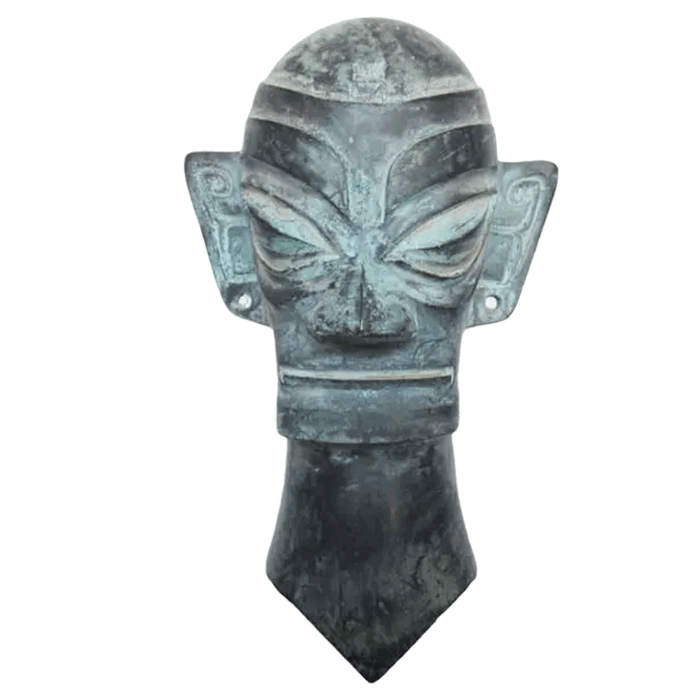
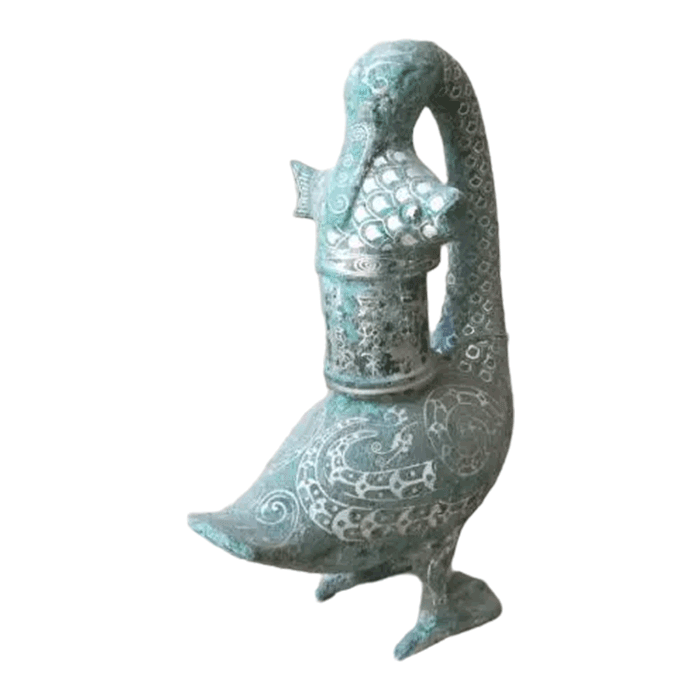
Sanxingdui Bronze Head Replica Gold-Foil Details
Sanxingdui Bronze Head Replica Options with Refined Gold-Foil Details
Bronze heads associated with the Sanxingdui archaeological tradition are recognized for their striking proportions, stylized facial features, prominent eyes, and sophisticated use of surface decoration. For collectors, museums, cultural retailers, interior designers, and project buyers, a carefully made replica can provide a visually compelling way to reference this important bronze-art tradition without presenting a modern product as an original artifact.
Gold-foil details are among the most important finish choices during replica development. They can transform the visual character of a bronze head from a dark, archaeological-inspired object into a more ceremonial, high-contrast display piece. However, buyers should evaluate gold application with the same care given to casting quality, facial accuracy, patina consistency, packing protection, and intended use. A gold surface that is too bright, too thick, or poorly positioned can reduce the historical character of the piece. A controlled application, by contrast, can strengthen the sculptural profile and improve presentation under gallery, retail, or architectural lighting.
Luoyang Yichuan Bronze Craft Co., Ltd. produces custom bronze artworks using premium Cu-Sn bronze alloy and the traditional lost-wax casting method. With a 3,000-square-meter production area and more than 30 skilled craftsmen, the company supports projects ranging from a single custom prototype to negotiated bulk production runs. This makes finish selection practical for buyers who need to approve a sample before proceeding with a larger replica program.
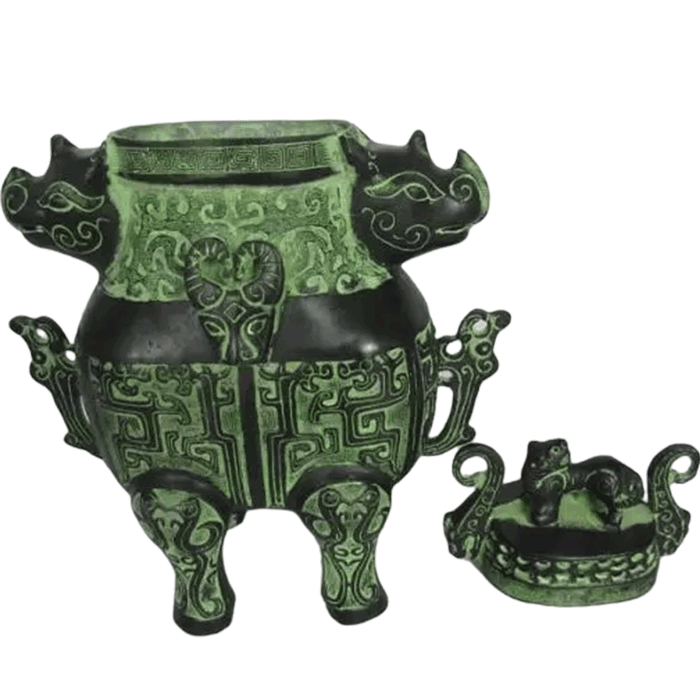
Understanding Gold-Foil Decoration on Bronze Head Replicas
Gold-foil decoration should not be treated as a generic metallic paint effect. In a well-considered replica, it is a deliberate surface feature that works with the bronze form, recessed details, and patina rather than covering them. Buyers should first decide whether the desired result is an archaeological-inspired appearance, a decorative interpretation for commercial display, or a contemporary cultural-art object.
Historically inspired bronze-head designs may include gold-colored treatment around selected facial areas, such as the forehead, brows, eyes, ears, or mask-like facial planes. The exact decoration should be based on the approved reference material for the project. Because Sanxingdui-related objects vary greatly in form and surviving surface condition, it is not appropriate to assume that every bronze head should receive the same gold coverage.
For this reason, procurement teams should provide clear visual references during the quotation stage. A strong reference package may include front, side, and rear images; dimensions; requested gold-covered zones; base or mounting requirements; target patina color; and intended installation environment. This avoids a common sourcing problem: approving a general “gold foil” request without defining the boundaries, texture, and overall contrast required.
Buyers exploring broader historical bronze styles can also review Sanxingdui bronze ware history to better understand why form, surface treatment, and cultural context should be considered together.
Choosing the Right Gold Finish for Appearance and Use
There is no single correct gold finish for every bronze-head replica. The appropriate option depends on display distance, lighting, customer expectations, touch frequency, and whether the item will be used as a collectible, exhibition prop, cultural souvenir, or architectural art feature.
Antique and subdued gold treatment
An antique gold treatment is generally preferred when the buyer wants the gold areas to appear integrated with aged bronze. The finish can be toned down so that it complements dark brown, green, black, or mixed patina rather than appearing newly polished. This approach is suitable for heritage-themed interiors, museum-style display environments, collector-focused product lines, and educational exhibits.
The visual goal is controlled contrast. At close range, the gold should reveal intentional detail and surface variation. At a normal viewing distance, it should support the sculpture’s expression rather than becoming the only feature the viewer notices.
Bright decorative gold treatment
A brighter gold effect may be appropriate for retail display, hospitality spaces, stage settings, or contemporary interiors where dramatic visual impact is required. This option can highlight oversized eyes, brows, facial contours, and ceremonial design elements. It is especially useful when the sculpture will be displayed against dark stone, wood, matte walls, or low-light backgrounds.
However, bright gold requires disciplined application. Overly reflective areas may create glare under spotlights, while broad gold coverage can hide the modeled depth of the bronze casting. Buyers should request sample photographs under lighting conditions similar to the final display environment whenever possible.
Selective gold accents
Selective application is often the most balanced choice. Instead of covering large facial zones, gold can be concentrated on carefully defined details. This can preserve the weight and character of bronze while drawing attention to the stylized geometry of the face. Selective accents are also useful when a buyer wants a coordinated series of replicas with different patina and gold-detail levels.
For a project involving several sizes, it is wise to establish a visual standard for each scale. A gold detail that looks refined on a large lobby sculpture may appear too heavy on a smaller desktop piece. Size-specific approval helps maintain proportion and consistent market presentation.
Evaluating Casting Accuracy Before Approving Surface Decoration
Gold foil and patina cannot compensate for a weak underlying casting. Before discussing decorative finishes in detail, buyers should evaluate the sculptural structure: the silhouette, forehead angle, eye projection, nose profile, mouth geometry, ears, neck transition, and base stability. These structural features determine whether a replica reads as a thoughtful bronze artwork or merely as a decorative object.
The lost-wax method is well suited to reproducing complex bronze forms because it supports detailed modeling and carefully defined relief. After casting, hand chasing and polishing can refine seams, correct small surface irregularities, and clarify important contours before patina and gold work are applied. For replicas with unusual eye shapes, protruding facial features, or openwork elements, the finishing stage is especially important.
Luoyang Yichuan Bronze Craft Co., Ltd. uses lost-wax casting for premium Cu-Sn bronze artworks and provides hand chasing, polishing, and patina finishing in antique or modern visual styles. Its ISO 9001 quality management system certification and pre-shipment quality inspection process provide additional assurance for B2B buyers assessing repeatable production standards.
When reviewing a prototype, buyers should inspect or request photographs of the following points:
- Front, left-side, right-side, and rear views of the complete bronze head.
- Close-up images of the eyes, brows, ears, nose, mouth, and any raised decorative patterns.
- The transition between bronze patina and gold-foil areas.
- Surface texture in both highlighted and recessed areas.
- The bottom structure, mounting points, or display base.
- Any visible casting marks, edge sharpness, or finishing irregularities.
- Color consistency across multiple pieces when ordering a series.
A practical prototype review should address both appearance and manufacturability. For example, a highly complex gold boundary may look attractive in a digital concept but may need adjustment to ensure a clean, durable handmade finish on an actual bronze surface. Clear approval criteria reduce rework and help both buyer and manufacturer align on what is acceptable.
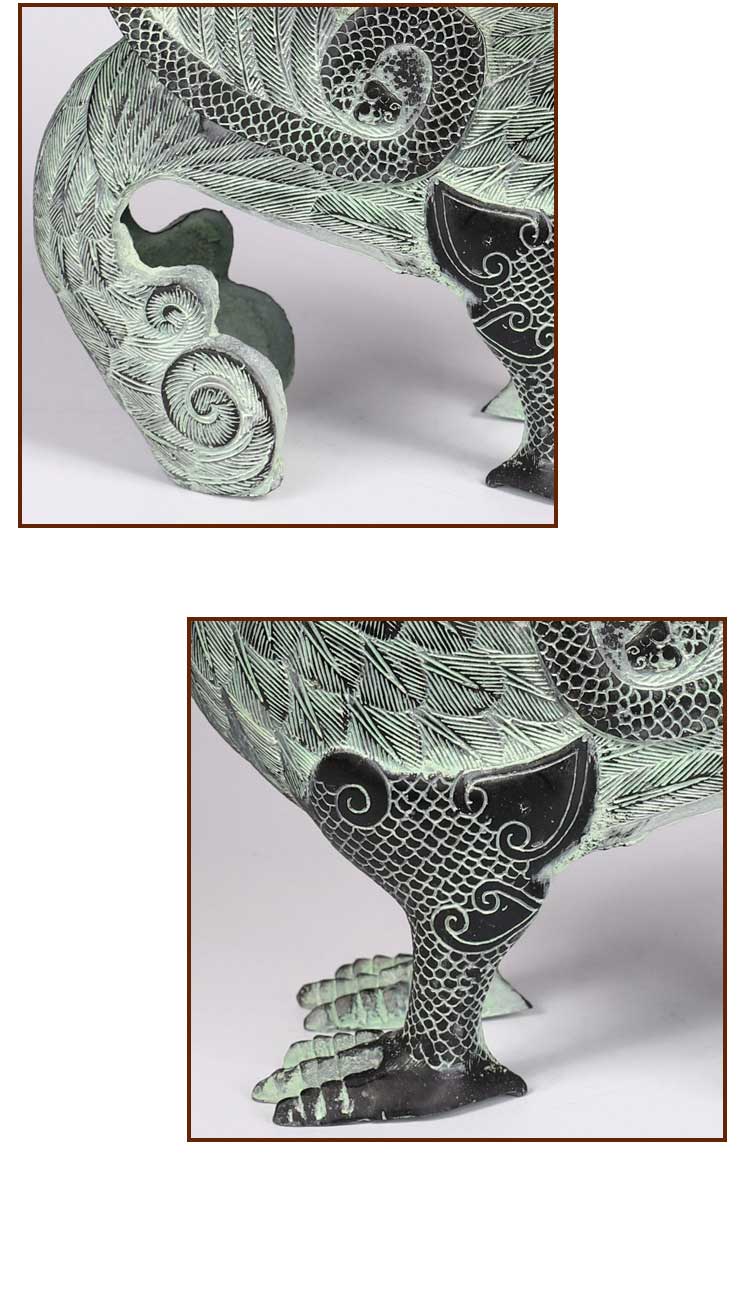
Patina, Gold Contrast, and Lighting Considerations
Patina establishes the visual foundation of a bronze replica. Gold details become more convincing when their tone, coverage, and texture are planned in relation to the patina beneath them. Dark brown patina can create a warm, traditional contrast. Green or blue-green patina can create an excavated or aged visual effect. Blackened bronze can provide the strongest contrast for selective gold accents, particularly in contemporary commercial interiors.
Buyers should not rely on color names alone. Terms such as “antique green,” “dark bronze,” or “aged gold” can be interpreted differently by different suppliers and customers. A better approach is to provide a physical sample, a reference image with known lighting, or an approved sample photograph. It is also useful to state whether variation is acceptable. Handmade patina naturally has tonal character, but a multi-unit project may still require a defined range of acceptable variation.
Lighting should be considered early in the design process. Warm lighting can enrich brown and gold finishes, while cool lighting may emphasize green patina and make bright gold appear sharper. Strong directional lighting can reveal sculptural depth but may also expose unwanted glare or uneven reflection. For hotel lobbies, showrooms, cultural venues, and public installations, buyers should share information about fixture direction, light temperature, and viewing distance.
For additional context on bronze coloration and material selection, buyers may find the discussion of bronze and brass differences useful when comparing metal-based decorative products.
Practical Requirements for Custom and Bulk Procurement
A bronze-head replica project should be specified as a complete manufacturing package, not simply as an image and a size request. The more clearly the buyer defines the intended application, the easier it is to recommend an appropriate wall thickness, base configuration, finish level, packing method, and production approach.
Important project details include overall height, width, depth, estimated weight limits, indoor or sheltered outdoor placement, preferred patina, gold-detail layout, display base, mounting method, target quantity, and delivery destination. For retail programs, buyers may also need individual product labeling, barcode requirements, protective inner materials, and master-carton instructions.
Luoyang Yichuan Bronze Craft Co., Ltd. accepts custom sculpture orders from one piece, allowing buyers to develop a prototype before making a volume decision. Bulk order quantities are negotiable according to sculpture size and design complexity. With annual output exceeding 50,000 bronze art pieces, the company can support both specialized custom work and structured production programs where visual consistency is important.
Protective packing deserves particular attention for fragile features such as extended eyes, projecting ears, thin decorative edges, and attached bases. Export-compliant protective packaging is important because the final surface can be damaged by movement, pressure, or abrasion during transit. The supplier should understand where the vulnerable points are and build packing around the actual geometry of the sculpture rather than using a generic carton approach.
Before shipment, buyers should confirm the approved finish standard, dimensions, quantity, packing configuration, and documentation needs. Luoyang Yichuan Bronze Craft Co., Ltd. conducts quality inspection before every shipment and offers free replacement for casting defects. It also provides after-sales support for patina touch-ups and restoration guidance, which can be useful for buyers managing long-term display pieces.
How to Write a Clear Replica Finish Specification
A clear specification helps prevent misunderstandings between concept approval and final production. This is particularly important when a project combines aged bronze, handmade surface variation, and gold-foil details. The following process can improve communication and reduce avoidable revisions.
- Define the reference: Provide the approved visual source and identify which features must be retained, simplified, enlarged, or omitted.
- Confirm dimensions: State overall size, base size, maximum depth, and acceptable dimensional tolerance if relevant.
- Map gold areas: Mark exactly where gold foil or gold-color treatment should appear and where exposed bronze should remain visible.
- Choose the patina direction: Specify whether the bronze should be dark, green-toned, warm brown, blackened, or another approved finish style.
- Approve a sample standard: Use prototype photos or a physical sample as the benchmark for future production pieces.
- State the use environment: Explain whether the item will be handled, displayed indoors, placed in a retail environment, or installed in a protected public space.
- Plan packing requirements: Identify any fragile areas and confirm export packing expectations before production is completed.
Buyers seeking a broader custom-development process can review how to customize a bronze sculpture for guidance on translating a concept into a manufacturable bronze artwork. For a wider selection of related decorative forms, Chinese bronze sculpture examples can also help buyers compare patina styles, forms, and display possibilities.
Making an Informed Finish Decision
The best gold-foil treatment is the one that supports the intended character of the bronze head. Buyers focused on historical atmosphere may prefer restrained gold accents over a dark, nuanced patina. Buyers planning commercial display may select clearer gold contrast for stronger visual recognition at a distance. Buyers developing a luxury gift or collectible line may need a carefully balanced combination of refined casting, detailed hand finishing, controlled gold application, and premium protective packing.
A successful Sanxingdui Bronze Head Replica should be evaluated as a complete work: sculptural accuracy, metal quality, finishing skill, color control, practical durability, and safe delivery all matter. By approving the casting structure first and then defining the gold-foil coverage, patina tone, display conditions, and packing requirements, buyers can make decisions that are both visually effective and commercially practical.