Sanxingdui Bronze Head Replica: Eyes, Masks and Crowns
Sanxingdui Bronze Head Replica Design: Understanding Eyes, Gold Masks and Crowns
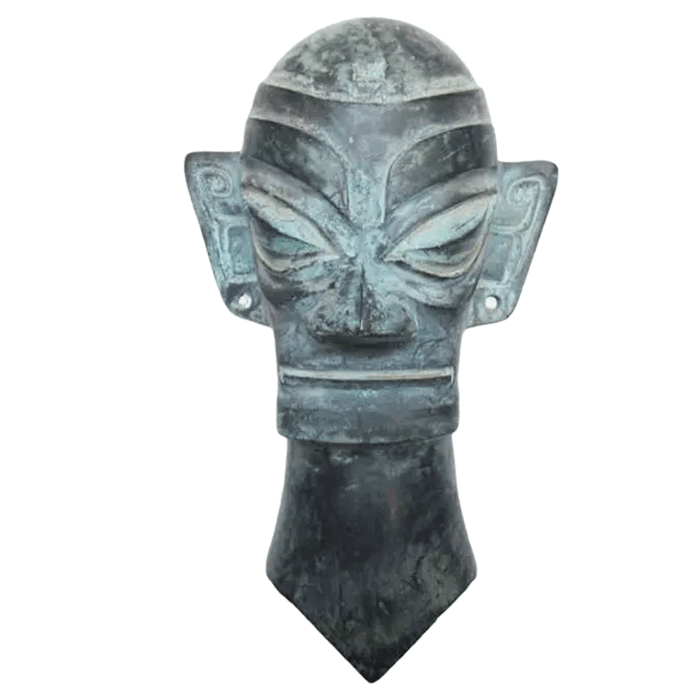
Sanxingdui bronze heads are among the most visually distinctive ancient Chinese artworks for museum collections, cultural retail programs, exhibition displays, and educational replica assortments. Their enlarged eyes, sharply modeled ears, formal expressions, gold-mask details, and elaborate crowns differ greatly from the more familiar bronze traditions of the Central Plains. For B2B buyers, understanding these visual characteristics is essential before commissioning a reproduction or selecting an item for a culturally focused product range.
A well-planned Sanxingdui Bronze Head Replica should not be treated as a generic antique-style sculpture. It requires careful decisions about reference material, proportions, surface finish, structural stability, display base design, and the relationship between bronze and gold-colored decorative elements. These decisions influence how accurately the finished work communicates the mysterious and ceremonial visual language associated with Sanxingdui culture.
Luoyang Yichuan Bronze Craft Co., Ltd. supports custom bronze artwork development for buyers requiring prototypes, exhibition-scale pieces, retail display models, and production quantities. With traditional lost-wax casting, Cu-Sn bronze alloy, hand chasing, polishing, and patina finishing, the company can help turn approved reference specifications into durable bronze artworks for professional applications.
Why Sanxingdui Bronze Heads Look Different from Other Ancient Bronzes
Sanxingdui bronzes are recognized for an expressive visual style that is immediately different from many ritual vessels, animal motifs, and human figures found in other periods of Chinese bronze art. The heads often present a highly stylized face rather than a naturalistic portrait. Their features may include long eyebrows, strong noses, wide ears, rectangular or elongated faces, and especially striking eyes.
For buyers developing a historically informed assortment, this difference should be reflected in both product selection and product interpretation. A Sanxingdui-inspired head should be presented as a cultural artwork with its own distinct design vocabulary, rather than grouped simply as an ordinary Chinese antique decoration. Educational labels, catalog descriptions, retail packaging, and exhibition panels can all explain the role of stylized facial modeling in making these objects memorable.
The broader development of Chinese metalwork gives useful context for this distinction. Buyers researching the wider heritage of ritual and decorative bronzes may consult bronze culture evolution when planning product narratives that connect Sanxingdui visual culture with other Chinese bronze traditions.
Oversized Eyes as a Primary Recognition Feature
The eyes are often the first feature noticed by viewers. Some Sanxingdui heads have large almond-shaped eyes, while others are associated with strongly projected tubular eyes. In a reproduction program, eye geometry must be reviewed early because it affects the entire face. If the eyes are too shallow, too small, unevenly placed, or incorrectly angled, the head can lose much of its intended visual impact.
For specification research, buyers should define whether the reference has flat modeled eyes, raised eyelids, extended eye forms, or separately emphasized pupils. The following points should be included in a design brief:
- Overall head height, width, and depth.
- Eye length, projection, angle, and distance between the eyes.
- Brow thickness and the contour connecting the brow to the nose bridge.
- Ear shape, ear placement, and whether ear ornaments are required.
- Facial symmetry requirements and permitted handmade variation.
- Front, side, rear, and top-view reference images.
For museum gift shops and exhibition retail, the eye design can also guide size selection. Larger statement pieces communicate the dramatic profile of the object at a distance, while smaller desktop versions need sufficient relief and clean feature separation so that the eyes remain legible at close range.
Gold Masks and Surface Contrast in a Sanxingdui Bronze Head Replica
Gold masks are among the most important visual elements associated with selected Sanxingdui heads. They create a contrast between the aged bronze surface and the bright metallic mask layer, drawing attention to the face and adding a ceremonial appearance. In a replica assortment, buyers should distinguish between a full-mask interpretation, partial gold facial coverage, and a bronze-only version. Each option serves a different display, budget, and storytelling purpose.
A gold-colored feature should be planned as a defined surface treatment rather than an indistinct painted area. The edge of the mask needs clear placement around the forehead, eyebrows, eyes, nose, cheeks, or mouth according to the approved reference. Accurate edge definition is particularly important because the contrast between materials is part of the object’s visual identity.
When sourcing, buyers should request confirmation of the desired decorative method, intended color tone, adhesion requirements, and handling precautions. A bronze sculpture used in a public exhibition may require different finishing considerations from a smaller decorative piece intended for enclosed retail packaging. The final specification should also clarify whether the finish is intended to appear newly metallic, subtly aged, or balanced with an antique bronze patina.
Choosing the Bronze Patina
Patina is not merely a color choice. It influences how deeply the casting details can be seen, how the gold-colored surface contrasts with the bronze, and whether the item feels formal, archaeological, decorative, or contemporary. Luoyang Yichuan Bronze Craft Co., Ltd. can provide hand-applied antique or modern patina finishes, allowing buyers to coordinate a series across multiple pieces.
Common specification considerations include dark brown bronze, green-toned antique bronze, blackened bronze, and warmer brown finishes. A dark patina may increase the visual contrast with gold-colored facial details, while a green-toned finish can create an aged appearance. However, buyers should approve physical samples or clearly documented color references before production, particularly when building a coordinated collection of heads, masks, vessels, and display accessories.
Material knowledge is also valuable for purchasing teams comparing different metal products. The article on bronze and brass differences can support clearer discussions about alloy selection, surface appearance, and product positioning.
Crowns, Headdresses and Structural Design Considerations
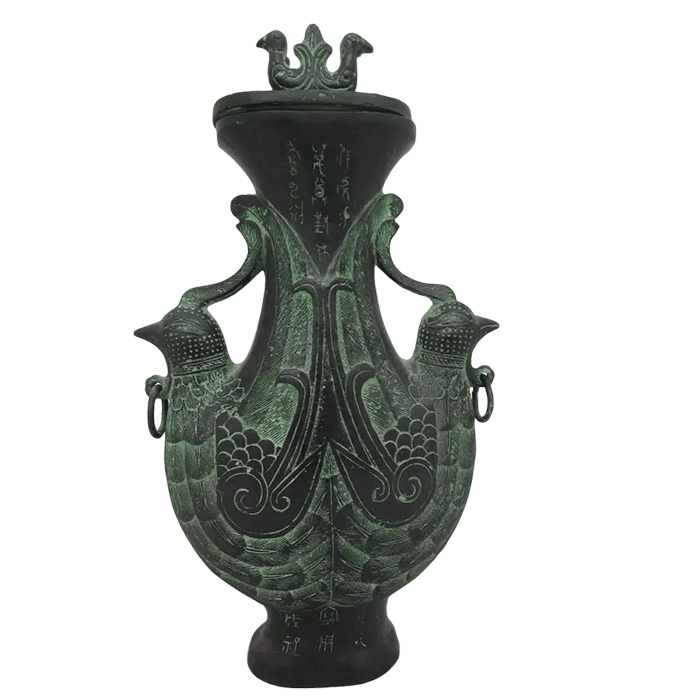
Crowns and headdresses add complexity to Sanxingdui bronze head reproductions. These elements can include branching forms, upright ornaments, openwork details, layered shapes, or other vertical decorative structures. They may make a sculpture more dramatic and valuable as a display centerpiece, but they also require additional planning for casting, transport, assembly, and installation.
For product-development teams, the crown should be analyzed as both an artistic and technical component. Fine projections may need reinforcement, thicker structural sections, or a modular construction approach depending on the dimensions and the selected design. A crown that looks light and open in a reference image may still need enough material strength to withstand casting, finishing, packing, and normal handling.
Buyers should ask for clear information on whether the crown will be cast as one piece with the head, produced as a separate component, or assembled after casting. Separate components can assist packaging and transport for large pieces, while integrated casting may provide a more continuous visual result. The best option depends on the exact reference design, size, installation setting, and shipping requirements.
Base Design for Exhibitions and Retail Displays
A head sculpture should have a base that supports its weight and visual balance without distracting from the artwork. A simple dark pedestal, a bronze plinth, a stone-like platform, or a custom labeled base may be appropriate depending on the buyer’s display concept. Exhibition projects often benefit from a base designed to accommodate identification plaques, inventory labels, or mounting requirements.
For a retail collection, a coordinated base can also improve shelf presentation and make different head designs easier to display together. Buyers may specify base dimensions, felt protection, mounting holes, logo placement, or removable structures. These details should be finalized before production rather than added after the artwork has been completed.
Organizations building broader artifact-inspired collections may also explore Sanxingdui bronze ware history to develop more cohesive educational themes around the product assortment.
Specification Checklist for Museum, Retail and Exhibition Buyers
Strong sourcing begins with a detailed and realistic specification. A reference image alone may be enough for an initial quotation, but it is not sufficient for controlling historical appearance, sizing, finish consistency, or installation needs. The buyer should prepare a structured design package before confirming a custom order.
A practical specification package for a Sanxingdui Bronze Head Replica can include the following items:
- Reference source: Provide front, side, rear, and detail photographs, sketches, or approved artwork. Identify the exact head, mask, or crown design to be represented.
- Target dimensions: State total height, facial height, width, depth, crown height, base size, and maximum permitted weight if relevant.
- Material requirement: Confirm bronze alloy expectations, display environment, and whether the work is intended for indoor or covered display.
- Surface finish: Specify antique or modern patina direction, bronze color range, polishing level, and gold-colored decorative areas.
- Structural details: Define whether crowns, ears, masks, bases, or mounting elements are integrated or separately assembled.
- Quantity plan: Indicate whether the requirement is a single prototype, a small retail series, or a larger production run.
- Packaging needs: State whether the order requires export-compliant protective packaging, individual cartons, crate packing, or display-ready inner packaging.
- Quality approval process: Confirm the sample, photographs, measurements, finish approvals, and inspection points required before shipment.
Luoyang Yichuan Bronze Craft Co., Ltd. supports projects from one custom prototype onward, with bulk order arrangements evaluated according to size and design complexity. Its 3,000-square-meter production area and team of more than 30 skilled craftsmen support casting, hand finishing, polishing, and patina work for custom bronze art projects.
Lost-Wax Casting and Hand Finishing for Detailed Bronze Heads
Lost-wax casting is well suited to sculptures that require modeled facial details, sharp eye contours, complex crown relief, and carefully defined decorative edges. The method enables intricate forms to be translated from an approved model into bronze, followed by hand chasing to refine details after casting. This combination of casting and handwork is important for decorative heads because their impact depends on the quality of the face rather than on overall shape alone.
After casting, skilled artisans can remove casting gates, refine seams, adjust surface texture, polish selected areas, and apply the chosen patina. Buyers should understand that handmade finishing can create subtle variations. For a coordinated commercial series, the objective is not machine-like uniformity but controlled consistency in size, principal facial features, and approved surface color.
Quality inspection should cover obvious casting defects, sharpness of key features, stability of the base, surface coverage, decorative placement, and protective packing before shipment. Luoyang Yichuan Bronze Craft Co., Ltd. conducts inspection before every shipment and provides free replacement for casting defects. After-sales support is also available for patina touch-up and restoration guidance.
Buyers interested in expanding beyond head sculptures may consider complementary Chinese bronze sculpture categories, including figures, animal sculptures, vessels, and decorative objects that can create a more complete cultural display.
Building a Responsible and Cohesive Replica Assortment
A successful cultural replica assortment balances visual impact, clear interpretation, and product consistency. Museums may prioritize accuracy, interpretive labels, and display durability. Retail buyers may prioritize manageable sizes, coordinated finishes, safe packaging, and price-tier variety. Exhibition organizers may need dramatic large-scale centerpieces along with smaller supporting objects for visitor engagement.
In each case, the best approach is to define the story first. A collection centered on eyes, gold masks, and crowns can present these elements as key visual themes. Supporting items can include descriptive panels, smaller bronze decorative pieces, vessel-inspired objects, or educational comparison materials. Product descriptions should avoid overstating undocumented functions or meanings and should focus on observable design characteristics and approved cultural context.
For custom development, buyers can work with the manufacturer to determine scale, finish, base structure, and packaging requirements before casting begins. The traditional bronze heritage of Luoyang, combined with modern production coordination, provides a practical foundation for creating professional cultural-art products that are suitable for export-oriented procurement.
A carefully specified Sanxingdui Bronze Head Replica can become a compelling centerpiece for a museum store, heritage exhibition, cultural retail collection, or institutional display. By studying the eyes, gold-mask treatment, crown construction, bronze patina, and display requirements in advance, B2B buyers can make sourcing decisions that support both visual authenticity and dependable product presentation.