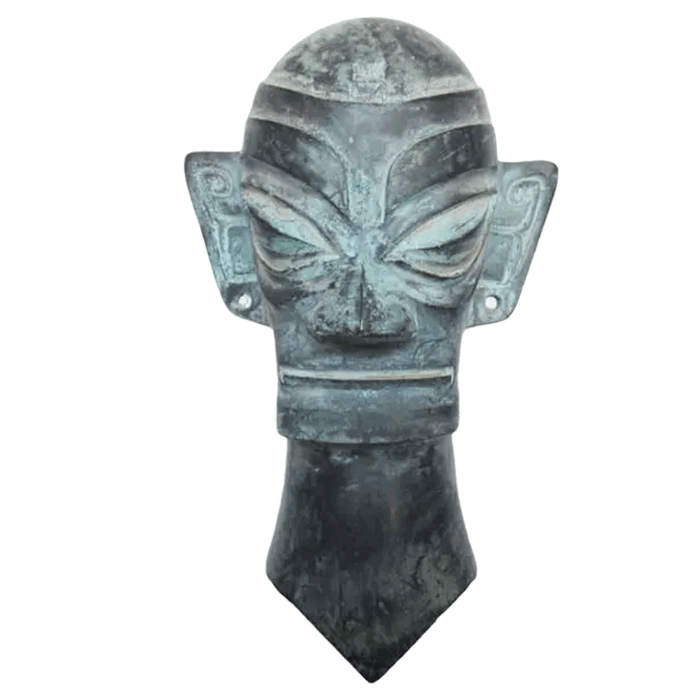
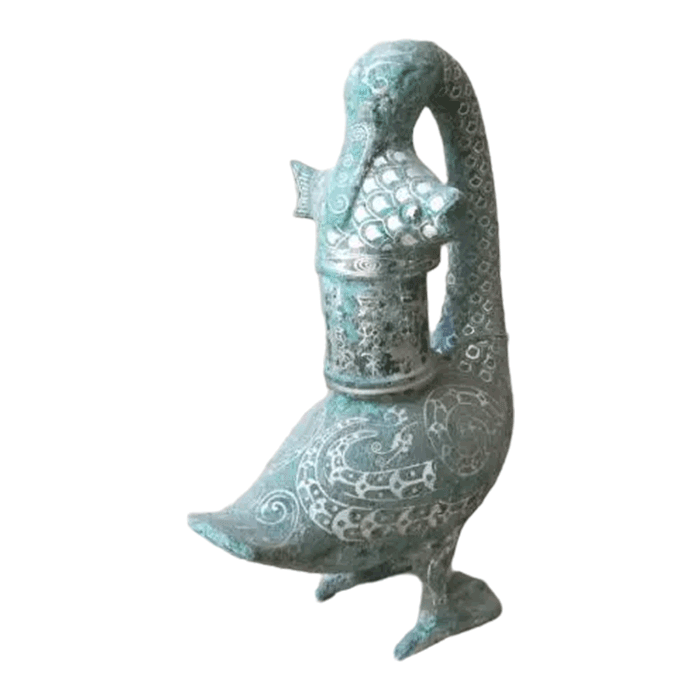
Sanxingdui Bronze Head Replica Display Planning
Match Sanxingdui Bronze Head Replica Proportions to Gallery and Hospitality Displays
A Sanxingdui Bronze Head Replica can become the visual center of a gallery, museum-style retail environment, hotel lobby, private club, or cultural exhibition. Its distinctive exaggerated eyes, projecting ears, strong brow line, and sculptural silhouette require more than a simple shelf placement. Buyers need to determine the right overall scale, base height, viewing distance, lighting direction, and surrounding materials before requesting a sample or quotation.
For professional buyers, proportion planning is not only an aesthetic task. It also affects transportation, installation, visitor circulation, display-case dimensions, structural support, and the perceived value of the finished installation. A head that is too small may lose its visual impact in a tall lobby. A head that is too large may dominate a retail display, block sightlines, or create an uncomfortable viewing angle for guests standing nearby.
Luoyang Yichuan Bronze Craft Co., Ltd. supports custom bronze artworks from a single prototype to bulk production runs. With a 3,000-square-meter production area in Yichuan County, Luoyang, and more than 30 skilled craftsmen, the company can help buyers translate display requirements into casting, finishing, and packaging specifications. Its bronze pieces are produced in premium Cu-Sn bronze alloy through the traditional lost-wax casting method, with hand chasing, polishing, and patina finishing available for antique or modern presentation needs.

Start With the Display Role, Not the Sculpture Size
The first question is not “How large should the bronze head be?” but “What job should it perform in the space?” A display object may function as a focal point, a cultural accent, a directional landmark, a retail storytelling feature, or a centerpiece for a hospitality reception area. Each role calls for a different proportion strategy.
For example, a prominent lobby installation must be legible from a distance. Visitors should recognize the profile and distinctive eyes while approaching from several meters away. In this setting, a larger head and taller pedestal may be appropriate. By contrast, an object inside a luxury retail cabinet is viewed at close range. It needs fine surface definition, carefully controlled reflections, and enough empty space around it for shoppers to appreciate the silhouette.
Before selecting dimensions, define the installation category:
- Gallery focal display: Designed for sustained viewing, interpretation panels, controlled lighting, and close inspection.
- Retail storytelling display: Designed to attract attention while keeping merchandise, customer movement, and sales sightlines clear.
- Hospitality centerpiece: Designed to create atmosphere and cultural identity in lobbies, lounges, restaurants, and reception areas.
- Display-case object: Designed for enclosed presentation where case height, access panels, and internal lighting determine the maximum scale.
- Series installation: Designed as multiple coordinated bronze heads, masks, vessels, or complementary objects placed along a corridor, wall, or themed zone.
A useful early planning method is to prepare a simple elevation drawing of the wall, cabinet, plinth, or room where the sculpture will be located. Mark the floor line, finished ceiling height, nearby furniture, signage, and expected viewer standing positions. This immediately reveals whether the artwork should read as a monumental object, a medium-scale cultural accent, or a detailed close-view collectible.
Establish Human Eye Level and Pedestal Height
Pedestal height determines how the visitor experiences facial features. For a bronze head, the eye line is especially important because the most recognizable Sanxingdui-inspired characteristics are concentrated in the face: elongated eyes, eyebrows, ears, nose, and crown or upper contour. If the pedestal is too low, guests look down on the object and lose the intended facial presence. If it is too high, the top plane becomes dominant and the face can feel visually distant.
For a standing adult audience, place the most important facial zone close to average eye level or slightly below it. A slightly lower position is often effective because it lets visitors see the facial plane and the top contour together. The best result depends on the head height, the angle of the face, and whether the artwork will be viewed from one principal direction or from multiple sides.
When planning a pedestal, consider the combined height of the base and sculpture rather than evaluating each part separately. A small bronze head can gain authority from a taller, narrower pedestal, while a larger head may need a lower and more substantial plinth to avoid a top-heavy appearance. The pedestal should support the sculpture visually and physically without competing with its form.
| Display Condition | Recommended Proportion Focus | Practical Consideration |
|---|---|---|
| Lobby or reception area | Clear silhouette at long range | Use a stable base and maintain open circulation around the object. |
| Retail feature table | Close-view surface detail | Keep the total composition below nearby product sightlines. |
| Gallery pedestal | Eye-level facial engagement | Allow visitors enough room to step back and view the profile. |
| Wall niche or cabinet | Balanced framing inside the opening | Confirm access clearance for placement and maintenance. |
| Restaurant or lounge | Atmosphere without obstruction | Prevent interference with seating, serving paths, and low lighting. |
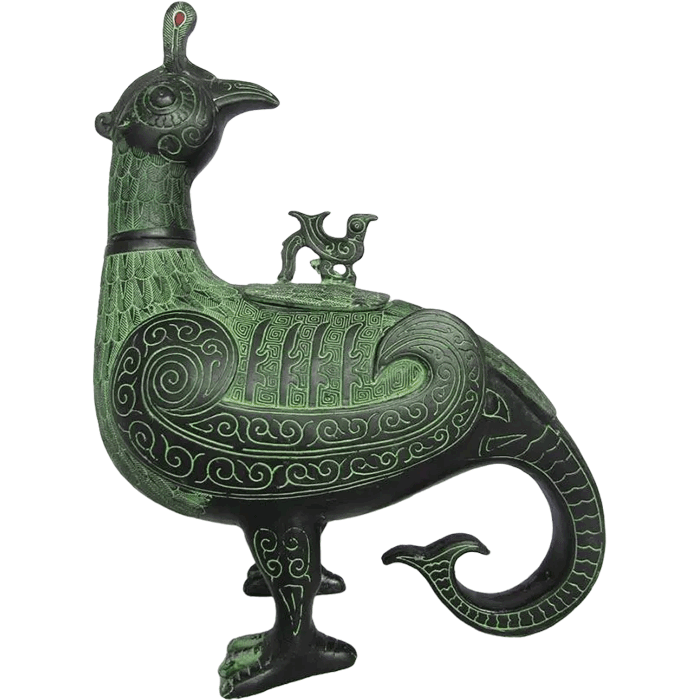
For buyers developing a broader Chinese art concept, a bronze head can be displayed alongside selected vessels, mirrors, or decorative sculptures. Reviewing examples of Chinese bronze sculpture can help a design team compare object categories and decide whether the head should remain a standalone centerpiece or become part of a larger cultural composition.
Calculate Viewing Distance From Head Size and Room Scale
Viewing distance should be planned as carefully as the sculpture dimensions. A visitor needs enough distance to understand the entire silhouette, but also needs a close position from which to see hand-finished texture, patina variation, and subtle chased details. The ideal display area includes both experiences.
As an early planning guide, establish three viewer zones:
- Recognition zone: The distance at which a guest first identifies the object as a focal point. This matters in entrances, corridors, hotel lobbies, and open retail floors.
- Appreciation zone: The distance at which the entire bronze head and pedestal appear balanced in one view. This is the primary photographic and visual-composition position.
- Detail zone: The closer distance at which the viewer sees casting texture, patina depth, edge finishing, and small sculptural transitions.
In a narrow corridor, a very large head can become difficult to appreciate because viewers cannot step back. In that situation, a medium-scale object with strong front-facing detail may perform better than a larger piece. In an expansive atrium, the opposite can happen: a small head may look refined when viewed close, but visually disappear when guests enter the room from a distance.
Design teams should also consider the height of surrounding objects. A head placed beside a high reception desk, large sofa back, decorative screen, tall indoor planting, or merchandise fixture may need additional pedestal height or a stronger silhouette to remain visible. Conversely, a display located in a minimal gallery with clear wall space can use a more restrained scale because the visual surroundings are quiet.
A site survey should record ceiling height, nearby architectural columns, floor finish, wall tone, primary entrances, and expected guest traffic. For hospitality projects, observe where guests naturally pause. For retail projects, identify product browsing paths and cashier sightlines. For galleries, determine whether visitors approach from the front, side, or both. These factors shape the final dimensions more reliably than selecting a replica size from a photograph alone.
Use Lighting to Preserve Facial Depth and Bronze Patina
Bronze surfaces change significantly under different lighting conditions. A head with a dark antique patina may show strong form under warm directional light but appear flat under broad, even ceiling illumination. A lighter green or layered patina may reveal more surface variation under grazing light, yet excessive glare can make polished edges look harsh.
Directional lighting is usually more effective than fully frontal lighting because it creates shadows beneath the brow, around the eyes, and along the ears. These shadows help preserve the dramatic sculptural identity of the form. However, the light angle should be tested carefully. A single strong spotlight from directly above can create deep eye sockets and obscure important details. A combination of key light and gentle fill light often produces a more balanced result.
For enclosed cabinets, specify the position of LED channels, color temperature, diffuser type, and maintenance access before fabrication. For open displays, test lighting from the main visitor approach rather than relying only on an architect’s ceiling plan. The piece should remain legible in the conditions guests actually experience, including daytime ambient light and evening hospitality lighting.
Patina should also be coordinated with the interior palette. A dark brown or antique bronze finish can create a formal, historic mood against warm stone, dark timber, and neutral textured walls. A green-toned patina may create stronger contrast against pale walls, glass, or contemporary metal fixtures. Luoyang Yichuan Bronze Craft Co., Ltd. provides hand patina finishing in antique or modern looks and supports consistent patina color matching for custom bronze art sourcing requirements.
Specify the Base, Fixing Method, and Safety Allowances
A successful display is both visually convincing and operationally safe. Bronze is durable, but the complete installation requires proper coordination between the sculpture, internal support, plinth, floor condition, and any display enclosure. Buyers should provide information about the intended installation surface early in the quotation stage.
Key technical questions include whether the piece will sit freely on a pedestal, whether concealed fixing points are required, whether the base must be removable for transport, and whether the project location has vibration, guest-contact, or earthquake-related considerations. A busy hotel lobby and a protected gallery display case do not require the same level of physical protection.
For freestanding installations, the visual width of the base should match the mass of the head. A base that is too narrow can look unstable even when it is mechanically sound. For public-facing environments, avoid pedestal edges that create trip hazards or interfere with cleaning equipment. If visitors can touch the work, position it outside common traffic lines or consider a low barrier, display case, or carefully designed standoff distance.
Export-ready protective packaging should be considered at the same time as the object and base dimensions. The company conducts quality inspection before every shipment and provides export-compliant protective packaging for fragile sculptures. This is particularly important for projects with projecting ears, raised decorative elements, separate bases, or multiple pieces that must arrive with matched finishes.
Plan a Coordinated Collection Rather Than an Isolated Object
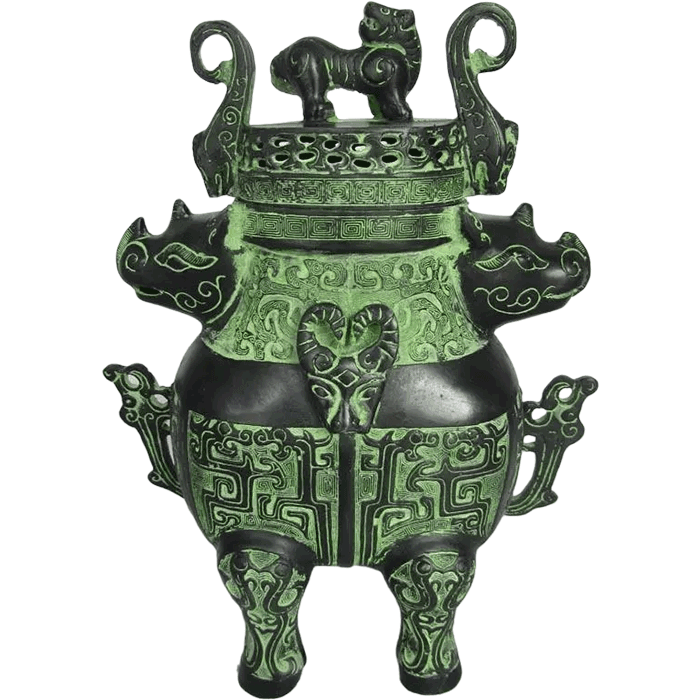
A bronze head can carry a complete display by itself, but many commercial interiors benefit from a coordinated group of bronze artworks. A hospitality buyer may place the head in a central niche, use complementary incense burners or vessels at reception, and add smaller decorative forms in lounge areas. A retailer may combine the central display with educational graphics, cultural books, gift items, or a curated group of bronze-inspired decorative objects.
The key is hierarchy. The bronze head should remain the primary visual statement. Supporting objects should be smaller, quieter, or placed at different depths so they do not compete with the main silhouette. Matching every object at exactly the same scale can make the presentation feel repetitive. Instead, create contrast through height, spacing, pedestal finish, and lighting intensity.
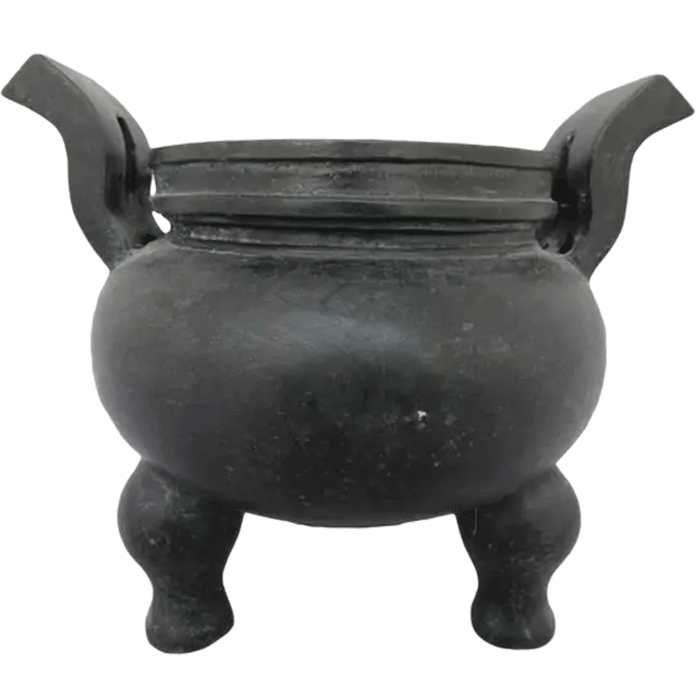
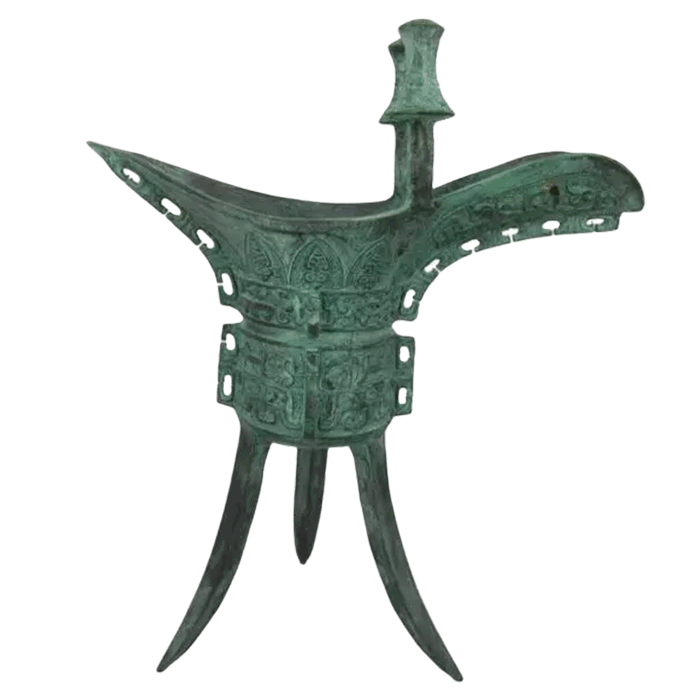
Buyers exploring vessel-based complements may find useful context in introduction to bronze wares. For historical background related specifically to the culture and visual language behind this display theme, the resource on Sanxingdui bronze wares can assist curators and interior teams in developing accurate interpretive content.
For a contemporary setting, balance historical references with modern display materials. Matte black steel, dark bronze metal, stone, smoked glass, warm timber, and neutral plaster can frame bronze effectively. Avoid highly patterned backdrops that compete with the head’s facial geometry. If the setting includes reflective glass or polished marble, test the sculpture from several approach angles to ensure reflections do not distract from the face.
Prepare an Effective Custom Specification Request
When requesting a custom quotation, provide more than a target height. Clear specifications reduce revision cycles and make it easier to evaluate whether a proposed casting and display solution fits the project. Since Luoyang Yichuan Bronze Craft Co., Ltd. can support custom sculptures from one piece and has annual output of more than 50,000 bronze art pieces, both limited-edition display projects and larger multi-location programs can be discussed according to design complexity and scale.
A strong specification package should include:
- Reference images, drawings, or approved cultural-art references for the desired head form.
- Required overall dimensions, including head height, width, depth, and total height with pedestal.
- Installation photographs showing the wall, floor, niche, cabinet, or open area.
- Estimated viewer distance and the principal viewing direction.
- Preferred patina appearance, such as dark antique bronze, layered green bronze, or a modern controlled finish.
- Whether the sculpture requires a separate base, concealed fixing, or integrated pedestal connection.
- Quantity required, delivery location, and packaging requirements.
- Any local restrictions involving public safety, display-case access, fire routes, or material approvals.
Early samples or prototypes can be especially useful where the project depends on a precise visual relationship between the bronze, plinth, lighting, and interior finishes. Buyers can also review options to customize a bronze sculpture when preparing drawings, reference images, and finish expectations for a quotation request.
Every custom project should also define the approval process. Confirm which stage requires approval: sculptural model, dimensions, surface finish, patina sample, base design, packaging method, or final inspection photographs. This is important when several bronze pieces must share a consistent appearance across different sites. The manufacturer offers free replacement for casting defects and after-sales support for patina touch-ups and restoration guidance, providing additional support for buyers planning long-term display use.
Make Proportion Decisions Before Production Begins
The most successful Sanxingdui Bronze Head Replica displays are planned from the viewer’s experience outward. Start with room scale, visitor approach, and visual role. Then determine head dimensions, pedestal height, viewing distance, lighting, safety allowances, and complementary objects. This sequence prevents a common problem: ordering an attractive sculpture first and attempting to force it into an unsuitable display environment later.
For gallery, retail-display, and hospitality buyers, proportion is the link between cultural value and commercial presentation. A properly scaled bronze head can guide movement through an interior, create a memorable arrival point, strengthen a heritage-inspired design concept, and invite close attention to craftsmanship. By preparing accurate site information and clear display priorities before requesting a sample or quotation, buyers can achieve a bronze installation that is both visually powerful and practical to install, maintain, and protect.