Reading the Taotie on a Shang Dynasty Style Bronze Vessel
Understanding the Enigmatic Taotie Motif on a Shang Dynasty Style Bronze Vessel
The Bronze Age in China, particularly during the Shang Dynasty (c. 1600–1046 BCE), represents a pinnacle of metallurgical artistry and ritualistic symbolism. The bronze vessels from this era were not mere containers; they were instruments of power, conduits for communication with ancestors, and potent symbols of social status. Central to their visual language is the formidable and mysterious Taotie motif. For designers, collectors, and B2B buyers sourcing historical replicas, the ability to "read" the Taotie and its surrounding ornamentation is crucial for evaluating authenticity and appreciating the profound cultural depth embedded in these objects. This guide delves into the iconography of the Taotie, providing the knowledge needed to assess the quality and accuracy of a modern reproduction.
At Luoyang Yichuan Bronze Craft Co., Ltd., we recognize that sourcing high-quality replicas of Chinese bronze handicrafts is about more than just acquiring a decorative object. It's about capturing a piece of history with precision and respect. Our expertise in the traditional lost-wax casting method, honed by over 30 skilled artisans in our 3,000-square-meter facility, allows us to recreate the intricate details that define these ancient masterpieces, ensuring every piece meets rigorous export quality standards.
What is the Taotie Motif? Unraveling an Ancient Mystery
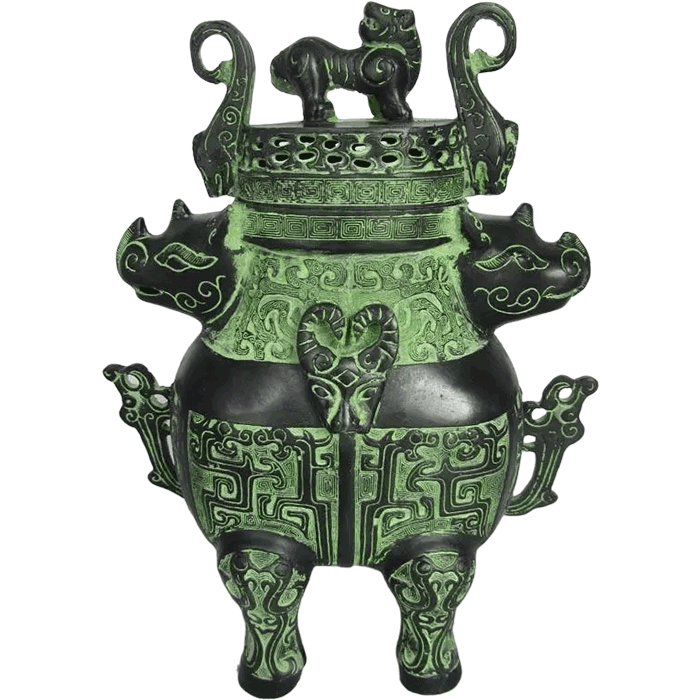
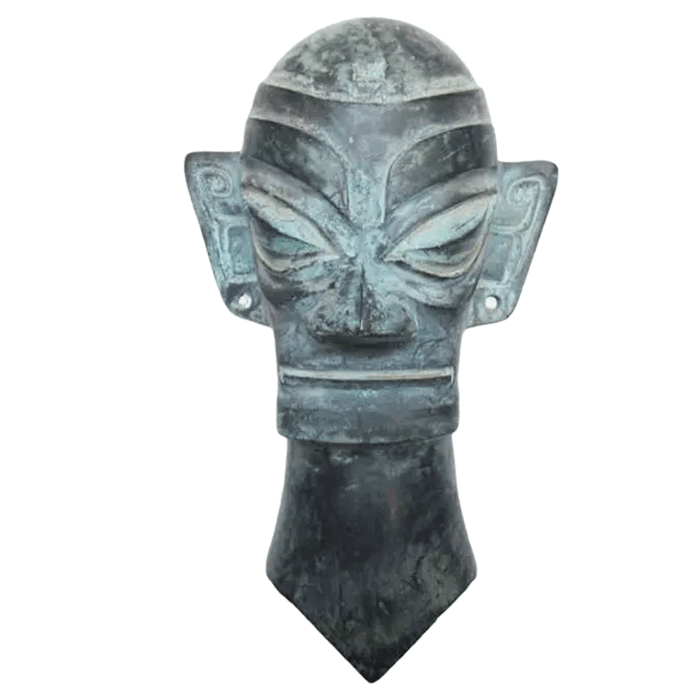
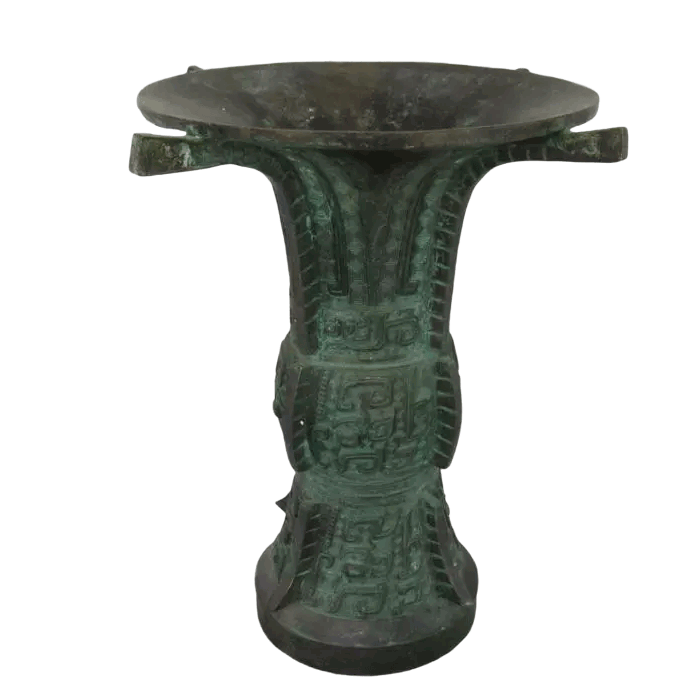
The Taotie is the most prominent and recognizable decorative motif found on ancient Chinese bronzes. It is typically presented as a frontal, symmetrical mask-like face, characterized by a pair of large, staring eyes, and often featuring horns, a snout, and fangs, but conspicuously lacking a lower jaw. The term "Taotie" itself, often translated as "glutton," was applied much later during the Zhou Dynasty and may not reflect its original Shang-era meaning. The true significance of the Taotie remains a subject of scholarly debate, with several compelling interpretations.
Symbolic Interpretations of the Taotie
- A Guardian or Protector: One theory suggests the Taotie's fierce, zoomorphic appearance served an apotropaic function, warding off evil spirits from the ritual ceremonies and the ancestral offerings contained within the vessels. Its powerful gaze and imposing features would have created an aura of solemnity and protection.
- A Shamanic Connection: Another interpretation links the Taotie to shamanism and spiritual transformation. The mask could represent a mythical beast, a shaman's face during a trance, or a creature that could traverse the spirit world. The design, often a composite of various animals (ox, tiger, dragon), may symbolize control over the natural world.
- A Warning Against Greed: The later "glutton" interpretation suggests the Taotie, with its large head and mouth but no body to be filled, served as a moral warning against overindulgence and greed—a cautionary symbol for the ruling elite who used these vessels.
- An Ancestral Totem: It is also possible that the Taotie was a clan emblem or a representation of a mythical ancestor. Different variations in horns and features could have signified different family lineages or deities.
Regardless of its precise original meaning, the Taotie was the dominant artistic expression of its time. Its intricate and highly structured design was not random but a carefully composed visual system. Understanding its components is the first step toward appreciating the artistry of both original artifacts and high-fidelity reproductions.
Deconstructing the Taotie: A Guide to Its Key Features
The genius of the Taotie lies in its modular and often ambiguous composition. What appears at first as a single, monstrous face can, upon closer inspection, resolve into two separate, profile dragons (known as kui dragons) confronting each other. This "split representation" is a hallmark of Shang bronze art. When evaluating a reproduction, pay close attention to the clarity, proportion, and stylistic accuracy of these individual elements.
The Dominant Eyes
The eyes are the undeniable focal point of any Taotie mask. They are almost always large, round, or canthused (with a defined inner corner), and stare directly at the viewer. In Shang art, the eyes were considered the seat of spiritual power. In a quality reproduction, the eyes should be sharply defined, often with a pronounced eyeball that projects from the surface, giving the motif a sense of life and intensity. The casting must be clean, without blurring the fine lines that delineate the eyelids and pupils.
Horns, Crests, and Ears
The features above the eyes define the character of the specific Taotie. The variety is immense, and these details are critical for stylistic accuracy.
- Horns: These can be C-shaped (like a ram), T-shaped, bottle-shaped, or modeled after the horns of an ox or water buffalo. Some are more serpentine, resembling dragons. The type of horn is a key identifier for classifying vessel styles from different periods of the Shang Dynasty.
- Crests: A central flange or crest often bisects the mask, reinforcing its symmetry. This feature can be simple or highly ornate, sometimes taking the form of a complex, shield-like shape.
- Ears: Positioned to the side of the horns, the ears are typically small and C-shaped or leaf-shaped, adding another layer of animalistic detail to the composite creature.
Snout, Fangs, and the Missing Jaw
Below the eyes, the Taotie features a nose or snout, which can be simple or detailed with nostrils. Flanking this are the upper jaws, from which sharp fangs often descend. The consistent absence of a lower jaw is one of the motif's most intriguing characteristics. It contributes to its otherworldly appearance and reinforces the "glutton" theory, as a creature that can consume but never be sated. In a well-crafted reproduction, these fangs and the upper jawline should be crisply cast, not soft or ill-defined.
The Context of the Pattern: Leiwen and Secondary Motifs
The Taotie mask does not exist in isolation. It is typically embedded within a dense field of intricate background patterns, the most common of which is the leiwen, or "thunder pattern." This pattern consists of fine, squared spirals that fill all the negative space on the vessel's surface. The leiwen adds texture, visual energy, and symbolic resonance, possibly representing the clouds and thunder associated with rain and agricultural fertility—a vital concern for the Shang people.
A superior reproduction of a Shang-style vessel will not neglect this background. The leiwen should be uniform, deeply incised, and consistent across the surface. Muddy or shallow patterns indicate a lower-quality mold or a poor casting process. In addition to the leiwen, the main Taotie is often flanked by secondary motifs, such as smaller dragons, birds, or cicadas, each carrying its own symbolic weight. The integration of these elements into a cohesive and hierarchical design is a testament to the sophistication of Shang artistry and a key benchmark for evaluating modern reproductions.
Sourcing High-Fidelity Bronze Replicas: A Manufacturer's Perspective
For businesses seeking to procure a customize a bronze sculpture, whether a single museum-grade replica or a bulk order for a high-end interior design project, understanding these iconographic details is essential. It enables a more informed discussion with the manufacturer and a better final product. At Luoyang Yichuan Bronze Craft Co., Ltd., we specialize in addressing the key pain points associated with sourcing custom bronze art.
The Challenge of Authentic Replication
Reproducing a Shang-style bronze vessel is not merely about mimicking a shape. It is about capturing the spirit and precision of the original. Common challenges include:
- Detail Fidelity: The fine lines of the Taotie and the dense leiwen pattern are easily lost in subpar casting processes.
- Patina Consistency: Achieving an authentic-looking antique patina that is consistent across a bulk order is a highly skilled art. The color, texture, and depth of the patina are critical to the vessel's aesthetic success.
- Structural Integrity: Bronze vessels often have complex shapes with handles, legs, and flanges. Ensuring these are securely attached and proportionally accurate requires expert craftsmanship.
Our Process: Tradition Meets Modern Quality Control
We leverage time-honored techniques and modern quality management to overcome these challenges. Our entire production process is certified under the ISO 9001 quality management system, ensuring every step is meticulously controlled.
The process begins with a premium bronze alloy (Cu-Sn), chosen for its casting fluidity and durability. We employ the traditional lost-wax method, a technique thousands of years old that is unparalleled for capturing intricate surface detail. After casting, each piece is subjected to hours of hand-chasing, where our master artisans use specialized tools to sharpen the lines of the Taotie, refine the leiwen, and ensure every detail is crisp and clear. This is followed by hand-polishing and the application of a custom patina, which can be formulated to achieve a variety of antique or modern finishes, ensuring consistent color matching for every project.
Our commitment to quality extends to logistics. We understand the challenges of shipping fragile, heavy artworks internationally. We have developed export-compliant protective packaging solutions to ensure your order arrives safely. Before any shipment, each piece undergoes a final, rigorous quality inspection. In the unlikely event of a casting defect, we offer a free replacement. We also provide after-sales support, including guidance on patina touch-ups and long-term restoration, ensuring your investment is protected for years to come. With an annual output of over 50,000 bronze pieces and an MOQ starting from a single piece for custom works, we have the flexibility and capacity to support projects of any scale, from a unique prototype to a large production run. Understanding the evolution of bronze culture is at the heart of what we do, and it informs every vessel we create.