Pricing Bespoke Bronze Replicas | A B2B Sourcing Guide
Understanding the Investment in Bespoke Bronze Replicas for Your Business
For galleries, architectural firms, interior designers, and cultural institutions, sourcing custom bronze artwork is a significant investment. The process involves not just acquiring a product, but commissioning a piece of enduring art that reflects a specific vision. A critical step in this process is budgeting, which requires a clear understanding of the factors that determine the final cost. Transparent pricing is the foundation of a successful partnership, and as a leading manufacturer, we believe in empowering our B2B clients with the knowledge to plan their projects effectively.
This guide breaks down the primary cost drivers behind commissioning custom bronze sculptures and artifacts. At Luoyang Yichuan Bronze Craft Co., Ltd., we combine time-honored techniques with modern quality control to produce exceptional pieces. By understanding our process, you can better anticipate the investment required for your unique project, whether it’s a single monumental statue or a large run of intricate decorative items. We will explore how material volume, design complexity, finishing choices, and production scale all contribute to the final quotation for your bespoke bronze replicas.
The Core Cost Factor: Material, Size, and Weight
The most direct and tangible cost in any bronze casting project is the raw material itself. Bronze is a premium copper-tin (Cu-Sn) alloy, and its market price as a commodity directly influences the base cost of any sculpture. However, the relationship between a sculpture's dimensions and its material cost is not always linear; it is a matter of volume, not just height.
Calculating Bronze Volume and Weight
When you request a quote for a sculpture, our first step is to analyze its three-dimensional geometry. A statue that is two meters tall will require significantly more than double the material of a one-meter statue of the same design. This is because volume increases exponentially with size. The weight of the final piece, which dictates the amount of molten bronze alloy needed, is the primary determinant of the material cost.
Furthermore, the nature of the casting—hollow versus solid—plays a crucial role. Smaller, simpler items might be cast solid, but larger statues are almost always cast hollow to manage weight, control cooling, and reduce material costs. The wall thickness of a hollow cast is a critical engineering decision that balances structural integrity with material efficiency. Our team of experts calculates the optimal thickness to ensure durability without unnecessary expense, a detail that is refined during the quotation process.
Economies of Scale in Bulk Orders
While the cost of a single large piece is substantial, B2B clients ordering in volume can benefit from economies of scale. The initial, and often most labor-intensive, phase of any custom project is the creation of the master model and the subsequent production molds. These are fixed, one-time costs. When producing a single prototype, this entire cost is absorbed by that one piece.
For a bulk order, however, this initial mold-making cost is amortized across the entire production run. This significantly lowers the per-unit price. If your business requires a series of identical bronze statues with different themes or decorative elements, planning for a single, larger order is far more cost-effective than placing multiple smaller orders over time. Our facility, with an annual output of over 50,000 pieces, is fully equipped to handle large-scale production runs, ensuring consistency and cost efficiency for our wholesale partners.
The Art of Creation: Complexity and the Lost-Wax Method
Beyond the raw material, the most significant cost driver is skilled labor. The time and expertise required to transform a design into a finished bronze masterpiece are immense. We utilize the traditional lost-wax casting method, a multi-step process that has been perfected over millennia and is revered for its ability to capture breathtaking detail. Understanding these steps illuminates why a highly complex design costs more than a simple one.
The journey from concept to bronze involves several key stages:
- Model Making: An artist first creates a master model from clay, wax, or another medium, perfectly capturing every detail of the final design. For precise replications, this stage is critical.
- Mold Creation: A flexible silicone or plaster mold is made from the master model. This mold will be used to create wax copies.
- Wax Casting: Molten wax is poured into the mold to create a hollow, positive replica of the original model. This wax version is where the fine-tuning begins.
- Wax Chasing: Our artisans meticulously inspect and refine the wax copy, removing seam lines, sharpening details, and ensuring the surface is perfect. This is where the true artistry lies, as any imperfection in the wax will be transferred to the bronze. Highly intricate designs, such as detailed facial features or complex patterns on chinese bronze handicrafts, demand many more hours of skilled labor at this stage.
- Spruing: A network of wax channels, called sprues and gates, is attached to the wax model. These will allow molten bronze to flow in and trapped gases to escape during casting.
- Investment (Ceramic Shell): The wax model and its sprue network are dipped repeatedly into a ceramic slurry and coated with sand, building a hard, heat-resistant shell around the wax.
- Burnout: The ceramic shell is placed in a kiln. The intense heat hardens the shell and melts out the wax—the "lost wax"—leaving a hollow cavity perfectly shaped like the original model.
- Bronze Pouring: Molten premium bronze alloy is carefully poured into the hot ceramic shell, filling every void left by the wax.
- Devesting: Once the bronze has cooled and solidified, the ceramic shell is carefully broken away to reveal the raw bronze casting.
- Metalwork: The sprues are cut off, and if the sculpture was cast in multiple pieces, they are expertly welded together. The final, most crucial stage is metal chasing, where artisans use specialized tools to grind down welds, re-texture surfaces, and refine every detail in the metal to match the original model.
Each of these steps requires the hands of our 30-plus skilled craftsmen, from bronze-casting masters to finishing artisans. The more complex the design—with undercuts, fine textures, or delicate appendages—the more time and expertise are demanded at the wax chasing and metal chasing stages, directly impacting the final price.
Finishing and Patination: Achieving the Perfect Aesthetic
A raw bronze casting is only a canvas. The final appearance and character of the piece are defined by the finishing and patination processes. These steps are as much an art as they are a science, and they represent a significant portion of the labor cost for high-quality bronze art.
Surface Finishing and Polishing
After the primary metal chasing is complete, the surface must be prepared. This can involve various levels of sanding and polishing to achieve the desired texture. A highly polished, mirror-like finish requires a multi-stage process with progressively finer abrasives and significant man-hours. In contrast, a more textured or matte finish may require less polishing but more intricate chasing to achieve a uniform look. The choice of finish is an aesthetic one that directly correlates with the labor time invested.
The Nuances of Patination
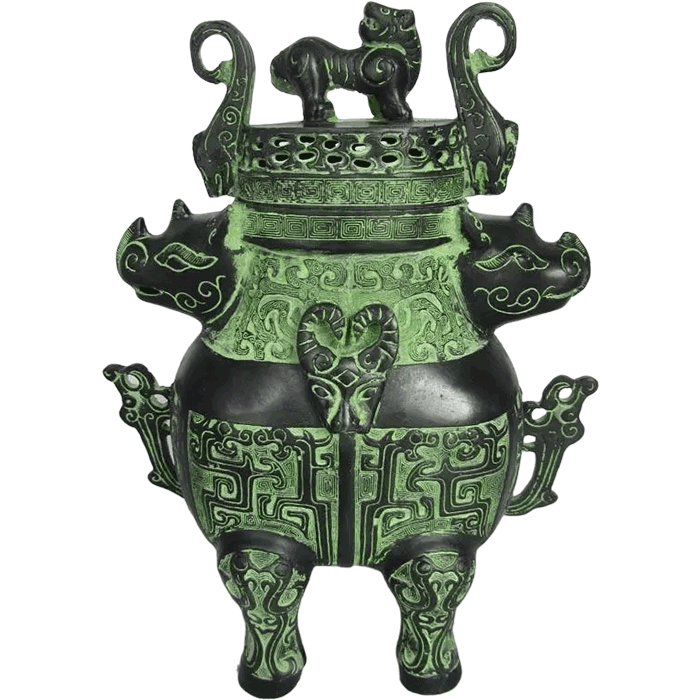
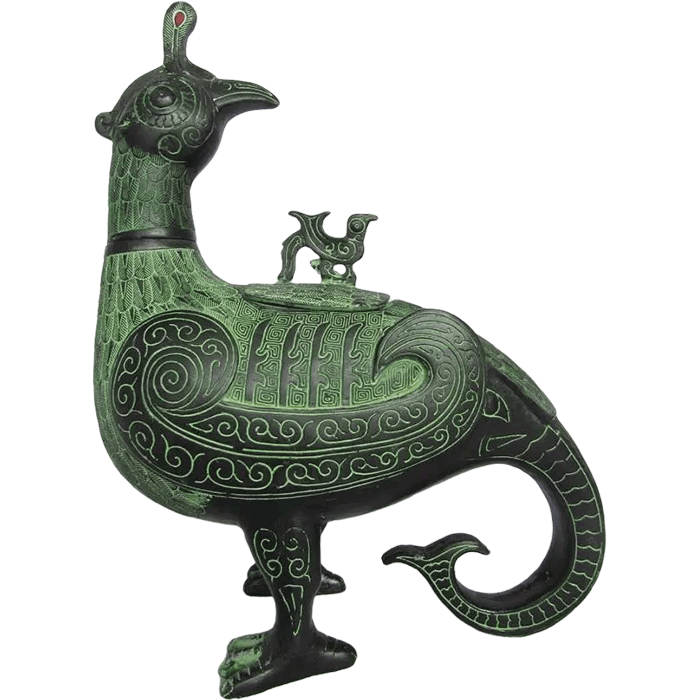
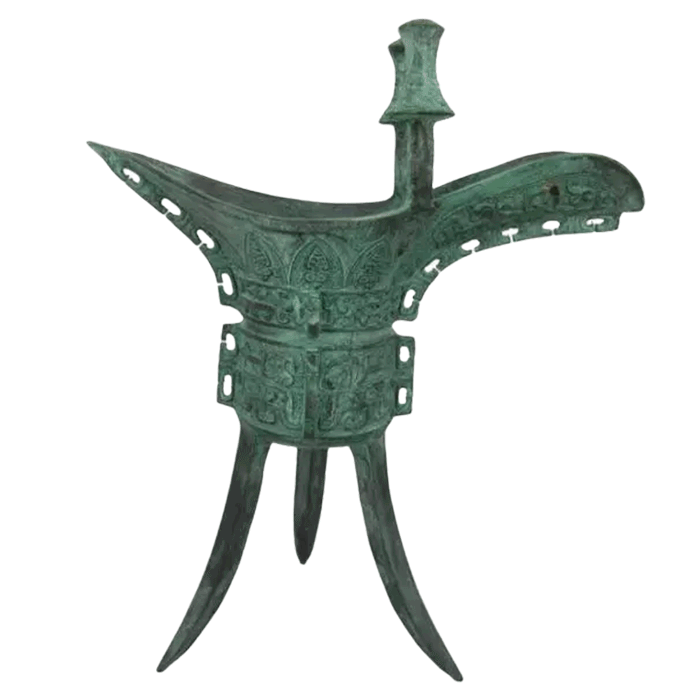
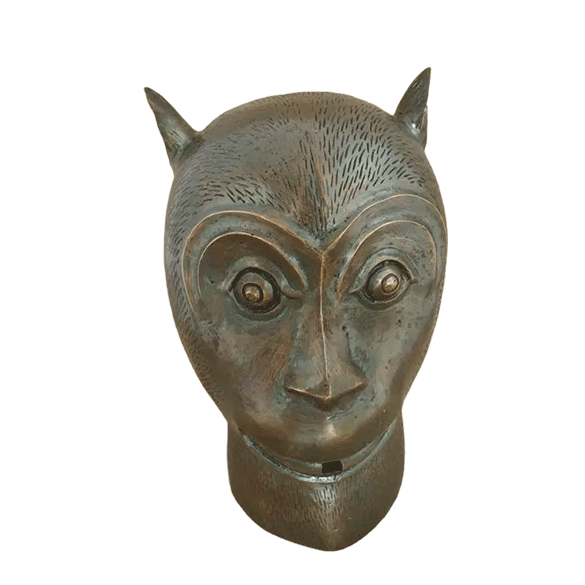
Patination is the process of chemically treating the surface of the bronze to create a layer of color. This is not paint; it is a controlled oxidation that becomes an integral part of the metal. The patina provides color, depth, and character, and it also serves as a protective layer. We offer a wide range of patinas, from traditional antique greens and rich browns, mimicking the look of ancient artifacts like the famous Houmuwu square cauldron, to sleek, modern blacks and nuanced polychrome finishes.
One of the key challenges in B2B sourcing is achieving consistent patina color across a large batch of sculptures. This is one of the pain points we solve for our clients. Our masters have developed precise formulas and application techniques, using heat and specific chemical compounds, to ensure that the first piece in a production run matches the last. Complex, multi-layered patinas require multiple applications and careful blending, making them more time-consuming and therefore more costly than a single, uniform color. The ability to guarantee color consistency is a hallmark of a high-quality foundry and a key value we provide.
Beyond the Foundry: Packaging, Logistics, and Quality Assurance
For international B2B buyers, the final "landed cost" includes more than just production. A reliable manufacturing partner manages the entire process through to delivery, ensuring the product arrives safely and meets all quality expectations. These logistical and quality control elements are built into our pricing structure to provide a seamless procurement experience.
MOQ, Prototyping, and Production Scale
We understand that our clients have diverse needs. That's why we support everything from a single custom prototype to large-scale production runs. Our Minimum Order Quantity (MOQ) starts at just one piece, allowing clients to commission a unique, one-of-a-kind sculpture or to order a sample for evaluation before committing to a larger order. While a single prototype carries a higher per-unit cost due to the unamortized setup expenses, it provides an invaluable opportunity to approve a design before full-scale production. For bulk orders, our 3,000-square-meter facility is capable of efficiently producing tens of thousands of pieces annually, delivering both quality and value.
Export-Compliant Packaging and After-Sales Support
A beautiful sculpture is worthless if it arrives damaged. We specialize in creating export-compliant protective packaging tailored to each piece. Fragile sculptures are secured in custom-built crates with foam padding and structural supports to withstand the rigors of international shipping. This attention to detail minimizes the risk of costly damage and insurance claims, protecting your investment.
Our commitment to quality is backed by our ISO 9001 certified quality management system. Every piece undergoes a thorough inspection before shipment to ensure it meets our exacting standards and complies with export quality regulations for art crafts. In the unlikely event of a casting defect, we offer a free replacement. Furthermore, we provide after-sales support, including guidance on patina touch-ups and long-term restoration, ensuring the longevity of your commissioned artworks.
Ultimately, the price of bespoke bronze replicas is a reflection of material, artistry, and quality assurance. By partnering with an experienced and transparent manufacturer, you invest not just in a product, but in a seamless process and a final piece that meets your exact specifications. If you are ready to begin your next project, we invite you to contact our team to customize a bronze sculpture and receive a detailed, no-obligation quotation tailored to your unique design.