Meaning of Chinese Bronze Patterns & Motifs
Understanding the Meaning of Chinese Bronze Patterns Through Motifs and Historical Periods
Chinese bronze art stands as a profound testament to ancient civilization, offering a visual encyclopedia of beliefs, rituals, and societal structures spanning millennia. The intricate patterns adorning these magnificent artifacts are not merely decorative; they are symbols imbued with deep cultural, religious, and political significance. For collectors, researchers, and project planners seeking to understand or accurately reproduce these historical masterpieces, deciphering the meaning of Chinese bronze patterns is crucial. Luoyang Yichuan Bronze Craft Co., Ltd. specializes in crafting authentic bronze reproductions that capture the historical essence and intricate details of these ancient designs, adhering to the highest standards of quality and historical accuracy.
From the fearsome
taotie mask to elegant dragon motifs and detailed pictorial scenes, each pattern tells a story of its era. This exploration delves into the evolution and symbolism of these patterns across key dynastic periods, providing insights into their context and importance. Our expertise, backed by an ISO 9001 quality management system, ensures that every custom bronze artwork, from a single prototype to bulk production runs, faithfully reflects the original artistic intent and craftsmanship.
The Dawn of Bronze Art: Shang and Western Zhou Dynasties (c. 1600-771 BCE)
The earliest and most profound expressions of Chinese bronze art emerged during the Shang and Western Zhou Dynasties. These periods are characterized by heavy, imposing ritual vessels used in ancestral worship and state ceremonies. The patterns on these bronzes were often zoomorphic, highly stylized, and imbued with a sense of awe and mystery, reflecting a worldview deeply connected to nature and the spirit world.
Early Shang: Taotie and Thunder Patterns
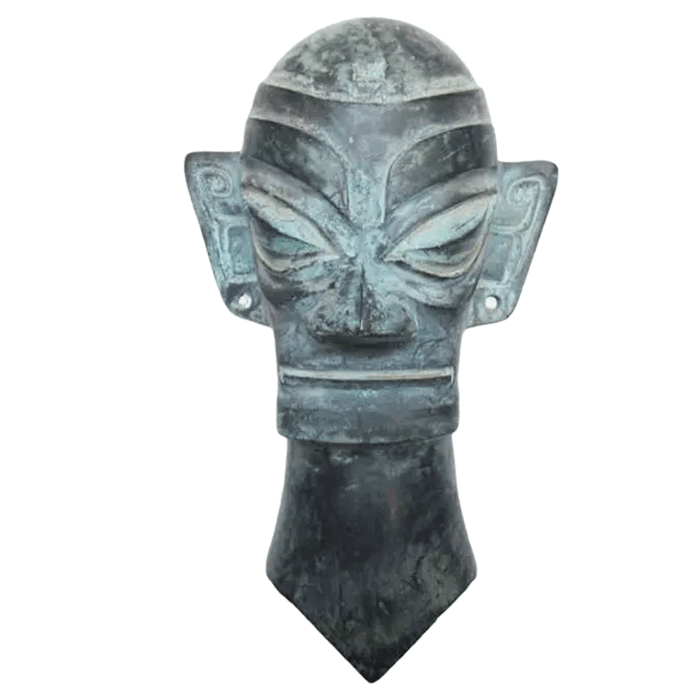
The quintessential motif of the Shang Dynasty is the
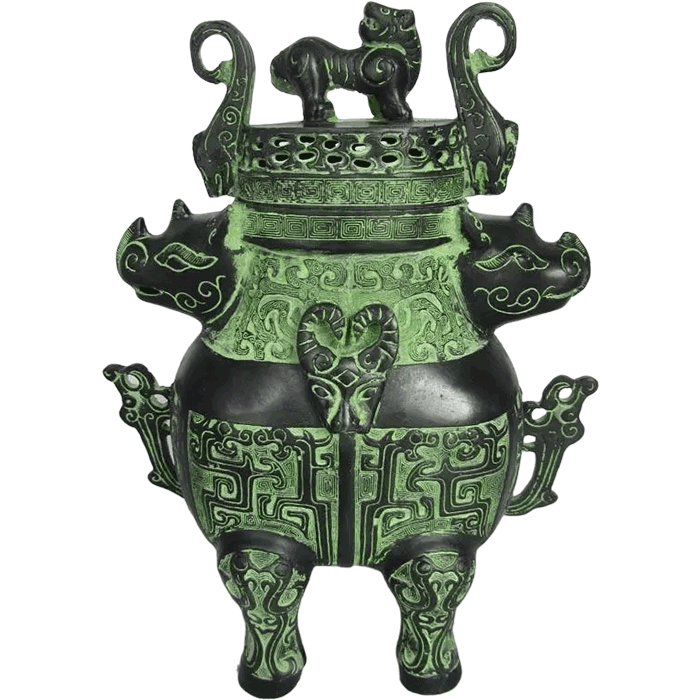
taotie (饕餮), a fearsome, symmetrical monster mask with prominent eyes, often depicted frontally. While its exact meaning remains debated, it is widely believed to represent a protective creature, perhaps a mythical beast associated with power, gluttony, or a guardian of the spiritual realm. The
taotie often appears on
ritual vessels like the ding cauldron, serving to enhance the solemnity and authority of the rituals performed. Its abstract, almost hallucinatory quality, combined with strict symmetry, evokes a sense of both terror and reverence.
Accompanying the
taotie are intricate geometric patterns, most notably the "thunder pattern" (
leiwen 雷紋). This motif consists of continuous spirals, often forming a square or circular maze-like design. The
leiwen is thought to symbolize clouds, thunder, or the cyclical nature of the cosmos, providing a dense, textured background that makes the larger animal motifs stand out. These patterns filled nearly every available space on the bronze surface, creating a visual richness that underscored the preciousness and ritualistic importance of the objects. The combination of the powerful
taotie and the pervasive
leiwen created a distinct artistic language that defined early Chinese bronze art.
Late Shang to Western Zhou: Animal Motifs and Inscriptions
As the Shang Dynasty progressed and transitioned into the Western Zhou, bronze patterns evolved. While the
taotie remained prominent, other animal motifs gained increasing importance. Dragons (
long 龍), phoenixes (
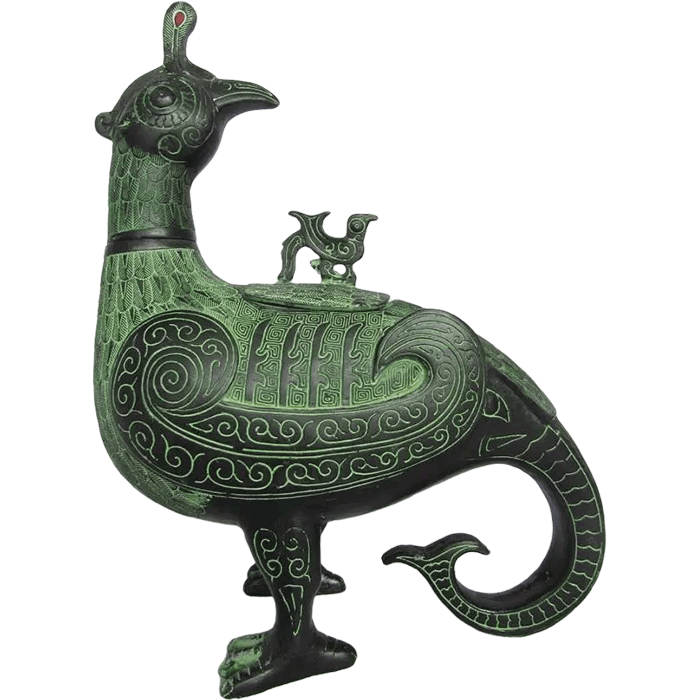
feng 鳳), tigers, and birds appeared more frequently, often depicted in profile or with more naturalistic features. These animals held specific symbolic meanings: dragons symbolized imperial power and divine authority, phoenixes represented prosperity and harmony, and tigers were associated with strength and protection. The stylization of these animals became slightly less rigid, allowing for more dynamic compositions.
During the Western Zhou Dynasty, bronze patterns also began to incorporate more narrative elements, particularly through the inclusion of extensive inscriptions (
jinwen 金文). These cast texts, often found on the interior of vessels, recorded significant events, royal decrees, or ancestral dedications. While technically not patterns in the decorative sense, these inscriptions are integral to the aesthetic and historical understanding of Western Zhou bronzes, serving as both historical records and calligraphic art. The patterns themselves became somewhat less dense, with more negative space, allowing the shapes of the vessels and the monumental inscriptions to stand out. This shift reflects a change in ritual emphasis, with a growing focus on lineage and historical record-keeping. Luoyang Yichuan Bronze Craft Co., Ltd. possesses the expertise to precisely replicate these complex patterns and inscriptions, ensuring historical accuracy for every bespoke piece. Our skilled craftsmen, including bronze-casting masters and finishing artisans, are adept at the traditional lost-wax method, a technique crucial for capturing the fine details of these ancient designs. For those interested in the broader context of these early developments, exploring
the evolution of bronze culture over 2000 years offers further insights.

Innovation and Refinement: Spring and Autumn to Han Dynasties (771 BCE - 220 CE)
The tumultuous periods following the Western Zhou saw significant changes in Chinese society, politics, and art. Bronze patterns reflected these shifts, moving from solemn ritualistic symbolism towards more dynamic, often secular, and increasingly sophisticated decorative forms.
Spring and Autumn Period: Interlaced Dragons and Geometric Designs
The Spring and Autumn Period marked a transition where regional states began to assert their independence, leading to a diversification of artistic styles. While ancestral worship remained important, the patterns on bronzes started to display greater exuberance and complexity. A prominent motif of this era is the "interlaced dragon pattern," where multiple serpentine dragons are woven together in dense, often symmetrical, compositions. These patterns are characterized by their intricate, almost textile-like appearance, moving away from the stark frontality of the Shang
taotie.
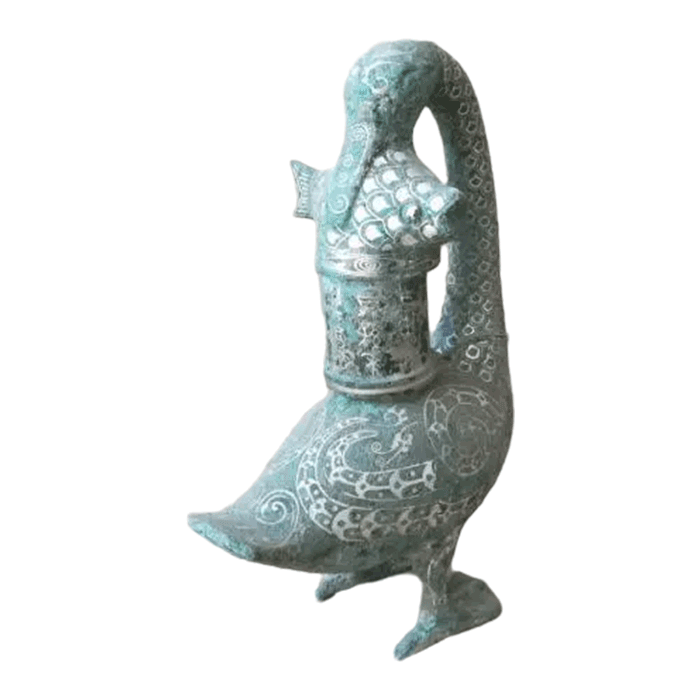
Geometric designs also continued to evolve, becoming more refined and curvilinear. Hook-and-volute patterns, often resembling stylized clouds or waves, created a sense of flowing movement across the bronze surface. While still abstract, these motifs were less overtly fearsome than their Shang predecessors, suggesting a shift in aesthetic sensibility towards elegance and sophistication. The bronzes of this period, including
vessels like the Lotus Crane Square Pot, demonstrate a mastery of intricate casting and a move towards more visually appealing forms.
Warring States Period: Pictorial Scenes and Gold/Silver Inlay
The Warring States Period, a time of intense conflict and intellectual ferment, brought revolutionary changes to bronze art. Patterns became increasingly pictorial, depicting scenes of daily life, hunting, feasting, and even mythical narratives. These images offer invaluable glimpses into the social customs and beliefs of the time, moving away from purely symbolic or abstract designs.
Technological advancements also allowed for new decorative techniques. Gold and silver inlay became popular, adding luxurious gleam and intricate detail to the bronze surfaces. Tiny pieces of precious metals were hammered into pre-carved grooves, creating stunning contrasts and highlighting the pictorial elements. Often, these inlays formed patterns of flying birds, fantastic beasts, or geometric spirals, making the bronzes exceptionally opulent. The
characteristics of the bronze wares of the Spring and Autumn and Warring States periods highlight this transition from rigid ritualism to more vibrant narratives.
Han Dynasty: Mythical Creatures and Everyday Life Depictions
The unified empire of the Han Dynasty brought a new era of stability and cultural flourishing. Bronze patterns continued to evolve, often reflecting a cosmology that blended earthly life with the celestial realm. Mythical creatures such as winged dragons, phoenixes, and various immortals became common, often depicted in dynamic flight or engaged in celestial pursuits. These motifs frequently adorned bronze mirrors, which gained immense popularity during this period. The
patterns on these bronze mirrors often included astrological symbols, auspicious characters, and mythical beings from Daoist cosmology, believed to bring good fortune and ward off evil.
Alongside mythical themes, patterns depicting everyday life, such as agricultural scenes, chariots, and architectural elements, also appeared. These designs, often rendered with a sense of realism, showcased the prosperity and practical concerns of the Han populace. The patterns of the Han Dynasty demonstrate a confident blend of spiritual aspiration and earthly appreciation, reflecting a more expansive and cosmopolitan worldview. Our facility in Yichuan County, Luoyang, with a production area of 3,000 square meters, is perfectly equipped to handle the replication of such historically significant pieces, ensuring that the essence of these periods is captured in every detail.
Spiritual and Secular Art: Post-Han Dynasties (220 CE onwards)
Following the decline of the Han Dynasty, China entered a period of fragmentation and significant cultural exchange. Bronze art continued to adapt, incorporating new religious influences and expanding into a wider range of functional and decorative objects.
Buddhist Influence: Lotus and Auspicious Symbols
With the spread of Buddhism from India, Buddhist motifs began to appear prominently on Chinese bronzes, particularly on statues and votive objects. The lotus flower, a central symbol in Buddhism representing purity, enlightenment, and spiritual growth, became a ubiquitous pattern. It adorned bases, halos, and robes of Buddhist statues, often rendered with delicate, flowing petals. Other auspicious symbols from Buddhist iconography, such as the wheel of dharma, the endless knot, and various celestial beings, also found their way onto bronze surfaces.
These patterns often featured a more serene and contemplative aesthetic, contrasting with the dynamic or fearsome motifs of earlier periods. The focus shifted from grand ritualistic power to personal devotion and spiritual merit. Bronze Buddhist statues, incense burners, and reliquaries became important mediums for these new artistic expressions, reflecting the profound impact of Buddhism on Chinese culture. Luoyang Yichuan Bronze Craft Co., Ltd. specializes in creating custom bronze artworks, including
Chinese bronze sculpture, that faithfully reproduce these sacred patterns, ensuring their spiritual integrity and artistic beauty.
Tang to Ming Dynasties: Floral Motifs and Everyday Objects
Later dynasties, such as the Tang, Song, Yuan, and Ming, continued to utilize bronze, though often for different purposes and with evolving artistic styles. During the Tang Dynasty, known for its cosmopolitanism and cultural vibrancy, bronze patterns often featured lush floral motifs, particularly peonies, which symbolized wealth and honor. These designs were often more naturalistic and less constrained by rigid symmetry, reflecting a broader appreciation for beauty and elegance.
Bronze mirrors continued to be popular, often decorated with auspicious animals, landscape scenes, or intricate floral patterns. Incense burners and other decorative objects also showcased these evolving artistic trends. In later periods, bronze was increasingly used for secular objects, including weights, household utensils, and smaller decorative items, with patterns reflecting contemporary tastes and artisanal skills. While the monumental ritual vessels of the early dynasties became less common, the craftsmanship and artistry applied to smaller bronze pieces remained exceptional, demonstrating a continuous tradition of bronze casting and pattern design that adapted to changing social and religious contexts.
Crafting Authenticity: Replicating Historical Chinese Bronze Patterns
The ability to accurately reproduce the diverse and intricate patterns of historical Chinese bronzes requires not only deep historical knowledge but also exceptional technical skill. Luoyang Yichuan Bronze Craft Co., Ltd. prides itself on its capability to meet these demanding requirements, offering unparalleled expertise in custom bronze art sourcing. Our commitment to preserving the integrity of ancient designs is paramount.
We address critical pain points for clients, such as ensuring the exact replication of antique bronzes. Our team of over 30 skilled craftsmen, including revered bronze-casting masters, meticulously hand-chase, polish, and apply patina finishes to achieve either authentic antique or modern looks. This hands-on approach, combined with the traditional lost-wax method using premium bronze alloy (Cu-Sn), guarantees that every detail, from the minute spirals of a
leiwen to the flowing lines of a Han dynasty dragon, is faithfully reproduced.
Consistency in patina color matching across multiple pieces is another challenge we expertly solve. Each bronze piece undergoes thorough quality inspection before every shipment, ensuring that it complies with export quality inspection standards for art crafts. Furthermore, our protective packaging is specifically designed for fragile sculptures, ensuring safe transit globally. We offer free replacement for any casting defects and provide comprehensive after-sales support, including guidance for patina touch-ups and restoration. Whether you require a single custom sculpture with an MOQ of 1 piece or are planning bulk production runs, our annual output of over 50,000 bronze art pieces and flexible production capabilities are designed to meet your project's unique specifications. Clients seeking to
customize a bronze sculpture from sculpmart.com can expect a seamless process from design to delivery.

The meaning of Chinese bronze patterns is deeply interwoven with the fabric of Chinese civilization. Each swirl, zoomorphic figure, and pictorial scene offers a window into the beliefs, aesthetics, and technological prowess of its time. From the solemn power of the Shang
taotie to the elegant pictorial narratives of the Han, these patterns continue to captivate and educate.
At Luoyang Yichuan Bronze Craft Co., Ltd., we are dedicated to bringing this rich history to life through expertly crafted bronze reproductions. Our blend of traditional techniques and modern quality control ensures that every artwork not only meets but exceeds expectations for historical accuracy and artistic excellence. We invite collectors, museums, and project planners to collaborate with us in preserving and celebrating the profound legacy of Chinese bronze art. Contact us to discuss your custom bronze art needs and discover how our expertise can bring your vision to fruition.