Meaning of Chinese Bronze Patterns: Ancient Motifs
Unveiling the Profound Meaning of Chinese Bronze Patterns
Ancient Chinese bronze artifacts are not merely historical relics; they are profound canvases adorned with intricate patterns that encapsulate centuries of cultural beliefs, cosmic understandings, and societal structures. For museum curators, educators, and cultural art importers, comprehending the meaning of Chinese bronze patterns is essential for appreciating their true value and historical context. These sophisticated designs, meticulously cast onto ritual vessels, weapons, and sculptures, served not only as decoration but as powerful symbols connecting the human realm with the divine, reflecting power, protection, and prosperity.
At Luoyang Yichuan Bronze Craft Co., Ltd., we are deeply committed to preserving and reinterpreting this rich heritage. Our expertise in crafting Chinese bronze sculpture, vessels, and custom artworks ensures that the intricate details and profound symbolism of these ancient patterns are faithfully brought to life, adhering to the highest standards of quality and authenticity.
Deciphering Early Dynastic Iconography: Shang and Zhou Periods
The genesis of complex Chinese bronze patterns can be traced back to the Shang dynasty (c. 1600–1046 BCE), a period marked by significant advancements in metallurgy and artistry. Early Shang bronzes, primarily ritualistic vessels, featured bold, often abstract zoomorphic designs. These patterns were not random; they were deeply rooted in shamanistic beliefs and ancestral worship, intended to facilitate communication between the living and the spirit world.
As the Bronze Age progressed into the Western Zhou dynasty (1046–771 BCE), the aesthetic of bronze patterns evolved. While still retaining a ritualistic function, Zhou bronzes began to incorporate more narrative and less fearsome motifs. The intricate, densely packed patterns of the Shang gave way to more open, flowing designs, often featuring stylized birds, dragons, and geometric forms. Inscriptions, known as 'jinwen,' also became more prominent, providing invaluable historical records alongside the decorative elements. These inscriptions, often detailing important events, decrees, or ancestral dedications, further enriched the meaning embedded within the bronze objects.
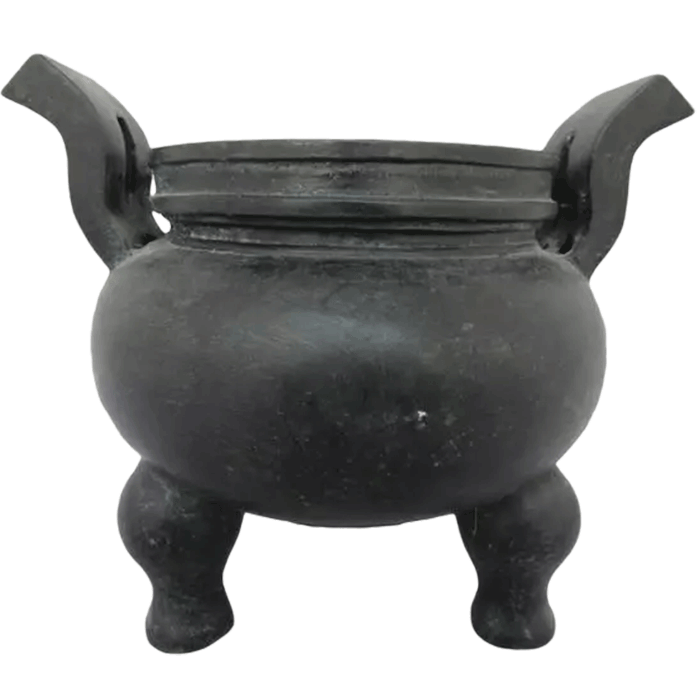
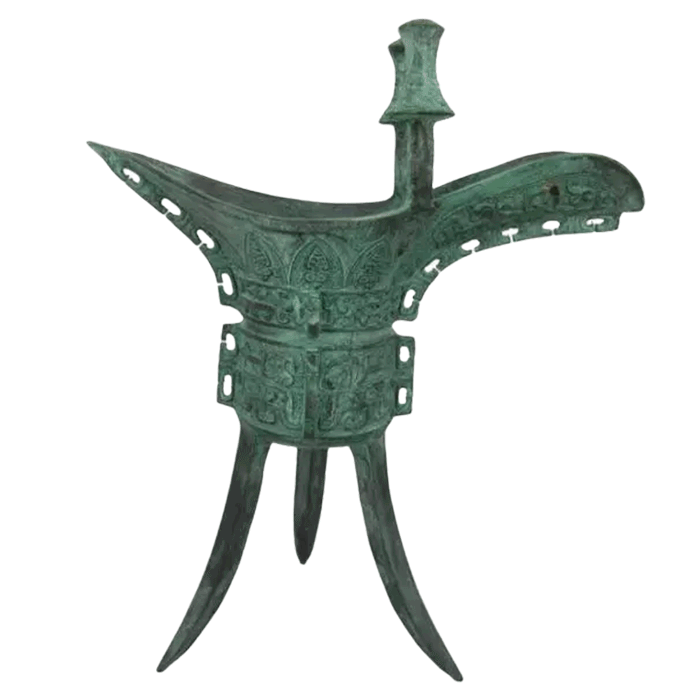
The transition from the Shang to the Zhou period illustrates a shift in focus from raw, formidable spiritual power to a more refined, ordered cosmic understanding. Vessels such as ding tripods and zun vases, central to ancestral rites, continued to bear patterns that reinforced their sacred purpose, evolving subtly to reflect changing philosophical and political landscapes.
Mythical Beasts and Cosmic Symbolism: The Taotie and Beyond
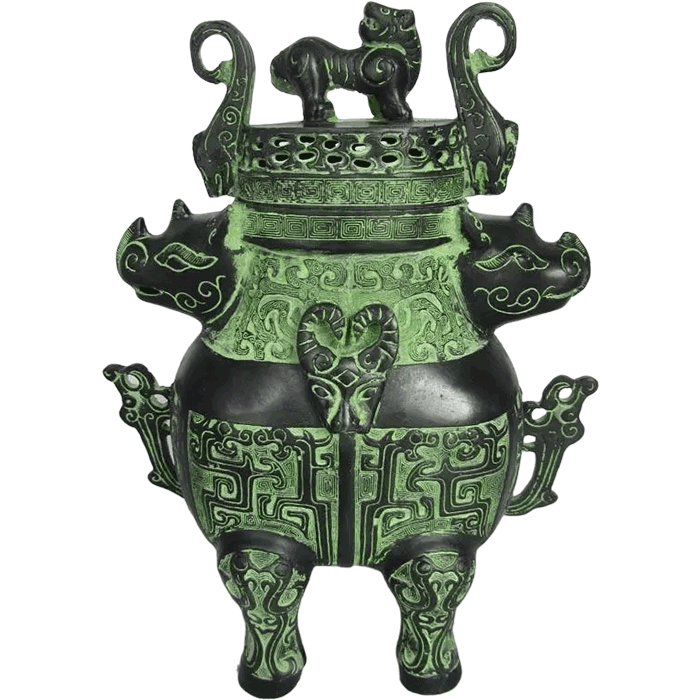
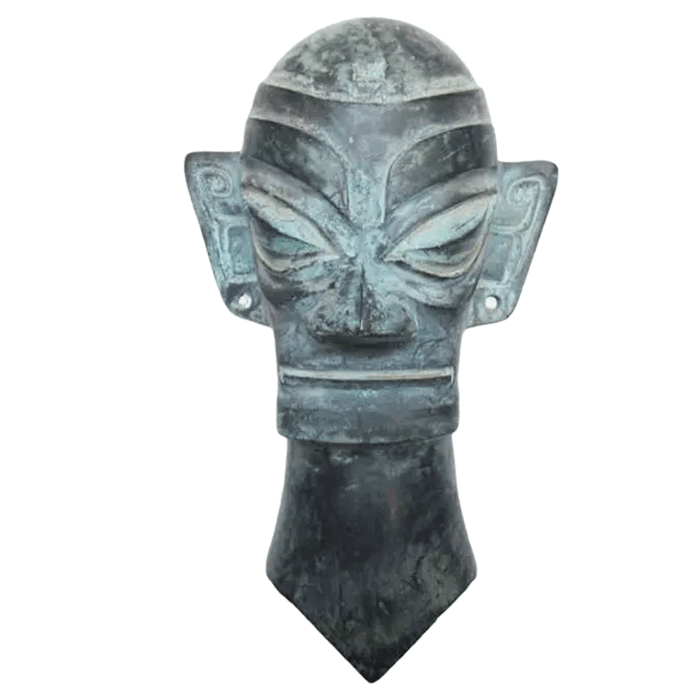
Among the most iconic and enigmatic motifs found on ancient Chinese bronzes is the Taotie (饕餮), a fearsome, symmetrical, mask-like face. Predominantly featured on Shang and early Western Zhou bronzes, the Taotie is characterized by prominent eyes, a broad nose, and often a gaping mouth, sometimes flanked by horns, ears, and stylized animal bodies. Its exact meaning remains a subject of scholarly debate, but it is widely believed to represent a protective guardian, a voracious beast symbolizing power and warning against gluttony, or a conduit to the spirit world. Its intense gaze was thought to ward off evil and ensure the sanctity of ritual ceremonies.
Another prevalent mythical creature is the Kui Dragon (夔龙), often depicted as a single-legged dragon or a stylized beast with serpentine or bird-like features. The Kui dragon typically symbolizes rain, fertility, and imperial authority, reflecting its association with water and agricultural prosperity. Its elegant, often undulating form adds a dynamic quality to the bronze surface.
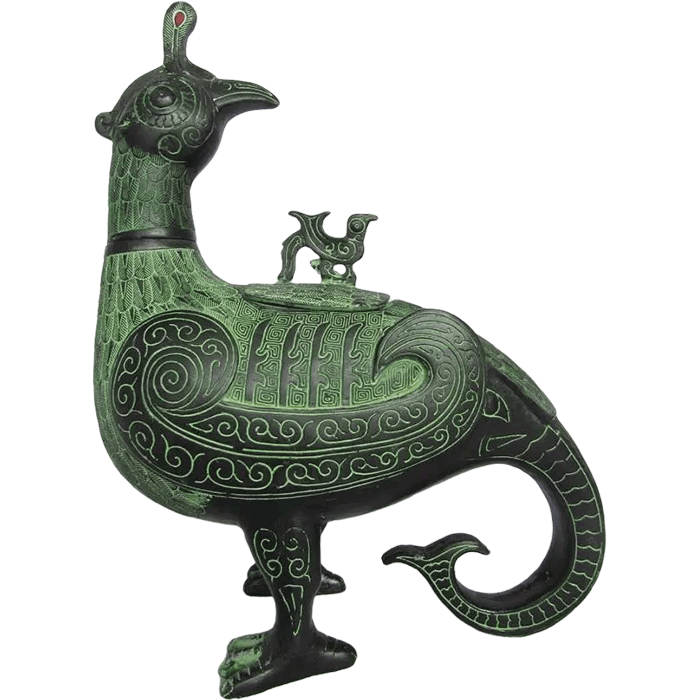
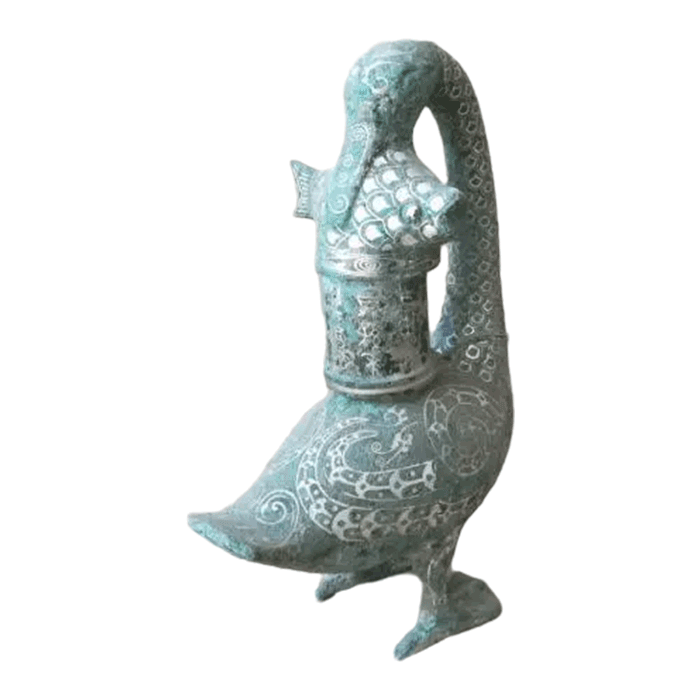
Later periods saw the increased appearance of the Fenghuang (凤凰), the Chinese phoenix. This magnificent bird, often associated with royalty, virtue, prosperity, and rebirth, typically appears in more refined and elegant forms, particularly from the Middle Zhou onwards. The general depiction of the Dragon (Long 龙), a powerful symbol of strength, good fortune, and imperial authority, also permeates Chinese bronze art, evolving from early stylized forms to the more elaborate depictions seen in later dynasties.
These mythical animals were not merely decorative elements; they were potent symbols conveying deep cosmological beliefs, societal values, and the aspirations of ancient Chinese civilization.
Nature's Influence: Real Animals and Abstract Elements
Beyond the realm of mythical creatures, ancient Chinese bronze patterns frequently incorporated recognizable animals, each imbued with specific symbolic meanings. The tiger, a creature of immense strength and ferocity, often symbolized protection, military prowess, and the ability to ward off evil spirits. Elephants, revered for their wisdom, strength, and gentle nature, represented peace, good fortune, and stability.
Birds, in various forms, also held significant symbolic weight. Owls, for instance, were sometimes associated with wisdom and protection, while cranes symbolized longevity and immortality. The cicada, with its life cycle of emergence from the earth, became a powerful emblem of rebirth, immortality, and transformation, often appearing on tomb artifacts and ritual vessels.
Alongside zoomorphic motifs, abstract patterns played a crucial role. The Leiwen (雷纹), or "thunder pattern," is a ubiquitous geometric design consisting of tight, squared spirals. It is believed to represent thunder, clouds, fertility, and the cosmic energy of the heavens. Cloud and water patterns, characterized by swirling lines and undulating forms, symbolized natural forces, fertility, and the life-giving properties of water. Interlocking designs, spirals, and various geometric fillers often provided background texture, enhancing the complexity and depth of the primary motifs.
These patterns, whether depicting real animals or abstract elements, demonstrate a profound connection to the natural world and the cosmos, reflecting a desire for harmony, prosperity, and protection in ancient Chinese society.
The Art of Production: Crafting Enduring Bronze Patterns
The intricate details and profound symbolism of these ancient patterns are a testament to the extraordinary skill and craftsmanship of ancient Chinese artisans. This tradition of excellence continues today. At Luoyang Yichuan Bronze Craft Co., Ltd., we employ the traditional lost-wax casting method, a sophisticated process that allows for the precise replication of even the most complex designs. This method, combined with our premium bronze alloy (Cu-Sn), ensures the durability and authenticity of each piece.
Our production area of 3,000 square meters houses over 30 skilled craftsmen, including bronze-casting masters and finishing artisans. They meticulously perform hand chasing, polishing, and patina finishing, bringing each pattern to life with either antique or modern looks. This dedication to traditional techniques ensures that the spirit and detail of historical bronze patterns are preserved in every new creation. We are ISO 9001 quality management system certified, and our products comply with export quality inspection standards for art crafts, guaranteeing superior quality for our international clients.
We understand the unique challenges faced by museum buyers and cultural importers, such as the need for exact replication of antique bronzes and consistent patina color matching. Our capabilities extend from a single custom prototype to bulk production runs, with a MOQ of just 1 piece for custom sculptures. Furthermore, we offer export-compliant protective packaging for fragile sculptures, ensuring safe delivery. Our commitment to quality extends to after-sales support, including free replacement for casting defects and guidance for patina touch-ups and restoration.
Whether you require a faithful reproduction of an ancient ritual vessel or a unique, custom bronze artworks that incorporate traditional motifs, our team possesses the expertise and infrastructure to meet your specific needs with unparalleled artistry and precision.
Beyond Decoration: The Broader Cultural Significance
The patterns on ancient Chinese bronzes were far more than mere ornamentation; they were a sophisticated language, a visual lexicon that communicated profound cultural, religious, and political messages. They served as a tangible link between the human world and the spiritual realm, invoking blessings, offering protection, and affirming social status. Through these patterns, ancient Chinese societies expressed their cosmology, their relationship with nature, their reverence for ancestors, and their understanding of power and authority.
Studying these motifs provides invaluable insights into the philosophical underpinnings of ancient Chinese civilization. They reveal an intricate worldview where the natural, human, and divine realms were deeply interconnected. The evolution of these patterns across dynasties also chronicles shifts in belief systems, political ideologies, and artistic tastes, offering a dynamic narrative of China's rich historical tapestry.
Today, the legacy of these patterns continues to inspire and educate. They remind us of the enduring power of art to convey complex ideas and emotions across millennia. For collectors, institutions, and anyone interested in the depths of Chinese culture, understanding the symbolism embedded in these bronzes enriches the appreciation of these magnificent artifacts.
Luoyang Yichuan Bronze Craft Co., Ltd. is proud to be a part of this enduring legacy, offering meticulously crafted bronze pieces that honor the artistic and symbolic traditions of ancient China. We invite you to explore our range of bronze statues with different themes, vessels, and custom options, each piece echoing the profound artistry and historical significance of these timeless patterns.