Matching Houmuwu Ding Motifs on Bronze Reproductions
How to Match Houmuwu Ding Motifs on a Houmuwu Ding Bronze Reproduction
The Houmuwu Ding, unearthed in Anyang and now recognized as one of the heaviest surviving Shang dynasty bronzes, carries a decorative program that has become a benchmark for scholars and collectors alike. When designers, museum consultants, or private collectors commission a reproduction, the success of the piece is judged less by its overall silhouette than by the accuracy of its surface motifs — the taotie masks, the cloud-and-thunder ground patterns, and the handle ornamentation. This guide walks through the specific decorative elements that must be evaluated before commissioning a replica, and explains how a workshop specializing in traditional lost-wax casting approaches motif fidelity.
Understanding the Original Decorative Program
Before any casting decision is made, it helps to separate the Houmuwu Ding's ornamentation into three distinct zones: the body panels, the leg (or "foot") bands, and the handle exteriors. Each zone uses a different compositional logic, and a reproduction that blends them incorrectly will look "close enough" to a casual observer but fail scrutiny from a trained eye.
Body Panel Taotie Masks
The four body panels of the original vessel each display a stylized taotie (animal mask) motif rendered in low relief against a dense leiwen (cloud-and-thunder) background. The mask's horns curve outward and slightly upward, the eyes are large and almond-shaped with raised pupils, and the nose ridge runs in a continuous vertical line down the center of the panel. Reproductions that flatten this ridge or simplify the horn curvature lose the sculptural depth that gives the original its presence. For readers researching related Shang-period vessel forms, this background on the piece's structure is worth reviewing in a dedicated article on the houmuwu square cauldron.
Leg Band Cicada and Animal Motifs
Each of the four legs carries a horizontal band near the top featuring a stylized cicada or animal-face motif, distinct from the body panels in both scale and relief depth. These bands are shallower than the body taotie and often show more wear on excavated originals, which means a faithful reproduction should account for slightly softened edges rather than crisp, machine-like lines — a detail that separates a museum-grade Houmuwu Ding bronze reproduction from a generic decorative casting.
Handle Fish and Bird Reliefs
The exterior of each handle bears a pair of confronting fish or bird-like reliefs, smaller in scale and positioned symmetrically. Because the handles are load-bearing in the original design, their wall thickness and relief depth were historically constrained by the casting technology of the period. Reproductions cast with modern alloy formulations sometimes exaggerate this relief for visual impact, which technically deviates from the archaeological record even if it looks more dramatic.
Why Motif Accuracy Depends on Casting Method
Surface motif fidelity is not purely an artistic decision — it is constrained by the casting process itself. The original Houmuwu Ding was produced using a piece-mold casting technique, which naturally created subtle seam lines and slight asymmetries between panels. Modern reproduction workshops instead typically rely on the lost-wax method, which offers finer control over undercuts and continuous relief lines but can also produce an unnaturally uniform surface if the wax model is not sculpted with the original's irregularities in mind.
A workshop pursuing a historically credible Houmuwu Ding bronze reproduction should therefore sculpt the wax pattern directly from high-resolution reference imagery or 3D scan data of the original, rather than working from a simplified line drawing. This preserves the subtle relief gradients across the taotie mask and the leiwen ground pattern, and it allows hand-chasing artisans to refine details after casting — sharpening horn tips, deepening eye sockets, or softening leg-band wear — in a way that a purely mechanical reproduction process cannot replicate.
At Luoyang Yichuan Bronze Craft Co., Ltd., this combination of wax modeling and post-cast hand chasing is standard practice across our vessel line, which also produces zun, hu, and other tripod and vase forms alongside custom pieces. For readers comparing casting techniques more broadly, our related overview of the difference between bronze and brass explains why alloy selection also affects how crisply fine relief can be rendered.
Evaluating Patina Before Commissioning a Replica
Motif accuracy is only half of the visual equation — patina color and texture determine whether the surface reads as archaeologically convincing or simply "aged-looking." The Houmuwu Ding, like many excavated Shang and Zhou vessels, displays a complex surface of malachite green, azurite blue undertones, and darker oxidized patches concentrated in recessed relief areas, where corrosion products accumulate over centuries of burial.
Common Patina Mismatches to Watch For
- Uniform green coating with no color variation, which reads as artificial rather than naturally aged.
- Patina applied only to raised surfaces, leaving recessed motif details looking too clean or too new.
- Overly glossy chemical patinas that reflect light differently than the matte, mineral-like surface of excavated bronze.
A workshop experienced in reproduction work will typically build up patina in layers, allowing chemical oxidation to settle into recessed areas of the taotie masks and leiwen ground first, then adjusting the raised surfaces separately to mimic natural wear patterns. This layered approach is one of the more difficult aspects of matching an original vessel's surface, and it is where color-matching consistency across a production run becomes a genuine sourcing concern for buyers ordering multiple pieces. Readers interested in the broader stylistic evolution of these surface treatments across dynasties may find useful context in our article on the evolution of bronze culture over 2000 years.
Practical Checklist for Commissioning a Houmuwu Ding Bronze Reproduction
For designers and researchers evaluating a workshop's capability before placing an order, the following checklist helps structure the review process:
1. Reference Source Verification
Ask whether the wax pattern was modeled from photographic reference, published archaeological drawings, or 3D scan data. Reproductions based on simplified drawings tend to lose fine leiwen ground detail.
2. Proportional Consistency
Confirm that leg spacing, handle angle, and panel proportions match published measurements of the original vessel, since scaling errors in one dimension often distort the appearance of the taotie masks.
3. Relief Depth Sampling
Request close-up photographs of a sample casting under raking light, which reveals whether relief depth on the body panels versus the leg bands has been differentiated correctly.
4. Patina Layering Process
Ask how the workshop achieves color variation — whether through multi-stage chemical patination or a single uniform treatment — since this affects how convincingly the surface reads under different lighting conditions.
5. Packaging and Export Handling
Because a full-scale Houmuwu Ding replica is heavy and its relief details are vulnerable to impact damage during transit, confirm that the workshop provides export-compliant protective packaging designed for fragile cast bronze, along with a pre-shipment quality inspection.
Luoyang Yichuan Bronze Craft Co., Ltd. operates under an ISO 9001 quality management system and inspects every piece prior to shipment, offering free replacement for casting defects and after-sales guidance on patina touch-ups. Our production facility in Yichuan County, Luoyang, supports orders from a single custom prototype through bulk production runs, with more than 30 skilled craftsmen — including bronze-casting masters and finishing artisans — working across a 3,000-square-meter production area.
Beyond the Ding: Related Vessel Forms and Custom Work
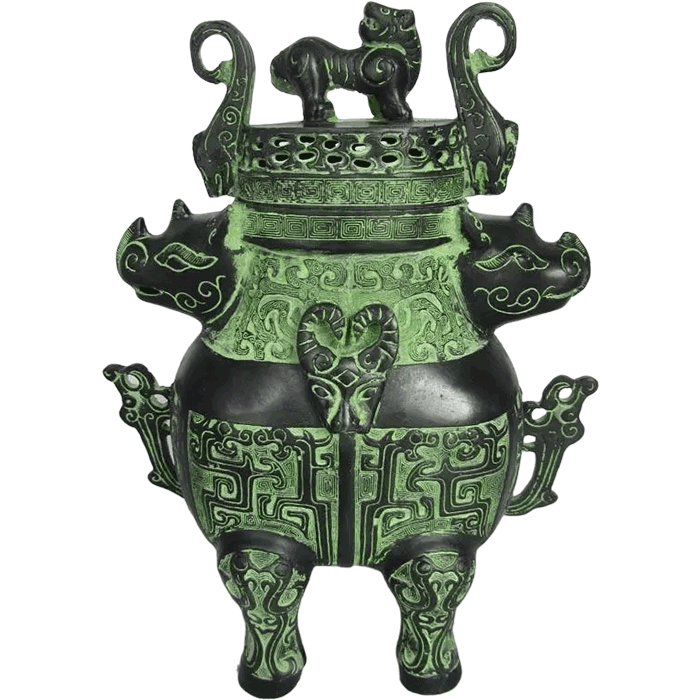
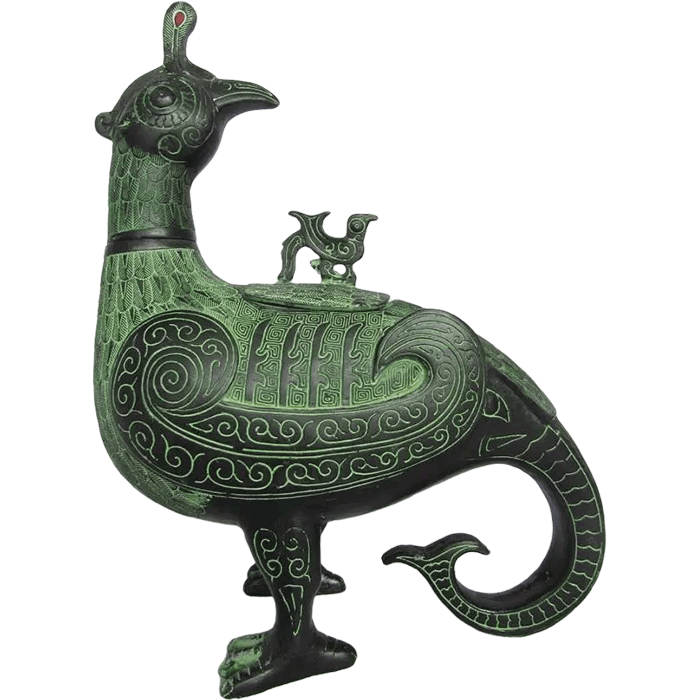
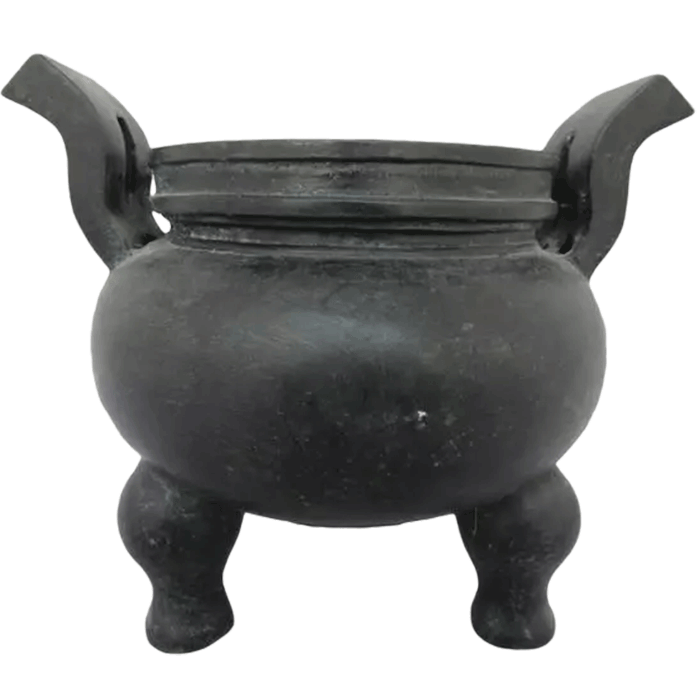
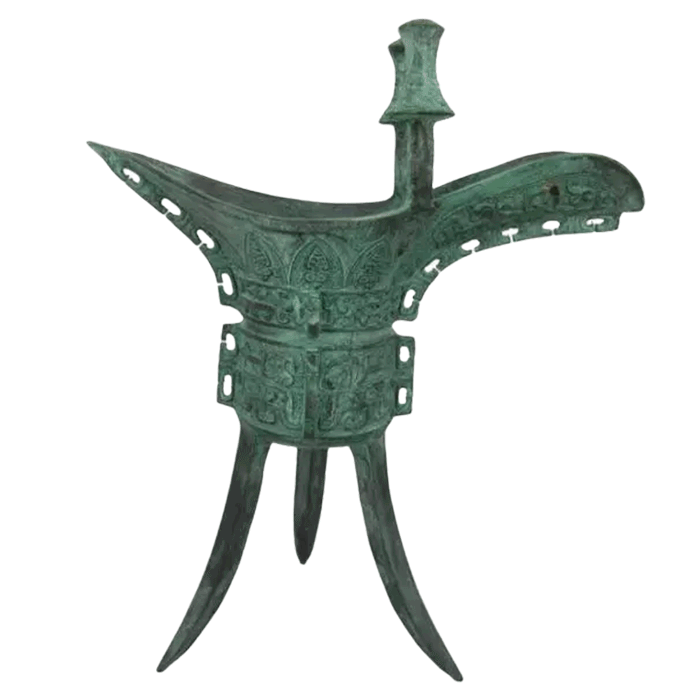
Buyers commissioning a Houmuwu-style vessel often also require complementary pieces for exhibition or research contexts — matching zun wine vessels, hu vases, or smaller ritual bronzes that share a consistent patina family. Our range of chinese bronze sculpture and vessel work extends to fully custom commissions, where our team works from client-supplied references or archaeological documentation to sculpt an accurate wax pattern before casting. For collectors and institutions exploring options beyond vessel forms, our bronze statues with different themes collection includes figural and animal subjects finished with the same hand-chasing and patina techniques described above.
Because motif accuracy and patina consistency are the two factors most likely to determine whether a reproduction satisfies a research or exhibition standard, we recommend requesting sample images and a written description of the casting and patination process before finalizing any commission. A workshop willing to document its reference sourcing, proportional checks, and layered patina process is generally better positioned to deliver a replica that withstands close comparison with published archaeological records — whether the final piece is a single decorative commission or part of a larger themed collection for a gallery or research institution.
For buyers ready to move forward with a commission, our team can review reference materials and provide relief-depth samples prior to production. Details on the commissioning process are available on our customize a bronze sculpture from sculpmart.com page, where project scope, timeline, and patina options can be discussed directly with our production team.