Match Shang Ding Replica Handles to Ritual Forms | Guide
Matching a Shang Dynasty Bronze Ding Vessel Replica's Handle Design to Its Original Ritual Form
For buyers evaluating antique bronze reproductions for cultural décor, educational displays, or resale collections, the handle style of a ding vessel is one of the most telling details of authenticity. Handles are not decorative afterthoughts — in Shang and early Zhou bronze casting traditions, handle shape, placement, and proportion were tied directly to the vessel's ritual function, regional workshop practices, and dynastic period. Buyers who understand these relationships are better equipped to compare suppliers, evaluate replica quality, and avoid pieces that mix mismatched stylistic elements from different periods.
This guide breaks down the main ritual ding forms, explains how their handles typically vary, and outlines what to look for when sourcing a reproduction piece for serious display or resale purposes.
Why Handle Design Matters in Ritual Bronze Vessels
In the Shang dynasty, bronze ding vessels served as ceremonial cooking and offering vessels used in ancestral rites. Their form communicated status, ritual function, and workshop tradition. Handles — typically upright loop handles positioned on the rim — were cast integrally with the vessel body using the lost-wax or piece-mold method, and their thickness, curvature, and attachment points followed conventions specific to each vessel category.
A reproduction that gets the body proportions right but uses a generic or mismatched handle style will look "off" to anyone familiar with original bronze culture, and it may raise questions in resale or academic display contexts where accuracy matters. This is one reason buyers researching a Shang Dynasty Bronze Ding Vessel Replica should ask suppliers directly how they source reference forms before commissioning a piece.
Common Ritual Ding Forms and Their Typical Handle Styles
Round-Bodied Ding (Yuan Ding)
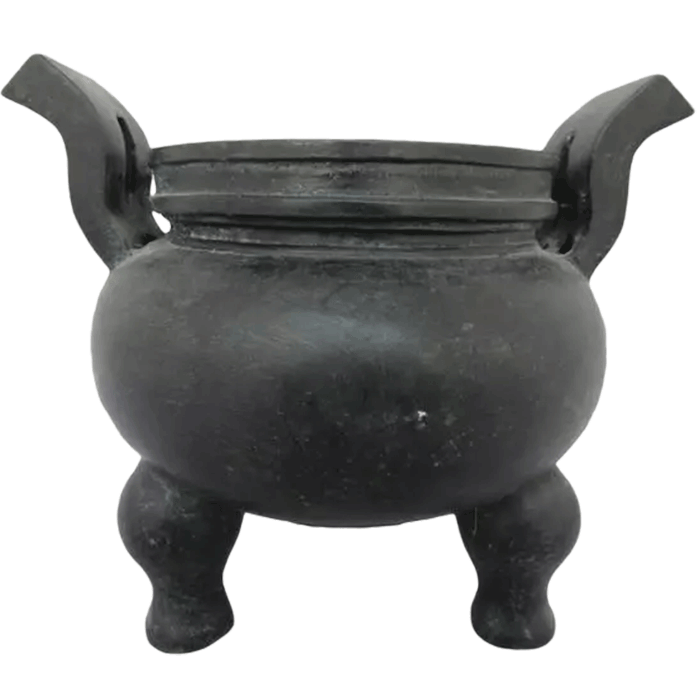
The round ding, standing on three legs with a rounded belly, is the most recognized ritual form from the Shang period. Handles on round ding are usually a pair of upright loop handles mounted symmetrically on the rim, slightly outward-leaning to allow for lifting with a carrying pole during ceremonies. Reproductions that place handles too close together or angle them inward tend to misrepresent the functional geometry of the original design.
Square Ding (Fang Ding)
Square ding vessels, exemplified by pieces like the Houmuwu square cauldron, use four legs and a rectangular body. Their handles are typically thicker and more angular than those on round ding, positioned at the narrow ends of the rim rather than the wider sides, reflecting the vessel's larger ceremonial scale. Readers interested in this specific vessel type can review a dedicated discussion of the Houmuwu square cauldron for more context on proportion and casting complexity.
Deep-Bellied Ding with Animal-Mask Motifs
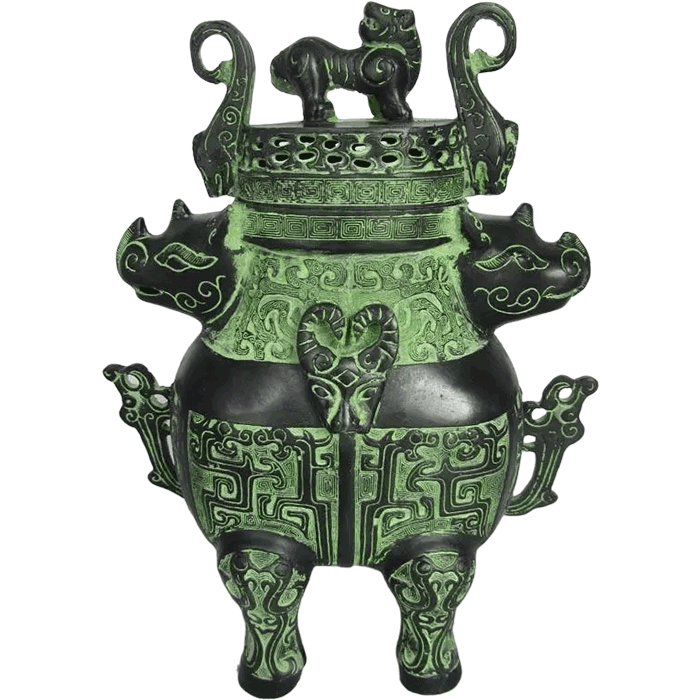
Later Shang and early Western Zhou ding often incorporate taotie (animal-mask) motifs along the body, and their handles sometimes echo this decorative language with subtle relief patterns extending from the rim into the loop itself. This is a detail that separates a well-researched reproduction from a simplified decorative casting — the handle should carry a visual relationship to the body's ornamentation, not exist as an isolated attachment.
Casting and Finishing Techniques That Affect Handle Accuracy
Handle accuracy is not just a design decision — it is a casting challenge. Because handles are thinner than the vessel body, they cool at a different rate during the lost-wax casting process, which can cause warping, air pockets, or weak attachment points if the mold and pour are not managed carefully by experienced craftsmen.
At Luoyang Yichuan Bronze Craft Co., Ltd., our production process uses a premium bronze alloy (Cu-Sn) and the traditional lost-wax method, allowing skilled bronze-casting masters to achieve consistent wall thickness across both the vessel body and its handles. After casting, hand chasing and polishing refine handle edges and surface texture, while patina finishing — available in antique or modern looks — ensures the handle color matches the body rather than appearing as a separately treated component. This attention to detail matters most when a buyer is trying to replicate a specific museum-referenced form rather than a generic "ding-style" decorative piece.
What Buyers Should Verify Before Shortlisting a Supplier
Buyers at the research stage — whether sourcing for museum-style décor, educational exhibits, or resale inventory — should evaluate a few specific points before narrowing down a supplier list:
- Reference accuracy: Ask whether the workshop references documented archaeological forms or works from generic templates. A supplier familiar with distinctions between round ding, square ding, and other ritual vessel categories is more likely to deliver a handle style consistent with the intended period.
- Casting method: Lost-wax casting allows finer control over handle-to-body transitions than sand casting, which can leave visible seams at attachment points.
- Patina consistency: Handles and bodies should share a matched patina tone. Inconsistent coloring between components is a common sign of rushed finishing work or mismatched batch production.
- Packaging for fragile details: Loop handles are among the most vulnerable points during shipping. Export-compliant protective packaging should specifically account for handle protrusions, not just overall vessel bulk.
- Quality inspection process: A pre-shipment inspection step, along with a clear policy on replacement for casting defects, reduces risk for buyers ordering sight-unseen from overseas.
These factors apply whether a buyer is ordering a single custom prototype or planning a bulk run for a themed retail collection. Because MOQ for custom sculptures can start from a single piece, buyers evaluating design fidelity have the option to commission a sample unit before committing to larger quantities.
Placing Ding Vessels Within a Broader Bronze Collection
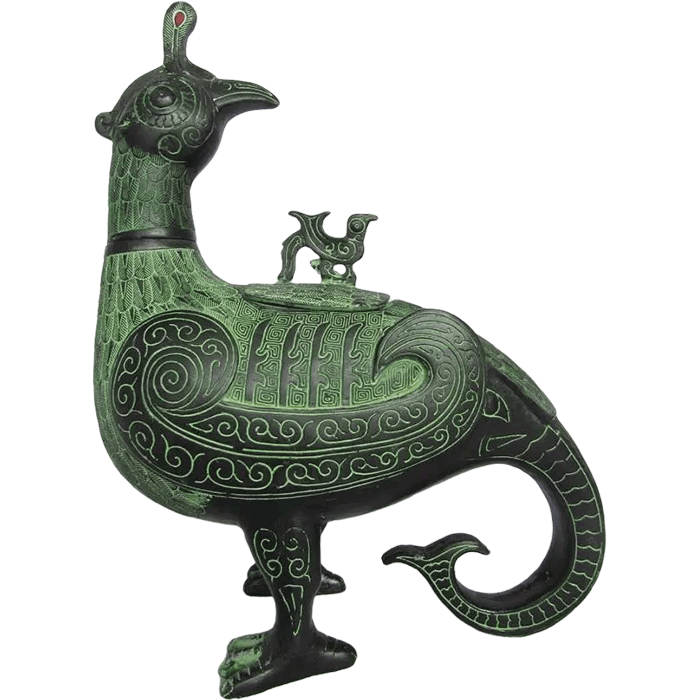
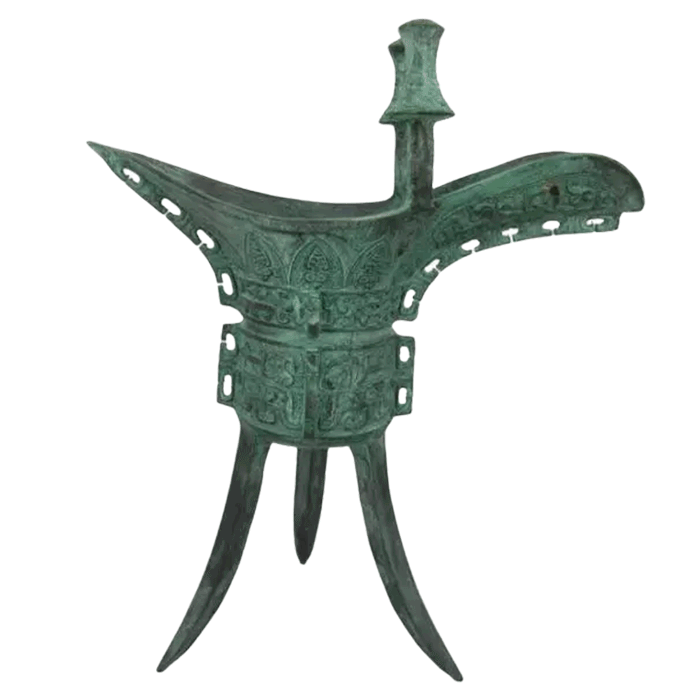
A ding vessel rarely stands alone in a curated collection — it is often paired with other ritual bronze forms such as zun wine vessels, hu vases, or bronze mirrors to represent a fuller picture of ancient Chinese material culture. Buyers building an educational display or a themed resale line may want to review our broader range of Chinese bronze sculpture offerings to see how vessel replicas complement figural pieces and decorative bronzes.
For those specifically researching vessel history before finalizing a purchase, background reading on related forms can add useful context. The evolution of ritual bronze casting techniques across dynasties, discussed in our article on the evolution of bronze culture over 2000 years, outlines how handle and body conventions shifted from the Shang through later periods — useful background for anyone trying to judge whether a replica's proportions are period-appropriate.
Custom Options for Precise Ritual Form Replication
Because ritual ding forms vary meaningfully by handle placement, leg shape, and surface motif, buyers with specific reference pieces in mind — whether from a museum catalog or a private collection — often benefit from a custom commissioning process rather than selecting from a standard catalog. Our production facility in Yichuan County, Luoyang, with over 30 skilled craftsmen including bronze-casting masters and finishing artisans, supports custom bronze artwork requests ranging from a single prototype to full production runs.
Buyers who want to submit reference photographs or dimensional drawings for a specific ding form can review the process to customize a bronze sculpture from sculpmart.com, which outlines how design references are translated into wax models before casting begins. This step is particularly important for handle accuracy, since small adjustments to loop width or rim attachment angle can significantly change how closely a reproduction matches its historical counterpart.
Final Considerations for Serious Buyers
Selecting a Shang Dynasty Bronze Ding Vessel Replica for cultural décor, education, or resale is ultimately a matter of matching design details to intended use. A display piece meant to educate visitors about Shang ritual bronzes benefits from strict handle-to-body accuracy, while a decorative interpretation for general home décor may prioritize visual balance over strict historical replication. Either way, understanding how handle styles relate to ritual ding categories gives buyers a stronger basis for comparing suppliers, asking informed questions, and avoiding pieces that blend inconsistent stylistic cues.
Before finalizing a shortlist, it is worth requesting sample photos of both round and square ding forms from a prospective supplier, along with details on their casting method and finishing process. This due diligence, combined with a clear understanding of ritual form conventions, helps ensure the final piece — whether a single showcase item or part of a larger inventory — holds up to informed scrutiny from collectors, educators, or retail customers alike.