Lost Wax Custom Bronze Foundry Shrinkage Control
How a Lost wax custom bronze foundry handles shrinkage in custom castings
Bronze shrinkage is one of the most important technical considerations when a sculptor, product designer, or procurement team is preparing a custom artwork for casting. A design may look complete in clay, wax, resin, or a digital model, but it must be adjusted before tooling and mold preparation if the finished bronze is expected to match the approved dimensions, proportions, assembly points, and visual character.
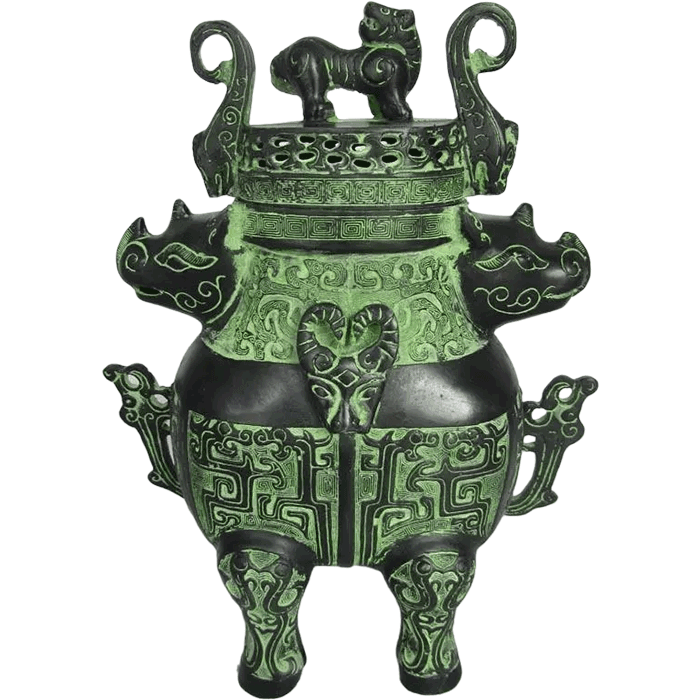
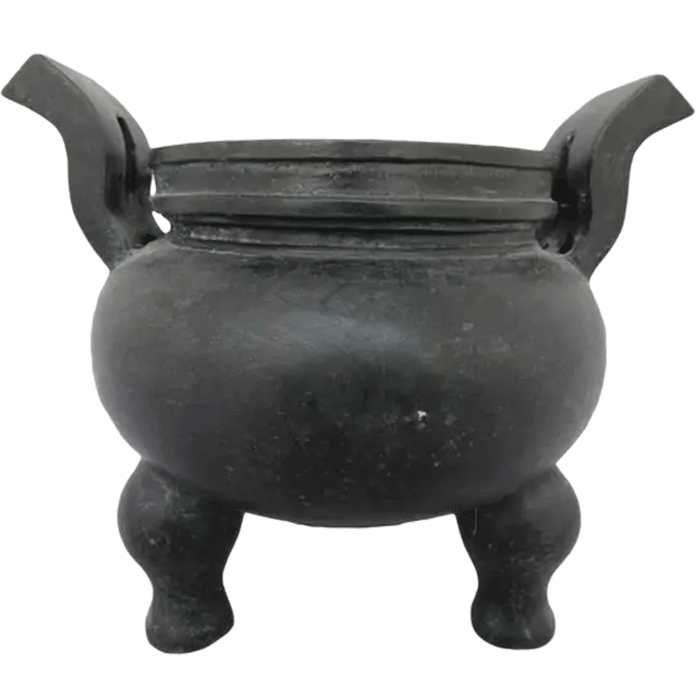
During lost-wax casting, bronze changes dimension at several stages. Wax patterns cool and contract, ceramic shell molds experience thermal change, molten bronze solidifies, and the casting cools to room temperature. These changes are normal, but they must be anticipated rather than corrected only after casting. A disciplined process helps ensure that a small bronze incense burner, a monumental human figure, a detailed animal sculpture, or a traditional ding vessel remains close to the approved specification.
For buyers sourcing custom bronze art, shrinkage planning should begin before the first production mold is made. It affects scale, wall thickness, mounting hardware, part segmentation, tolerances, and even patina expectations. At Luoyang Yichuan Bronze Craft Co., Ltd., custom work can begin from one prototype, allowing clients to validate a design before moving to a larger production quantity. This is especially useful when the design includes complex relief, tight-fitting parts, inscriptions, or matching components.
Why bronze castings shrink during the lost-wax process
Shrinkage is not one single event. It is the combined result of material behavior throughout the casting workflow. Understanding the stages helps design teams identify where dimensional changes should be managed.
Wax pattern contraction
The lost-wax process begins with a wax pattern, whether it is created from a silicone mold, an injection wax die, a hand-built wax model, or a pattern developed from a digital sculpture. As the wax cools, it contracts slightly. For repeatable editions, the foundry needs to use stable wax procedures and controlled handling so that patterns remain consistent from piece to piece.
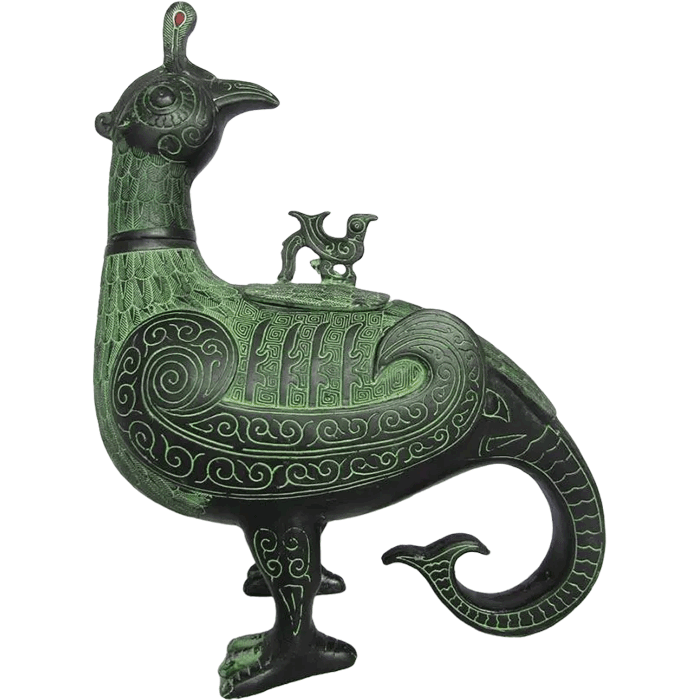
Wax movement can be particularly relevant for thin elements such as fingers, spear shafts, bird legs, handles, openwork ornament, and vessel rims. If a pattern bends or distorts before shell building, that distortion can be transferred into the metal. A foundry therefore checks waxes for symmetry, alignment, thickness, and damage before proceeding.
Metal solidification and cooling
When molten Cu-Sn bronze enters the heated ceramic shell, the metal begins to cool. As it changes from liquid to solid and then cools further, it contracts. The exact amount depends on the alloy composition, casting geometry, wall thickness, feeding design, and cooling conditions.
Large masses generally cool differently from thin features. A solid base may retain heat longer than a thin robe edge, while a heavy animal torso may cool at a different rate than its tail or ears. If this is not planned correctly, the result may include dimensional variation, internal shrinkage porosity, warping, or stresses near junctions between thick and thin sections.
Ceramic shell and assembly effects
The ceramic shell must withstand burnout, preheating, pouring, and cooling. Its behavior influences how faithfully surface detail and dimensions are reproduced. In addition, many large sculptures are cast in sections and welded together after casting. Each section may be accurate individually, yet the full assembly still requires careful alignment at seams, joints, mounting points, and internal supports.
This is why a bronze sculpture should not be evaluated only as a single isolated form. The design must also be reviewed as a casting system: patterns, gates, risers, shells, metal flow, cooling paths, sections, welds, chasing, and final installation.
How a Lost wax custom bronze foundry calculates allowance
There is no responsible universal shrinkage percentage that applies to every custom bronze project. A small decorative mirror, a hollow Buddhist statue, a thick-walled incense burner, and a multi-section outdoor sculpture present different technical conditions. The practical method is to establish shrinkage allowance according to the intended bronze alloy, the production route, the dimensions that matter most, and the form of the work.
The foundry normally begins with the approved reference material. This may include a physical master, technical drawings, CAD files, 3D scans, photographs with measurements, or scaled maquettes. Critical dimensions should be identified early. These may include:
- Overall height, width, depth, and base footprint
- Wall thickness requirements for hollow objects
- Installation holes, threaded inserts, anchor locations, and flange dimensions
- Gaps between assembled elements or moving components
- Diameter of vessel openings, lids, handles, and rims
- Symmetrical features on human faces, animals, mirrors, and ritual vessels
- Dimensions needed for packing crates, display pedestals, or architectural recesses
After reviewing the design, the foundry applies an appropriate allowance to the pattern or production model. For digital projects, the model may be scaled before pattern creation. For hand-sculpted or molded work, adjustments can be made during master preparation or wax pattern development. The goal is not simply to make every feature larger. The goal is to preserve the required finished size after the complete thermal process.
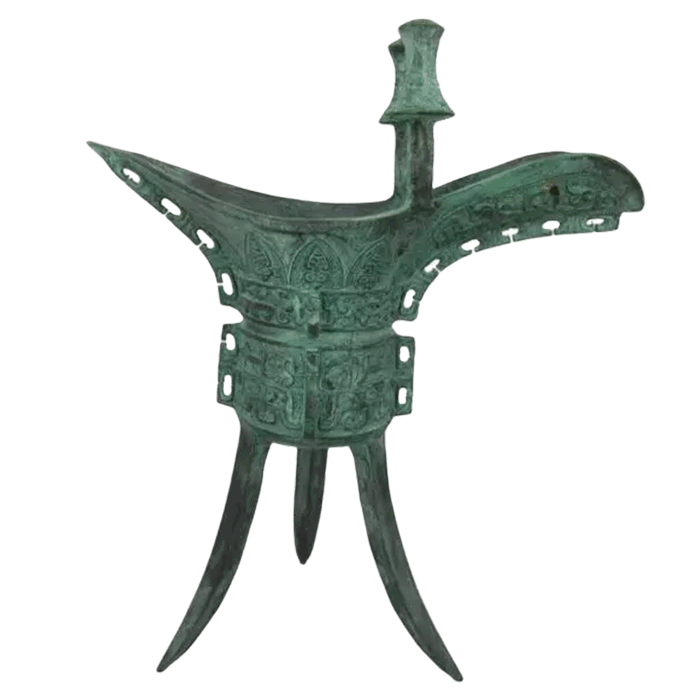
For historical-style designs, proportion matters as much as measurement. A client ordering a reproduction inspired by a ritual vessel may want the silhouette, decorative bands, handles, feet, and inscriptions to retain visual accuracy. Reference information on several bronze wares can help design teams discuss traditional vessel forms before finalizing a custom interpretation.
Design features that require extra shrinkage planning
Some forms are more forgiving than others. Smooth, solid objects with generous proportions are generally easier to control than highly detailed works with extreme thickness changes. Early feasibility review should focus on the features most likely to be affected by shrinkage, cooling stress, or metal flow.
Thin and extended elements
Long, narrow, or unsupported features may cool rapidly and can be vulnerable to distortion. Examples include branches, reins, weapon shafts, extended arms, incense burner legs, antlers, and the tails of animal statues. The foundry may recommend a revised thickness, a discreet internal support, a separate cast component, or an alternative assembly method.
Such recommendations are not necessarily compromises in artistic quality. In many cases, they are the practical steps that allow a delicate feature to survive casting, welding, finishing, transport, and installation. This is especially relevant for projects based on bronze statues with different themes, where slender legs, ears, wings, and tails may need tailored engineering.
Thick-to-thin transitions
A sudden transition from a heavy section to a thin section can create uneven cooling. For example, a large figure may have a substantial torso connected to narrow wrists, while a vessel may have a thick body with thin handles and ornamental projections. These regions must be considered when planning gating and feeding.
Where possible, gradual transitions are easier to cast than abrupt ones. If the artistic design requires sharp changes, the foundry can plan the casting system to help feed the heavier areas as the bronze solidifies. The aim is to reduce the risk of shrinkage cavities inside critical masses while maintaining the visible design.
Relief, texture, and inscriptions
Fine textures can make shrinkage concerns less obvious because dimensional changes may appear as softer edges, reduced depth, or incomplete definition rather than a visibly smaller overall object. Detailed surface work should therefore be evaluated in wax and again after casting.
Traditional motifs, calligraphy, decorative borders, and historical relief patterns often require hand chasing after the metal is cast. This finishing stage can restore crispness and continuity where needed, but it should be planned as part of the project rather than treated as an emergency correction. For clients researching historical references, the several bronze mirrors resource offers useful context for discussing decorative bronze surfaces.
Gating, risers, and directional solidification
Shrinkage control is closely connected to the gating and feeding system. Gates are channels through which molten bronze enters the mold. Risers, also called feeders, are reservoirs designed to supply additional molten metal as the casting solidifies. Their placement is based on the form of the sculpture and the expected cooling behavior of each area.
The principle is to encourage directional solidification: the casting should solidify in a planned sequence that allows liquid metal to feed areas that are still contracting. Heavy sections often need access to a properly located feeder. If a thick area freezes without adequate feeding, internal shrinkage defects may occur.
For a custom sculpture, the gating system is temporary and will be removed after casting. However, its location still matters. Gates should be placed where removal and finishing will be least disruptive to visible details. A human statue may allow gating beneath a base, under drapery, or along a less visible seam. A vessel may use locations that can later be chased and blended into the decorative structure.
Experienced craftsmen also consider metal flow. Bronze needs to reach detailed areas before it loses too much heat. A casting with delicate openwork, deep texture, or multiple thin appendages requires a gating plan that supports complete filling while balancing shrinkage control. Luoyang Yichuan Bronze Craft Co., Ltd. operates with more than 30 skilled craftsmen, including bronze-casting masters and finishing artisans, which supports coordination between pattern preparation, casting, chasing, and patina work.
How prototype approval reduces tooling risk
For new designs, a prototype is one of the most effective ways to verify shrinkage assumptions before committing to repeated production. The prototype can confirm not only overall size but also balance, wall thickness, structural integrity, detail clarity, assembly fit, and finish suitability.
Buyers should provide a clear approval checklist before production. Measurements should identify both critical dimensions and acceptable tolerances. For example, the overall height of a statue may have a reasonable tolerance, while the bolt pattern on its base may need much tighter control. A vessel lid may require a tested fit, while an ornamental relief band may be judged mainly by visual continuity.
| Review item | What to confirm before tooling | Why it matters |
|---|---|---|
| Overall scale | Final height, width, depth, and base dimensions | Compensates for expected process shrinkage |
| Critical interfaces | Mounting holes, inserts, pedestal contact points, lid fit | Ensures installation and assembly compatibility |
| Wall thickness | Hollow casting requirements and structural areas | Supports metal flow and cooling consistency |
| Surface detail | Texture depth, lettering, relief, and ornament | Protects visual definition after casting and finishing |
| Patina reference | Color sample, sheen, highlight level, and protected areas | Helps maintain a consistent intended appearance |
Luoyang Yichuan Bronze Craft Co., Ltd. supports custom orders from one piece, so prototype-based evaluation can be practical for artworks that are not yet ready for a bulk run. Once the prototype is approved, the same specification framework can guide repeat production. For teams beginning a new artwork, the option to customize a bronze sculpture provides a useful starting point for defining material, dimensions, form, and surface expectations.
Inspection, finishing, and dimensional verification
Shrinkage management does not end when the casting leaves the shell. The bronze must be cut from its gates, cleaned, welded if cast in sections, chased, polished, and prepared for patina. Each operation should preserve the approved form.
Dimensional inspection is especially important after welding and before final patina. The team should check the base plane, vertical alignment, symmetry, key widths, assembly holes, and the relationship between separate components. On larger sculptures, a slight alignment difference can become noticeable when the work is placed on a pedestal or viewed from a distance.
Hand chasing is also an important quality stage. It can refine seams, reconnect decorative lines, improve textures, and blend gate removal points into the surrounding surface. For antique-style work, finishing artisans may preserve the character of hand-made surface variation while maintaining the key dimensions agreed with the client. For modern designs, they may pursue cleaner planes and more uniform geometry.
Patina should be applied only after the client’s surface and dimensional requirements have been confirmed. Different patina styles can alter how edges, textures, and relief appear to the eye. Darker recessed patina may emphasize depth, while polished highlights may make edges appear sharper. The company offers antique and modern patina finishing, with support available for patina touch-ups and restoration guidance after delivery.
Questions procurement teams should ask before ordering
Early discussions about shrinkage help avoid preventable revisions later. Whether sourcing a bronze Buddhist statue, a commemorative figure, a decorative vessel, or a custom public artwork, procurement teams should ask focused questions before tooling begins.
- Which finished dimensions are critical, and what tolerances are acceptable?
- Will the sculpture be solid, hollow, or cast in assembled sections?
- Are there thin extensions, deep undercuts, heavy masses, or detailed relief areas?
- Where will gates and risers be positioned, and how will those areas be finished?
- Does the design include mounting hardware, inserts, lids, moving parts, or internal supports?
- Will a prototype be reviewed before repeated production begins?
- What inspection points will be documented before shipment?
- How will the sculpture be protected during export transport?
Export-ready packing is particularly relevant for fragile sculptural elements, polished surfaces, and complex assemblies. Luoyang Yichuan Bronze Craft Co., Ltd. performs quality inspection before every shipment and provides export-compliant protective packaging for fragile sculptures. The company is ISO 9001 quality management system certified, and its art crafts comply with export quality inspection standards.
Turning shrinkage knowledge into a better bronze specification
Shrinkage is not a reason to avoid ambitious bronze designs. It is a design and manufacturing variable that should be addressed at the earliest stage. The best results come from clear reference materials, realistic tolerance requirements, proper alloy and wall-thickness decisions, thoughtful gating, prototype approval, and careful finishing inspection.
For custom bronze work, an effective specification should state the intended finished dimensions rather than only the size of the original model. It should identify features that cannot change, distinguish visual tolerances from functional tolerances, and include surface references for patina and polishing. A well-prepared brief gives the casting team the information needed to plan allowances before mold and shell work begin.
With an annual output of more than 50,000 bronze art pieces and a 3,000-square-meter production area in Yichuan County, Luoyang, Henan Province, Luoyang Yichuan Bronze Craft Co., Ltd. can support both individual custom prototypes and negotiated bulk orders based on size and design complexity. For clients, the central lesson is straightforward: confirm shrinkage strategy before tooling, not after the bronze has been poured.