Lost Wax Bronze Castings: Direct vs. Indirect Wax
Lost Wax Bronze Castings help buyers choose between unique artworks and repeatable editions.
Collectors, retailers, museum shops, interior projects, and art buyers often ask the same practical question before ordering bronze: should the work be made with direct wax or indirect wax? The answer affects more than the production route. It influences whether each bronze is a singular interpretation, whether a design can be repeated, how closely editions can follow an approved original, and how a supplier should plan inspection, finishing, packaging, and future replenishment.
Both routes belong to the traditional lost-wax casting family. In each case, a wax pattern is invested in a heat-resistant mold material, the wax is removed by heating, and molten bronze is poured into the resulting cavity. After cooling, the investment material is removed, followed by metal chasing, surface refinement, polishing, and patina work. The defining difference is how the wax pattern is created and whether it can be recreated from a retained mold.
For buyers, the decision should begin with the product plan rather than with a general assumption that one method is better. A one-off commemorative figure, a large public artwork, an antique-style vessel, a series of retail sculptures, and a limited-edition Buddhist statue may each require a different approach. Understanding the role of wax helps purchasing teams specify the right process before requesting a quotation.
How the lost-wax process creates a bronze artwork
Bronze casting begins with a design source. Depending on the project, this source may be an original sculpture, a hand-built clay model, an approved physical sample, a historical reference, or artwork supplied by the client. Skilled makers translate the intended form into a wax pattern that includes the sculpture’s surface details, proportions, and casting allowances.
The wax pattern is fitted with wax channels. These channels create pathways for molten metal to enter the mold and for gases to escape during pouring. The wax assembly is then covered with investment material to form a heat-resistant shell or mold. Once the mold is cured and heated, the wax melts out. This is why the process is called “lost wax”: the wax pattern is removed before bronze is poured.
Premium Cu-Sn bronze alloy is suitable for works that require detailed modeling, durable structure, and hand-finished visual depth. After the metal has cooled, craftspeople remove the investment, cut away the former gating system, and refine the casting. Chasing can restore crisp details, while polishing and patina finishing establish the final appearance. Antique, dark, green-toned, brown, and more contemporary surface directions can be developed according to the approved design intent.
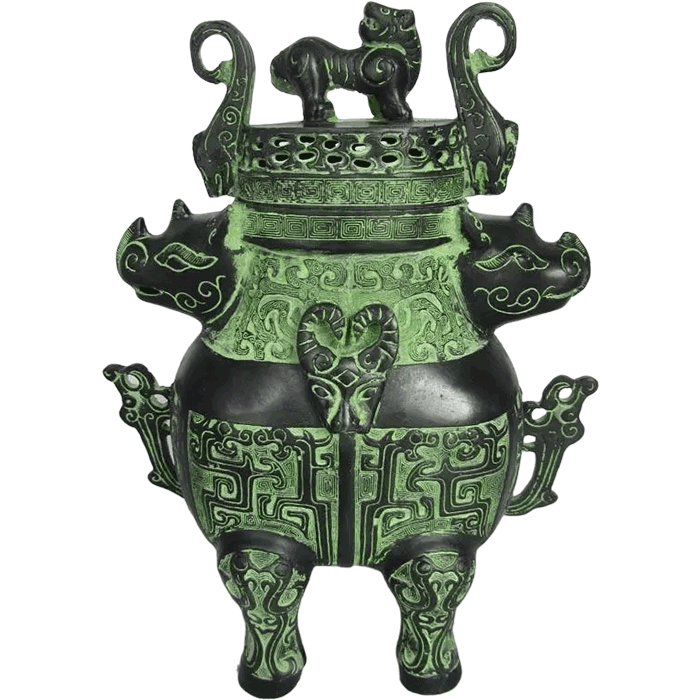
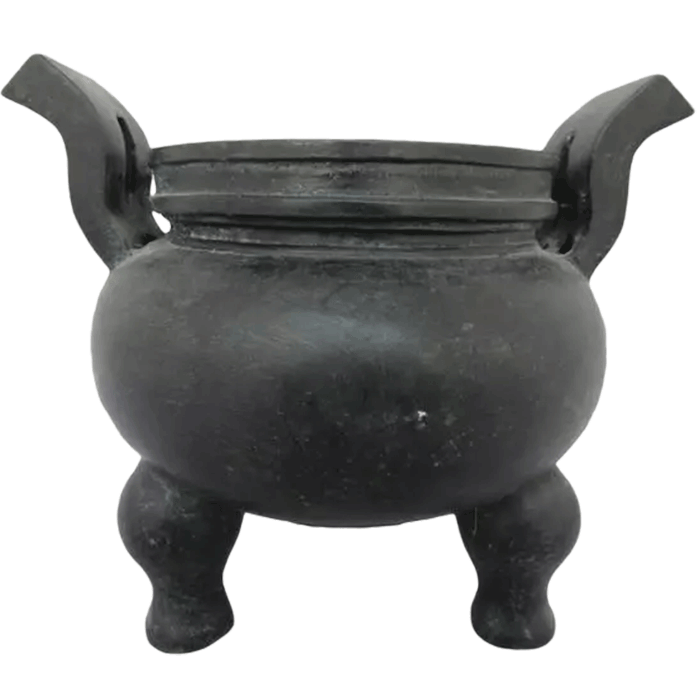
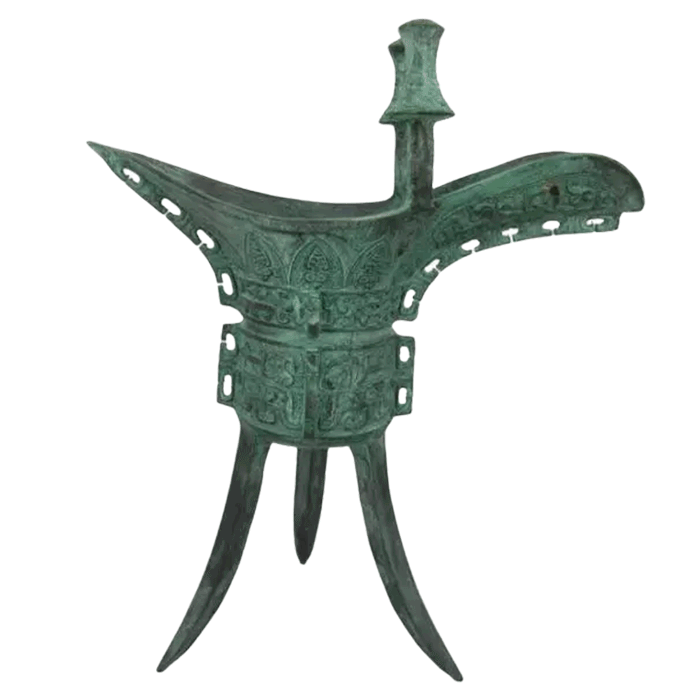
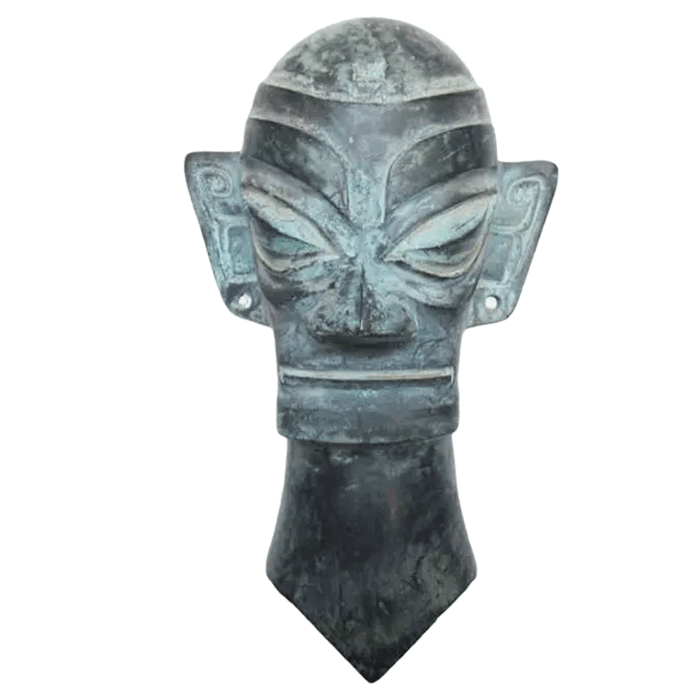
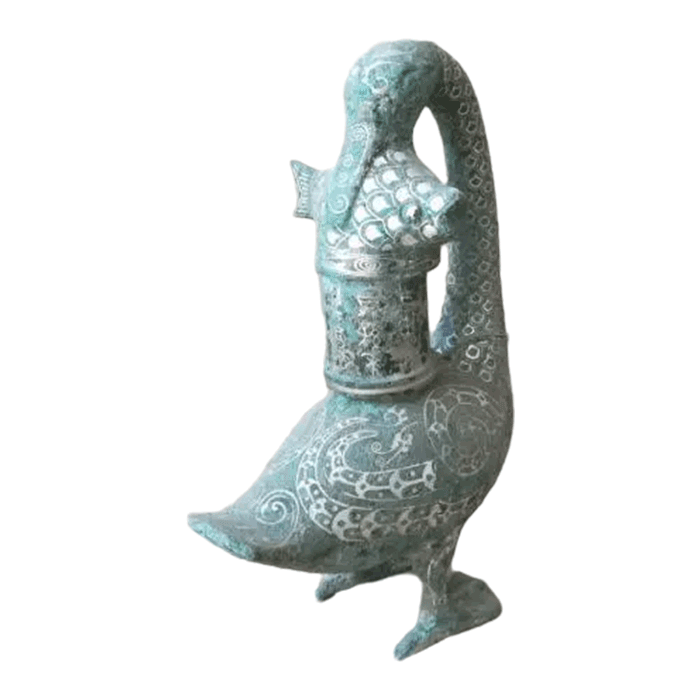
The same core principles can support many categories of bronze art, including human figures, animal statues, incense burners, Buddhist sculptures, mirrors, and traditional vessels such as ding, zun, hu, tripods, and vases. Buyers interested in historic form language can also review several bronze wares when preparing a vessel-based product brief.
Direct wax is suited to singular and highly individual work
Direct wax casting starts with a wax model made specifically for the bronze being produced. The artist or craft team creates, adjusts, carves, or builds the wax directly. Once the wax is invested and burned out, that specific wax pattern no longer exists. The bronze that emerges is therefore tied closely to that one wax stage and its individual handwork.
This route is often appropriate when the buyer wants a unique artwork or when the design is expected to evolve through hands-on sculptural refinement. A collector commissioning a single portrait bust, a project buyer ordering a site-specific sculpture, or a client seeking a one-piece artistic study may value the direct relationship between the wax model and the finished bronze.
Advantages of direct wax
- Creative flexibility: The wax can be modeled and refined as an original work, allowing detailed artistic decisions during the pattern stage.
- Individual surface character: Hand-applied texture, tool marks, and sculptural adjustments can give the work a distinctive presence.
- Suitable for one-off commissions: A direct approach can align well with unique custom artworks, prototypes, and non-repeat projects.
- Useful for developing original concepts: When a form has not yet been finalized for edition production, direct wax can support the approval process for a first casting.
Considerations before choosing direct wax
The most important consideration is repeatability. Because the wax pattern is consumed during casting, producing another closely matching bronze generally requires a new wax model or a separate process for establishing a reusable mold from an approved original. For a buyer planning seasonal replenishment, a numbered edition, or consistent retail inventory, this may introduce additional preparation work.
Direct wax may also be less convenient when the requirement is a series of matching pieces. “Matching” should always be defined in the purchasing brief. It may refer to dimensions, silhouette, decorative relief, patina direction, mounting points, or visual consistency across a collection. The more exact the repeatability requirement, the more important it becomes to discuss indirect wax and mold retention early in the project.
That said, direct wax does not mean that quality control is less important. The bronze should still be inspected for casting integrity, finishing quality, surface treatment, and packing readiness. For fragile or protruding forms, protective packaging planning should be considered alongside the sculpture itself, rather than after the finishing stage is complete.
Indirect wax supports repeatable bronze editions
Indirect wax begins with a reusable mold made from an approved original model or master. Wax is then introduced into that mold to create a new wax positive for each casting. Each wax pattern is still lost during the investment and burnout stages, but the retained mold can be used to produce additional wax patterns from the same approved source.
This distinction makes indirect wax especially relevant to retailers, distributors, gallery programs, hospitality projects, and buyers planning multiple copies of the same design. It can also be appropriate for editioned sculpture programs in which the client needs a consistent sculptural source for future production.
Advantages of indirect wax
- Repeatable starting point: A retained mold enables new wax patterns to be created from the same approved master.
- Better planning for editions: Buyers can organize a production plan around repeated designs rather than recreating the original wax by hand each time.
- Useful for retail continuity: Reorders may be easier to plan when the mold and approved finish specifications are retained and documented.
- Supports coordinated collections: A family of bronze decorations, tabletop objects, incense burners, or figures can be based on repeatable forms.
Indirect wax is not a substitute for clear specifications. A mold can reproduce a form, but the finished bronze still depends on metal casting, finishing, assembly where applicable, patina application, inspection, and packing. Buyers should provide clear expectations for measurements, weight range where relevant, color direction, surface sheen, mounting hardware, and acceptable variations caused by hand finishing.
Patina deserves particular attention. Bronze patina is not simply a paint color applied to metal. It is a surface finish shaped by preparation, chemical treatment, heat where appropriate, hand application, polishing, sealing, and visual judgment. Even when a design is produced from the same mold, the buyer should approve a reference sample or defined finish standard for repeat orders. This is particularly important when collections require close patina color matching across multiple pieces.
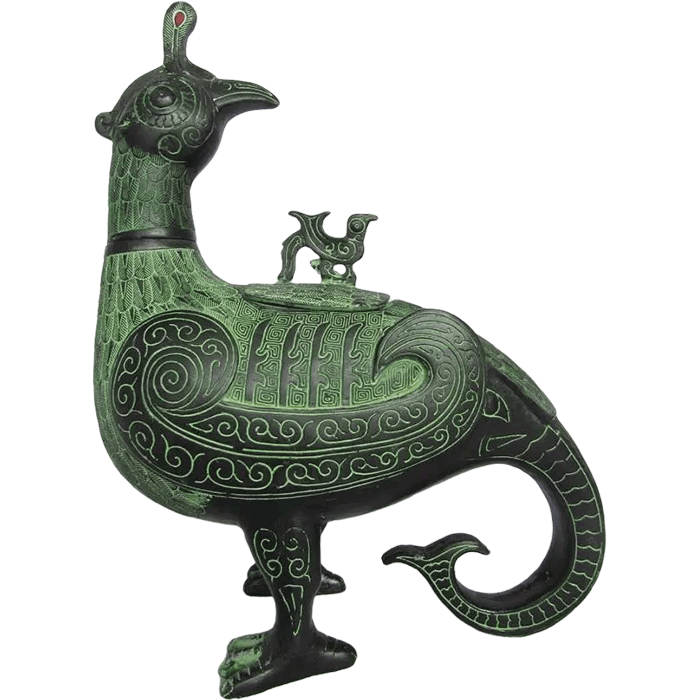
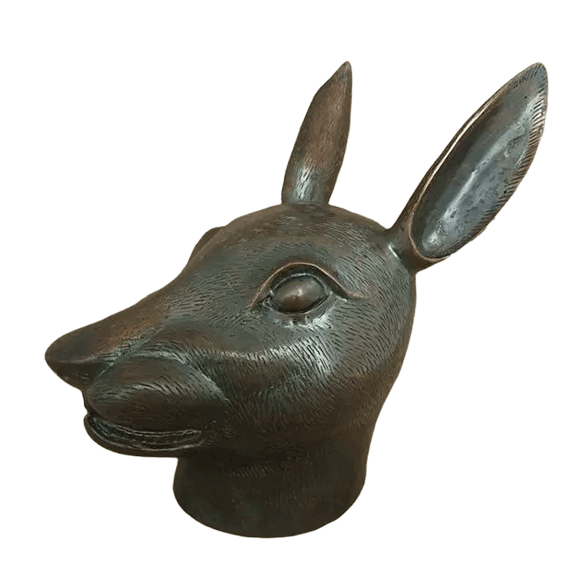
For product teams sourcing animal designs in a coordinated collection, the available range of animal bronze statues can help establish a useful reference point for scale, pose, and decorative direction.
Choosing between direct and indirect wax for your order
A practical choice depends on the commercial and artistic purpose of the order. Direct wax is often the stronger option when uniqueness, artistic development, and individual surface expression are the priority. Indirect wax is often the stronger option when the buyer requires repeated forms, planned editions, or a design that may be reordered later.
| Buying requirement | Direct wax approach | Indirect wax approach |
|---|---|---|
| Single collector commission | Well suited to an individually modeled wax and unique casting. | Possible, but a reusable mold may not be necessary for one piece. |
| Limited bronze edition | May require repeated hand-created wax patterns or additional mold planning. | Usually more suitable because wax patterns can be reproduced from the master mold. |
| Retail replenishment | Less convenient when close repeatability is required. | Useful for planning repeat production from an approved design source. |
| Large custom project | Suitable where each work is individually developed or adapted. | Suitable where multiple related forms or matching units are needed. |
| Antique-style reproduction | Useful for hand-developed interpretation and surface detail. | Useful when the approved reproduction needs to be repeated consistently. |
Buyers should also separate the question of “edition” from the question of “authenticity.” An edition can be carefully made and professionally finished, but it should still be described accurately in commercial materials. If a product is based on a historical bronze, the description should distinguish between an antique original, an inspired contemporary work, and a reproduction. Clear product language protects both the retailer and the final customer.
For historical references involving major Chinese bronze forms, the Houmuwu square cauldron provides useful context for buyers researching monumental ding vessels and their structural visual features.
Specifications buyers should confirm before production
The best production outcome begins with a complete inquiry. Whether a project uses direct or indirect wax, the supplier needs enough information to evaluate the design, casting feasibility, finishing route, and packaging requirements. A brief should be specific enough that the buyer and production team are working toward the same result.
- Artwork source: State whether the design is a drawing, 3D file, photograph, physical original, historical reference, or a new concept requiring modeling support.
- Quantity and reorder plan: Identify whether the request is for one prototype, a limited edition, an initial retail batch, or a project with possible future replenishment.
- Dimensions: Provide overall height, width, depth, base size, wall thickness expectations for vessels where relevant, and installation constraints.
- Finish reference: Specify antique or modern appearance, preferred patina tone, polish level, and whether visual matching to an existing item is required.
- Structural requirements: Identify any thin areas, extended elements, separate parts, mounting points, internal support needs, or outdoor placement conditions.
- Packaging destination: Share the export destination and shipping method so protective packaging can be planned for fragile forms.
- Approval milestones: Confirm whether the buyer needs approval of the model, wax, sample, patina, or final inspection images before shipment.
Luoyang Yichuan Bronze Craft Co., Ltd. operates from Yichuan County, Luoyang, Henan Province, with a 3,000-square-meter production area and more than 30 skilled craftsmen, including bronze-casting masters and finishing artisans. The company supports custom work from one prototype onward and can discuss bulk production according to design complexity and size. Its annual output exceeds 50,000 bronze art pieces, covering custom artworks as well as sculptures, vessels, mirrors, incense burners, and Buddhist statues.
For a buyer with an original concept, the option to customize a bronze sculpture is most effective when the inquiry explains whether the final plan requires a singular work or a repeatable edition. This decision should be made before major modeling and mold work begins.
Quality, finishing, and after-sales planning matter in both methods
Direct and indirect wax are only part of the production decision. The finished bronze must also meet the buyer’s expectations for casting quality, surface treatment, stability, and shipment condition. Luoyang Yichuan Bronze Craft Co., Ltd. follows an ISO 9001 quality management system and products comply with export quality inspection standards for art crafts. Quality inspection is completed before every shipment.
For custom work, a finish reference is particularly valuable. Antique bronze surfaces often require controlled variation, while modern finishes may require a cleaner and more uniform appearance. If a client is matching an existing collection, the supplier should receive photographs, physical samples where possible, and written acceptance criteria. Early agreement reduces uncertainty when the project reaches the patina stage.
Export-compliant protective packaging is also essential for fragile sculptures, especially works with raised wings, extended arms, slender animal legs, elaborate handles, or projecting decorative elements. Packing should protect the bronze surface while preventing movement during transport. Buyers should communicate whether items are intended for individual retail boxes, gallery delivery, consolidated freight, or direct project installation.
After delivery, practical support remains relevant. Free replacement is available for casting defects, while after-sales guidance is available for patina touch-ups and restoration needs. These considerations are useful for buyers maintaining display collections, managing retail inventory, or installing bronze objects in long-term commercial environments.
Make the wax decision part of your product strategy
The choice between direct and indirect wax should be treated as a product strategy decision. Direct wax aligns naturally with singular pieces, evolving artistic ideas, and highly individual commissions. Indirect wax aligns naturally with repeatable forms, planned editions, and product lines that may need additional production later.
Neither option removes the need for careful design review, hand finishing, patina approval, and shipment inspection. Instead, each route gives the buyer a different level of flexibility at the wax-pattern stage. When the intended quantity, reorder plan, surface standard, and end use are clearly defined, a bronze supplier can recommend a more appropriate path from model to finished artwork.
For collectors, retailers, and project buyers, the most effective inquiry states not only what the bronze should look like today, but also what the product should achieve tomorrow: a single memorable artwork, a controlled limited edition, or a repeatable collection with consistent visual identity.