Jue Catalog Records: Dates, Dimensions, Provenance Guide
Ancient Chinese Ritual Wine Vessel Jue: Reading Catalog Dates, Dimensions and Provenance Before You Source
For importers, curators, and resellers who specify historically styled bronze vessels, catalog literacy is not optional. Before a single quotation is requested or a mold is approved, a buyer needs to understand what museum and auction catalog entries actually communicate about dating, measurements, and ownership history. This article walks through how to read those records and how that reading translates into practical decisions when commissioning reproductions or historically inspired pieces for resale.
Why Catalog Records Matter for Sourcing Decisions
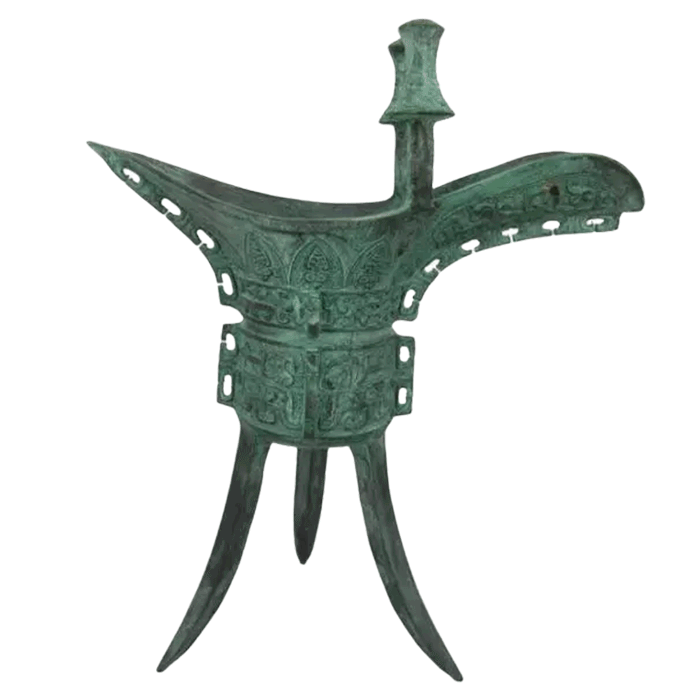
A tripod wine cup with pointed legs and a flared mouth may look similar across dozens of museum photographs, yet the underlying catalog data can vary enormously — sometimes by centuries, sometimes by several centimeters, and often in ownership history that affects both authenticity claims and design fidelity. When a buyer references a museum record to brief a workshop, ambiguity in that record gets passed straight into production specifications. Understanding catalog conventions early prevents costly revisions later and gives sourcing teams a shared vocabulary with manufacturers who specialize in chinese bronze sculpture reproduction work.
The Three Pillars of a Catalog Entry
Most institutional records for ritual bronzes are built around three data pillars: chronological attribution, physical dimensions, and provenance narrative. Each pillar carries its own conventions, and misreading any one of them can lead to a reproduction brief that misrepresents the original object.
Dating Conventions in Jue Catalog Records
Dating for this vessel type typically spans the late Xia through Western Zhou periods, with the majority of surviving examples attributed to the Erlitou, Erligang, and early-to-mid Shang phases. Catalog dates are rarely presented as a single year; instead, they appear as period brackets such as "early Shang dynasty, 16th–15th century BCE" or "middle Shang, Anyang phase." These brackets reflect typological comparison — leg shape, spout curvature, column-cap style, and decorative banding are cross-referenced against securely dated tomb assemblages.
When a catalog lists a date range rather than a fixed year, this signals that attribution rests on stylistic and archaeological comparison rather than direct textual evidence. For sourcing purposes, this matters because a workshop reproducing an "early Shang" profile should be briefed differently than one reproducing a "late Shang, Anyang" profile — the leg silhouette, wall thickness, and surface decoration differ meaningfully between these sub-periods. Buyers referencing the general category of the Ancient Chinese Ritual Wine Vessel Jue should always ask which period bracket a target design belongs to before finalizing a specification sheet.
Reading Uncertainty Flags
Some catalog entries include qualifiers like "attributed to" or "possibly." These flags indicate the museum itself has reservations about firm dating, often due to an unclear excavation context or a lack of directly comparable pieces. Sourcing teams should treat such entries as reference inspiration rather than exact templates, since replicating an uncertain original risks compounding ambiguity into a commercial product description.
Dimensions: What Museum Measurements Actually Tell You
Catalog dimensions for this vessel type usually list height, mouth diameter, and sometimes weight, with height being the most consistently recorded figure. Typical surviving examples range from roughly 15 to 30 centimeters in height, though ceremonial or tomb-specific pieces can fall outside that range. A few points deserve attention when translating these numbers into a production brief:
- Height measurements often include the legs. Confirm whether a listed height is total height (spout tip to leg base) or body height alone, since workshops need the total figure for mold planning.
- Mouth diameter affects casting complexity. A wider, more irregular trefoil mouth requires more careful wax-model shaping in the lost-wax process than a narrower, rounder opening.
- Weight is rarely standardized across records. When available, weight figures help estimate wall thickness, which in turn affects both casting yield and shipping weight for export packaging.
Because dimension recording is not always standardized across institutions, buyers comparing multiple catalog sources for the same design lineage may find discrepancies of a centimeter or two. This is normal and should be resolved by prioritizing the most detailed, peer-reviewed catalog rather than averaging figures from casual references.
Provenance Records and What They Signal to Buyers
Provenance sections in a catalog entry trace an object's ownership chain — excavation site, early collectors, dealer records, and eventual museum accession. For sourcing professionals, provenance data is less about production specification and more about narrative credibility when marketing a reproduction as "museum-inspired" or "based on an excavated example."
Excavated vs. Collection-Derived Pieces
Vessels with a documented excavation context — a named tomb, a stratified layer, an associated bronze set — carry stronger scholarly consensus around dating and regional style. Pieces that surfaced through the antiques market without excavation records often carry wider dating brackets and more cautious language. When briefing a workshop on a reproduction, referencing an excavated example gives craftsmen a clearer, better-documented target for surface patterns and casting seams typical of that period and region.
Provenance and Design Authenticity Claims
Resellers marketing historically styled pieces should be careful not to conflate "inspired by" with "replica of." A catalog-referenced original with full provenance supports language like "modeled after a documented Shang-period vessel," while an object with thin or contested provenance supports only general stylistic attribution. This distinction protects both the buyer's credibility and the manufacturer's reputation for accurate historical reproduction work, an area covered in more depth in this overview of the evolution of bronze culture over 2000 years.
From Catalog Research to Production Brief
Once dating, dimensions, and provenance are understood, the next step is translating that research into a workable specification for a bronze workshop. A well-prepared brief typically includes:
- Target period bracket (e.g., early Shang vs. Anyang-phase late Shang)
- Total height, mouth diameter, and approximate wall thickness
- Reference photographs from multiple angles, including leg and spout detail
- Desired surface finish — antique patina, taotie relief density, or simplified modern interpretation
- Quantity and whether the order is a single prototype or a production run
Workshops experienced in traditional lost-wax casting can match documented proportions closely, then apply hand chasing and patina work to approximate the surface character described in catalog photographs. Buyers who need a single prototype before committing to bulk quantities can review the process for how to customize a bronze sculpture based on reference documentation of this kind.
Common Sourcing Pitfalls When Interpreting Catalog Data
Treating a Single Record as Definitive
Because dating and dimension conventions vary between institutions, relying on one catalog entry alone can produce a skewed brief. Cross-referencing two or three well-documented sources reduces the risk of replicating an outlier measurement or an outdated dating attribution.
Overlooking Regional Style Variation
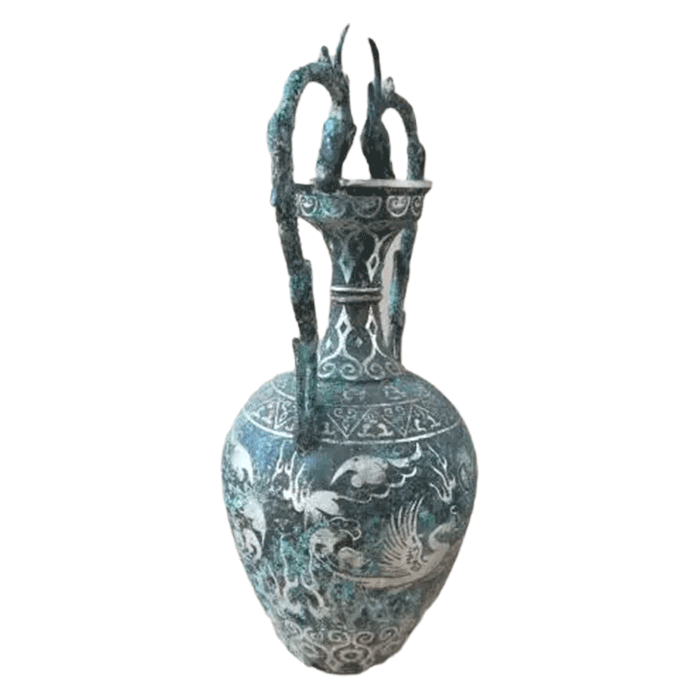
Not every vessel of this type follows the same decorative grammar. Style varies across the wider bronze corpus, and the same is true of ritual wine vessels — column caps, leg curvature, and band motifs shifted across regions and centuries. A brief that ignores this variation risks producing a piece that reads as generically "ancient" rather than accurately period-specific.
Underestimating Packaging and Shipping Needs
Slender legs and thin walls, both common in this vessel category, make finished pieces more vulnerable in transit than solid sculptural forms. Export-compliant protective packaging should be discussed with the manufacturer at the same time as dimensions and finish, not as an afterthought after production is complete.
Quality and Verification Before Bulk Commitment
Before committing to a bulk production run, buyers should request quality inspection documentation and confirm the manufacturer's policy on casting defects. A manufacturer working under an ISO 9001 quality management system, with pre-shipment inspection and defect replacement policies, offers a measurable layer of assurance that is difficult to verify from photographs alone. This is particularly relevant for vessels with delicate legs and fine surface relief, where casting flaws are more likely to appear than on simpler forms.
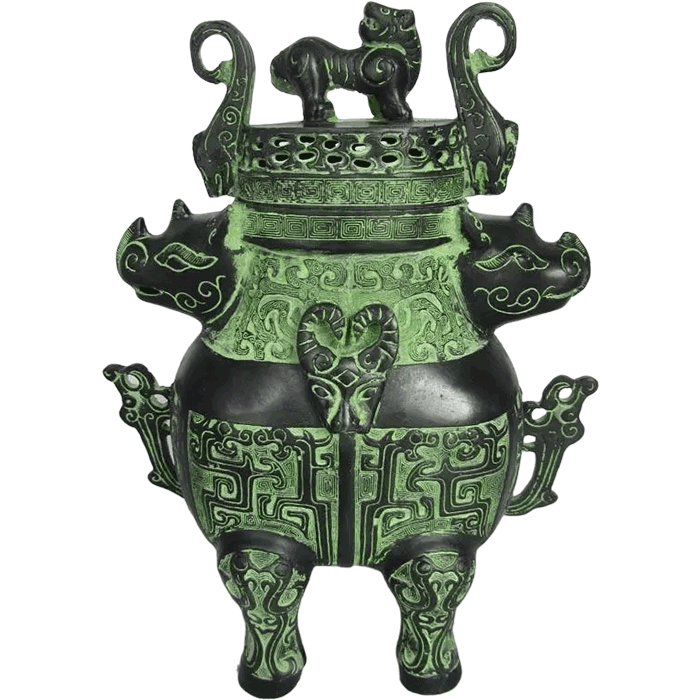
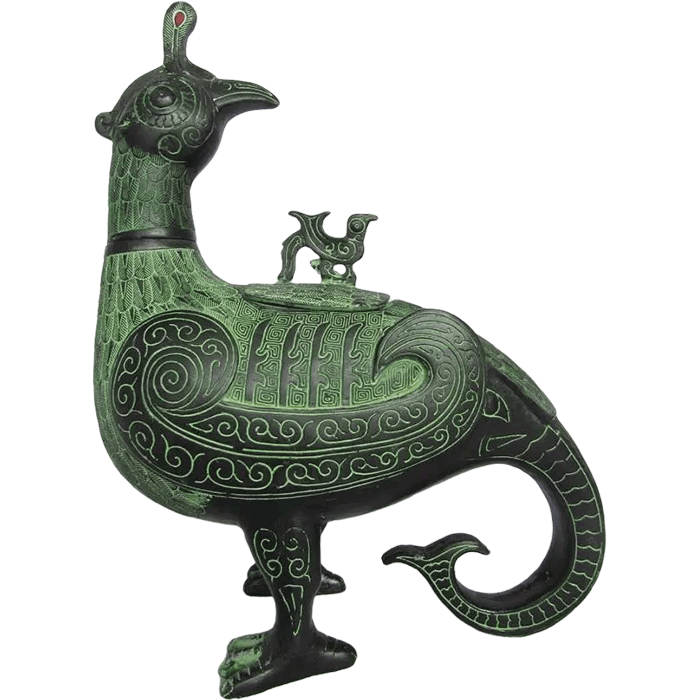
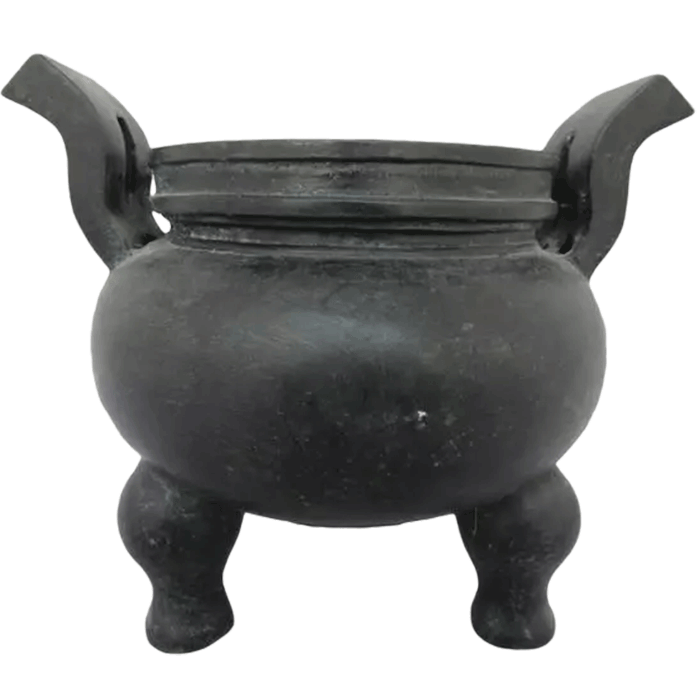
For buyers assembling a broader catalog of ritual bronze forms alongside this vessel type — including ding tripods, zun vessels, and hu vases — reviewing a manufacturer's full range of bronze statues with different themes and vessel reproductions can help streamline sourcing into a single, quality-controlled supplier relationship rather than multiple fragmented orders.
Bringing Research and Production Together
Reading catalog dates, dimensions, and provenance carefully is the groundwork that makes a historically styled reproduction credible and commercially defensible. A buyer who understands why a date bracket spans two centuries, why a height figure may or may not include the legs, and why provenance strength affects marketing language will brief a workshop more precisely and avoid revision cycles later. The Ancient Chinese Ritual Wine Vessel Jue, with its slender profile and archaeologically rich history, rewards this kind of careful preparation — and pairing that research with an experienced bronze-casting partner turns catalog literacy into a finished product ready for import, resale, or museum-style display.