Identify real vs replica Chinese bronze: Guide
Identify real vs replica Chinese bronze with evidence beyond visual inspection
Chinese bronze objects can be visually persuasive long before they are historically persuasive. For collectors, dealers, auction buyers, museum suppliers, and interior-art purchasers, the most difficult decisions arise when a vessel, mirror, statue, or ritual object appears convincing in photographs and even under direct examination. Surface color, decorative motifs, casting texture, and apparent corrosion can all be recreated with modern materials and skilled finishing techniques.
Visual review remains an important first step, but it is not a complete authentication process. A buyer who relies only on appearance may overlook modern casting methods, artificially applied patina, repaired sections, altered inscriptions, or a genuine fragment incorporated into a later object. Conversely, a newly made bronze reproduction should not automatically be treated as deceptive when it is clearly represented as a contemporary work. The key issue is accurate disclosure, appropriate documentation, and a review method matched to the object’s value and claimed age.
For serious acquisitions, professional verification may be necessary when the financial, historical, legal, or reputational consequences of a mistake are significant. This guide explains where visual checks are useful, why they can fail, and how to build a stronger assessment process before committing to a high-value purchase.
Why visual checks remain useful but cannot prove age
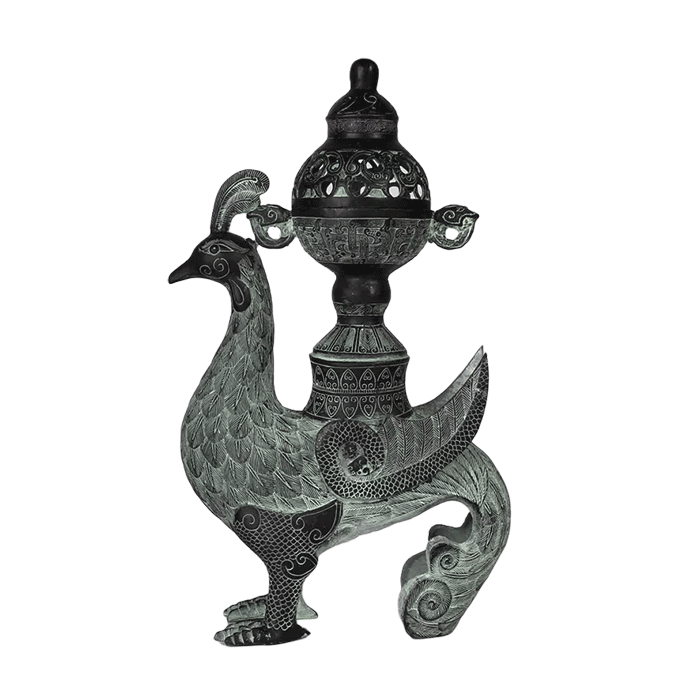
A careful visual review can quickly identify obvious warning signs. Buyers commonly examine form, weight, metal color, decorative style, surface texture, casting seams, patina distribution, and signs of recent tooling. These observations can help determine whether an object deserves further study. They are especially helpful when screening a large number of lower-risk pieces or comparing a claimed antique with documented examples from the same historical period.
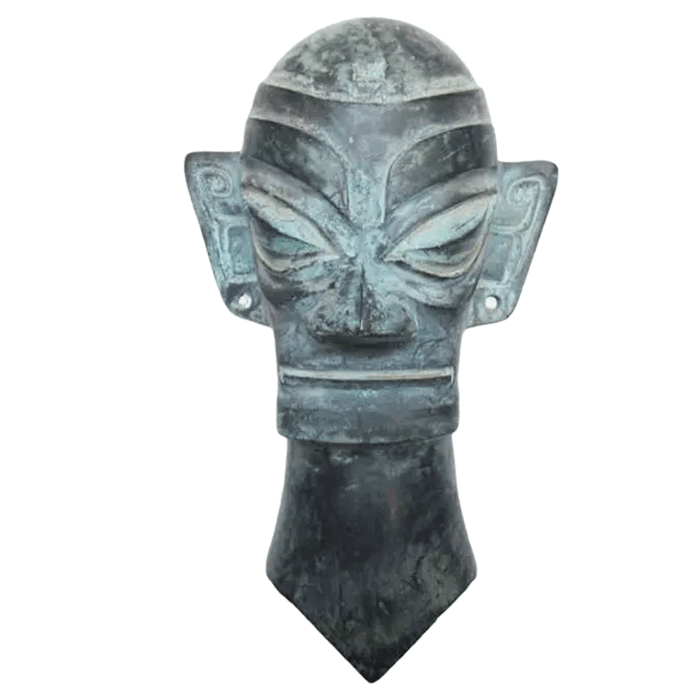
However, visual consistency is not the same as historical authenticity. A well-informed maker can study published catalogues, museum references, excavated examples, and period motifs. Contemporary lost-wax casting can reproduce intricate relief, animal forms, masks, inscriptions, and vessel profiles with remarkable precision. Surface finishing can then make a new object look aged, excavated, or long displayed.
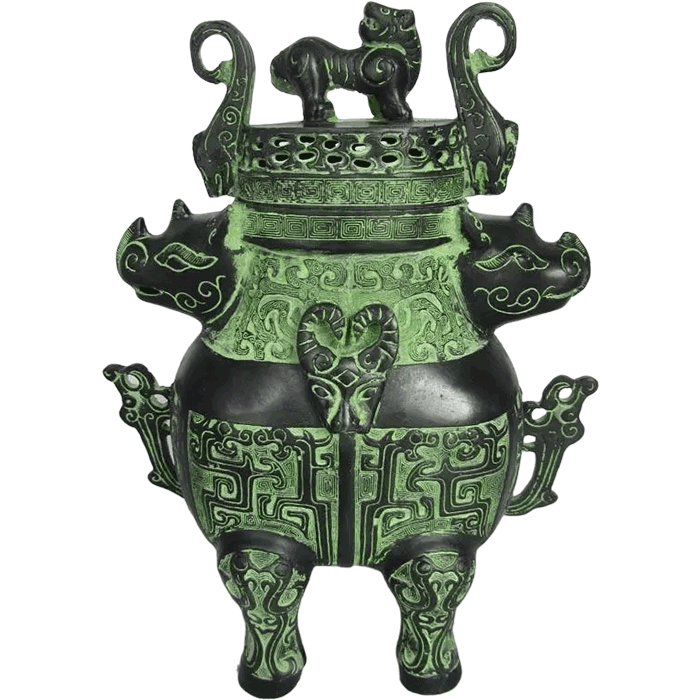
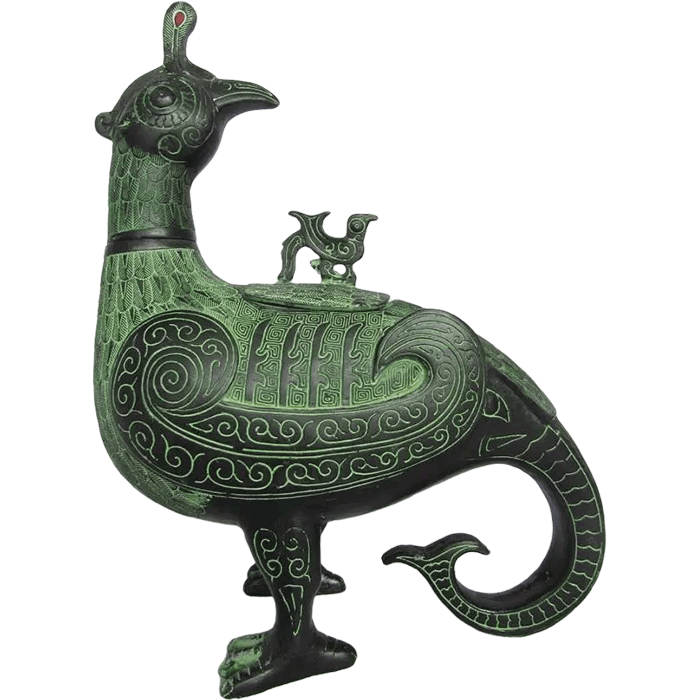
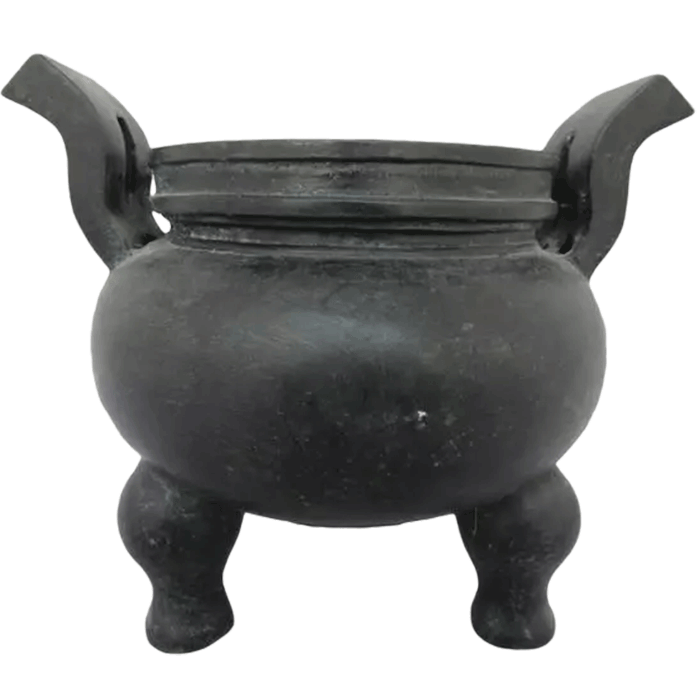
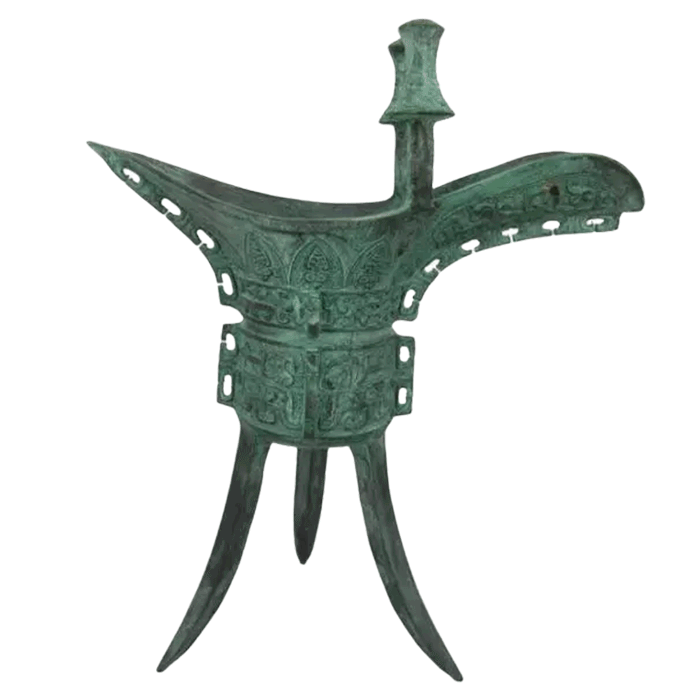
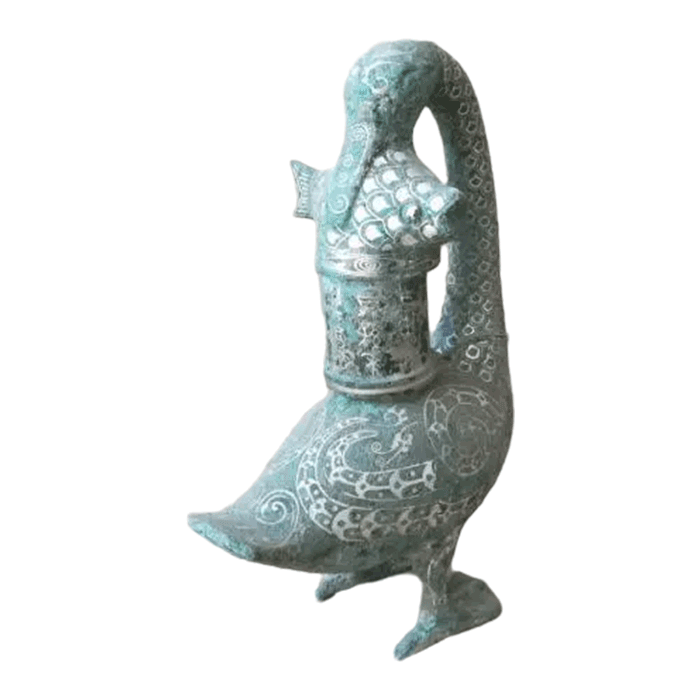
Chinese bronze art spans many object types and historical traditions. Ding, zun, hu vessels, mirrors, incense burners, Buddhist figures, human statues, animal figures, weapons, and ritual objects all have different construction histories. Understanding the intended object category is essential before judging whether a particular feature is unusual. Buyers researching traditional forms may find useful context in this overview of several bronze wares, but reference reading alone should not replace specialist examination.
Photographs introduce another limitation. Lighting can deepen recesses, conceal fresh scratches, enhance green corrosion tones, and make a patina appear more complex than it is. Image editing can further alter the apparent color of bronze. A listing image should therefore be treated as preliminary information, not as proof of alloy composition, age, excavation history, or ownership history.
Common visual features that replicas can imitate
Modern replicas vary widely in quality. Some are easy to identify because their form is simplified, their ornament is shallow, or their patina is uniform. Others are more sophisticated and may reproduce the visual language of ancient bronzes closely enough to create doubt. Buyers should understand the following areas of imitation.
Patina and corrosion effects
Natural corrosion develops through complex interactions among alloy composition, burial conditions, humidity, salts, handling, storage, and previous conservation. It may include greens, blues, reds, blacks, browns, mineral encrustation, cuprite layers, or compact corrosion. Yet color alone cannot establish age. Modern chemical treatments, pigments, coatings, soil applications, and controlled oxidation can create surfaces that appear old at first glance.
Artificial patina may look overly even across high and low areas, gather in decorative recesses without a convincing transition, or reveal different colors at fresh scratches and protected edges. Still, these are warning signs rather than definitive conclusions. Authentic objects may have been cleaned, waxed, stabilized, repaired, or restored. A professional should assess whether the corrosion layer, metal surface, and any restoration materials are consistent with the claimed history.
Cast texture and mold evidence
Ancient Chinese bronzes were made through several historical casting approaches, including piece-mold casting. Modern workshops may use lost-wax casting, sand casting, silicone molds, digital modeling, or combinations of these methods. Each process can leave different evidence, but later finishing and artificial aging may obscure it.
Visible seams, surface pitting, wax-model texture, repeated tool marks, and interior casting features can be informative. Yet a seam does not automatically indicate an ancient piece-mold process, just as a smooth surface does not automatically prove a modern origin. Replicas can be chased by hand after casting, while genuine objects may have been repaired or refinished over centuries.
A comparison with published examples is useful when assessing form and decorative vocabulary. The historical importance of objects such as the houmuwu square cauldron also demonstrates why famous bronzes frequently inspire later reproductions. A resemblance to a known museum object should prompt closer questions about source material, scale, construction, and declared production date.
Inscriptions and decorative motifs
Inscriptions can affect both scholarly importance and market value. They can also be copied, added, recut, or altered. A convincing-looking script is not enough. Specialists may evaluate calligraphic style, character forms, placement, casting integration, tool work, and consistency with the object’s proposed era. Decorative motifs require similar care. Taotie masks, dragons, birds, cicadas, geometric bands, and animal handles may be inspired by genuine traditions but combined in ways that do not fit a specific period or vessel type.
Buyers should be cautious when a seller uses only broad descriptions such as “ancient style,” “archaic bronze,” or “museum quality.” These terms may describe appearance rather than verified age. Ask whether the object is presented as an antique, a later reproduction, a decorative copy, a restoration, or a newly commissioned bronze artwork.
When professional verification is worth the cost
Professional review is most appropriate when the purchase price is substantial, the object is claimed to be ancient, the provenance is incomplete, the inscription is significant, or the buyer intends to resell, insure, exhibit, import, or donate the item. It is also important when the object may be subject to cultural-property restrictions or when a purchaser needs documentation for compliance and recordkeeping.
Visual checks may be sufficient for clearly described contemporary decorative bronzes with modest value. They are less adequate for objects presented as rare archaeological-era pieces, important ritual vessels, early Buddhist bronzes, or historically attributed mirrors. In these situations, the question is not merely whether the object looks old. The question is whether the available evidence supports the stated identity and ownership history.
A buyer may choose professional verification when any of the following conditions applies:
- The seller claims an early date but cannot provide a coherent ownership history.
- The asking price depends heavily on age, rarity, inscription, dynasty attribution, or archaeological significance.
- The surface appears unusually uniform, heavily coated, or inconsistent across protected areas.
- The object has repairs, filled losses, replaced handles, added feet, or a suspiciously clean interior.
- The bronze resembles a documented museum work too closely without a clear explanation of its origin.
- The buyer needs support for insurance, resale, institutional acquisition, import procedures, or collection records.
- The object is part of a larger purchase where one misattributed item could create commercial risk.
Professional verification does not necessarily mean a single test delivers a final answer. Authentication is usually an evidence-based process. Experts consider the object itself, technical examination, comparative scholarship, conservation history, and provenance together. The strength of the conclusion depends on the quality and consistency of all available evidence.
Build a stronger authentication workflow
Before paying for laboratory work or specialist consultation, buyers can organize information in a way that makes expert review more efficient. A disciplined workflow helps distinguish basic screening from defensible due diligence.
Start with transparent seller documentation
Request clear, high-resolution images of the front, reverse, base, interior, rim, handles, feet, inscriptions, damaged areas, and any unusual surface features. Ask for dimensions, weight, declared material, known repairs, prior restoration, and the exact wording of the seller’s age claim. If an item is described as antique, request all available provenance records, invoices, collection labels, export documents, appraisal reports, and previous auction references.
Documentation gaps do not prove that an object is modern, but they increase uncertainty. A seller should not pressure a buyer to accept an exceptional age claim without allowing reasonable review. Keep written records of descriptions and representations made during the transaction process.
Use comparative research carefully
Compare the object with reliable published references, collection databases, and scholarly catalogues. Look beyond the overall silhouette. Assess proportions, decorative sequence, handle attachment, foot construction, inscription placement, interior details, and wear patterns. Historical context can be useful; for example, the evolution of bronze culture helps show how forms and functions changed over long periods.
Comparative research should be used to develop questions, not to force an identification. A replica may match a famous reference image because it was copied from that very image. A genuine object may also differ from a published example due to workshop variation, later repair, incomplete preservation, or limited scholarly documentation.
Consult qualified specialists and conservators
An experienced specialist may assess typology, casting technology, iconography, inscriptions, patina, restoration, and market context. A conservator can examine surface layers, joins, repairs, coatings, and corrosion conditions. Where possible, choose reviewers whose relevant expertise is clear and whose evaluation process is independent of the sale.
Ask what the opinion covers. A visual opinion based on images has different limits from a hands-on examination. A condition report differs from an authentication report. An alloy analysis may identify material characteristics but cannot, by itself, prove an ancient date. Written reports should state the evidence reviewed, the methods used, the limitations of the findings, and the confidence level of any conclusion.
Consider scientific examination in context
Scientific methods may be useful when selected for a specific question. Non-destructive or minimally invasive approaches can include X-ray imaging, X-ray fluorescence analysis, microscopy, radiography, and other material or structural examinations. These methods may reveal internal joins, casting defects, repairs, alloy variation, corrosion structure, and modern additions.
Results require expert interpretation. An alloy result that appears compatible with historical bronze does not establish origin because alloy compositions can overlap, recycled metal can be used, and modern makers may choose suitable materials. Similarly, a corrosion feature may support further investigation without independently proving an age. The strongest analysis combines technical results with art-historical review and documented provenance.
Separate authentic antiques from honestly disclosed reproductions
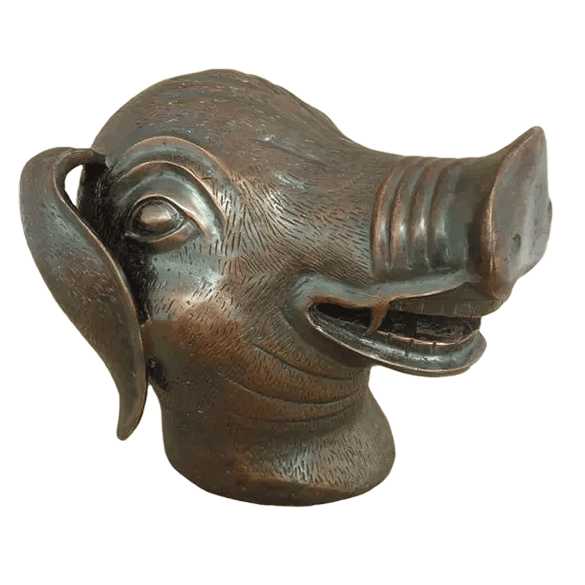
Not every replica is a problem. Contemporary bronze craftsmanship has legitimate value when the work is accurately described. Museums, designers, hospitality projects, religious spaces, private collectors, and cultural retailers may commission reproductions or historically inspired pieces for display, education, décor, or ceremonial use. The ethical issue begins when a modern work is presented as an excavated antique or when its production history is concealed.
Luoyang Yichuan Bronze Craft Co., Ltd. produces custom bronze artworks, including human and animal statues, vessels, mirrors, incense burners, and Buddhist statues. The company uses premium Cu-Sn bronze alloy and traditional lost-wax casting, with hand chasing, polishing, and patina finishing available for antique-style or modern visual effects. These finishing options should be understood as contemporary production services, not as claims that a new artwork is an ancient original.
For buyers who need an antique-inspired object with clear production disclosure, commissioning a new work can reduce uncertainty. The company supports custom work from a single prototype to bulk production, with MOQ from one piece for custom sculptures. Buyers can review design drawings, dimensions, surface requirements, and patina preferences before production. Those planning a bespoke project can customize a bronze sculpture according to their approved concept and intended application.
Clear labeling is especially important for trade buyers. Product descriptions, invoices, packing lists, and catalogues should identify whether an item is newly made, reproduced from a historical reference, antique-style, restored, or sold as an original antique. This protects downstream buyers and supports honest market communication.
Questions to ask before completing a high-value purchase
When the object’s claimed age materially affects price, use a written checklist. The goal is not to accuse a seller; it is to ensure that the purchase decision reflects the available evidence and the remaining uncertainty.
- What exactly is the claimed date, culture, dynasty, function, and place of origin?
- Is the object offered as an original antique, a later copy, a restored work, or a modern reproduction?
- What is the complete documented ownership history, and where are the supporting records?
- Has the object been examined in person by an independent specialist or conservator?
- Which tests, if any, were performed, and what were their stated limitations?
- Are there repairs, replaced sections, coatings, recut inscriptions, or modern mounts?
- Can the seller provide detailed images of the interior, base, edges, and areas of damage?
- What return terms apply if the item materially differs from its written description?
- Are export, import, and cultural-property requirements relevant to the proposed transaction?
- Does the requested price remain reasonable after accounting for unresolved authenticity risk?
A careful buyer should also distinguish between “no evidence of a problem” and “positive evidence of authenticity.” The first may simply mean that the review was limited. The second requires a coherent body of support. When uncertainty remains, price, contractual protections, and intended use should reflect that uncertainty.
Make decisions based on evidence, disclosure, and risk
The ability to Identify real vs replica Chinese bronze does not come from one visual shortcut. It comes from recognizing the limits of appearance, asking targeted questions, documenting every claim, and using qualified professional review when the stakes justify it. A convincing patina, a familiar motif, or a heavy cast form may be relevant observations, but none should stand alone as proof.
For serious collectors and trade buyers, the most practical approach is proportionate due diligence. Screen visually, compare carefully, request documentation, assess provenance, and escalate to independent expertise for high-value or uncertain objects. If the goal is a new, historically inspired bronze rather than an antique acquisition, choose a maker that provides clear disclosure and controlled production specifications. Luoyang Yichuan Bronze Craft Co., Ltd. performs quality inspection before shipment and provides export-compliant protective packaging for fragile bronze artworks, helping B2B buyers source newly made bronze pieces with transparent manufacturing context.