Identify real vs replica Chinese bronze: Expert Guide
Identify real vs replica Chinese bronze before making a high-value purchase
Chinese bronze objects can carry significant historical, artistic, and commercial value. For collectors, galleries, auction buyers, museums, and import businesses, the difference between an ancient original, a later period object, a restored piece, and a modern reproduction can materially affect value, compliance decisions, insurance, resale potential, and reputation.
Preliminary visual inspection is useful, but it is not a substitute for professional authentication. A convincing replica may reproduce the silhouette of a Shang or Zhou vessel, the green surface of archaeological patina, or the decorative character of an ancient mirror with considerable skill. Conversely, a genuine older object may show repairs, uneven surfaces, corrosion, and wear that inexperienced buyers wrongly interpret as warning signs.
The practical question is not whether a buyer can recognize every detail alone. It is whether the available evidence is strong enough for the financial and legal decision at hand. When the answer is uncertain, an independent specialist should be involved before funds are committed.
Why visual checks alone rarely establish authenticity
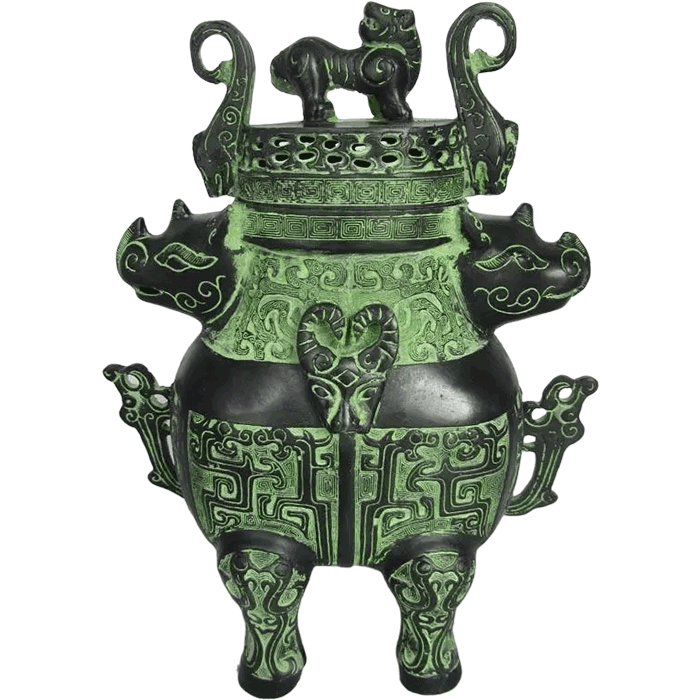
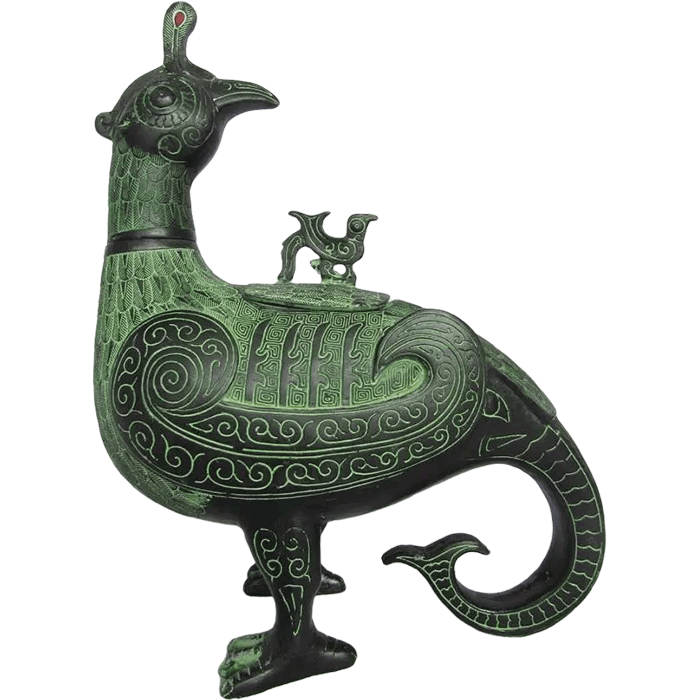
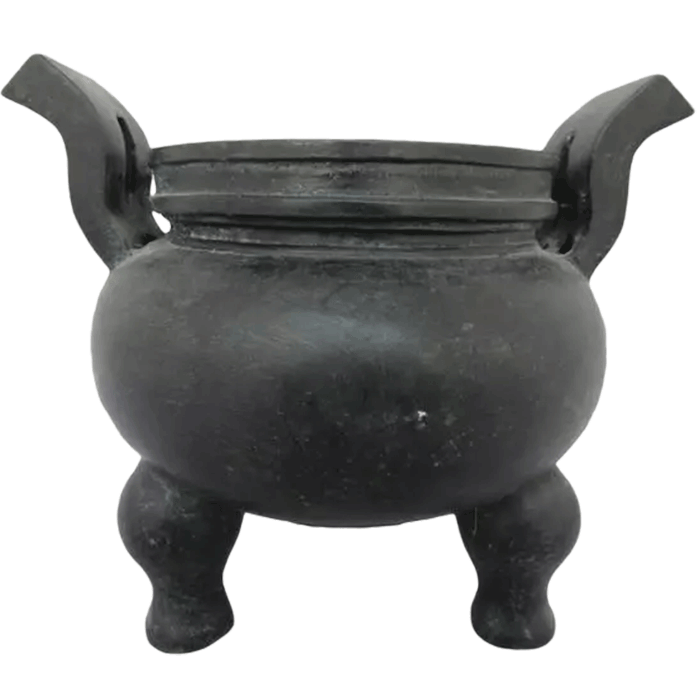
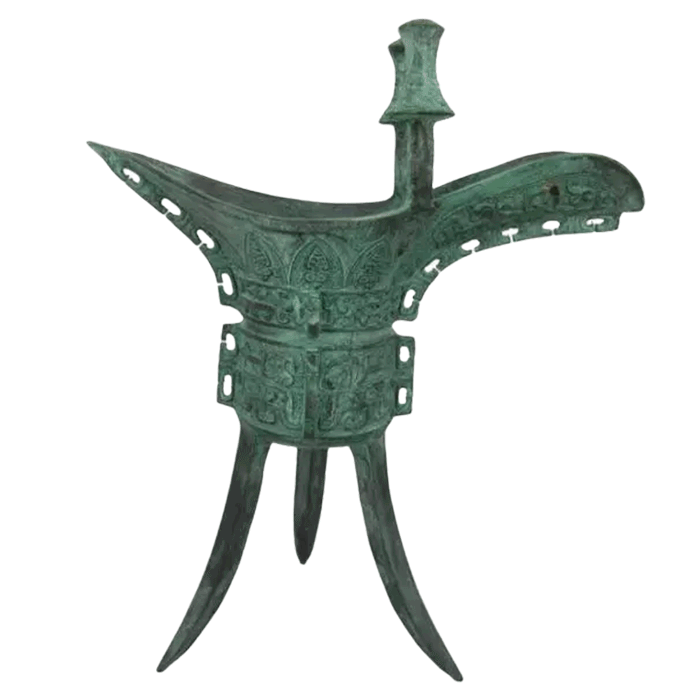
Chinese bronze developed over many centuries, across regions, workshops, and object types. Ding tripods, zun wine vessels, hu vases, mirrors, incense burners, Buddhist figures, animal sculptures, and ritual objects can all have different forms, alloy compositions, decorative programs, and production histories. A feature that is expected on one type of object may be unusual but not impossible on another.
Many buyers begin with obvious indicators: color, weight, surface texture, oxidation, decoration, and apparent age. These factors matter, but none should be treated as conclusive in isolation. Patina can be artificially applied, buried surfaces can be imitated, repairs can be disguised, and old fragments can sometimes be combined with later components. A dark brown, black, red, or green surface does not by itself confirm age.
Likewise, casting imperfections do not automatically prove antiquity. Ancient lost-wax and piece-mold casting methods can leave distinctive evidence, but modern workshops can also produce complex cast surfaces. A modern handmade bronze may have irregularities from chasing, polishing, mold work, or intentional aging. An object that looks “too perfect” deserves scrutiny, but an object that looks rough or damaged also requires context.
Buyers should also distinguish between authenticity and quality. A modern bronze reproduction can be honestly represented, well cast, historically informed, and suitable for interior design, educational display, hospitality projects, or decorative collections. It becomes a problem only when its age, origin, cultural status, or material history is misrepresented.
For context on the historical breadth of these objects, review bronze culture evolution before comparing a proposed object with a particular historical period. Broad familiarity with forms and motifs helps buyers ask better questions, but it should not replace an assessment by a qualified professional.
Identify real vs replica Chinese bronze by understanding the limits of preliminary inspection
A structured first review can help decide whether an object should proceed to expert examination. The purpose of this stage is risk screening, not final authentication. Buyers should document what they see, preserve all seller statements, and avoid cleaning, polishing, or testing the object in ways that could damage its surface or compromise later analysis.
Review provenance and ownership records
Provenance is the documented history of ownership, collection, sale, exhibition, publication, export, or inheritance associated with an object. Strong provenance does not automatically guarantee authenticity, but a clear and consistent record can support the overall evaluation. Gaps are common in older objects, yet unexplained changes in ownership story, vague claims of “old collection,” or documents that do not match the object should be treated carefully.
Request copies of invoices, collection records, auction catalogues, appraisal reports, shipping documents, export permits where applicable, photographs from earlier ownership, and conservation records. Check whether descriptions, dimensions, images, and stated materials remain consistent from document to document. A mismatch may have an innocent explanation, but it requires clarification before purchase.
Inspect form, decoration, and construction
Compare the object with published examples from the claimed period and category. Look at proportions, foot rings, handles, lid fit, decorative bands, animal masks, inscriptions, and the relationship between functional elements. For example, a vessel described as a ritual bronze should be assessed according to the conventions of its proposed form, not merely by whether it has decorative motifs associated with ancient China.
Use reputable reference materials and museum documentation. Buyers evaluating wine vessels may benefit from an overview of ancient bronze wine vessels, while those examining ceremonial forms can compare known characteristics of a square cauldron ding. These resources provide historical orientation, not authentication certificates.
Observe the surface without altering it
Examine the surface under natural and controlled lighting, ideally with magnification. Note areas of pitting, mineralization, cracks, corrosion, residue, polish, wax, paint, or different surface colors. Pay special attention to protected locations: beneath the base, inside handles, under a lid, around joins, and within deeply recessed decoration. Artificial patina may appear more uniform than naturally developed surfaces, while newly exposed metal can be hidden in less visible areas.
However, surface interpretation is highly technical. Genuine ancient corrosion can vary widely depending on burial conditions, storage, past cleaning, restoration, and prior conservation. A professional will assess the relationship between corrosion, substrate, wear, casting texture, and any later intervention rather than relying on one visual feature.
When an expert opinion is essential
An expert should be involved whenever the cost of being wrong exceeds the cost of due diligence. This threshold is lower than many buyers assume. Even a moderately priced bronze can create a serious issue if it is intended for public display, insured collection inventory, gallery resale, cross-border shipment, or a client project represented as antique.
Call an expert before purchasing an object represented as ancient
If a seller describes a piece as ancient, excavated, dynastic, archaeological, museum-quality, or of a specific historical period, professional review is appropriate before payment. The more specific the claim, the more evidence should support it. A verbal assurance, a general certificate without detailed object information, or an unattributed online description is not enough for a significant transaction.
Experts may include recognized scholars, specialist appraisers, experienced conservators, museum professionals, and laboratories with relevant materials-analysis capability. The right choice depends on the question. A stylistic specialist may assess form and iconography, while a conservation scientist may investigate surface layers, alloy composition, corrosion, repair materials, or manufacturing evidence.
Call an expert when provenance is incomplete or inconsistent
Missing provenance does not prove that an object is a replica. Nevertheless, it increases uncertainty, especially when the claimed age would make lawful collection, ownership history, and export documentation important. If a seller cannot clearly explain where the item came from, when it entered a collection, or how it was legally transferred, pause the transaction and seek advice.
Import buyers should also obtain independent guidance on applicable customs, cultural property, import, and export requirements in the relevant jurisdictions. Authentication, legal ownership, and export eligibility are related but separate matters. An object may be technically old while still presenting documentation or trade restrictions that need professional review.
Call an expert when the object has unusual repairs or mixed components
Repairs are common in historic metalwork. A repaired handle, replaced foot, restored rim, patched crack, or stabilized corrosion area may not invalidate an object, but it can affect value and should be disclosed. More concerning situations include decorative elements that appear stylistically unrelated, joins concealed under modern filler, or surfaces that differ sharply across supposedly original sections.
An expert can help determine whether repairs are historically consistent, later restorations, or evidence that components from different objects have been assembled together. This distinction is difficult to make from online photographs alone.
Call an expert before public resale or institutional acquisition
Galleries, dealers, designers, and institutions face reputational exposure when they describe an object incorrectly. Before offering a bronze as antique, period-authentic, or historically significant, establish a defensible file containing condition images, seller representations, provenance records, specialist opinions, and relevant laboratory results where available.
A written assessment should identify the object clearly with photographs, dimensions, observed materials, condition, scope of examination, conclusions, limitations, and date. Avoid relying on certificates that do not show the actual object or fail to explain the basis of the opinion.
What a professional authentication process may include
No single method answers every authenticity question. A reliable process generally combines documentary research, connoisseurship, technical examination, and careful comparison. The level of analysis should be proportionate to the object’s value, claimed age, condition, and transaction risk.
- Documentation review: The expert reviews provenance, invoices, previous appraisals, collection records, photographs, shipment papers, and seller claims.
- Visual and stylistic assessment: The form, ornament, inscription, proportions, casting details, and wear patterns are compared with established references.
- Condition examination: The assessment identifies corrosion, repairs, restorations, fills, coatings, fractures, and altered areas.
- Technical investigation: Depending on the case, non-destructive or minimally invasive analytical methods may be considered by qualified professionals.
- Written conclusion: The final report should state what can be supported by the evidence, what remains uncertain, and what further work may be advisable.
Laboratory techniques can be valuable, but results require interpretation. Alloy composition, for example, may support or challenge a claimed production history, yet bronze alloys have varied over time and modern makers can select similar materials. Testing should be directed by a professional who understands both the object type and the limits of the method.
It is also useful to distinguish bronze from related copper alloys. A basic explanation of bronze and brass differences can help buyers understand why a generic metal description is insufficient. Material terminology alone cannot establish historical age.

Questions to ask an authentication expert
Before engaging a specialist, confirm their relevant experience and clarify the scope of work. An expert in European sculpture may not be the best fit for early Chinese ritual bronzes, just as a general antique dealer may not have laboratory or conservation expertise. Ask focused questions and request a written proposal when the decision is substantial.
- What categories and periods of Chinese bronze do you regularly assess?
- Will you examine the object in person, from photographs, or through laboratory collaboration?
- What documents and photographs should be provided before the appointment?
- Can you assess restoration, alteration, or composite construction as well as age?
- What analytical methods, if any, do you recommend and why?
- Will the report state limitations and distinguish fact from opinion?
- Do you have any financial interest in the sale, purchase, or consignment of the object?
Independent expertise is particularly important when the person providing the opinion also benefits from the transaction. A transparent conflict-of-interest policy helps protect both buyer and seller.
Buying replicas responsibly for design, display, and commercial projects
Not every buyer is seeking an ancient object. Many projects require durable, visually refined bronze art inspired by traditional Chinese forms. In these cases, transparency is the key requirement. A modern work should be described accurately as a contemporary casting, reproduction, interpretation, or custom artwork rather than presented as an archaeological or period antique.
Luoyang Yichuan Bronze Craft Co., Ltd. produces bronze sculptures, vessels, mirrors, incense burners, Buddhist statues, and custom bronze artworks using premium Cu-Sn bronze alloy and traditional lost-wax casting. Its craftsmen can provide hand chasing, polishing, and antique-style or modern patina finishing for decorative and commissioned works. These finishes are aesthetic production options and should not be confused with proof of historical age.
For buyers sourcing new work, clear specifications reduce misunderstanding. Confirm the approved drawing or reference image, dimensions, alloy expectations, surface finish, patina sample, mounting requirements, packaging needs, and shipment inspection process. For a bespoke project, the option to customize bronze sculptures can be appropriate when the goal is a new commissioned piece rather than an unverified antique purchase.
With more than 30 skilled craftsmen and capacity for custom prototypes as well as bulk production, the company supports orders from one custom sculpture upward, subject to design and size requirements. Quality inspection is completed before shipment, and export-compliant protective packaging is available for fragile bronze artworks. Buyers should retain product specifications and invoices so that modern commissioned bronzes remain accurately documented throughout future ownership.
A practical decision rule for serious buyers
Use preliminary inspection to identify questions, not to create false certainty. If the object is low value and clearly sold as a modern decorative piece, normal supplier due diligence may be enough. If it is offered as an ancient Chinese bronze, carries a substantial price, has unclear provenance, will cross borders, or will be resold with an authenticity claim, obtain a qualified independent opinion first.
The strongest purchasing decision is based on aligned evidence: a credible ownership history, a form consistent with the claimed category, surfaces and construction that withstand expert examination, transparent condition disclosure, and documentation appropriate to the transaction. When these elements do not align, delay the purchase rather than allowing urgency, scarcity language, or attractive patina to substitute for verification.
For serious collectors, galleries, and import buyers, expert review is not an obstacle to acquisition. It is a disciplined step that protects capital, supports accurate representation, and preserves confidence in the Chinese bronze market.