Identify Ritual Motifs on Chinese Bronze Artware
Identify Ritual Motifs on Chinese Bronze Artware for Accurate Product Description
Ritual motifs are among the most important visual features used to identify, describe, and classify Chinese Bronze Artware. For décor buyers, cultural-art retailers, museum-inspired collection planners, and enthusiasts, understanding these patterns helps distinguish a simple decorative vessel from a design rooted in ancient ceremonial traditions.
Bronze objects from China can include ritual vessels, animal figures, human sculptures, incense burners, mirrors, Buddhist statues, and ornamental reproductions. While not every bronze object was originally made for ritual use, many designs borrow visual language from early bronze culture. Motifs such as animal masks, dragons, birds, cicadas, cloud patterns, and geometric borders often refer to a long tradition of ceremonial vessels and symbolic decoration.
Correct motif identification is useful when planning an assortment, preparing catalog descriptions, discussing custom artwork, or selecting finishes for a traditional interior project. Rather than calling every raised pattern an “ancient design,” buyers can use more specific terminology based on the shape, placement, and visual structure of the ornament.
Why Ritual Motifs Matter in Bronze Identification
Ancient Chinese bronze vessels were closely associated with ceremonies, offerings, feasts, ancestor worship, and elite social life. Their decorative programs were not usually random surface embellishment. A motif could frame the body of a vessel, emphasize the handles, define a lid, or create a visual hierarchy between the central panel and surrounding borders.
For modern bronze production and collection planning, those original design principles remain valuable. A Chinese bronze sculpture with a dragon band, for example, communicates a different visual character from a smooth contemporary figure with minimal surface treatment. A ding with strong animal-mask reliefs may be suited to a traditional display, while a hu vase with restrained geometric ornament may better suit a formal hospitality or architectural interior.
Motifs also influence how a bronze piece should be described to end customers. Accurate descriptions improve transparency and help buyers understand whether a product is:
- Inspired by ritual bronze vessel decoration;
- Decorated with an animal-mask motif;
- Designed with dragon or bird imagery;
- Finished in an antique-style patina;
- Created as a modern interpretation of traditional bronze culture; or
- Customized from a supplied reference, drawing, or historical model.
It is important not to overstate the age or origin of a newly made item. A contemporary bronze may reproduce or reinterpret historical forms without being an antique. Clear wording such as “ritual-bronze-inspired,” “traditional animal-mask relief,” or “antique-style patina” is more accurate for modern production.
Recognize the Taotie or Animal-Mask Motif
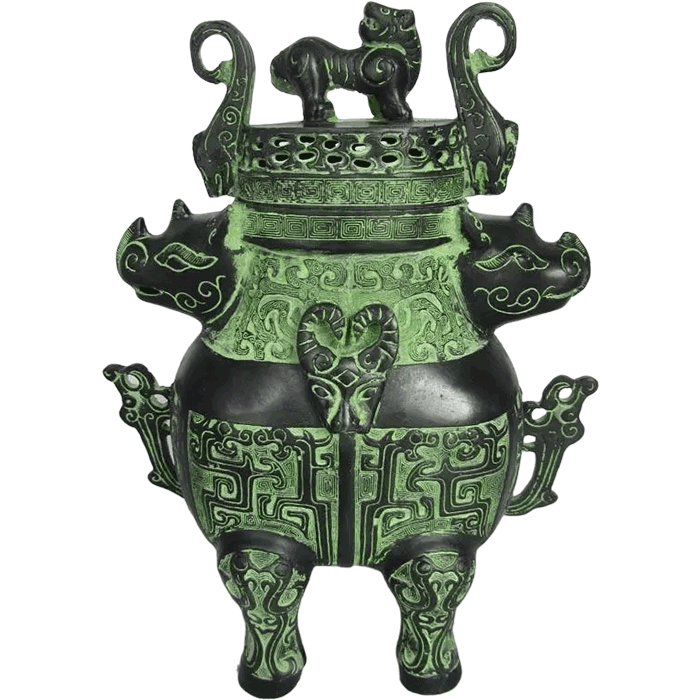
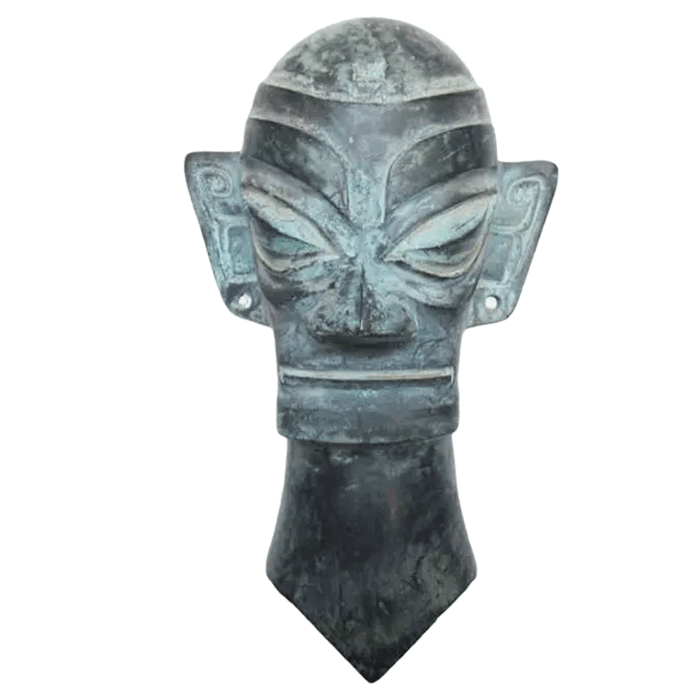
The taotie is one of the most recognizable patterns associated with early Chinese ritual bronzes. In product descriptions, it is often called an animal mask because it is commonly arranged as a front-facing face with symmetrical features. The design may include prominent eyes, brows, horns, ears, a snout, fangs, or curled elements that suggest an animal body extending outward from the central face.
On a vessel, the animal mask is frequently organized around a vertical central line. The left and right sides mirror each other, creating a balanced and powerful composition. At first glance, the viewer may see two separate creatures. Looking more carefully, the eyes and facial features reveal a single frontal mask.
Where to Find Animal Masks
Animal-mask decoration is commonly placed on the main body of a ding, zun, hu, gui, or other vessel form. It may be repeated in horizontal bands, set inside framed panels, or combined with spiral fillers. On tripod vessels, a mask may occupy the space between legs, while smaller mask motifs can appear on handles or lid knobs.
When identifying this motif, look for the following characteristics:
- Strong bilateral symmetry around a central vertical axis;
- Large, rounded, or raised eyes;
- Horns or ear-like extensions above the eyes;
- Curved lines that develop into dragons, tails, or abstract scrolls;
- A dense relief pattern that fills a panel without leaving much empty space; and
- A frontal face that appears to look directly outward.
The meaning of the taotie has been discussed in many ways, and its symbolism should not be reduced to a single universal explanation. For commercial description, it is generally best to identify the visible form first: “animal-mask motif,” “taotie-style mask,” or “symmetrical mask relief.” This avoids making unsupported claims about a specific religious or ceremonial meaning.
Distinguish Dragon Motifs from Serpentine Borders
Dragon imagery appears in many forms on Chinese Bronze Artware. Some dragons are easy to identify because they have visible heads, open mouths, legs, claws, horns, or long curling bodies. Others are highly stylized. Their bodies may become spirals, hooked lines, or interlaced ribbons that are difficult to separate from the surrounding ornament.
A dragon motif often has movement. Unlike the front-facing animal mask, dragons may turn sideways, curve around a vessel, face another creature, or extend across a border. On certain vessel designs, paired dragons meet at the center, while their long bodies trail into the side panels.
Key Features of Bronze Dragons
Look for a defined head, a tapering body, curled tail sections, and legs or claw-like forms. In low-relief ornament, the dragon may have a C-shaped or S-shaped profile. A long body with a head at one end is generally more likely to be a dragon than a purely geometric scroll.
Dragon designs can range from bold sculptural handles to fine background patterns. A vessel may use dragon heads as handle terminals, while smaller curled dragons fill the field around an animal mask. This layered approach gives an object depth and makes close visual inspection especially important.
For product descriptions, distinguish between “dragon-handle details,” “interlaced dragon relief,” “stylized dragon scrollwork,” and “serpentine geometric border” when possible. If the head or body is too abstract to identify reliably, “curled relief pattern” is a safer term than assigning a specific creature.
Buyers researching historical visual references can compare different vessel forms through an introduction to bronze wares. Vessel shape and decoration are often connected, so learning both elements creates a more precise basis for assortment planning.
Identify Bird, Cicada, and Other Animal Forms
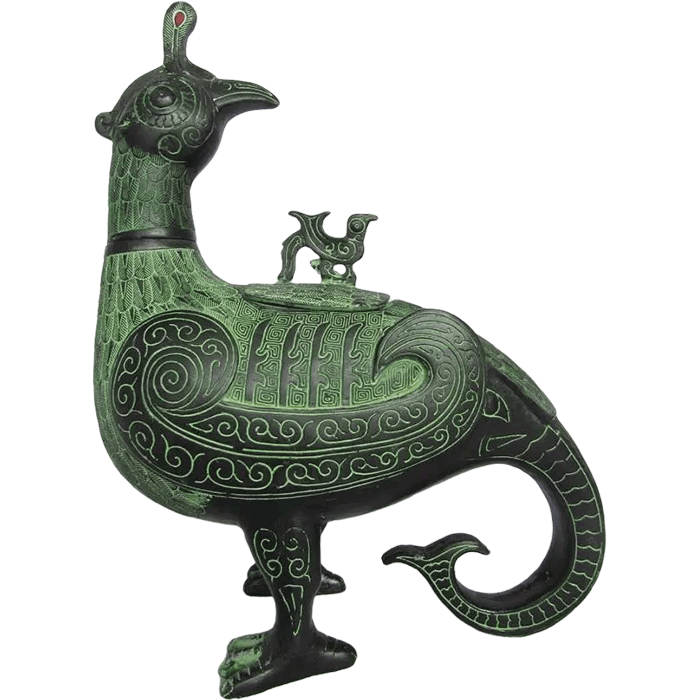
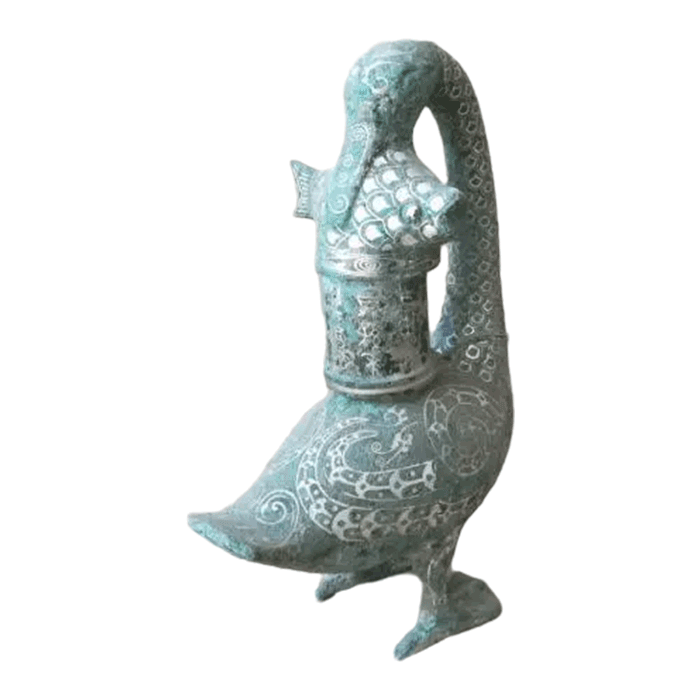
Bird motifs are another important category in traditional bronze decoration. Depending on the period and style, they may appear as long-tailed birds, perched birds, crested forms, or abstract bird-like profiles. A bird may be shown in side view with a beak, rounded body, wing, and extended tail. It may also be integrated into a larger symmetrical pattern.
Bird decoration is particularly useful for buyers who want a more elegant, flowing visual direction than the heavier animal-mask motif. A bird-patterned vase, incense burner, or decorative panel can offer a ceremonial reference while maintaining a lighter visual rhythm.
Cicada Motifs
Cicada motifs are usually smaller and more compact than dragons or birds. They may feature an elongated body, prominent eyes, a narrow head, and simplified wing outlines. On ritual bronzes, cicada forms can appear as repeated bands or as small details within a complex decorative field.
Because cicada patterns are often stylized, they can be confused with abstract leaves or narrow animal forms. Look for repetition: if several small figures have matching heads and wing-like sides, they are more likely to be cicada-inspired designs than random geometric fillers.
Rams, Tigers, Elephants, and Other Sculptural Animals
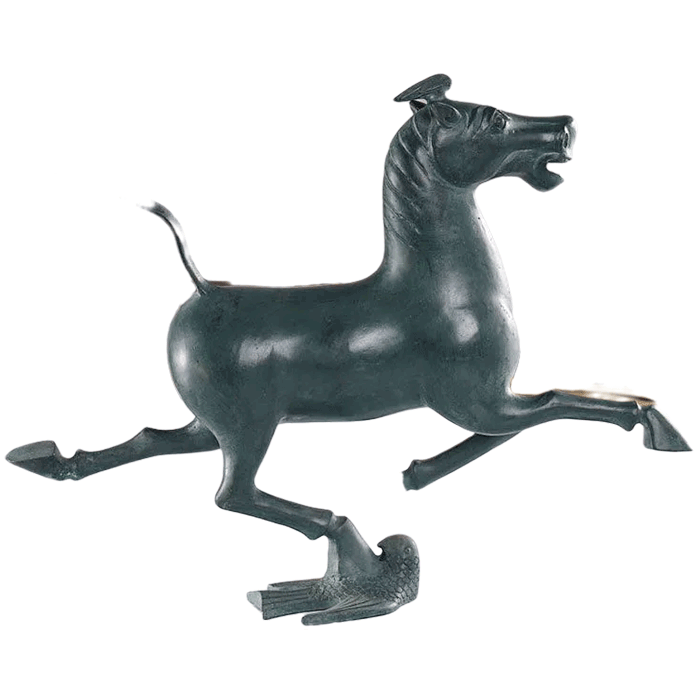
Some bronzes use fully modeled animals rather than flat surface ornament. A ram-headed handle, bird-shaped finial, tiger figure, elephant form, or mythical beast can become the defining element of a vessel or sculpture. These features should be described according to what is visible rather than assigned a symbolic meaning without reliable source material.
Animal sculpture also remains relevant for contemporary décor ranges. Collections of animal bronze statues can be planned around realistic wildlife, traditional guardian figures, mythical creatures, or bronze forms inspired by ancient vessel ornament.
Read Geometric Ground Patterns and Border Bands
Not every ancient-style bronze surface includes a clearly identifiable animal. Many objects use geometric ground patterns to create texture, depth, and separation between major motifs. These designs are essential to the overall appearance of ritual bronzes, even though they may receive less attention than masks and dragons.
One common pattern is the thunder pattern, often described using the Chinese term leiwen. It generally consists of squared spirals, angular curls, or repeated meander-like lines. This pattern may fill the background behind an animal mask or appear as a narrow border around a main decorative zone.
Other common visual structures include:
- Horizontal bands that divide the neck, shoulder, belly, foot, and lid;
- Repeated circles, hooks, or spirals;
- Rope-like borders around handles or rims;
- Diamond, triangle, or lozenge arrangements;
- Raised studs or bosses placed in regular rows; and
- Linear patterns that frame a central animal motif.
When writing a product listing, note the location of the pattern. “Thunder-pattern ground behind animal-mask relief” is more informative than simply saying “traditional carved texture.” Similarly, “raised spiral border at the vessel neck” gives a buyer a clearer understanding of where the ornament appears.
Geometric motifs also help identify the balance between traditional and modern design. A piece with dense relief across every surface has a more ceremonial and historical visual effect. A modern vessel may use one narrow leiwen-inspired band while leaving most of the bronze surface smooth and polished.
Match Motifs to Vessel Shapes and Product Categories
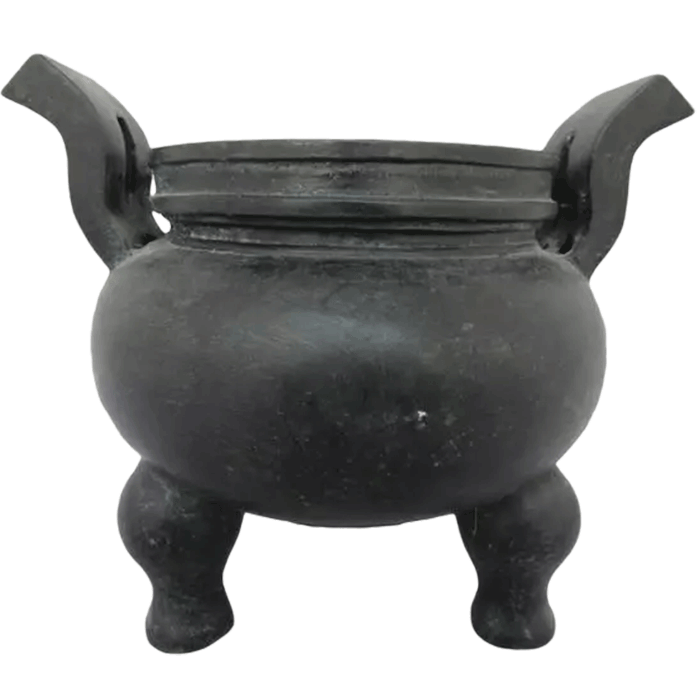
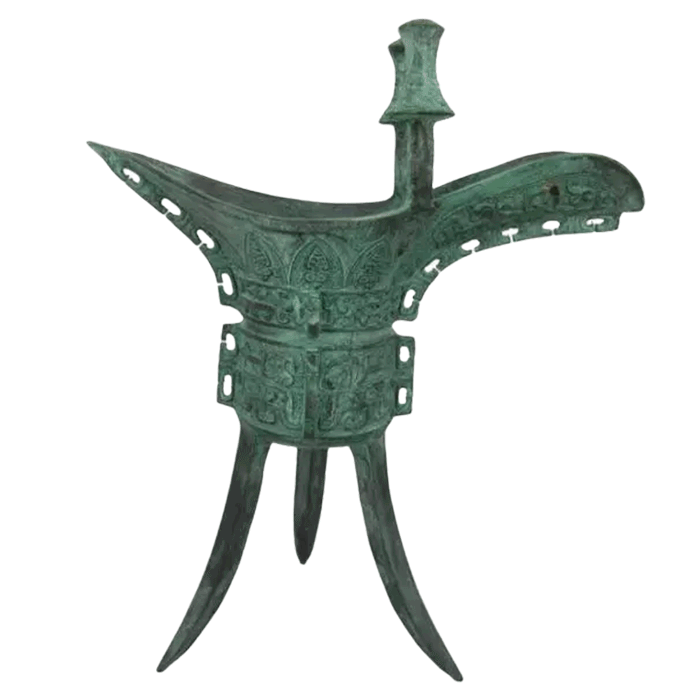
Accurate identification becomes easier when the motif is considered together with the object type. A ding is commonly recognized by its bowl-like body and legs, while a zun may have a more dramatic profile and a hu often reads as a vase-like form. Each shape offers different surfaces for ornament placement.
| Product Type | Motif Areas to Review | Useful Description Language |
|---|---|---|
| Ding tripod | Main body panels, legs, handles, lid | Animal-mask panels, dragon handles, geometric border bands |
| Zun vessel | Flared mouth, neck, shoulder, central body | Bird relief, scrolling dragons, framed ceremonial patterns |
| Hu vase | Neck, shoulder, body, side handles | Symmetrical relief, ring-handle animals, repeated decorative bands |
| Incense burner | Lid, feet, handles, body | Beast finial, cloud pattern, openwork animal ornament |
| Bronze mirror | Back panel, central knob, outer rim | Radial ornament, animal roundel, floral or geometric border |
For historical context on large ritual vessel forms, buyers may find the Houmuwu square cauldron a useful reference point. It demonstrates why vessel structure, relief placement, and casting complexity should be considered together when evaluating traditional-inspired designs.
Describe Patina Without Confusing It with the Motif
Patina and motif are related visually but should be described separately. The motif is the designed form: a dragon, mask, bird, cicada, or geometric pattern. Patina is the surface color and finish that affects how clearly the motif can be seen.
An antique-style finish may use dark brown, blackened, green-toned, or layered color effects to emphasize recessed lines and raised relief. A modern finish may use warmer polished bronze, a cleaner dark surface, or controlled contrast between high and low areas. The same motif can look dramatically different under different finishing approaches.
For example, a dark patina with highlighted raised edges can make a taotie-style mask appear deeper and more sculptural. A smooth polished finish may make the same relief look more contemporary. Buyers should therefore specify both the decorative language and the desired surface effect when discussing a custom project.
Luoyang Yichuan Bronze Craft Co., Ltd. uses premium Cu-Sn bronze alloy and the traditional lost-wax casting method for bronze artworks. Hand chasing, polishing, and patina finishing can be applied according to the selected design direction, including antique or modern looks. This makes it possible to develop products ranging from historically inspired ritual vessels to contemporary bronze sculptures with selected traditional motifs.
Use a Practical Review Process for Custom Orders
For custom projects, motif accuracy begins before casting. A buyer may provide reference photographs, drawings, dimensions, logo placement requirements, finish samples, and intended use information. For historical-inspired work, it is especially helpful to identify which elements must be replicated closely and which can be adapted for a new design.
- Identify the object form. Confirm whether the project is a ding, zun, hu, mirror, incense burner, statue, or another artwork.
- Mark the main motif. State whether the primary visual focus is an animal mask, dragon, bird, cicada, Buddhist image, or geometric pattern.
- Define placement. Specify where the motif belongs: body panel, handles, lid, legs, rim, back panel, or base.
- Choose relief depth. Decide whether the design should be engraved, low relief, high relief, openwork, or fully sculptural.
- Confirm the finish. Select an antique-style or modern patina direction and clarify whether raised details should be highlighted.
- Review the prototype. For complex artwork, a prototype or approval stage helps align the final result with the intended visual reference.
Custom bronze projects can begin from one piece, while bulk production arrangements can be discussed according to the size and design complexity. The company’s production team includes bronze-casting masters and finishing artisans, supporting both individual custom artworks and larger production requirements. Quality inspection is completed before shipment, and export-compliant protective packaging is available for fragile sculptures.
Build More Accurate Assortments with Motif-Based Categories
For resellers and décor buyers, motif-based grouping can create a more informative collection than organizing products only by size or price. A traditional assortment may include animal-mask ding vessels, dragon-handle incense burners, bird-patterned vases, decorative bronze mirrors, and small animal sculptures. A more modern assortment may retain selected ritual details while using simplified profiles and cleaner patina finishes.
Useful category labels can include “animal-mask vessels,” “dragon-inspired bronze décor,” “ritual-style tripod vessels,” “traditional bronze mirrors,” “Buddhist bronze artworks,” and “modern bronze forms with ancient motifs.” These labels help customers understand the visual direction without incorrectly presenting newly produced pieces as antiques.
Chinese Bronze Artware combines visual heritage with practical decorative value when motifs are identified with care. By recognizing masks, dragons, birds, cicadas, geometric grounds, and sculptural animal forms, buyers can communicate more accurately with suppliers and create stronger product stories for cultural, hospitality, retail, and interior décor markets.
For buyers seeking custom vessel forms, sculptures, or motif adaptations, custom bronze sculpture services can support the development of designs based on supplied references, desired dimensions, and selected patina requirements.