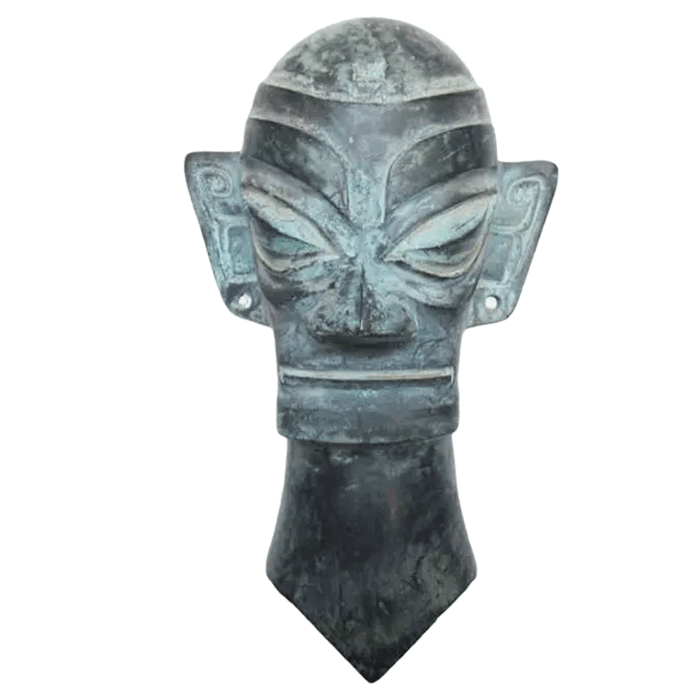
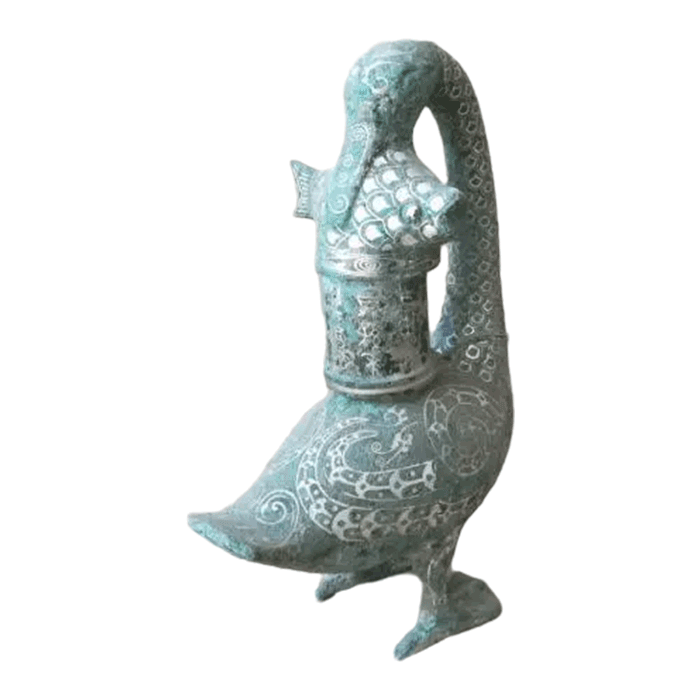
Identify Real vs Replica Chinese Bronze Patina
Identify real vs replica Chinese bronze by examining patina before you buy
Patina is often the first feature that attracts a buyer to a Chinese bronze. Green, blue, brown, black, red, and earth-toned surfaces can suggest age, history, and craftsmanship. However, patina is also one of the easiest visual effects to imitate. A decorative bronze may have a carefully applied finish that looks aged in marketplace photographs but reveals itself as newly colored metal when viewed under strong light or handled closely.
For collectors, interior buyers, galleries, and sourcing teams, the goal is not to assume that every aged-looking object is fraudulent. Modern reproductions and decorative bronze artworks can be legitimate products when their material, production date, and finish are represented accurately. The key pre-purchase question is whether the patina, object construction, and seller description agree with one another. When they do not, buyers should pause, request more documentation, and avoid making age claims based on surface color alone.
Why patina alone cannot prove an object’s age
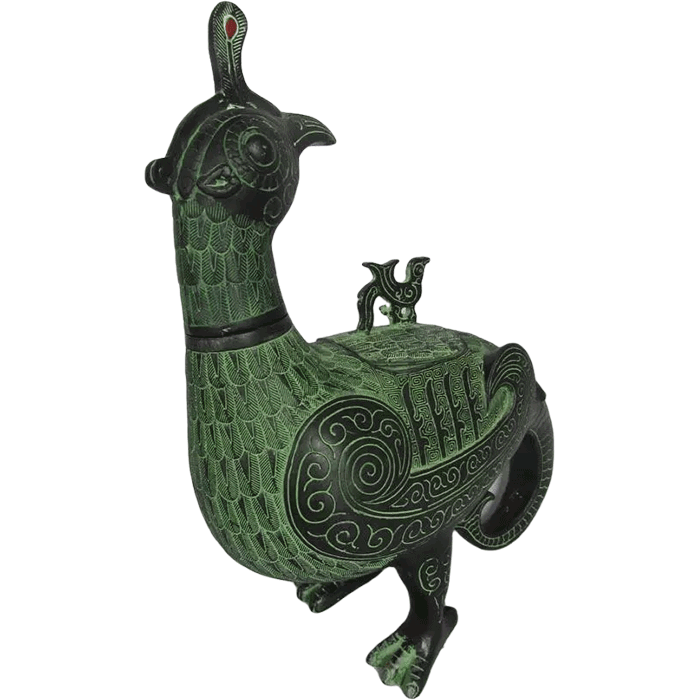
Natural corrosion develops through a long interaction between metal, moisture, salts, oxygen, soil conditions, handling, cleaning, and storage. This means genuine old bronze can display considerable variation. One area may be dark and compact, another may have stable green mineralization, and protected recesses may retain a different color from exposed relief details. There is no single “correct” antique bronze color.
At the same time, modern bronze makers can create convincing antique-style surfaces through chemical patination, tinted waxes, pigments, abrasives, heat treatment, and selective polishing. These finishing methods are commonly used for decorative and artistic purposes. A modern patina is not automatically a problem; misleading age representation is the issue.
Buyers should therefore avoid simple assumptions such as “green equals ancient” or “dark brown equals old.” A dark finish may be a modern wax or lacquer. A bright green surface may be a recent chemical treatment. Conversely, a genuine older object may have been cleaned, restored, buried in stable conditions, or stored indoors, reducing the dramatic corrosion that inexperienced buyers expect to see.
The most reliable evaluation combines surface inspection with provenance, casting quality, form, wear patterns, inscriptions, material analysis when appropriate, and an honest seller disclosure. For historical context on vessel types and decorative traditions, review this introduction to bronze wares before comparing a marketplace listing with documented examples.
How to identify real vs replica Chinese bronze from patina clues
When reviewing a bronze remotely or in person, look for a relationship between patina and the object’s physical structure. Natural-looking surfaces are usually integrated with the casting, relief, recesses, edges, and areas of expected contact. Artificial finishes often appear visually dramatic but structurally disconnected.
Look for overly uniform color distribution
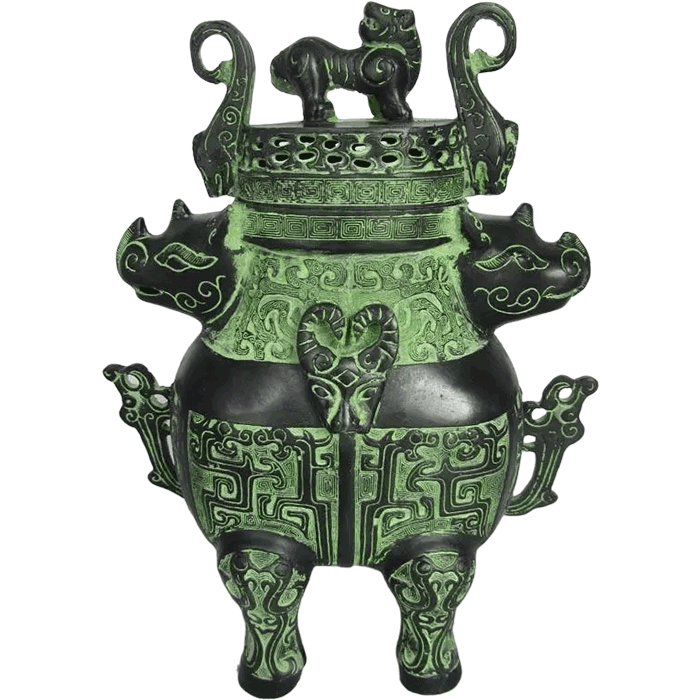
One of the most common warning signs is an even green, turquoise, or black coating spread across nearly the entire object. On a complex vessel, statue, incense burner, or mirror, every surface does not experience the same environment. Raised details, undersides, interior cavities, feet, handles, and protected grooves normally age differently.
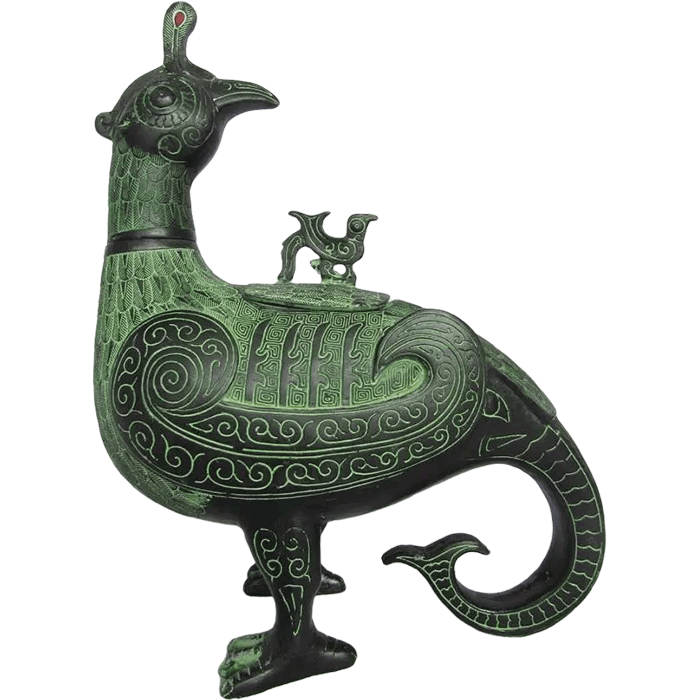
A uniformly colored finish may be a deliberate modern decorative choice. The concern increases when the seller presents that perfectly even surface as proof of antiquity. Ask for images of the underside, base, interior, seams, high points, and areas beneath handles. If every location has exactly the same color and texture, the finish deserves closer review.
Check whether the patina sits on top of the metal
Artificial color can sometimes look like a coating rather than a surface transformation. In close photographs, examine chipped spots, scratches, edges, and high-relief details. Red flags include a thin colored layer lifting away to expose bright yellow metal, paint-like pooling in corners, or an abrupt border between green coloration and bare bronze.
Natural corrosion can also flake or form layers, so flaking alone is not conclusive. The important question is whether the texture resembles a coherent mineralized surface or a recently applied finish. A seller should be able to provide sharp close-up images rather than relying only on heavily edited overview photographs.
Inspect high-contact areas for believable wear
Handles, rim edges, feet, projecting animal heads, facial features, incense burner lids, and raised motifs are common contact points. On an older object, these areas may show different wear from recessed fields. However, imitation wear is frequently created by sanding, scraping, or polishing selected edges to expose brighter metal beneath a dark or green finish.
Artificial wear often looks repetitive and theatrical: every high point is rubbed in the same way, every edge is equally bright, or the abrasion ignores the object’s actual handling pattern. A more credible surface generally has irregular transitions and wear that makes physical sense for the object’s shape and use.
Be cautious with powdery green deposits
Loose, vivid green powder may be presented as evidence of age, but it can indicate active corrosion or added material. Active bronze disease is a conservation concern and should not be confused with stable historical patina. If pale green powder is present in pits, cracks, or joins, do not rub it with a finger or attempt to clean it before professional advice.
Request detailed photographs and ask whether the object has been stabilized or conserved. A responsible seller should not describe unstable corrosion as a desirable proof of authenticity. For a buyer, active corrosion can create future storage, treatment, and value risks.
Photo-review red flags for marketplace buyers
Marketplace images can conceal important information through low resolution, heavy filters, warm lighting, and selective angles. Before placing an order, create a simple evidence file for each item. Save the full listing, seller description, price, dimensions, material claims, photographs, shipping statement, and all messages. This record helps you compare responses later and supports any dispute process if the delivered item differs materially from the listing.
Ask for a consistent image set
A useful image request should include the front, back, left side, right side, base, interior where accessible, close-ups of decorative motifs, close-ups of damaged or corroded areas, and a photograph beside a ruler. Request images in natural indirect daylight and under neutral indoor light. Different lighting can reveal whether green color is embedded in the surface or is a glossy topical coating.
Ask for a short continuous video when possible. The seller can slowly rotate the object, show the underside, and hold it at different angles. Video makes it harder to hide patched areas, exaggerated texture, or a finish that changes dramatically under directional light.
- Be cautious when only one side of the object is photographed.
- Question images with intense color saturation or strong orange lighting.
- Request unfiltered close-ups if every photo has the same cinematic filter.
- Check whether the base, feet, and interior are absent from the listing.
- Compare the stated dimensions with visible scale references.
- Save screenshots before the listing is changed or removed.
Match patina to the object’s stated identity
The listing should clearly distinguish among an antique, a later-period object, a reproduction, an inspired decorative piece, and a newly made bronze artwork with antique-style patina. Vague phrases such as “old style,” “museum quality,” or “ancient look” are not age documentation. They may describe appearance rather than origin.
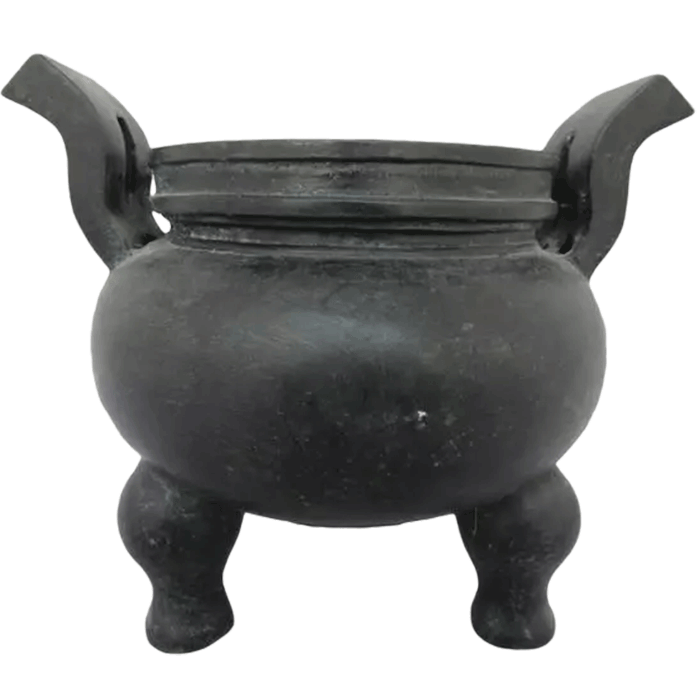
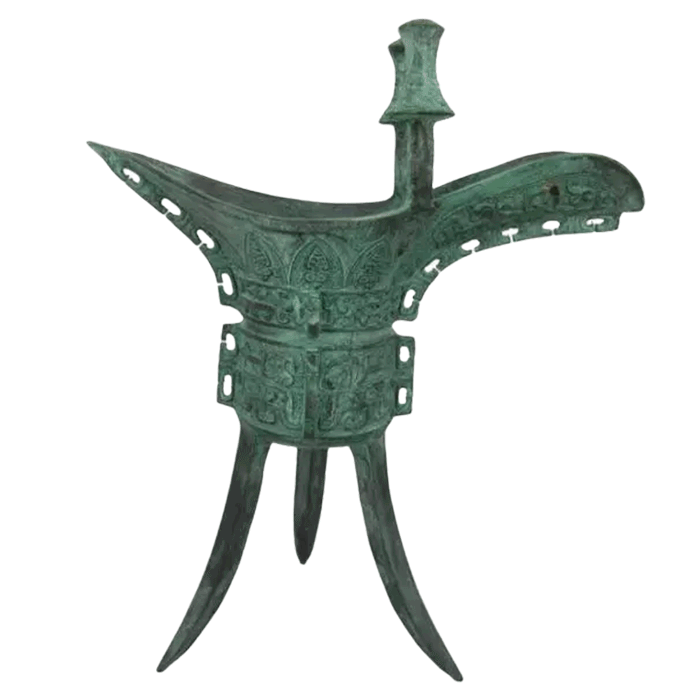
Buyers evaluating a ding, zun, hu, tripod, mirror, Buddhist statue, or animal sculpture should also study whether its form is consistent with the claimed period or inspiration. For example, the Houmuwu square cauldron provides a useful reference point for studying the visual characteristics of monumental ding forms. It should not be used as proof that a similar-looking commercial item is ancient.
What to examine when handling a bronze in person
In-person inspection allows better observation, but buyers should handle objects carefully and avoid destructive testing. Do not scratch an inconspicuous area, apply chemicals, scrape corrosion, or use abrasive tools. Such actions can damage a genuine object, reduce value, and create disputes with the seller.
Use raking light and magnification
Bring a small flashlight and view the surface from a low angle. Raking light can reveal brush marks, sprayed coatings, filler, artificial scratches, molding seams, and inconsistent textures. A jeweler’s loupe or simple magnifier can help distinguish granular corrosion from a smooth colored film.
Inspect transitions closely. Pay particular attention to where the patina meets scratches, casting flaws, drilled holes, repaired breaks, or worn edges. A recent finish may cover these areas in a way that looks too continuous, while older surface development may show more complex variation.
Examine the base, interior, and hidden areas
The underside of a statue, the interior of a vessel, the base of a mirror, and the bottom of an incense burner can provide useful clues. Newly cast decorative bronzes may have modern finishing marks, uniform internal color, fresh grinding, or recent attachment hardware. None of these features alone proves deception, especially on a disclosed reproduction, but they may conflict with a claim of substantial age.
Look for modern screws, welded additions, machine-drilled openings, obvious resin filling, or a patina that stops abruptly at inaccessible edges. Consider how an object would have been cast, finished, used, buried, cleaned, repaired, and stored. If the claimed story does not fit the object’s construction, request a specialist assessment.
Consider weight and sound with caution
Weight can help compare similar objects, but it is not an authentication method by itself. Wall thickness, alloy composition, hollow versus solid construction, repairs, and internal fill material can all affect weight. Likewise, tapping or ringing a bronze is not recommended for fragile, corroded, or valuable objects. It can cause damage and produces unreliable conclusions.
For buyers seeking a modern bronze with known production details, a transparent supplier can state the alloy, casting method, finishing approach, dimensions, and weight range. This is materially different from relying on folklore-based tests to establish antiquity.
Questions that create a useful pre-purchase record
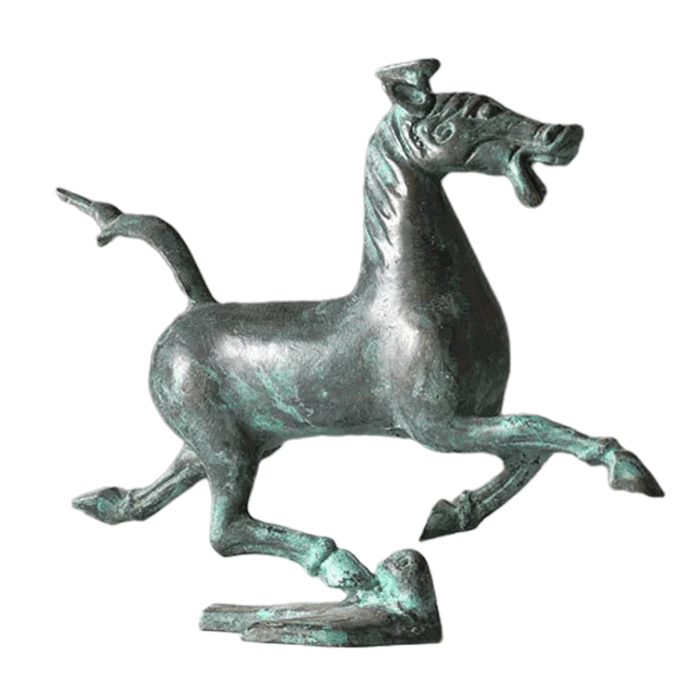
Good questions are specific, neutral, and documented in writing. Rather than asking, “Is this authentic?” ask questions that require clear facts. A seller’s willingness to answer does not independently prove authenticity, but vague or contradictory responses are valuable risk indicators.
- How is the object described: antique, reproduction, vintage decorative item, or new artwork?
- What is the stated material or alloy?
- Has the surface been cleaned, repatinated, waxed, lacquered, restored, or repaired?
- Can you provide photos of the base, interior, underside, and all sides under neutral light?
- What provenance, prior ownership history, invoice, appraisal, export record, or collection documentation accompanies the item?
- Are there condition issues such as loose corrosion, cracks, repairs, dents, or missing elements?
- What is the return policy if the delivered item differs from the written description?
For high-value purchases, request an opinion from a qualified Asian art specialist, conservator, auction-house expert, or laboratory capable of appropriate non-destructive analysis. X-ray fluorescence, for example, may provide information about surface alloy composition, but its results require informed interpretation. No single test should be treated as a complete authentication answer.
Separate antique evaluation from modern bronze sourcing
Many buyers need bronze objects for hospitality, landscape projects, retail collections, religious settings, corporate gifts, or interior decoration. In these cases, a newly made bronze can be the more practical and transparent choice. It can provide the desired historical visual language while offering known specifications, repeatable dimensions, controlled patina selection, and export-ready packing.
Luoyang Yichuan Bronze Craft Co., Ltd. produces bronze sculptures, vessels, mirrors, incense burners, Buddhist statues, and custom bronze artworks using premium Cu-Sn bronze alloy and traditional lost-wax casting. The company supports custom work from one prototype to bulk production, with hand chasing, polishing, and antique or modern patina finishing available. Buyers can discuss exact reproduction requirements, patina color matching, and packaging needs before production begins.
For project planning, explore Chinese bronze sculpture styles or review options to customize a bronze sculpture according to your requested size, theme, and finish. Clear disclosure is especially important when an artwork is inspired by historical Chinese forms: the product should be presented as a newly made bronze artwork, not as an excavated or period antique.
Use a risk-based buying decision
Aged-looking patina can be beautiful, but it should never carry the entire burden of proof. The higher the claimed age, rarity, or price, the more carefully a buyer should verify provenance, condition, object construction, and seller representations. A low-cost decorative item may only require clear disclosure and quality photographs. A supposedly ancient ceremonial vessel or rare mirror requires a much higher level of evidence.
Before purchase, document visible red flags, request additional images, compare the listing against reliable references, and keep all representations in writing. If the seller cannot explain the object consistently or pressures you to decide without further inspection, treat that as a reason to step back. A careful review does not replace professional authentication, but it can prevent many avoidable buying mistakes and help buyers choose either a properly documented antique or a transparently produced modern bronze with confidence.