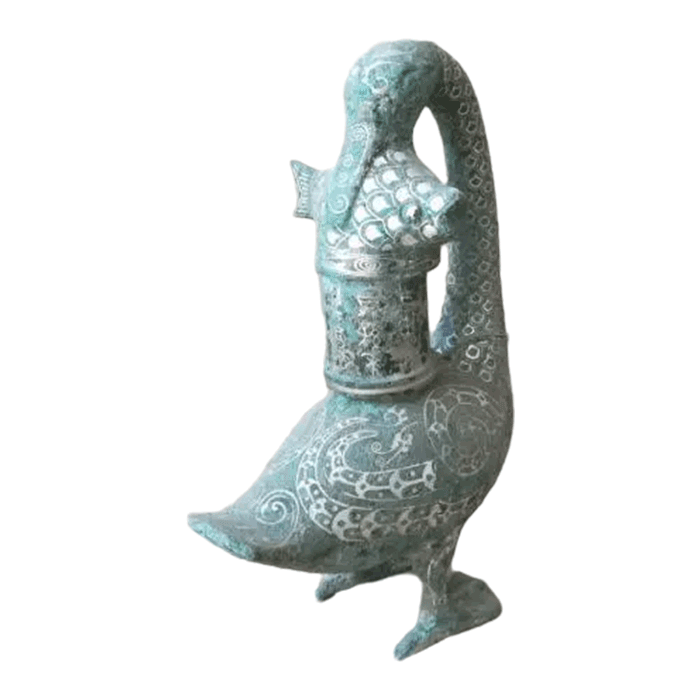
Identify Chinese Mythology Bronze Figures
Understanding the Distinct Symbols that Identify Chinese Mythology Bronze Figures
The rich tapestry of Chinese mythology offers an endless source of inspiration, with its pantheon of deities, mythical beasts, and legendary heroes deeply embedded in the cultural consciousness. For collectors, interior designers, and art importers, discerning authentic chinese bronze sculpture, particularly those representing specific mythological narratives, requires a nuanced understanding of their intricate symbolism. Luoyang Yichuan Bronze Craft Co., Ltd. specializes in crafting premium bronze art pieces, offering expertise in replicating historical designs and producing bespoke sculptures that faithfully capture the essence of these ancient tales.
This guide delves into the key symbolic elements and figures that characterize genuine Chinese mythology bronze figures, helping you identify and appreciate the profound stories they embody. From august celestial beings to powerful auspicious creatures, each detail tells a part of a larger narrative, meticulously rendered through traditional bronze casting techniques.
Decoding Iconic Deities and Immortals in Bronze
The pantheon of Chinese deities is vast and diverse, each figure recognizable by specific attributes, garments, and accompanying elements. When evaluating Chinese mythology bronze figures, familiarity with these identifiers is crucial.
The August Jade Emperor and Heavenly Bureaucracy
The Jade Emperor (Yù Dì) stands as the supreme ruler of Heaven in Taoist mythology, presiding over a vast celestial bureaucracy. Bronze depictions often portray him seated on a throne, adorned in imperial robes, a flat-topped crown (mian) with dangling beads, and holding a ceremonial tablet or scepter. His presence signifies ultimate authority, cosmic order, and justice. Other figures from the heavenly court, such as celestial generals or officials, might accompany him, distinguished by their armor, weapons, or official headwear.
Guanyin, The Bodhisattva of Compassion
While originating from Buddhist traditions, Guanyin is profoundly integrated into Chinese folk mythology, revered as the Bodhisattva of Compassion. Bronze statues of Guanyin are among the most recognizable. She is often depicted as a graceful female figure, sometimes with multiple arms symbolizing her ability to reach out to all beings, or holding a lotus flower, a vase of pure water, or a willow branch. Her serene expression and often flowing robes convey peace and benevolence. The presence of a small Amitabha Buddha in her headdress is another common identifier. Representations can vary from standing figures to those seated on a lotus pedestal, emphasizing her purity and spiritual enlightenment.
The Eight Immortals (Ba Xian)
A beloved group of Taoist deities, the Eight Immortals are symbols of prosperity, longevity, and good fortune. Each immortal possesses a distinct attribute or implement, making them individually identifiable in bronze sculptures:
- He Xiangu: Holds a lotus flower or a fly-whisk, symbolizing purity and health.
- Cao Guojiu: Dressed in official robes, often holds a pair of castanets, representing nobility and theatre.
- Li Tieguai: A lame beggar with an iron crutch and a gourd, symbolizing medicine and the ability to help the sick.
- Lan Caihe: Often depicted as a young, gender-ambiguous figure carrying a flower basket, representing florists and gardeners.
- Lu Dongbin: A scholar-official with a magic sword (which dispels evil) and a fly-whisk, representing scholarship and alchemy.
- Han Xiangzi: Plays a jade flute, symbolizing music and enlightenment.
- Zhang Guolao: An elderly sage riding a white donkey (often depicted backwards) and carrying a bamboo drum, symbolizing wisdom and longevity.
- Zhongli Quan: Portrayed as a robust man with a fan, capable of reviving the dead and turning stones into gold, symbolizing military power and wealth.
Bronze groupings of the Eight Immortals are popular, often depicted together crossing the sea or celebrating, bringing a sense of collective auspiciousness.
Mythological Heroes and Cultural Icons
Beyond deities, many legendary heroes and cultural progenitors populate Chinese mythology. Figures like Nuwa, the creator goddess often depicted with a human upper body and serpent lower body, or Fuxi, her brother and husband, are foundational. Hou Yi, the divine archer who shot down nine suns, is recognizable by his bow and arrows. These figures, while less common as individual bronze sculptures compared to deities or auspicious animals, represent pivotal moments in Chinese cosmological and historical narratives.
Mythical Beasts and Auspicious Creatures in Bronze Art
Many animal bronze statues in Chinese art are not merely decorative but deeply rooted in mythology, representing specific virtues, powers, and good omens. Identifying these creatures is key to understanding the mythological context of a bronze piece.
Dragons (Long)
The Chinese Dragon is perhaps the most iconic mythical creature, symbolizing power, strength, good luck, and wisdom. Unlike Western dragons, Chinese dragons are benevolent. Bronze dragons are typically depicted with a serpentine body, four legs with sharp claws, a camel's head, deer antlers, a rabbit's eyes, a bull's ears, a snake's neck, a clam's belly, a carp's scales, and an eagle's claws. They are often shown grasping a flaming pearl (the "pearl of wisdom" or "pearl of spiritual energy"). Imperial dragons typically have five claws, while lesser dragons or those for non-imperial use have three or four. The dynamism and intricate scales are hallmarks of quality bronze dragon figures.
Phoenixes (Fenghuang)
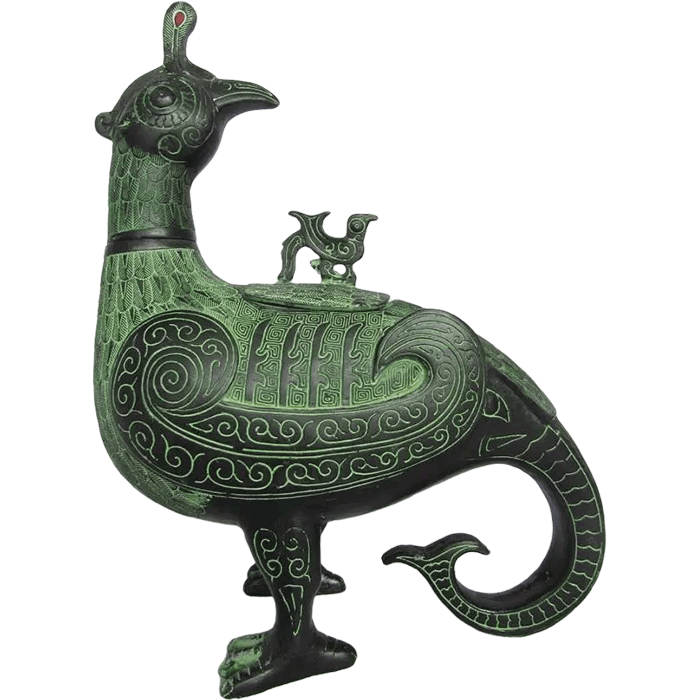
The Fenghuang, or Chinese Phoenix, is a magnificent bird that symbolizes high virtue, grace, and harmony. It is often paired with the dragon to represent the Emperor and Empress respectively, or yin and yang. Bronze phoenixes are typically depicted with a beautiful, elaborate plumage, a long flowing tail, and often resemble a combination of a peacock, pheasant, and eagle. They are usually shown in flight or perched on a tree, embodying auspiciousness and renewal.
Qilin (Kylin)
The Qilin is a mythical chimerical creature, often described as having the head of a dragon, the body of a deer, scales, an ox tail, and horse hooves. It is a symbol of prosperity, good fortune, protection, and longevity, and is said to appear with the imminent birth or passing of a sage. Bronze Qilin figures are frequently depicted standing majestically or in a dynamic pose, often with flames emanating from their bodies, signifying their divine nature.
Pixiu / Bixie
The Pixiu (also known as Bixie) is a powerful, winged, lion-like creature, often depicted with a single horn. It is renowned for its ability to attract wealth and ward off evil spirits, particularly because it is said to have an insatiable appetite for gold and silver, yet no anus to excrete it, thus retaining wealth. Bronze Pixiu figures are popular as guardians of homes or businesses, often shown in a fierce, protective stance.
Tortoise (Gui)
While a real animal, the tortoise has profound mythological significance, symbolizing longevity, stability, and endurance. Often, it is combined with other mythical elements, such as the Xuanwu (Black Tortoise), one of the Four Symbols of the Chinese constellations, which represents the north and winter. Bronze tortoises, sometimes with snake-like features or carrying stelae on their backs, are common emblems of good fortune and lasting power.
Other Auspicious Animals
Other creatures like the three-legged toad (Chánchú), associated with wealth, or the Fu Dogs (Shishi), guardian lions often seen in pairs at entrances, also belong to the realm of mythological symbolism and are frequently rendered in bronze.
Symbolic Objects and Narrative Elements in Bronze Sculptures
Beyond the figures themselves, various objects and environmental elements within a bronze sculpture provide crucial clues to its mythological context.
Celestial and Earthly Emblems
Common background elements in bronze figures include stylized clouds (symbolizing heaven and good fortune), mountains (stability and enduring power), and water patterns (wealth and continuous flow). The lotus flower, a Buddhist symbol of purity, enlightenment, and rebirth, frequently appears with deities like Guanyin. Peaches of immortality, associated with the Queen Mother of the West, signify longevity. The Ruyi scepter, an S-shaped ceremonial object, symbolizes good luck and power.
Weapons and Tools of Mythological Figures
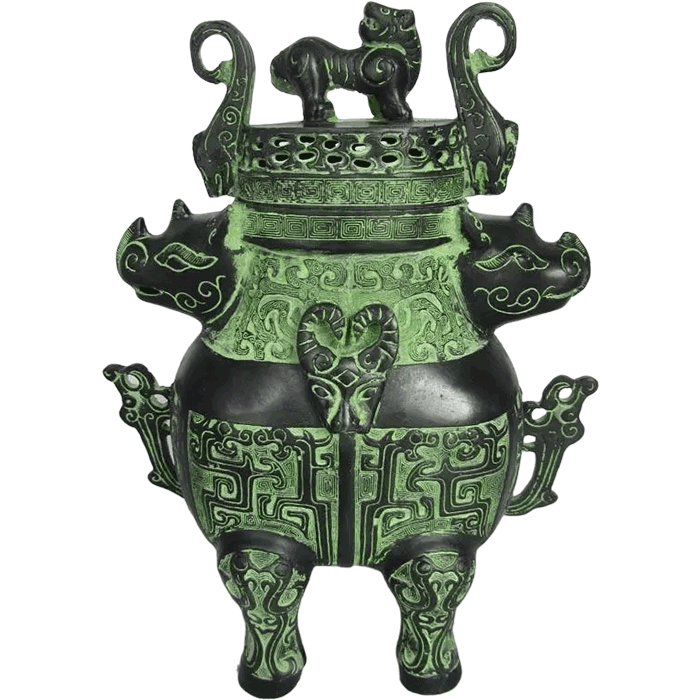
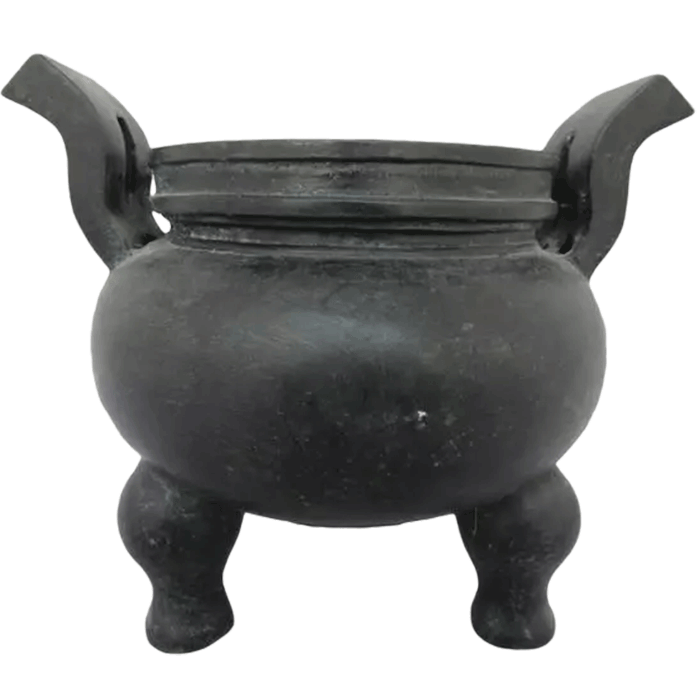
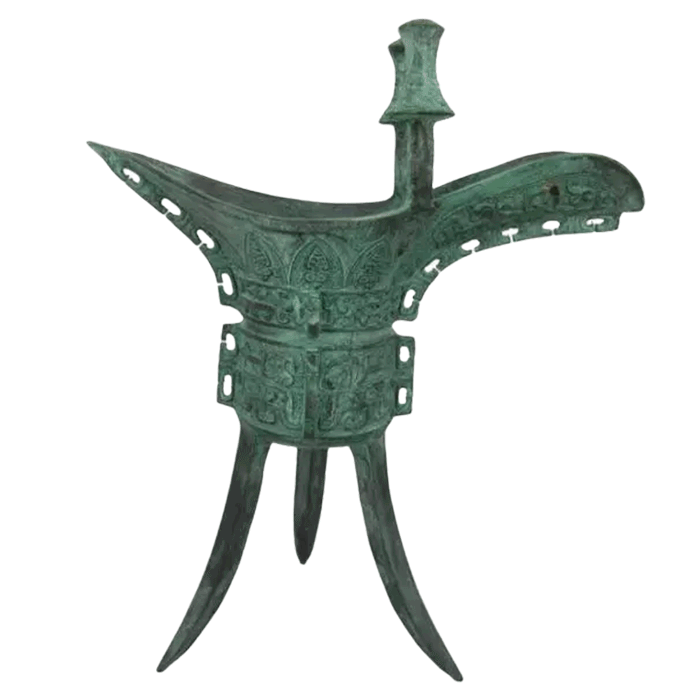
Many mythological figures are identifiable by the specific implements they carry. For instance, the Monkey King (Sun Wukong) is inseparable from his golden-banded staff. Lü Dongbin of the Eight Immortals carries a magic sword. Ritualistic bronze vessels such as introduction to several bronze wares including Ding (tripods), Zun (wine vessels), and Hu (vases) are not only artifacts themselves but can also be adorned with mythological motifs or depict scenes involving deities, further enriching the narrative.
Narrative Scenes and Contextual Clues
Some bronze pieces depict entire mythological scenes, such as the Eight Immortals crossing the sea, or specific episodes from classic novels like "Journey to the West" or "Fengshen Yanyi" (Investiture of the Gods). These narrative sculptures offer a comprehensive view of the mythology, requiring a deeper understanding of the stories themselves to fully appreciate their intricate details and symbolic meanings.
The Craftsmanship Behind Authentic Chinese Mythology Bronze Figures
The authenticity and artistic value of Chinese mythology bronze figures are profoundly linked to the craftsmanship involved in their creation. Luoyang Yichuan Bronze Craft Co., Ltd. upholds a legacy of excellence, ensuring that each piece not only represents mythological accuracy but also stands as a testament to superior artistry.
Our production process begins with premium bronze alloy (Cu-Sn), cast using the venerable traditional lost-wax method. This centuries-old technique allows for exceptional detail and fidelity to the original design, essential for capturing the intricate features of deities and mythical creatures. Following casting, our team of over 30 skilled craftsmen, including bronze-casting masters and finishing artisans, meticulously perform hand chasing and polishing. This intricate work brings out the sculpture's fine details, from the scales of a dragon to the serene expression of Guanyin. The final touch is the patina finishing, available in both antique and modern looks, which enhances the character and depth of the bronze, giving it a timeless appeal.
Located in Yichuan County, Luoyang, Henan Province, our 3,000 square meter production area is equipped to handle diverse orders, supporting everything from a single custom prototype to extensive bulk production runs. We understand the unique challenges faced by collectors and importers, such as the need for exact replication of antique bronzes, consistent patina color matching across multiple pieces, and export-compliant protective packaging for fragile sculptures. Our ISO 9001 quality management system certification ensures that all products comply with export quality inspection standards for art crafts, providing peace of mind to our global clientele. Whether you need to customize a bronze sculpture from sculpmart.com or source a series of specific mythological figures, our MOQ starts from just 1 piece for custom sculptures, with bulk orders negotiable based on size and design complexity.
Ensuring Quality and Authenticity for Your Collection
When investing in Chinese mythology bronze figures, quality and authenticity are paramount. Luoyang Yichuan Bronze Craft Co., Ltd. is committed to delivering unparalleled products and services. Every shipment undergoes rigorous quality inspection before dispatch, guaranteeing that each piece meets our stringent standards. We offer a free replacement policy for any casting defects, underscoring our confidence in our craftsmanship.
Our commitment extends beyond delivery with comprehensive after-sales support, including guidance for patina touch-ups and restoration. This ensures that your valuable bronze figures retain their beauty and integrity for generations. We pride ourselves on solving critical sourcing pain points for our B2B partners, providing not just products, but reliable, compliant, and high-quality solutions for their bronze art needs.
By understanding the symbolic language embedded within these magnificent bronze creations, and by partnering with a manufacturer dedicated to preserving traditional artistry and ensuring modern quality, you can confidently acquire pieces that truly embody the spirit and narrative of Chinese mythology.
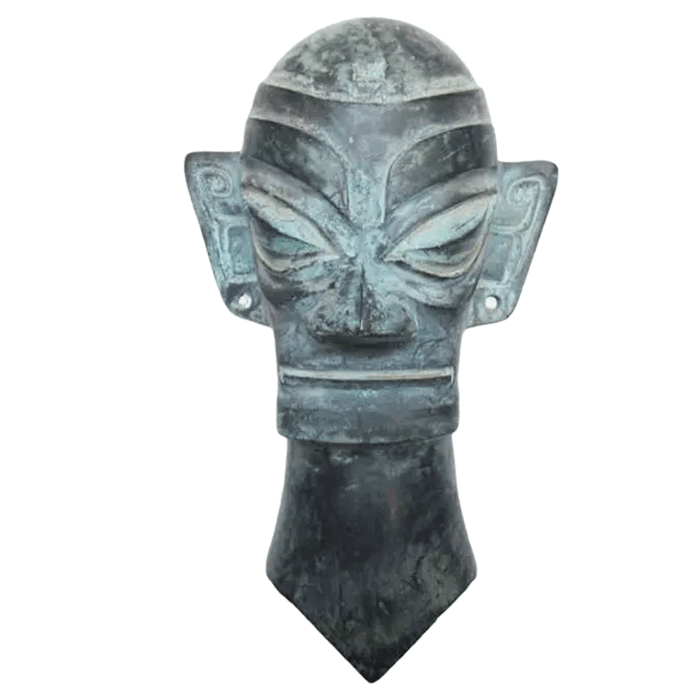
The world of Chinese mythology bronze figures is rich with cultural depth and artistic excellence. By familiarizing yourself with the distinguishing features of deities, mythical beasts, and symbolic elements, you can make informed decisions and curate a collection that truly reflects the profound narratives of ancient China. Luoyang Yichuan Bronze Craft Co., Ltd. stands as your trusted partner, providing not only exquisite craftsmanship but also the expertise and reliability needed to bring these timeless stories to life through bronze art.