How to Tell Chinese Mythology Bronze Figures From Ritual Vessels
How to Tell Chinese Mythology Bronze Figures From Ritual Vessels
For collectors, museum buyers, and décor importers just beginning to explore Chinese bronze art, one of the most common points of confusion is distinguishing figural sculpture from ceremonial vessels. Both categories share the same metallurgical roots—copper-tin alloys, ancient casting traditions, and a shared visual vocabulary of dragons, phoenixes, and taotie masks—but they serve fundamentally different purposes, follow different production techniques, and appeal to different buyers. Understanding these differences early in your sourcing research will help you select the right product category, negotiate accurately with suppliers, and set realistic expectations for lead time, pricing, and finishing options.
This guide breaks down the structural, functional, and craftsmanship differences between mythic bronze figures and ritual vessels, and offers practical guidance for buyers evaluating suppliers before placing a custom or bulk order.
What Defines a Ritual Bronze Vessel?
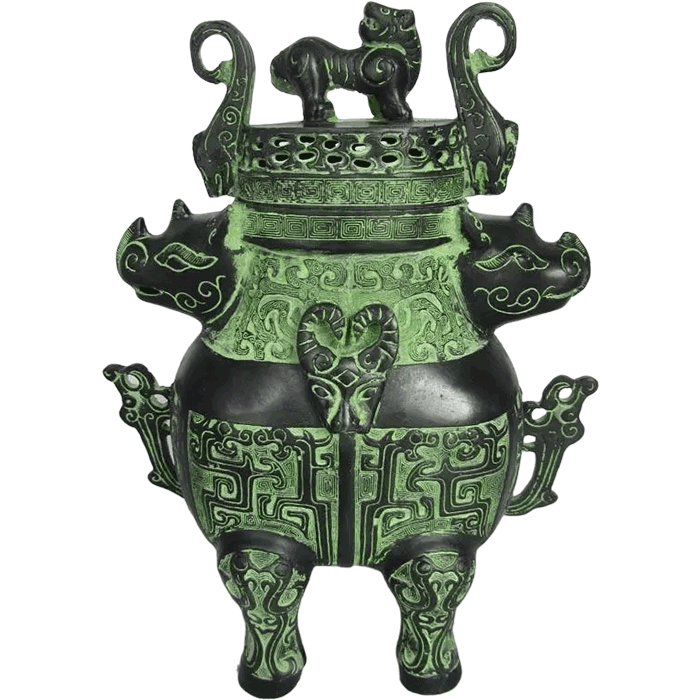
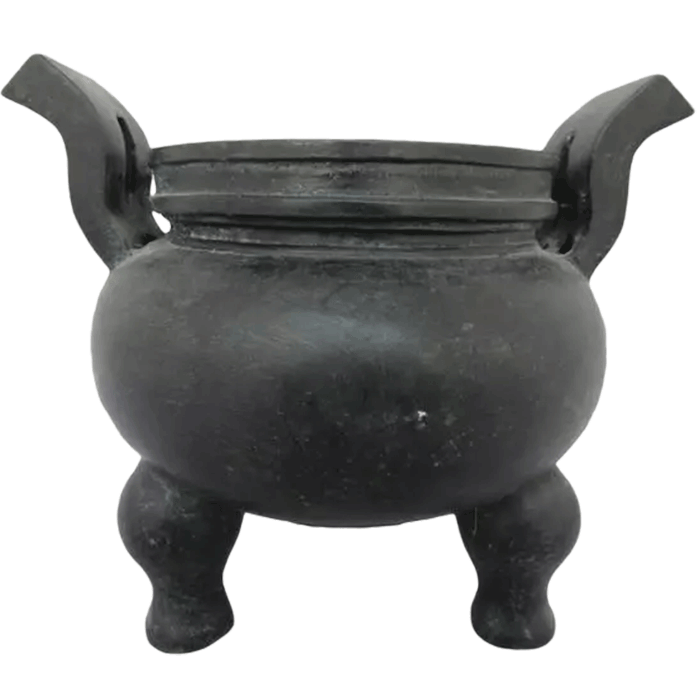
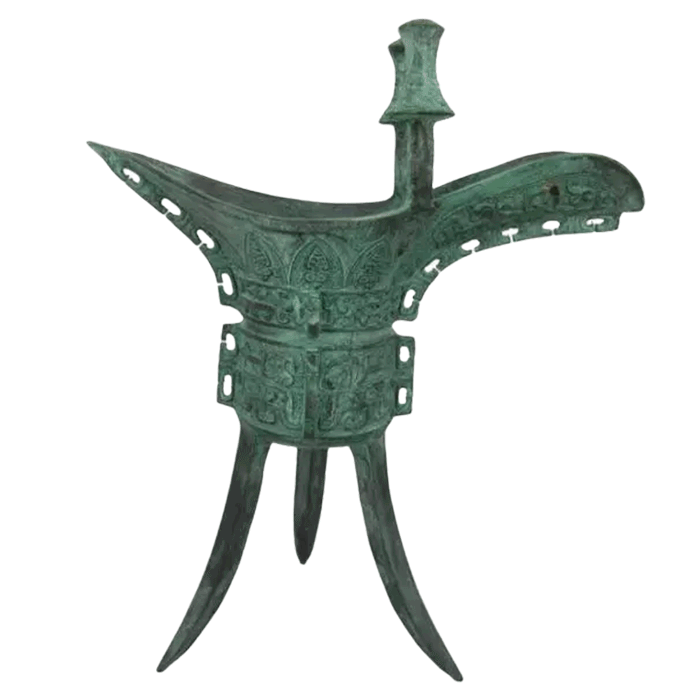
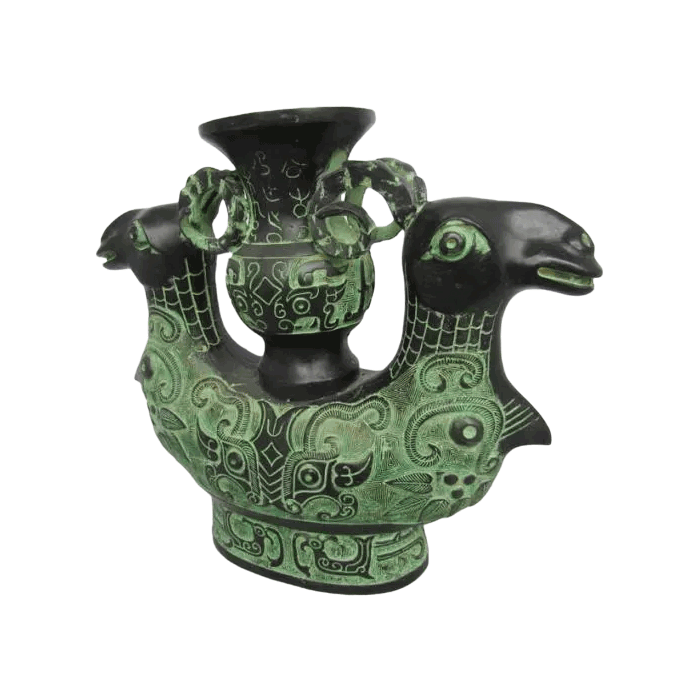
Ritual vessels—commonly known by their Chinese names such as ding, zun, and hu—originated during the Shang and Zhou dynasties as tools for ancestral worship, wine offerings, and ceremonial feasting. These pieces are typically hollow, functional in form, and defined by symmetrical geometry: three or four legs on a ding, a wide flaring mouth on a zun, or an elongated neck on a hu vase.
Key Identifying Features
- Symmetrical, vessel-based silhouette (bowls, tripods, vases)
- Surface decoration is typically low-relief patterning—taotie masks, cloud-and-thunder motifs, or dragon bands—rather than freestanding figures
- Inscriptions (if present) are cast on interior surfaces, often documenting clan names or historical events
- Function-driven proportions: a wide base for stability, handles for lifting, a lid for sealing contents
Buyers researching this category often want pieces that replicate museum originals with high dimensional accuracy. For a deeper look at how these vessel forms evolved across dynasties, our article on the evolution of bronze culture over 2000 years outlines the stylistic shifts from Shang austerity to Warring States refinement.
What Defines Chinese Mythology Bronze Figures?
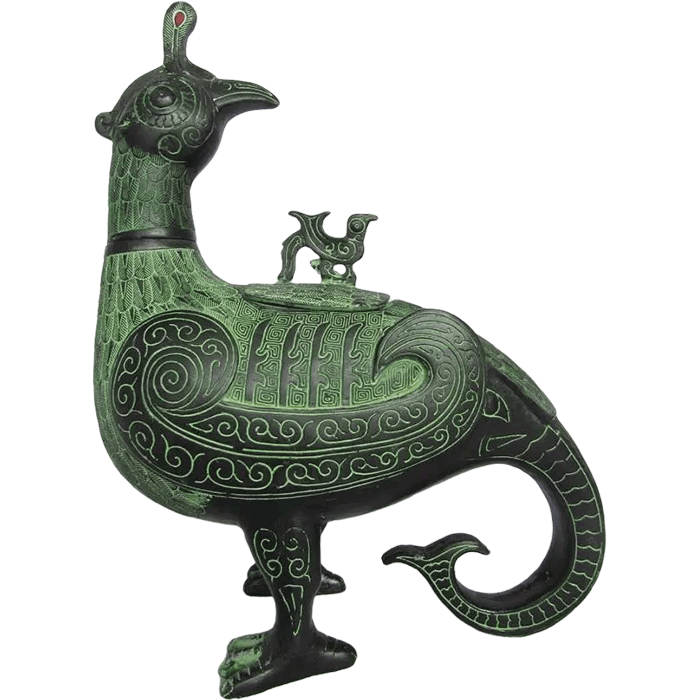
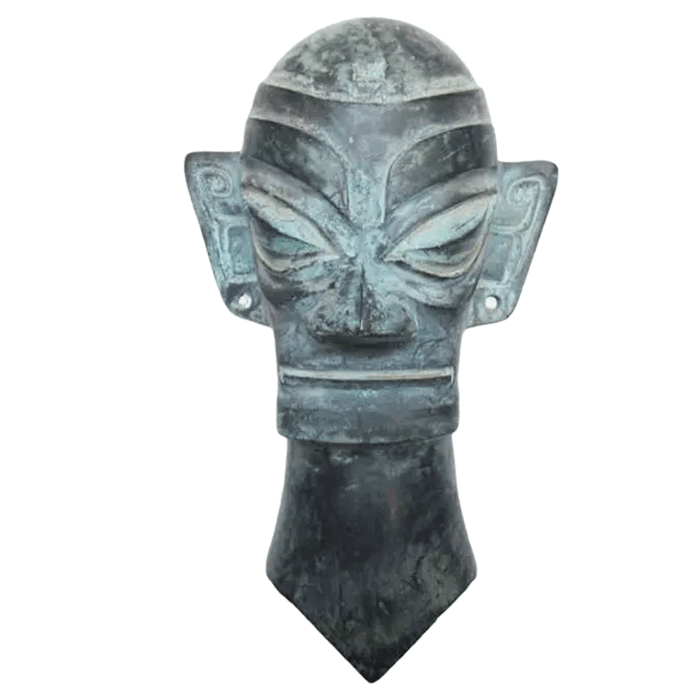
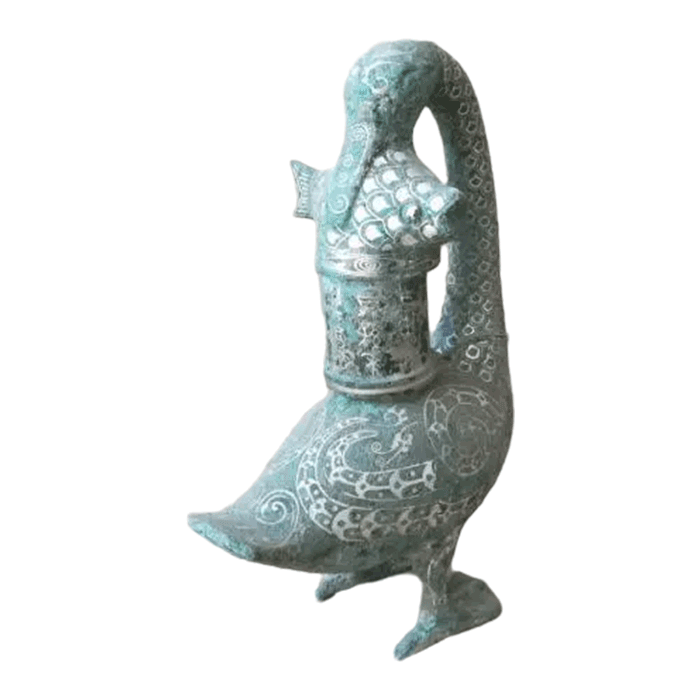
In contrast, Chinese mythology bronze figures are freestanding sculptural works depicting deities, guardian animals, immortals, or legendary heroes. Unlike vessels, their primary purpose is symbolic and decorative rather than functional. A bronze Guanyin, a pair of guardian lions, or a galloping horse inspired by Han dynasty legend all fall into this category.
Key Identifying Features
- Anatomically expressive forms—human figures, animals in motion, or composite mythical creatures
- Emphasis on posture, facial expression, and drapery rather than surface pattern alone
- Often finished with hand-applied patina to suggest age, spiritual gravity, or a specific historical period
- No structural requirement to hold liquid or food; the form serves narrative and symbolic purposes
Because these figures are meant to evoke a legend or deity rather than replicate a container's function, sculptors rely heavily on manual chasing and finishing work after casting. This is where the skill of individual artisans becomes far more visible than in vessel production. Buyers interested in the full range of figural themes can review bronze statues with different themes to compare human, animal, and mythological subjects side by side.
Casting and Finishing: Where the Two Categories Diverge
Both ritual vessels and mythic figures are traditionally produced using the lost-wax casting method, which allows for intricate detail and hollow-cast weight reduction. However, the post-casting workflow differs significantly between the two.
Ritual Vessel Production
Vessel casting emphasizes dimensional precision and pattern consistency. Once cast, the piece is cleaned, and surface reliefs are lightly re-chased to sharpen the geometric motifs. Patina work on vessels tends to follow historical reference tones—malachite green, cuprite red, or earth-toned oxidation—matched against known archaeological examples.
Mythic Figure Production
Figural sculpture requires more hand-chasing time because expression and musculature must be refined individually, even across pieces cast from the same mold. Patina application is also more varied, ranging from antique verdigris finishes to darker modern bronze tones favored by contemporary interior designers. A workshop producing both categories needs craftsmen skilled in different disciplines—vessel specialists focused on pattern fidelity, and figure specialists focused on anatomical and facial detailing.
At Luoyang Yichuan Bronze Craft Co., Ltd., our production facility in Yichuan County, Luoyang, brings together more than 30 skilled craftsmen, including bronze-casting masters and finishing artisans, so that both vessel replication and figural sculpture can be handled to export-quality standards under one roof.
Why the Distinction Matters for Buyers
Understanding whether you need a ritual vessel or a figural sculpture affects far more than aesthetics—it shapes your sourcing timeline, packaging requirements, and cost structure.
Sourcing and MOQ Considerations
Custom mythic figures, particularly one-of-a-kind commissions such as a bespoke deity statue or a themed guardian animal pair, can often be produced starting from a single piece, since molds may be sculpted specifically for that project. Ritual vessel replicas, especially those matching well-documented museum pieces, may also start from a single prototype but typically move toward bulk orders once a buyer confirms sizing and finish. In both cases, MOQ and lead time should be negotiated based on size and design complexity rather than assumed from a price list alone.
Packaging and Export Compliance
Fragile figural details—outstretched arms, flowing robes, delicate animal limbs—require different protective packaging than the more compact geometry of a vessel. Export-compliant crating, corner reinforcement, and moisture-resistant wrapping should be confirmed with your supplier before finalizing an order, particularly for large sculptural commissions destined for museum display or high-end retail.
Authenticity and Reference Accuracy
Collectors and museum buyers frequently request exact replication of antique originals, whether a Shang dynasty ding or a Tang dynasty guardian figure. This requires a supplier capable of sourcing accurate historical references and matching patina tone consistently across a production run—an area where inconsistent quality control among smaller workshops often creates problems for importers. Reviewing case studies and historical references, such as the discussion of the Houmuwu square cauldron, can help buyers calibrate expectations for how closely a reproduction should match documented originals.
Practical Checklist Before Placing an Order
| Consideration | Ritual Vessels | Mythic Figures |
|---|---|---|
| Primary purpose | Ceremonial/functional replica | Symbolic/decorative sculpture |
| Key craftsmanship focus | Pattern and dimensional accuracy | Anatomy, expression, drapery |
| Typical finishing | Historical patina matching | Antique or modern patina, more variation |
| Packaging priority | Stability of base and handles | Protection of protruding details |
| Common buyer profile | Museum stores, antique replica importers | Décor importers, temple suppliers, private collectors |
Before confirming a purchase order, it's worth requesting sample photos of previous work in the exact subcategory you need—whether that's a bronze incense burner, a Buddhist statue, or a pair of animal guardians. Reviewing a supplier's bronze statues with different themes portfolio alongside their vessel catalog gives a clearer picture of whether their team has genuine depth in both disciplines rather than strength in only one.
Working With a Supplier That Covers Both Categories
Many buyers eventually need both product types—for instance, a museum gift shop stocking ritual vessel reproductions alongside mythological figure statuettes, or an interior décor importer combining bronze mirrors with figural centerpieces. Working with a single manufacturer that maintains ISO 9001 quality management certification and produces both categories under one export inspection process simplifies logistics considerably, since buyers avoid coordinating multiple suppliers with different quality standards and shipping schedules.
Luoyang Yichuan Bronze Craft Co., Ltd. operates a 3,000-square-meter production facility with an annual output exceeding 50,000 bronze art pieces, supporting everything from single custom prototypes to larger production runs. Every shipment undergoes quality inspection, and casting defects are covered by free replacement, giving buyers a reliable path whether they are sourcing a single museum-grade vessel or a full collection of Chinese mythology bronze figures for retail distribution.
For buyers still refining their product direction, browsing category pages such as chinese bronze sculpture alongside historical background articles can clarify which subject matter—deities, dynastic vessels, or guardian animals—best fits a target market before committing to a first order.
Final Thoughts
Distinguishing ritual vessels from mythic bronze figures comes down to purpose, form, and finishing technique. Vessels prioritize geometric precision and historical pattern accuracy, while figural sculpture demands expressive detailing and more individualized hand-finishing. Recognizing these differences early allows collectors, museum buyers, and décor importers to communicate more precisely with manufacturers, set accurate budgets, and avoid mismatched expectations around lead time or finish quality. Whether your sourcing plan centers on a documented antique replica or an original figural commission, understanding this foundational split in bronze craftsmanship is the first step toward a successful order.