How to Scale a Simuwu Ding Replica for Display
How to Scale a Simuwu Ding Replica for Display
The original Houmuwu ding, often referred to by its earlier name Simuwu ding, is one of the largest and heaviest ancient bronze vessels ever unearthed, weighing over 800 kilograms and standing well above one meter tall. For museum shops, interior designers, and private collectors, commissioning a scaled reproduction raises a practical question before any casting begins: what size actually suits the intended space and purpose? This guide walks through the factors that determine appropriate scaling for a display-ready reproduction, drawing on standard practices used in bronze casting workshops that specialize in historical replication.
Understanding the Original Dimensions
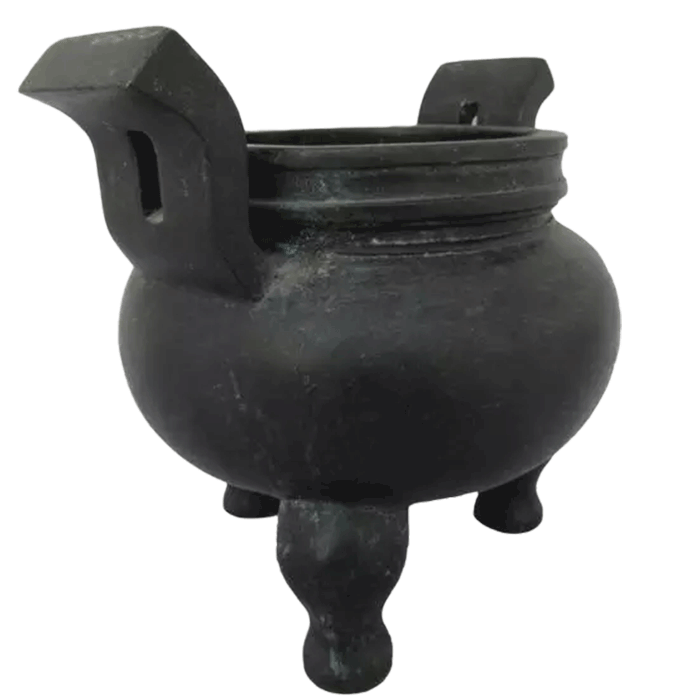
Before scaling down or up, it helps to understand the reference dimensions of the original vessel. The authentic ding stands approximately 133 centimeters tall, measures around 110 by 79 centimeters at the rim, and weighs 832.84 kilograms in bronze alloy. These proportions matter because the piece's visual weight comes from its thick legs, deep belly, and heavy handles — features that must scale proportionally, not just linearly, to preserve the correct visual balance. A workshop experienced in reproducing this vessel will maintain the ratio between wall thickness, leg diameter, and overall height so the miniature or full-size version still reads as authentic rather than distorted.
For readers researching the broader background of this vessel and its place in bronze casting history, the article on Houmuwu square cauldron provides useful context on its excavation and cultural significance.
Why Scale Matters More Than Size Alone
Two replicas of different heights can both look "correct" if the scale ratio is consistent throughout. Conversely, a replica that simply shrinks the height while keeping wall thickness or leg proportions unchanged will look clumsy or unnaturally heavy. When commissioning a Simuwu Ding replica, request that the foundry confirm they are scaling every dimension — height, width, wall thickness, and decorative relief depth — using the same ratio, rather than adjusting height alone to fit a display case.
Common Display Scale Categories
Buyers typically request one of several standard scale ranges, depending on where the piece will be displayed.
Tabletop and Desk Scale (15–30 cm)
This range suits retail counters, office desks, and gift-shop inventory. At this size, fine surface details such as the taotie animal-mask motifs and cloud-and-thunder background patterns need careful hand-chasing after casting, since fine lines can blur if the wax mold isn't cut with enough precision. This scale is popular for museum gift shops and corporate gifting programs because it balances shipping cost with visual impact.
Mid-Size Display Scale (40–70 cm)
This is the most requested range for lobby displays, private collections, and cultural exhibition spaces. At 40 to 70 centimeters, the vessel retains a commanding presence without requiring reinforced flooring or specialized shipping crates. Most interior designers select this range when placing a piece in a reception area or gallery vitrine.
Near Full-Scale and Full-Scale (90 cm and above)
Museums, cultural centers, and high-end collectors sometimes commission near-original or full-scale replicas for permanent exhibition. These pieces require significant lost-wax casting capacity, a longer production timeline, and reinforced structural design in the legs to safely bear the vessel's own weight, since bronze at this volume is substantial even when hollow-cast.
| Scale Category | Typical Height | Best Use Case |
|---|---|---|
| Tabletop | 15–30 cm | Retail, gifting, desk display |
| Mid-Size | 40–70 cm | Lobby, gallery vitrine, private collection |
| Near Full-Scale | 90 cm+ | Museum exhibition, cultural institutions |
Factors That Influence the Right Choice
Available Display Space and Viewing Distance
A vessel meant to be viewed up close on a desk should emphasize crisp detail at a smaller scale, while a piece intended for viewing from several meters away in a lobby benefits from a larger scale so the pattern work remains legible. Measure the display footprint, including clearance for the vessel's wide legs and handles, before finalizing dimensions.
Structural and Casting Considerations
Larger bronze castings require thicker walls near the base to support the vessel's own weight, along with internal reinforcement that isn't visible in the original archaeological piece but is necessary for long-term structural stability in a reproduction. A workshop using the traditional lost-wax method can adjust internal wall thickness during the wax-model stage without altering the external appearance, which is one reason lost-wax casting remains the preferred technique for accurate historical reproductions.
Patina and Finish Consistency Across Scale
Color matching becomes more complex as size increases, since a larger surface area needs uniform patina application to avoid visible blotching or tonal variation between the legs, belly, and handles. Workshops experienced in antique-style finishing typically test patina formulas on sample plates before applying them to the full casting, particularly for larger commissions where inconsistency would be more noticeable. Readers interested in how patina and surface treatment vary across bronze vessel types may find the overview on Chinese bronze sculpture techniques helpful for comparison.
Shipping and Handling Constraints
Scale also determines packaging requirements. A 20-centimeter tabletop replica can ship in a padded wooden crate with standard freight, while a near full-scale reproduction needs custom crating, weight distribution planning, and often a dedicated pallet with reinforced corners. Buyers sourcing internationally should confirm the foundry's export packaging standards before committing to a size, especially for large or asymmetrical shapes like the ding's four legs, which are vulnerable points during transit.
Working With a Foundry on Custom Scaling
Because every display environment differs, most buyers work directly with the casting workshop to determine final dimensions rather than choosing from a fixed catalog size. A reliable process typically includes the following steps.
- Share the intended display location, including height, width, and depth constraints, along with photos if possible.
- Request a scaled technical drawing or 3D rendering before wax modeling begins, so proportions can be reviewed and adjusted.
- Confirm the alloy composition and casting method — a copper-tin bronze alloy cast through lost-wax casting is standard for accurate historical reproduction.
- Discuss patina finish, whether an antique green-brown surface or a more contemporary polished bronze look is preferred.
- Review the foundry's quality inspection and packaging process before production, particularly for larger or fragile pieces.
A workshop with in-house craftsmen — including bronze-casting masters and finishing artisans — can typically accommodate custom scale requests starting from a single prototype piece, which is useful for museum shops testing a design before committing to a production run. For a deeper look at how custom commissions are typically structured, see the process outlined for customizing a bronze sculpture.
Practical Recommendations by Buyer Type
Museum Shops
Tabletop-scale reproductions between 15 and 25 centimeters tend to perform best for retail, balancing affordability with enough surface detail to satisfy visitors seeking an accurate souvenir. Bulk orders at this scale also ship and store more efficiently.
Interior Designers
Mid-size pieces in the 40 to 70 centimeter range usually integrate well into lobbies, private libraries, or feature shelving, offering visual weight without overwhelming a room. Designers should coordinate with the foundry on base or stand design, since the ding's leg spacing needs a stable platform at larger scales.
Private Collectors and Institutions
Collectors seeking the closest possible replication of the original often request near full-scale pieces, sometimes alongside documentation of the alloy composition and casting method for provenance and insurance purposes. A Simuwu Ding replica at this scale is a long-term commission that benefits from close communication with the foundry throughout production, including progress photos at the wax-model and casting stages.
Final Considerations Before Placing an Order
Choosing the right scale for a display reproduction is less about picking a number and more about matching proportional accuracy, structural soundness, and finish quality to the intended setting. Whether the goal is a compact desk piece or a museum-grade centerpiece, working with a foundry that understands lost-wax casting, hand chasing, and patina matching will produce a far more convincing result than a generic sizing chart alone. Buyers are encouraged to request sample photos of previous vessel reproductions and ask directly about wall thickness and internal reinforcement for their chosen scale, since these details affect both appearance and long-term durability.
For readers wanting to explore how bronze vessels like ding, zun, and hu tripods evolved across dynasties — context that can inform which decorative details matter most in a reproduction — the article on the evolution of bronze culture over 2000 years offers useful background. Combined with clear communication about display space and structural needs, this research helps ensure the finished piece, at whatever scale, remains faithful to the craftsmanship of the original.