How to Reduce Landed Costs on Chinese Bronze Replicas
Practical Ways for B2B Buyers to Reduce Landed Costs on Chinese Bronze Replicas
For import buyers, gallery owners, and interior design firms sourcing Chinese Bronze Replicas, the factory quotation is only the starting point. The real number that matters is the landed cost — the total spent once duty, freight, insurance, packaging, and post-arrival handling are added to the unit price. Many buyers focus solely on comparing per-piece prices between suppliers, then find their actual costs balloon after damaged shipments, customs delays, or unexpected re-finishing work. This guide breaks down where those hidden costs come from and how a well-run bronze foundry can help you control them from quotation to delivery.
Understanding What Drives the Price of Chinese Bronze Replicas
Before negotiating a quote, it helps to understand the cost structure behind bronze casting. Unlike mass-produced resin or fiberglass items, genuine bronze pieces made with the traditional lost-wax method involve several labor-intensive stages: wax modeling, mold building, alloy casting, hand chasing, polishing, and patina application. Each stage requires skilled craftsmen, and the alloy composition itself — typically a copper-tin (Cu-Sn) bronze — affects both weight and material cost.
When comparing quotations, ask suppliers to break down pricing by these components rather than giving a single lump sum. This lets you identify where cost differences actually come from: is one factory using thinner casting walls to save on metal, or do they simply have lower labor rates? Buyers who want museum-grade accuracy, such as exact replication of antique chinese bronze sculpture pieces, should expect higher chasing and finishing costs, since fine surface detail takes considerably more manual work than a simplified casting.
Alloy Grade and Wall Thickness
Thinner walls reduce material cost but can increase breakage risk during shipping, which often costs more in claims and replacements than it saves upfront. A reputable supplier will recommend wall thickness based on the piece's size and shipping method rather than cutting it purely to hit a lower quote.
Finishing Complexity
Antique-style patina finishes that replicate aged bronze tones require multiple chemical and heat treatments to achieve consistent color matching. Modern polished finishes are typically faster to produce. If your project doesn't require an aged look, specifying a modern finish can shorten production time and reduce labor cost.
Negotiating MOQ and Production Runs Without Overpaying
One common misconception is that small orders are always more expensive per piece. In reality, a factory that supports custom orders from a single prototype — as opposed to only accepting bulk minimums — gives buyers more flexibility to test a design before committing to volume. This matters for landed cost planning because a failed bulk order (wrong dimensions, unsatisfactory patina, or packaging issues) is far costlier than a small pilot shipment.
- Request a single sample piece before finalizing a bulk order, especially for new sculpture designs or custom customize a bronze sculpture projects.
- Ask whether tooling or mold costs are amortized into unit price for larger runs — this can shift the per-piece economics significantly.
- Clarify if pricing is negotiable based on design complexity, since a plain bronze vase and a finely detailed bronze Buddhist statue involve very different labor hours even at the same size.
Buyers assembling a mixed container — for example, combining bronze vessels, bronze mirrors, and incense burners — should also confirm whether the supplier can consolidate multiple product lines into a single production and shipping schedule. This reduces the number of separate freight bookings and associated handling fees.
Packaging and Freight: Where Landed Cost Often Goes Wrong
Bronze sculptures and vessels are heavy, dense, and often irregularly shaped, which makes packaging design a major factor in total cost. Inadequate crating leads to two expensive outcomes: damage claims and repeated re-shipment, or customs delays caused by packaging that doesn't meet import documentation standards.
Export-compliant protective packaging built specifically for fragile bronze pieces — foam-lined wooden crates, moisture barriers, and secured internal bracing — costs more upfront than generic packing but reduces the risk of breakage during ocean or air freight. When evaluating quotes, ask suppliers to specify:
- Crate material and internal cushioning method for each product type.
- Whether packaging costs are included in the quoted unit price or billed separately.
- Estimated total shipping weight and volume, since bronze's density means freight cost per cubic meter can be higher than for lighter materials.
Buyers should also factor in destination-country import duties for bronze art versus decorative metalware, as classification can affect tariff rates. Confirming HS code classification with your supplier before shipment avoids unexpected customs costs at the port of entry.
Quality Inspection: Preventing Costly Rework After Delivery
A defective casting discovered after the goods clear customs is far more expensive to fix than one caught before shipment. Pre-shipment quality inspection — checking for casting flaws, uneven patina color, and structural integrity — should be a standard part of any factory's process, not an optional add-on. Ask potential suppliers directly:
- Do they inspect every piece before shipment, or only a sample batch?
- What is their policy on casting defects — replacement, refund, or repair?
- Can they provide after-sales support for patina touch-ups if the finish is affected during transit or installation?
A supplier operating under an ISO 9001 quality management system typically documents these inspection steps, which gives buyers a paper trail useful for both internal procurement records and any insurance claims related to transit damage. This documentation also matters if you're importing for museum, hospitality, or government projects where compliance records are required.
Matching Patina and Finish Across Multiple Units
For bulk orders of identical pieces — such as a set of bronze incense burners for a hotel chain or a series of matching garden statues — consistent patina color matching across units is critical. Color variation between pieces in the same order often leads to buyer rejection or costly on-site touch-up work. Confirm with your supplier how they control color consistency across a production batch, especially for antique-style finishes that rely on chemical patination rather than paint.
Working With an Experienced Bronze Foundry to Control Total Cost
Luoyang, Henan Province, sits at the heart of a bronze-casting tradition that spans roughly 3,000 years, and factories in this region — including ours in Yichuan County — combine that heritage with modern production discipline. Operating from a 3,000-square-meter facility with more than 30 skilled craftsmen, including bronze-casting masters and finishing artisans, allows for both single custom prototypes and annual output exceeding 50,000 pieces. This range matters for landed cost planning: a factory built only for mass production may struggle with small custom orders, while a small workshop may lack the capacity and packaging infrastructure needed for reliable bulk export.
When comparing Chinese Bronze Replicas suppliers, look beyond the unit price quoted on a spreadsheet. Consider casting quality, packaging standards, inspection procedures, and after-sales support together — these factors determine whether your final landed cost matches your budget or exceeds it. A slightly higher factory quote that includes proper export packaging and pre-shipment inspection is often cheaper overall than a low quote that results in breakage, customs issues, or rework.
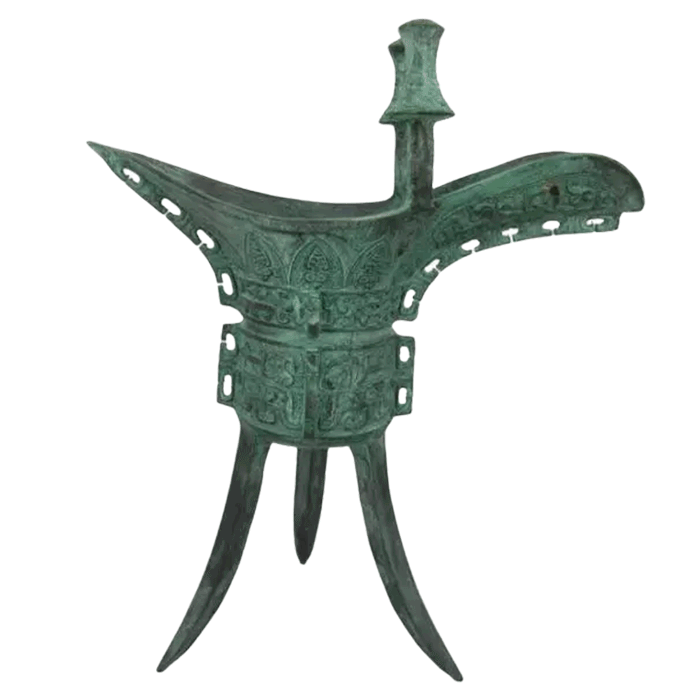
Buyers researching design options can browse categories such as bronze statues with different themes, or review historical context on pieces like the Houmuwu square cauldron to better understand the craftsmanship behind classic vessel forms before requesting a custom quote.
Checklist: Questions to Ask Before Confirming Your Order
- Is the quotation broken down by material, casting, finishing, and packaging?
- What is the MOQ, and is it negotiable based on design complexity?
- Does the price include export-compliant crating for fragile bronze items?
- Is pre-shipment inspection standard, and what happens if a defect is found?
- What after-sales support is available for patina touch-ups or restoration guidance?
- How is color and patina consistency maintained across a multi-unit order?
Working through this checklist before placing an order helps buyers avoid the most common landed-cost surprises: damaged shipments, inconsistent finishes, and unclear customs classification. For a closer look at how casting techniques evolved over centuries and why certain finishing methods cost more than others, see the evolution of bronze culture over 2000 years.
Final Thoughts on Budgeting for Bronze Imports
Reducing landed cost on Chinese Bronze Replicas isn't about chasing the lowest factory quote — it's about understanding the full cost chain from casting to customs clearance. Buyers who ask detailed questions about alloy composition, finishing method, packaging standards, and inspection policy are far better positioned to avoid the expensive surprises that erode margins after goods arrive. Partnering with a foundry that offers transparent pricing, flexible order sizes from single prototypes to large production runs, and documented quality control gives procurement teams the predictability needed for accurate budgeting.
Whether you're sourcing a single custom sculpture or planning a container load of mixed bronze vessels, mirrors, and Buddhist statues, taking the time to evaluate these factors upfront will consistently save more than negotiating a few dollars off the initial unit price. To explore the craftsmanship standards behind these products, visit our about scultmart page for more background on production capabilities and certification.