How to Read a Bronze Taotie Motif Vessel: A Buyer's Guide
How to Read a Bronze Taotie Motif Vessel Before Commissioning a Reproduction
For museum curators, private collectors, and cultural-project teams, sourcing an accurate bronze reproduction begins long before contacting a foundry. It starts with understanding what you are looking at. The Taotie motif — often described as a mask-like face composed of symmetrical eyes, horns, and a divided body — is one of the most recognizable yet frequently misread patterns in ancient Chinese bronze art. Before selecting a workshop to recreate a piece, it helps to know exactly which visual elements define authenticity and which details separate a faithful reproduction from a generic decorative casting.
Understanding the Taotie Motif: Origins and Symbolism
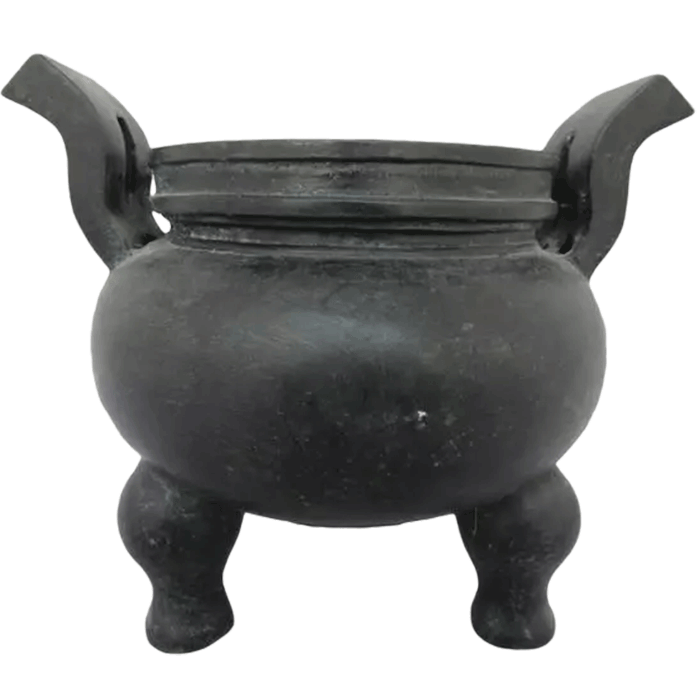
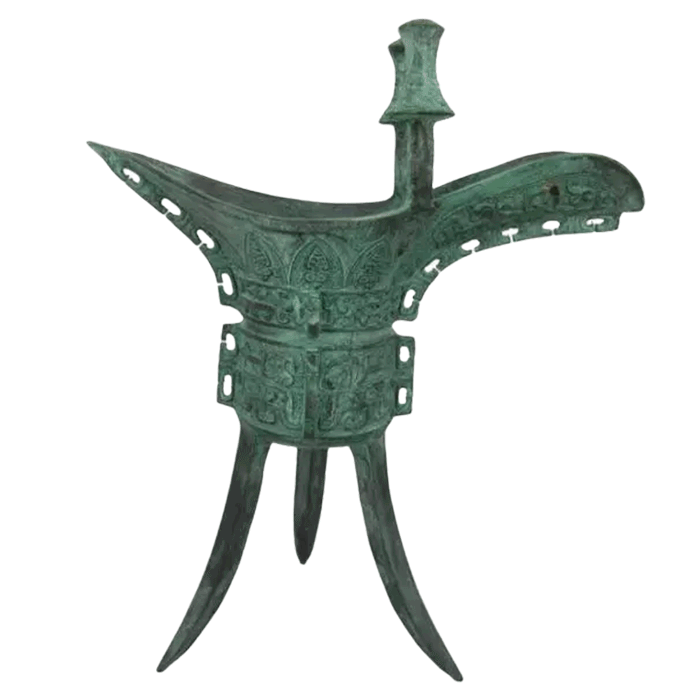
The Taotie pattern first appeared during the late Neolithic period and reached its most refined expression during the Shang and Western Zhou dynasties, roughly 1600–770 BCE. It typically decorates ritual vessels used in ancestor worship and sacrificial ceremonies — ding tripods, zun wine vessels, and hu vases among them. Scholars have long debated its exact meaning, but most agree the motif functioned as a protective or symbolic guardian figure, mediating between the human and spiritual worlds during ritual offerings.
Because these vessels were central to elite ceremonial life, the quality and precision of the Taotie carving often indicated the social rank of the owner. This is one reason museum buyers researching a reproduction should treat the motif not as ornamental filler, but as a coded visual language with specific compositional rules. Readers who want broader historical context can review the evolution of bronze culture across different dynastic periods before narrowing down a specific vessel type to replicate.
Key Visual Elements to Identify on a Bronze Taotie Motif Vessel
Reading a Taotie pattern correctly requires slowing down and examining the composition piece by piece. Most authentic patterns share a consistent internal logic, even though surface style varies by period and workshop.
Eyes and Brow Ridges
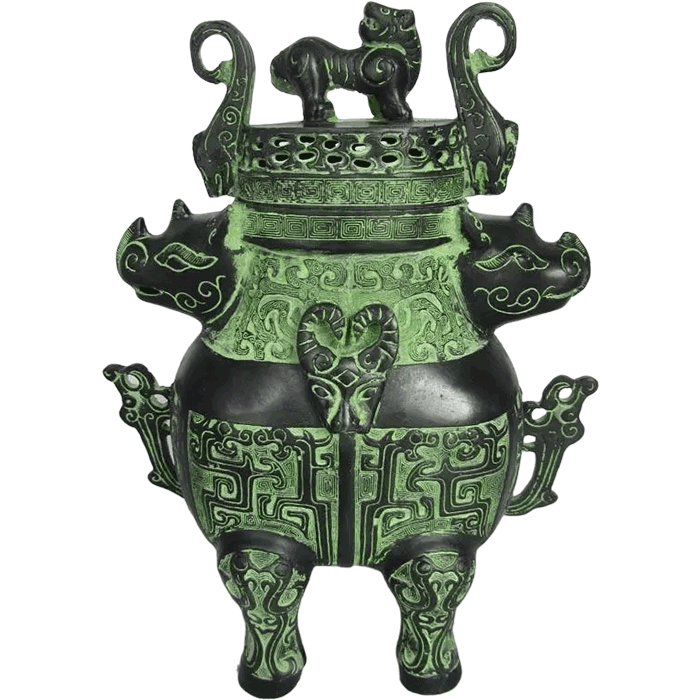
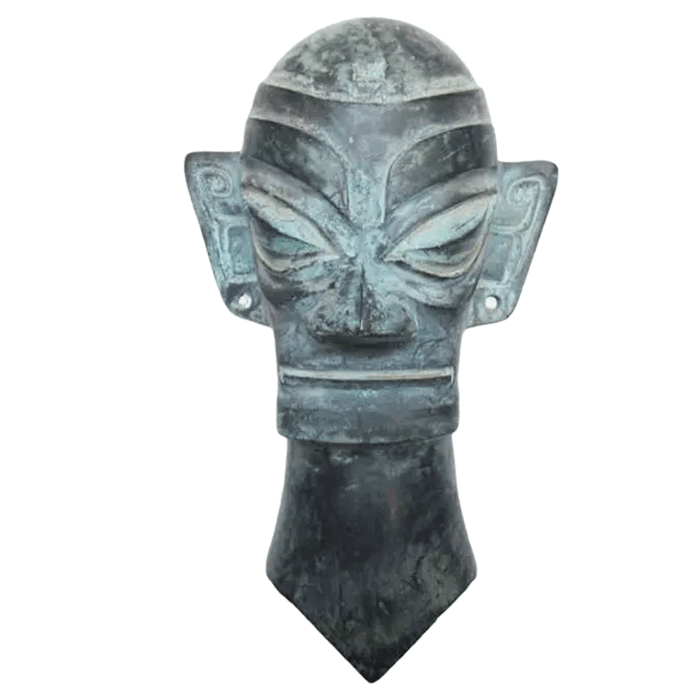
The eyes are almost always the dominant feature — large, protruding, and symmetrically placed on either side of a vertical centerline. In many Shang-period castings, the pupils are raised bosses surrounded by concentric grooves, giving the face a staring, almost hypnotic quality. Later Zhou-period examples tend to flatten the eye relief and integrate it more smoothly into surrounding spiral or cloud patterns.
Horns and Ears
Above the eyes, horn shapes curve outward or upward, sometimes resembling ox horns, ram horns, or stylized antlers. Ear-like flanges often flank the horns, though on many vessels these are abstracted into scroll or hook forms rather than literal animal ears. The horn style is one of the most reliable clues for dating a piece, since horn curvature changed noticeably between early Shang and late Western Zhou workshops.
Body Symmetry and the Central Ridge
A defining trait of the Taotie face is bilateral symmetry split by a raised central ridge, which sometimes forms the nose bridge or a decorative flange running down the vessel's body. Some scholars argue the motif originally represented two profile dragons merged into a single frontal face — a theory supported by the way the body tapers into scroll or leg-like extensions on either side.
Regional and Period Variations in Taotie Design
Not every Taotie face follows the same template. Vessels excavated from different regions show noticeably different stylistic choices. The bronze culture associated with Sanxingdui, for example, produced masks and vessel motifs with far more exaggerated, almost surreal facial proportions compared to the more formalized Central Plains style. Teams researching regional accuracy for a specific reproduction should compare reference pieces from the Sanxingdui bronze wares collection against Shang dynasty Central Plains examples before finalizing design references, since the two traditions are sometimes mistakenly treated as interchangeable.
Later Spring and Autumn and Warring States period vessels often reduced the Taotie to a smaller decorative band, layered among interlacing dragon or cloud motifs rather than serving as the sole focal design. This shift reflects changing ritual practices and a growing preference for denser, more intricate surface ornamentation.
What Museum Buyers Should Verify Before Commissioning a Reproduction
Once a specific reference vessel or period style has been identified, the next stage is evaluating whether a foundry can reproduce it with the level of fidelity a museum or research project requires.
Casting Method and Alloy Composition
Authentic-feeling reproductions depend on the traditional lost-wax casting method and a bronze alloy (copper-tin) composition close to historical ratios. Sand-cast or resin-based imitations often lose the fine relief detail that defines a well-executed Taotie face, particularly in the eye bosses and horn curvature, which require sharp mold precision.
Patina Accuracy
Color consistency is one of the most common sourcing pain points for institutional buyers. A reproduction with an uneven or overly uniform "aged" patina will look artificial next to genuine excavated pieces or high-quality museum replicas. Ask any prospective workshop how patina color matching is controlled across a production batch, especially if multiple vessels are needed for a themed exhibition.
Documentation and Provenance Referencing
For research and exhibition purposes, request documentation showing which historical reference piece informed the reproduction's proportions and motif details. This is particularly relevant when a project involves a bronze Taotie motif vessel intended for educational display rather than purely decorative use, since visitors and researchers may expect accurate sourcing notes alongside the object.
Why Craftsmanship Matters for a Reproduction
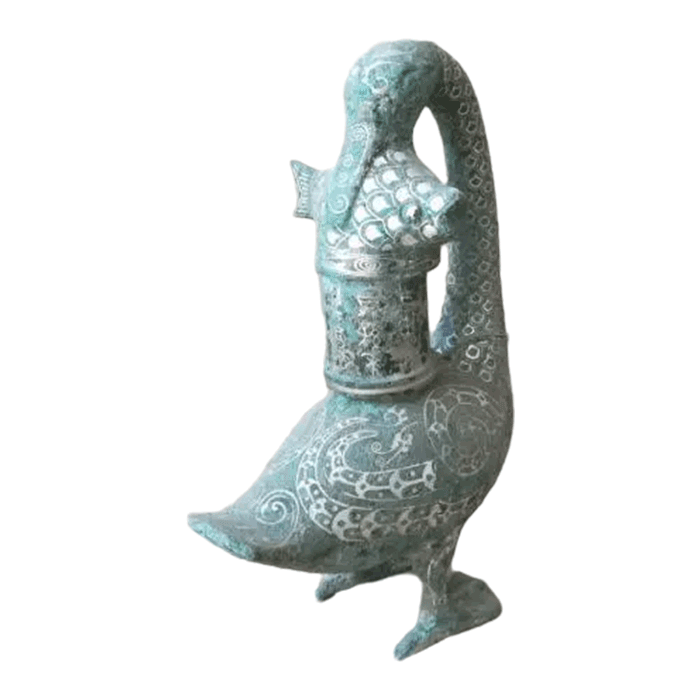
A Taotie face that looks correct from a distance can still fail close inspection if the underlying carving lacks depth or symmetry. Hand chasing after casting is what typically sharpens the eye relief, horn edges, and central ridge into a convincing likeness of the original. Workshops with dedicated finishing artisans — rather than relying solely on mold output — are generally better equipped to correct minor casting imperfections before the patina stage. This distinction matters most on complex ritual vessel shapes like ding tripods or zun forms, where the Taotie band wraps around a curved surface and must remain visually balanced from every viewing angle.
Buyers researching general vessel types before committing to a specific commission may find it useful to review a broader chinese bronze sculpture catalog to compare finishing quality across different product categories, from vessels to figural statues, before narrowing down the exact reproduction specifications.
Sourcing a Museum-Grade Reproduction
Luoyang Yichuan Bronze Craft Co., Ltd. operates from a 3,000-square-meter production facility in Yichuan County, Luoyang, Henan Province, staffed by more than 30 skilled craftsmen including bronze-casting masters and finishing artisans. The workshop produces over 50,000 bronze art pieces annually and supports orders from a single custom prototype up to bulk production runs, with minimum order quantities starting at one piece for custom sculptures. Every shipment undergoes quality inspection, and casting defects are covered by free replacement, which is particularly relevant for institutions ordering fragile ritual vessel shapes that require export-compliant protective packaging.
For teams still in the early research phase, it can help to review examples of past vessel and sculpture work before requesting a quotation. Project leads planning a themed acquisition — whether a single ceremonial vessel or a matched set for exhibition — can also customize a bronze sculpture specification sheet covering size, alloy ratio, and patina finish ahead of formal engagement with a foundry.
Reading a Taotie motif accurately is the foundation of any credible reproduction project. Once the eyes, horns, and body symmetry are correctly identified against a known historical reference, the remaining sourcing decisions — alloy composition, casting method, and patina matching — become far easier to evaluate against a workshop's actual capabilities rather than marketing claims alone.