How to Read Chinese Bronze Sculpture Forms by Dynasty
How to Read Chinese Bronze Sculpture Forms Across Different Dynasties
For buyers, collectors, and researchers evaluating a Chinese Bronze Sculpture or a museum-grade replica, style recognition is often the fastest way to judge authenticity and craftsmanship quality. Every dynasty in Chinese history left a distinct visual fingerprint on bronze work — in silhouette, surface texture, decorative motif, and casting technique. Learning to read these signals gives procurement teams and cultural institutions a practical framework before committing to a custom order or bulk purchase. This guide walks through the major stylistic periods and explains what to look for when assessing a piece.
Why Dynasty Style Matters When Sourcing Bronze Art
Bronze casting in China spans more than three thousand years, and each era developed its own visual language shaped by ritual purpose, metallurgy, and artistic taste. A buyer sourcing a replica ding for a corporate lobby, or a museum commissioning a Han-style horse, needs to know whether the proportions, patina, and ornamentation genuinely reflect the period being referenced. Misreading these cues can result in a piece that looks "ancient" in a generic sense but fails scrutiny from knowledgeable clients or exhibition curators.
Understanding period style also helps when negotiating custom orders. A workshop that can accurately reproduce the taotie motifs of the Shang dynasty or the fluid drapery of Tang figures demonstrates a deeper technical vocabulary than one that offers only surface-level "antique-look" finishes. This distinction matters most when replicating vessels or figures for institutional display, where accuracy is part of the value proposition.
Shang and Western Zhou: The Foundation of Ritual Bronze Forms
Heavy Ritual Vessels and Taotie Motifs
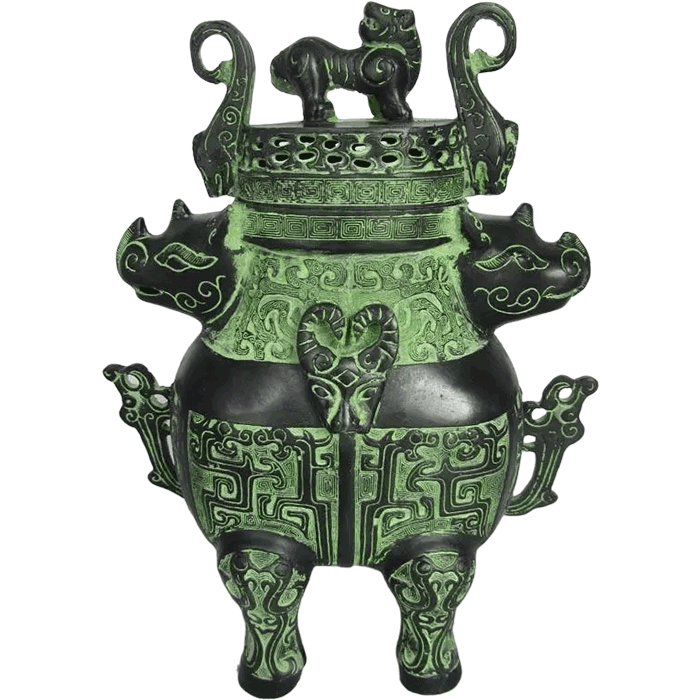
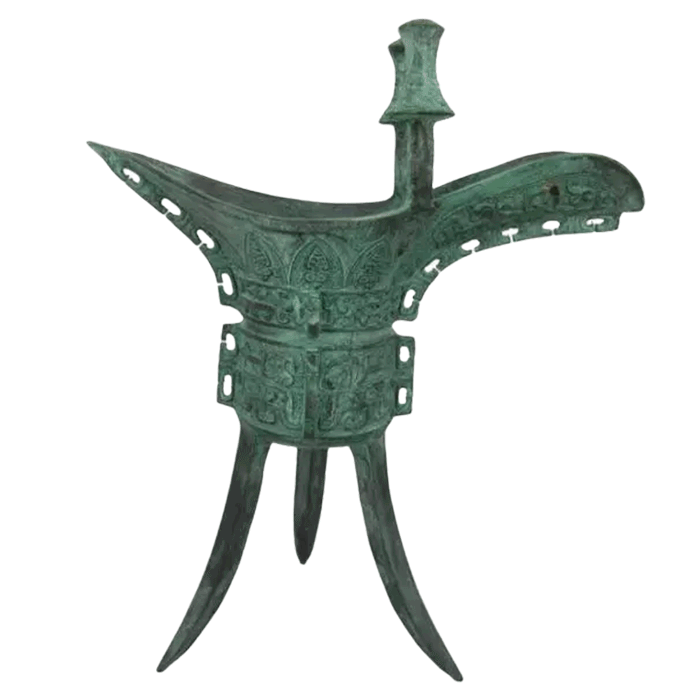
The earliest mature bronze forms emerge from the Shang dynasty, dominated by ritual vessels such as ding tripods, zun wine containers, and jue cups. These pieces are thick-walled, geometrically stable, and covered in dense relief patterns — most notably the taotie, a stylized animal mask motif believed to have protective or symbolic meaning. Surfaces are divided into structured registers rather than flowing narrative scenes.
Western Zhou bronzes continue this vessel tradition but shift toward longer inscriptions cast into the interior, recording ownership, ceremonies, or royal grants. If you are evaluating a Shang or Zhou-style ding or zun replica, check for crisp, symmetrical relief work and inscription clarity — shallow or blurred casting usually signals a lower-quality mold rather than deliberate archaic wear. Readers researching this period in depth may find our overview of introduction to several bronze wares useful for cross-referencing vessel types.
Spring and Autumn to Warring States: Complexity and Regional Variation
Inlay Work and Narrative Detail
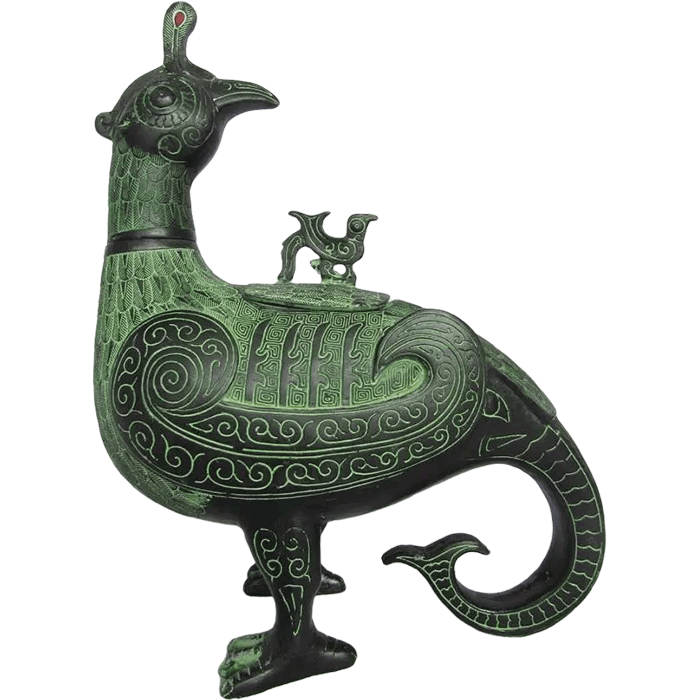
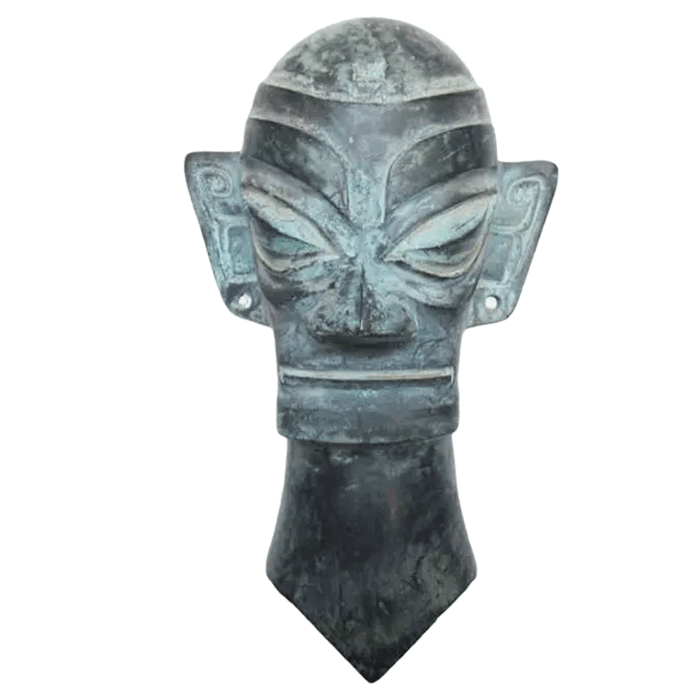
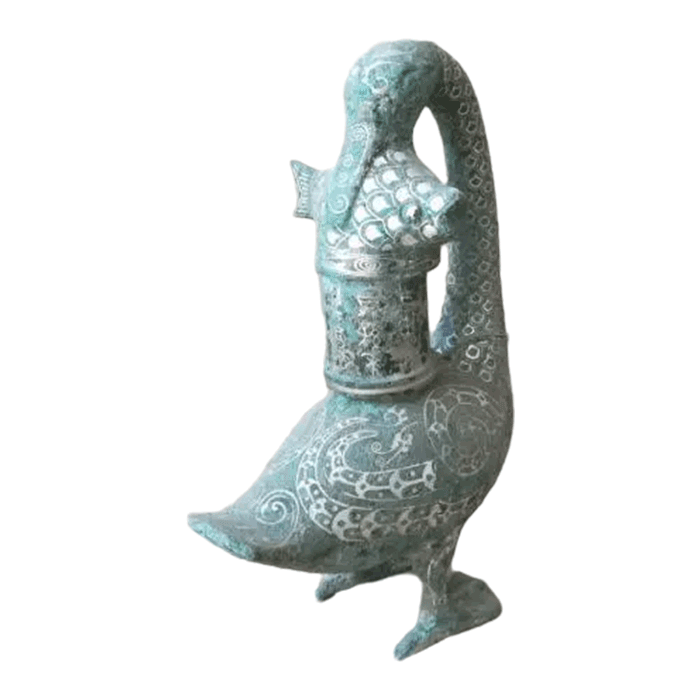
By the Spring and Autumn and Warring States periods, bronze forms grew more intricate. Vessels display interlaced dragon patterns, gold and silver inlay, and thinner, more elegant walls made possible by improved lost-wax casting. This is also the period that produced iconic pieces like chime bells and ceremonial swords, reflecting both artistic ambition and advancing metallurgy.
Regional workshops during this era developed distinguishable local styles, which is why scholars often study the characteristics of the bronze wares of the Spring and Autumn and Warring States as a category of its own. For buyers, a well-executed replica from this period should show fine interlacing detail without the piece feeling structurally fragile — a balance that requires genuine casting skill rather than surface engraving alone.
Han and Tang Dynasties: The Rise of the Bronze Figure
Han: Movement and Naturalism
The Han dynasty marks a turning point where standalone figural sculpture — human and animal forms — becomes as significant as ritual vessels. Han bronzes are known for capturing motion, most famously in galloping horse figures, where the sculptor conveys speed and balance through minimal points of contact with the base. Proportions become more naturalistic compared to the stylized rigidity of earlier periods.
Tang: Confidence, Volume, and Ornament
Tang dynasty bronze work reflects the era's cosmopolitan confidence. Figures — both secular and Buddhist — show fuller volumes, relaxed postures, and elaborate drapery folds. Bronze mirrors from this period are particularly notable, often decorated with grapevine, floral, or auspicious animal motifs on the reverse. For buyers interested in this decorative category, our article on several bronze mirrors outlines common Tang-era patterns worth recognizing.
Together, Han and Tang set the visual template most buyers associate with a classic Chinese Bronze Sculpture — dynamic figures, confident proportion, and refined surface ornament. A workshop replicating pieces from these periods should demonstrate control over anatomical flow, not just decorative surface texture.
Song Through Qing: Refinement, Religious Imagery, and Domestic Display
Song and Yuan: Restraint and Technical Precision
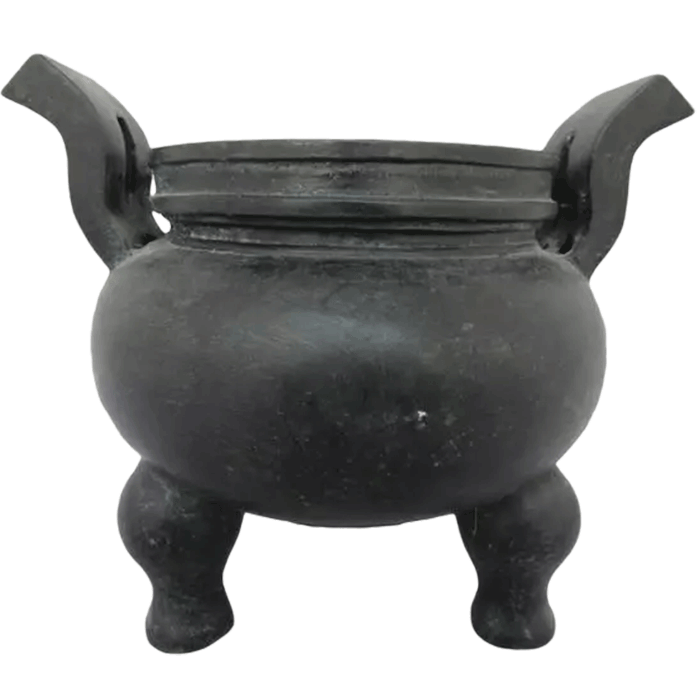
Song dynasty bronze work leans toward restraint and archaistic revival — many Song pieces intentionally reference Shang and Zhou vessel shapes but with cleaner lines and less dense ornamentation, reflecting Song aesthetic preference for elegance over excess.
Ming and Qing: Buddhist Statuary and Household Bronzes
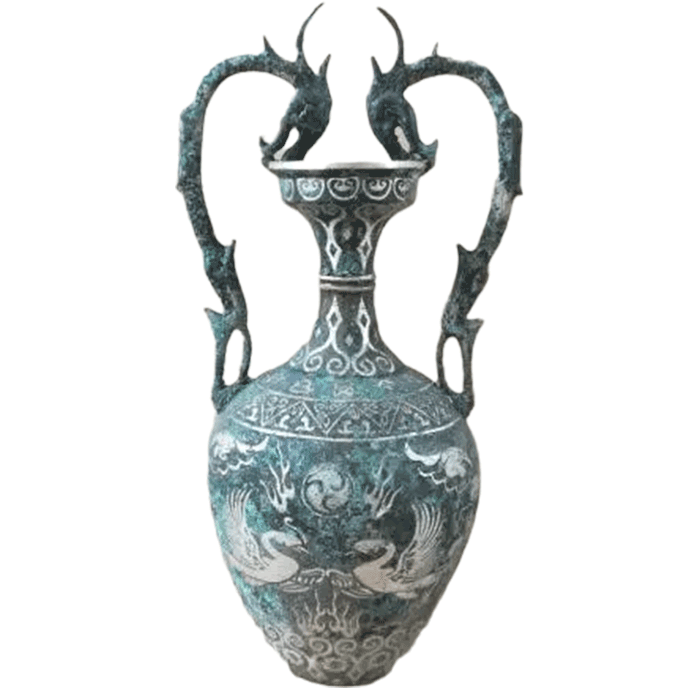
Ming and Qing dynasties saw significant growth in Buddhist bronze statuary, incense burners, and decorative household bronzes such as vases and censers intended for scholar's studios or temple altars. Surface treatment during this period often includes richer patina work and, in higher-end pieces, gilding. Buyers sourcing a bronze Buddhist statue or temple incense burner today are typically referencing this later stylistic vocabulary — softer facial modeling, elaborate robe detailing, and symbolic hand gestures (mudras) rendered with anatomical care.
A Practical Checklist for Evaluating Bronze Sculpture by Period
- Silhouette and proportion: Does the overall shape match known conventions for the referenced dynasty, or does it blend features from multiple periods inconsistently?
- Surface motif density: Shang and Zhou pieces favor dense geometric registers; Tang and later work often allows more open, breathing space around ornament.
- Casting sharpness: Crisp relief and clean inscription lines usually indicate a well-made mold and skilled lost-wax casting process.
- Patina consistency: Color should be even and match the intended finish — whether antique green-brown tones or a modern polished look — without patchy or artificially blotchy application.
- Weight and wall thickness: Genuine period-accurate reproductions should feel structurally consistent with the historical vessel or figure type, not artificially light or hollow-feeling.
This checklist is useful whether you are evaluating a single custom prototype or reviewing samples ahead of a bulk order. It also helps when briefing a workshop — being specific about which dynasty's stylistic features you want referenced leads to far more accurate results than a general request for an "antique bronze look."
From Historical Reference to a Finished Bronze Piece
Producing an accurate period-style bronze sculpture requires more than decorative surface work. It involves traditional lost-wax casting in bronze alloy, hand chasing to sharpen relief detail, and controlled patina application to match the tone associated with a given dynasty — whether the deep malachite-green often linked to archaic vessels or the warmer brown tones typical of later Buddhist statuary. Craftsmen also need to understand proportion conventions specific to each era, since a Han-style horse and a Tang-style horse, for example, carry noticeably different weight distribution and musculature emphasis.
At Luoyang Yichuan Bronze Craft Co., Ltd., based in Yichuan County, Luoyang — a region long associated with China's bronze heritage — our craftsmen work from this same historical vocabulary when producing sculptures, ritual vessels, mirrors, incense burners, and Buddhist statues. Each piece goes through quality inspection before shipment, and casting defects are covered by free replacement, which matters when a client is relying on period accuracy for museum display or cultural gifting purposes. Buyers can review examples of finished work through our Chinese bronze sculpture collection or explore bronze statues with different themes spanning multiple historical periods.
For projects that require referencing a specific dynasty precisely — matching an excavated artifact, replicating a museum piece, or adapting a historical form for a modern commission — our customize a bronze sculpture service allows direct collaboration on proportion, motif, and patina before production begins. This is particularly relevant for institutional buyers who need documentation on how style choices map to historical periods.
Reading Style as Part of Due Diligence
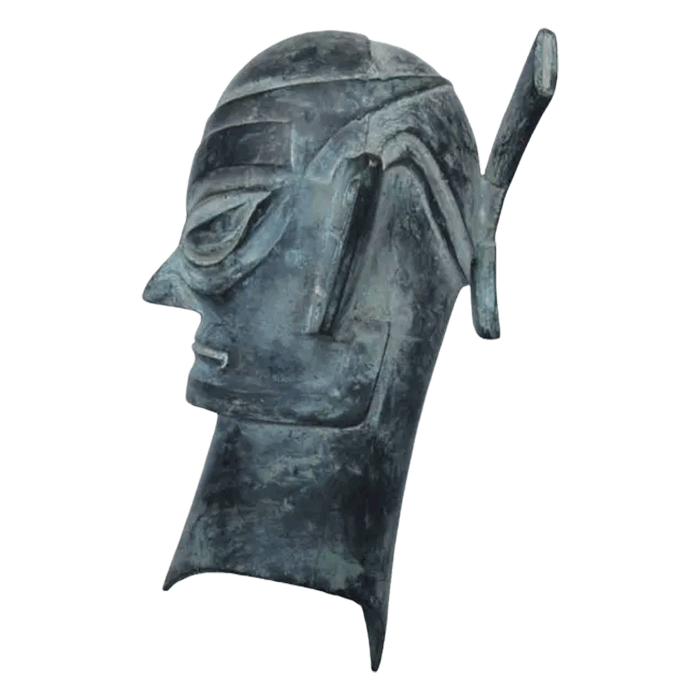
Whether you are procuring for a hotel lobby, a cultural exhibition, or a private collection, treating dynasty-style recognition as part of standard due diligence protects against mismatched expectations later. A supplier who can discuss why a Warring States vessel uses thinner walls than a Shang one, or why Tang figures carry fuller volume than Han ones, is demonstrating genuine craft knowledge rather than marketing language. This is especially important for a Chinese Bronze Sculpture intended for long-term display, where visual authenticity often becomes part of the piece's ongoing value and interpretive story.
For further background on how these stylistic shifts developed over time, our archive on the evolution of bronze culture over 2000 years traces the broader historical context behind the forms discussed above, and can serve as a useful reference when briefing a custom order or preparing procurement documentation.
Final Thoughts for Buyers and Researchers
Style literacy is a practical tool, not just an academic exercise. Recognizing the visual markers of each dynasty allows buyers to ask sharper questions, evaluate samples more confidently, and communicate precise expectations to a workshop before production begins. Combined with attention to casting quality, patina consistency, and structural proportion, this approach gives procurement teams a reliable method for assessing any bronze piece — from a small tabletop censer to a large-scale figural commission — before it enters a collection, exhibition, or commercial space.