How to Identify Taotie Motifs on Ding, Gu and Zun
Identifying a Bronze Taotie motif vessel across ding, gu and zun forms requires close attention to line, symmetry and casting technique
For curators, collection managers and replica specifiers, distinguishing an authentic Taotie pattern from a stylized or misapplied version is essential before commissioning a reproduction. The Taotie, often described as a mask-like beast face, appears across many vessel categories from the Shang and Western Zhou periods, but its rendering differs significantly depending on the vessel type, casting era and regional workshop tradition. This guide walks through the visual markers that separate a well-researched Bronze Taotie motif vessel from a generic "ancient-looking" ornament, and offers practical guidance for specifying reproductions that hold up to scholarly scrutiny.
What the Taotie Motif Represents on Ancient Bronze Vessels
The Taotie is typically composed of a symmetrical face divided by a central vertical ridge, often the flange running down the middle of the vessel body. Two large eyes dominate the composition, flanked by horns, ears, and sometimes a nose bridge rendered in raised relief. The motif rarely appears as a full creature; instead, it is abstracted into paired profile dragons or birds that mirror each other to form the illusion of a single frontal face. Understanding this construction logic is the first step in verifying whether a vessel's decoration is faithful to historical convention or a modern approximation.
Scholars continue to debate the precise symbolic meaning of the Taotie, with interpretations ranging from ancestor worship imagery to protective or admonitory symbolism tied to ritual feasting. Regardless of interpretation, the motif's structural rules remained remarkably consistent for centuries, which is why deviations are easy to spot once you know what to look for. For a broader view of how bronze ornamentation evolved over time, this overview of the evolution of bronze culture over 2000 years provides useful context for dating stylistic shifts.
Identifying Taotie on the Ding
Placement and Proportion
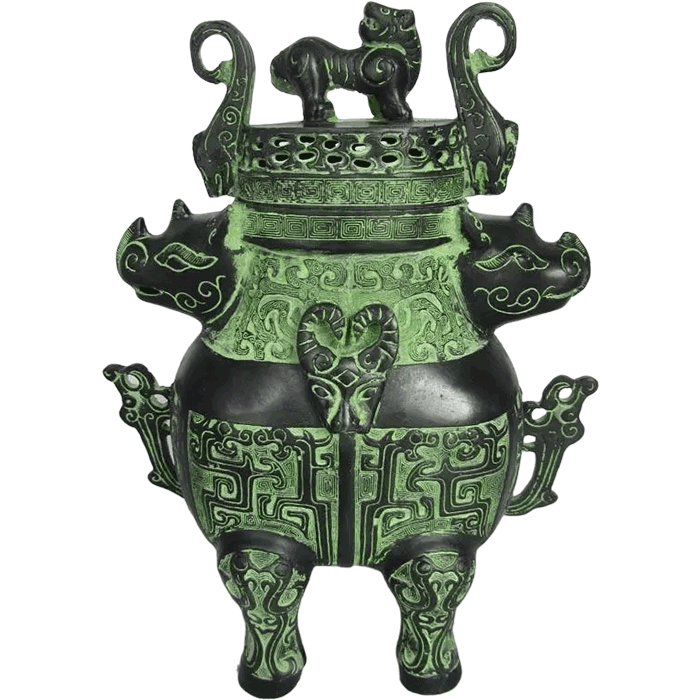
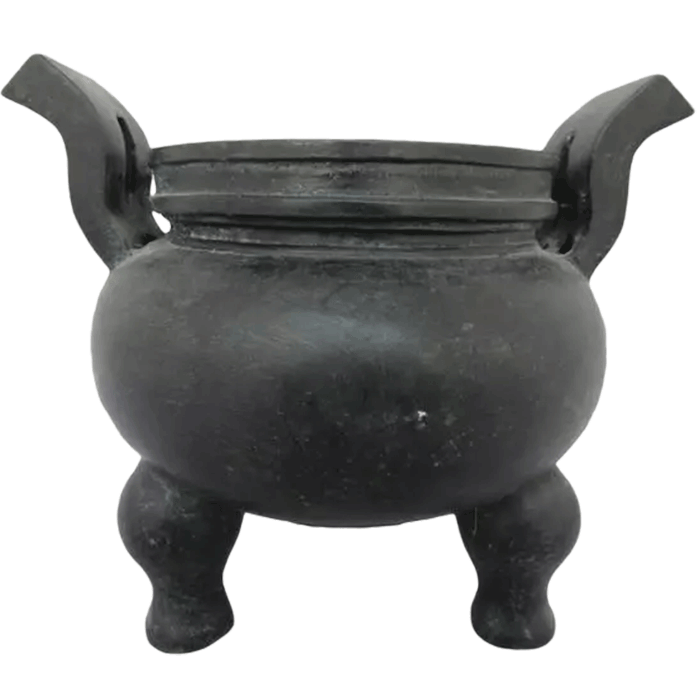
On tripod ding vessels, the Taotie motif is usually banded around the upper body, just below the rim, and is repeated in registers separated by narrow leiwen (thunder pattern) fill. The face is often compressed horizontally to fit the curvature of the vessel wall, which means the horns may appear flattened or hooked rather than fully upright. When examining a ding for authenticity of design, check whether the motif band aligns with the vessel's structural seams and leg attachments — on genuine period pieces, the decoration respects the underlying casting sections rather than being applied as a decorative afterthought.
Leg and Handle Continuity
A well-executed ding extends secondary motifs, such as cicada patterns or small kui dragons, down the legs in a way that visually supports the main Taotie band above. Reproductions that isolate the Taotie purely to the body without any relationship to the leg ornamentation often signal a simplified or budget casting rather than a historically grounded piece. Readers researching related ritual bronze forms may also find this discussion of the Houmuwu square cauldron helpful, as it illustrates how monumental ding pieces organized multiple decorative bands simultaneously.
Identifying Taotie on the Gu
The gu, a slender trumpet-mouthed wine vessel, presents the Taotie motif differently than the ding due to its narrow, elongated silhouette. Here the mask is typically compressed into the mid-section or lower bulb of the vessel, often interrupted by four vertical flanges that split the face into quadrants. Because the gu's surface curves sharply, the eyes of the Taotie tend to appear more elongated and almond-shaped compared to the rounder eyes found on flatter vessel surfaces like the zun.
One reliable identification marker is the relationship between the flange and the motif's central axis. On authentic gu designs, the flange does not simply decorate the surface — it structurally divides the Taotie into two mirrored profile creatures, reinforcing the symmetry that defines the motif. If a reproduction shows a flange that overlaps or obscures this mirrored logic, it likely reflects a decorative reinterpretation rather than a faithful copy. For collectors comparing wine vessel forms more broadly, this piece on ancient Chinese bronze wine vessel traditions offers useful comparative detail across gu, jue and hu shapes.
Surface Relief Depth
Gu vessels from earlier Shang phases tend to show shallower, more linear Taotie relief, while later refinements introduce deeper, almost sculptural modeling with undercut edges. When specifying a reproduction, clarify with your foundry which relief depth is appropriate for the period being referenced, since this single detail significantly affects both visual accuracy and casting complexity.
Identifying Taotie on the Zun
The zun, typically a wider-bodied ritual container used for wine or ceremonial offerings, offers the most surface area for a fully developed Taotie composition. On many zun examples, the motif spans the widest part of the vessel body in a single dominant register, sometimes accompanied by smaller subordinate Taotie faces near the neck or foot ring. This layered composition is one reason zun vessels are frequently referenced in museum collections as archetypal examples of the motif.
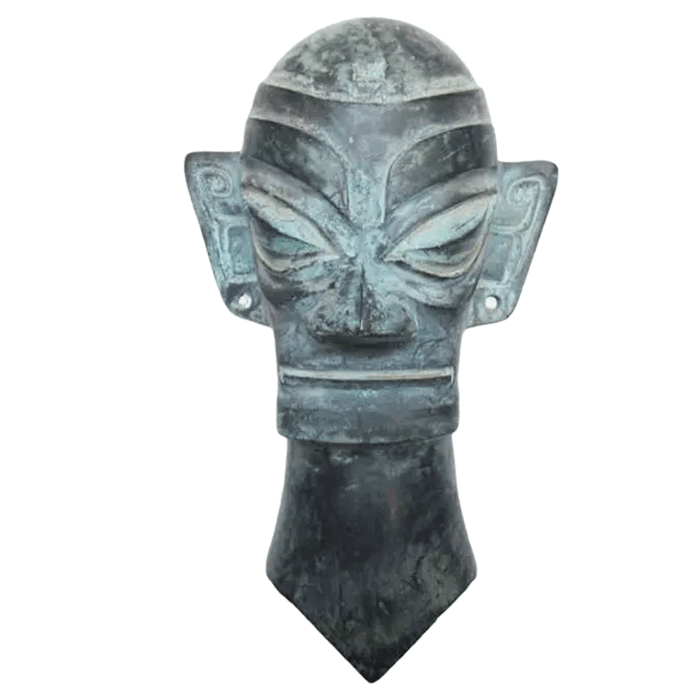
When evaluating a zun for design fidelity, pay attention to how the horns curl. Bull-horn variants curve outward and slightly downward, while ram-horn variants spiral inward toward the face. Mixing these horn types inconsistently across a single vessel is a common shortcut in lower-quality reproductions and a useful red flag for specifiers reviewing prototype photographs before approving a production run. Readers interested in exceptional regional variations may also want to review the wonders of Sanxingdui bronze wares, which demonstrate how motif conventions shifted outside the central plains tradition.
Base and Foot Ring Details
Zun vessels often carry a secondary decorative band around the foot ring, frequently featuring simplified Taotie or kui dragon derivatives. This band should feel visually subordinate to the main body motif — smaller in scale, shallower in relief, and less detailed. A reproduction that gives the foot ring equal visual weight to the main register often indicates the pattern was resized uniformly from a single template rather than adapted proportionally for each register, a shortcut that experienced curators can usually spot immediately.
Practical Guidance for Specifying a Reproduction
For institutions or collectors commissioning a Bronze Taotie motif vessel reproduction, the identification principles above translate directly into specification requirements. It helps to request reference photographs of the intended prototype alongside a description of the casting method, since lost-wax casting preserves fine relief detail more faithfully than sand casting, particularly around undercut horn and eye elements.
- Confirm whether the motif should reflect early, middle, or late period conventions, since horn shape and relief depth vary accordingly.
- Request sample images of flange treatment to verify the mirrored dragon-profile construction is respected.
- Clarify patina expectations, as color matching significantly affects how legible the motif appears under gallery lighting.
- Ask for quality inspection documentation prior to shipment, particularly for large or fragile ding and zun forms.
Luoyang Yichuan Bronze Craft Co., Ltd. produces custom bronze vessels using the traditional lost-wax method with hand chasing and patina finishing in both antique and modern presentations. With an ISO 9001 certified quality system and a production team that includes dedicated casting masters and finishing artisans, the workshop supports orders ranging from a single museum-grade prototype to larger batches for gallery or institutional distribution. Every shipment undergoes quality inspection, and casting defects are covered by free replacement, which matters considerably when reproducing fine relief details like Taotie eyes and horn curls that are easy to under-cast.
Specifiers who want to compare a broader range of vessel forms alongside Taotie-decorated pieces can review the full range of chinese bronze sculpture offerings, or explore how ding, zun and hu shapes are presented within a themed collection through the bronze statues with different themes catalog. For projects requiring a fully custom motif interpretation, submitting reference imagery through the customize a bronze sculpture service allows the foundry team to match relief depth, horn style and patina tone to a specific historical reference before production begins.
Why Accurate Motif Identification Matters Before Production
Misreading a Taotie motif before commissioning a reproduction can result in a piece that looks superficially ancient but fails scholarly or exhibition scrutiny. Because the motif's symmetry, flange integration and horn styling are period- and vessel-specific, curators benefit from treating motif identification as a distinct step separate from general vessel shape selection. A ding, gu and zun may share a common decorative vocabulary, but the way that vocabulary is compressed, stretched or layered onto each form differs enough that a single template rarely produces convincing results across all three.
Foundries experienced in ritual bronze reproduction typically maintain separate reference libraries for each vessel type precisely because of these differences. When reviewing a workshop's portfolio, ask specifically for examples of Taotie treatment on ding versus zun forms rather than judging general craftsmanship alone, since the motif's structural logic is where most reproduction quality gaps become visible. This distinction is particularly relevant for institutions building a Bronze Taotie motif vessel collection intended for side-by-side comparative display, where inconsistencies between pieces are far more noticeable than they would be in an isolated single-object presentation.
Ultimately, identifying the Taotie motif accurately is less about memorizing a single template and more about understanding how vessel geometry, casting technique and period convention interact. Curators who apply these structural checks — flange integration, horn style consistency, relief depth appropriate to period, and proportional relationship between primary and subordinate registers — are well positioned to specify reproductions that meet both aesthetic and historical standards.