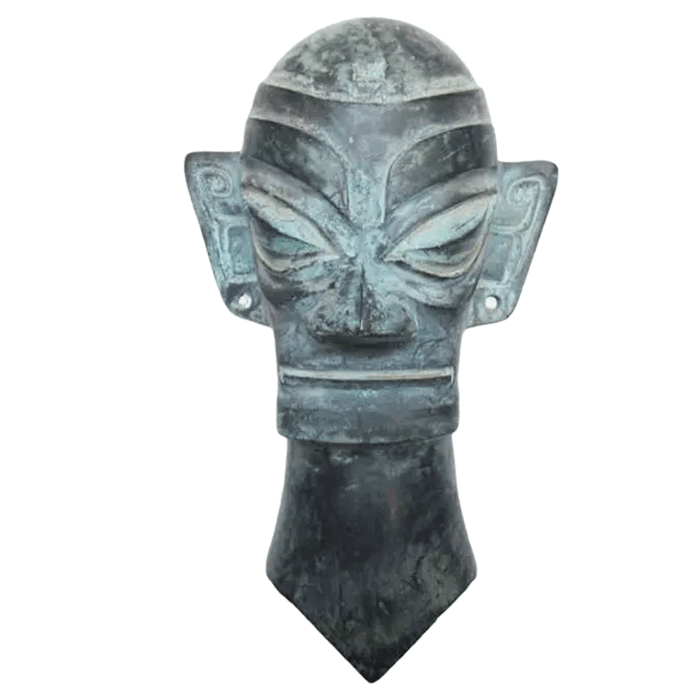
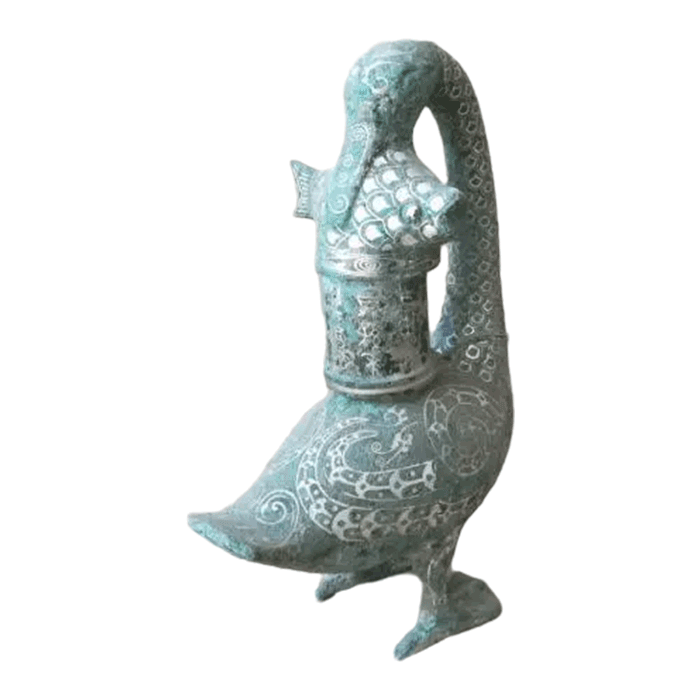
How to Identify Taotie Motifs on Bronze Ritual Vessels
A Practical Guide to Identifying the Bronze Taotie Motif Vessel in Ritual Bronze Collections
For procurement teams, museum registrars, and private collectors, accurately describing decorative motifs on Chinese bronze ritual vessels is not a stylistic preference — it is a specification requirement. Whether drafting a purchase order for a reproduction piece or cataloguing an heirloom for a collection record, the ability to correctly identify a taotie motif determines whether the resulting documentation, pricing, and craftsmanship brief are accurate. This guide breaks down the visual grammar of the taotie pattern, explains how it appears across different vessel types, and offers guidance for buyers who need to specify these details when commissioning custom bronze work.
What Is the Taotie Motif and Why It Matters in Sourcing Briefs
The taotie is one of the most recognizable decorative motifs in ancient Chinese bronze art, typically described as a stylized zoomorphic mask composed of a central nose ridge, two large bulging eyes, curling horns, and a symmetrical body split along the vertical axis. Scholars have debated its exact symbolic meaning for centuries — some associate it with a mythical devouring beast, others with ancestral or shamanic imagery tied to ritual sacrifice. Regardless of interpretation, the taotie remains the default reference point when clients ask for "traditional bronze decoration" without specifying further, which is why sourcing teams should understand its features before finalizing a brief.
When a buyer requests a bronze Taotie motif vessel for a themed collection, gallery installation, or corporate gift program, the difference between a competent rendering and a generic "ancient-style" pattern often comes down to correct facial proportion, horn curvature, and the depth of relief carving. Misidentifying the motif — confusing it, for example, with a kui dragon border or a cicada band — can lead to costly revisions after casting has already begun.
Core Visual Elements to Check
- Central nose ridge: A raised vertical line running down the middle of the face, often the focal axis of symmetry.
- Bulging eyes: Large, protruding circular or almond-shaped eyes positioned on either side of the ridge, sometimes rendered in relief high enough to cast shadow under raking light.
- Curling horns: Horn forms that sweep upward and outward, varying by period — Shang dynasty horns tend to be blockier, while later Zhou-period variants show more fluid curls.
- Split-body symmetry: The body of the beast is often depicted as if unfolded flat, with limbs mirrored on each side, a hallmark that distinguishes taotie from other single-profile animal motifs.
- Background fill patterns: Leiwen (thunder pattern) spirals frequently fill the negative space, adding textural depth that helps the primary mask stand out.
Where Taotie Motifs Commonly Appear on Ritual Vessels
Buyers researching a bronze Taotie motif vessel for reference or reproduction purposes should know that the placement of the motif varies by vessel form, and this affects casting complexity and pricing.
Ding Tripods and Cauldrons
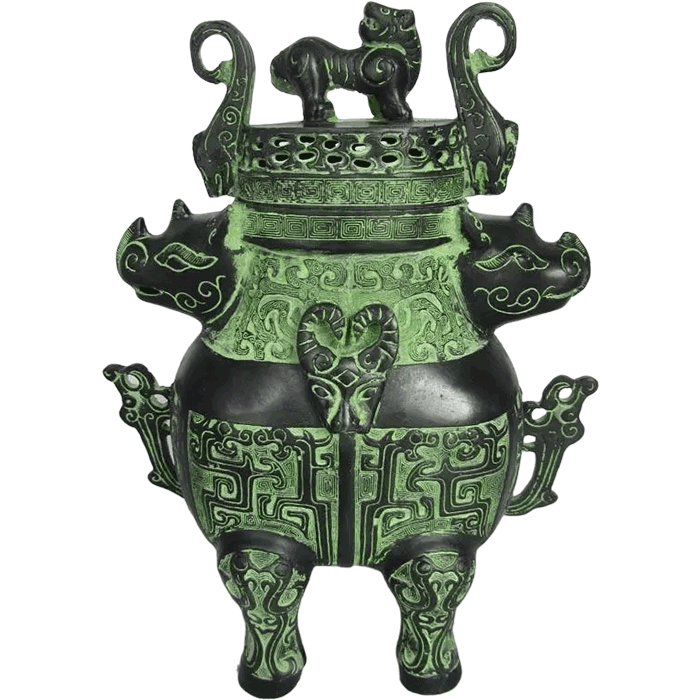
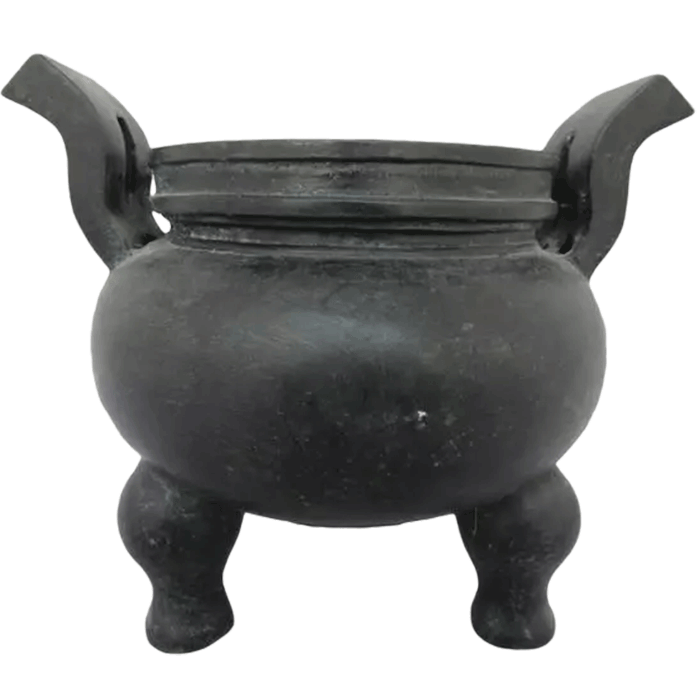
On ding vessels, the taotie mask usually occupies the belly band, often repeated around the circumference and separated by flanges. The legs may carry a secondary, simplified version of the same motif, which requires careful mold segmentation during lost-wax casting to keep proportions consistent on a curved surface.
Zun and Hu Vessels
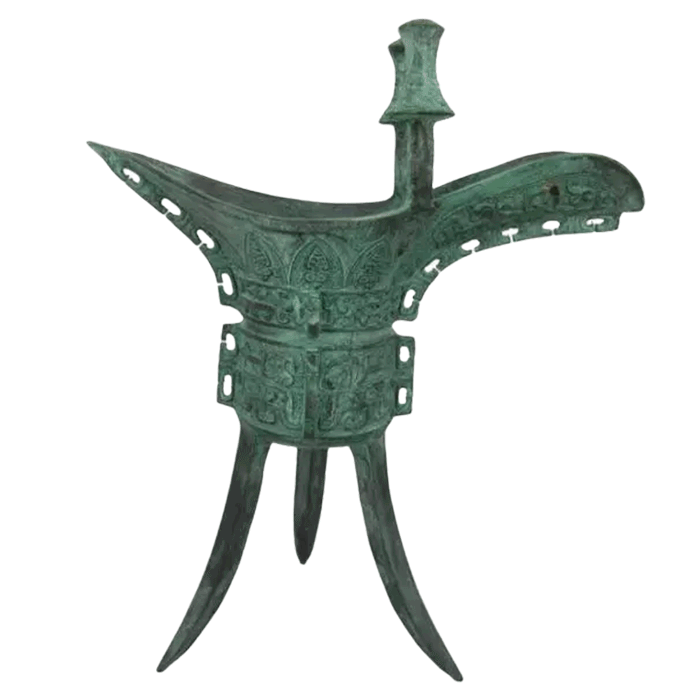
Zun wine vessels and hu vases typically display the taotie across the shoulder or widest section of the body, sometimes wrapping continuously around the form. Because these vessels have more vertical curvature than a ding, the horn and eye elements must be scaled carefully so the mask does not appear distorted when viewed from the front.
Incense Burners and Smaller Ritual Objects
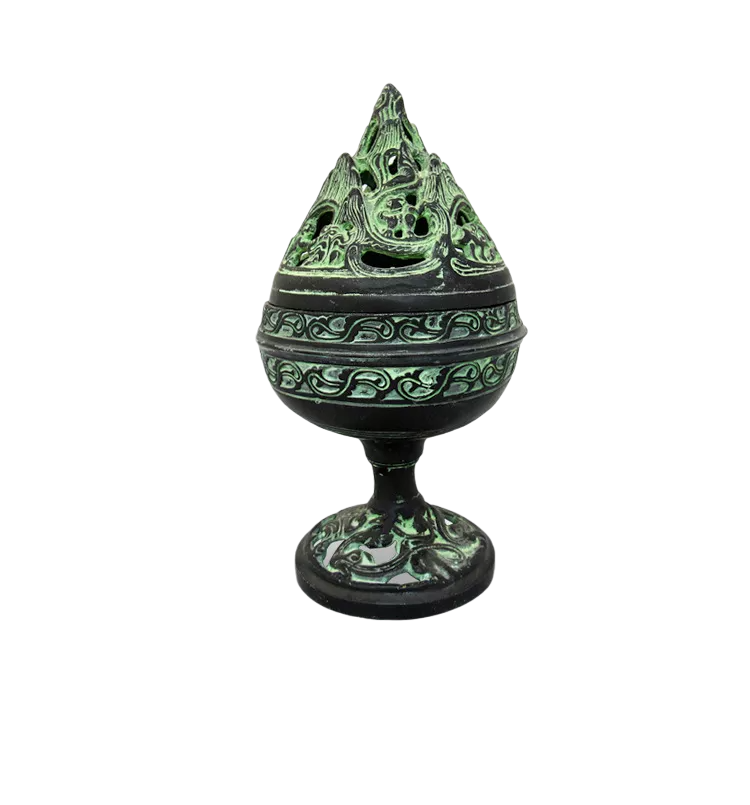
On smaller pieces such as incense burners, the taotie is often reduced to a stylized medallion near the base or lid, retaining the eye-and-ridge structure but simplifying the surrounding thunder pattern due to space constraints.
For collectors researching how these forms evolved over centuries, background reading on the evolution of bronze culture over 2000 years provides useful historical context for dating and comparing motif styles across dynasties.
Distinguishing Taotie from Similar Bronze Motifs
Buyers unfamiliar with bronze decoration terminology sometimes conflate the taotie with other common motifs found on ritual vessels. Getting this distinction right in a purchase order avoids miscommunication with the casting workshop.
| Motif | Key Distinguishing Feature | Typical Placement |
|---|---|---|
| Taotie | Frontal symmetrical mask, bulging eyes, split body | Belly band, shoulder, medallion |
| Kui Dragon | Single profile, elongated body, one visible leg | Borders, narrow bands |
| Cicada Band | Triangular, segmented insect form | Neck or foot rim |
| Cloud-and-Thunder (Leiwen) | Repetitive spiral fill, no facial features | Background filler around main motif |
Reference material on related bronze forms, such as Houmuwu square cauldron, can help buyers compare how taotie bands were arranged on some of the largest known ritual bronzes, offering a useful visual benchmark for scale and proportion.
Specifying a Bronze Taotie Motif Vessel for Custom Production
Once the motif has been correctly identified, the next step for buyers is translating that identification into a workable production brief. This is where sourcing from an experienced workshop matters. Luoyang Yichuan Bronze Craft Co., Ltd. produces bronze vessels — including ding, zun, and hu forms — using the traditional lost-wax casting method with premium bronze alloy (Cu-Sn), which allows fine relief detail such as taotie eyes and horn curls to be preserved through casting and hand-chasing.
Details Worth Including in a Brief
- Reference images or drawings showing the desired taotie style (Shang-period blocky horns versus later Zhou fluidity)
- Preferred patina finish — antique dark green, brown oxidation, or a modern polished look
- Vessel dimensions and wall thickness, which affect how deep the relief can be carved
- Quantity — from a single custom prototype to a bulk production run
With an annual output of over 50,000 bronze art pieces and a production team of more than 30 skilled craftsmen, including bronze-casting masters and finishing artisans, the workshop supports both one-off replication projects and larger order volumes. Every shipment undergoes quality inspection, and the ISO 9001 certified quality management system ensures the finished decoration matches the approved reference before packaging for export.
Buyers who want to explore how a taotie design can be adapted to a specific vessel form or combined with other decorative elements may find it helpful to review the process to customize a bronze sculpture from sculpmart.com, which outlines how reference materials are translated into a finished casting.
Common Documentation Mistakes When Recording Taotie Decoration
Curators and buyers preparing collection records or specification sheets should avoid a few recurring errors:
- Vague labeling: Recording a motif simply as "animal mask" without noting eye shape, horn type, or symmetry loses valuable detail for future comparison.
- Ignoring background pattern: The presence or absence of leiwen fill can help date a piece stylistically and should be documented separately from the primary mask.
- Overlooking vessel-specific variation: The same general motif can look markedly different on a ding leg versus a zun shoulder, so descriptions should specify placement.
- Confusing casting technique with decoration: Whether a motif was cast in high relief, low relief, or added through later hand-chasing affects both authenticity assessment and reproduction cost, and these facts should not be merged in a single note.
For those building a broader reference library on bronze decoration and vessel typology, further reading on some ancient chinese bronze miscellaneous vessels offers additional comparative examples beyond the taotie-decorated forms discussed here.
Final Notes for Buyers and Curators
Correctly identifying a taotie motif — its eye structure, horn curvature, symmetry, and background fill — is a small but consequential step in any sourcing or documentation workflow involving Chinese bronze ritual vessels. Whether the goal is writing an accurate collection record or briefing a workshop on a reproduction piece, precision in this description reduces revision cycles and improves the final result. For buyers ready to move from research to production, reviewing examples of chinese bronze handicrafts can offer a practical sense of how motif detail translates into a finished cast object, supporting both procurement decisions and long-term collection planning.