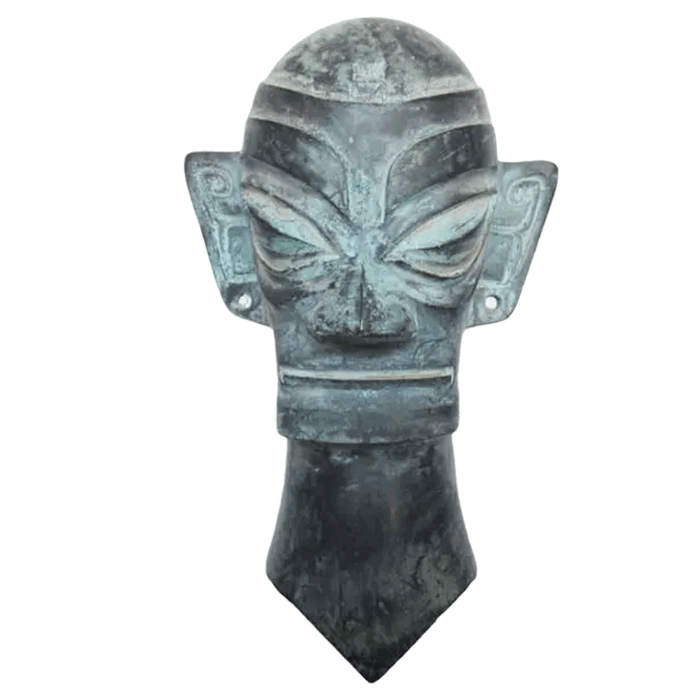
How to Distinguish Bronze Zun Forms by Foot and Body
How to Distinguish a Bronze Zun by Its Foot and Body Shape
For buyers and curators sourcing Chinese bronze vessels, the ability to read a piece's silhouette is often more useful than memorizing dynasty dates. The foot structure and body profile of a wine vessel reveal its regional lineage, its intended ceremonial function, and — for modern reproduction purposes — how complex the casting will be. This guide breaks down the major variants by these two features, helping procurement teams and gallery buyers ask more precise questions when requesting quotes or custom replicas.
Why Foot and Body Shape Matter More Than Surface Decoration
Surface motifs such as taotie masks or cloud scrolls are frequently copied across different vessel families, which makes them unreliable for classification alone. The foot ring, base width, and body curvature, however, are structural elements tied to the original bronze-casting molds of the Shang and Zhou periods. A collector comparing two pieces side by side will notice that even when decoration looks similar, the underlying form tells a very different story about origin and casting technique. Readers who want deeper background on how these forms evolved across centuries can review the evolution of bronze culture over 2000 years for additional historical context.
The Two Diagnostic Zones
- Foot zone: the base ring, splayed foot, or animal-leg support beneath the vessel.
- Body zone: the swelling belly, waisted neck, or flared rim above the base.
Classic Round-Bodied Forms with a Trumpet Foot
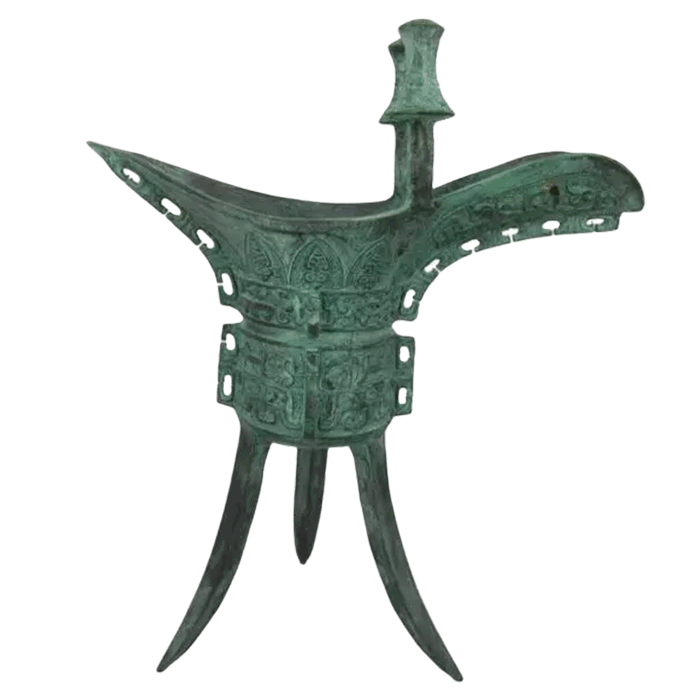
The most recognizable type features a wide trumpet-shaped foot flaring outward to stabilize a tall, waisted body. This design typically shows three distinct sections: a flared rim at the top, a narrow waist in the middle, and a splayed foot ring at the bottom that mirrors the rim's angle. This silhouette was common in ritual sets meant for pouring wine during ancestral ceremonies, and it remains the shape most buyers picture when they hear the term.
When commissioning a reproduction of this form, casting teams pay close attention to wall thickness at the waist, since this narrow section is the most likely point of casting stress. Workshops using the traditional lost-wax method can control this thickness precisely, which is one reason buyers ask about casting technique before finalizing a design.
Animal-Shaped Variants: Identifying by Leg and Body Silhouette
A separate family of vessels takes the form of a standing or crouching animal, with the body cavity doubling as the wine container. These pieces are identified almost entirely by their leg structure and body posture rather than by rim shape, since many lack a conventional foot ring altogether.
Bird-Shaped Bodies
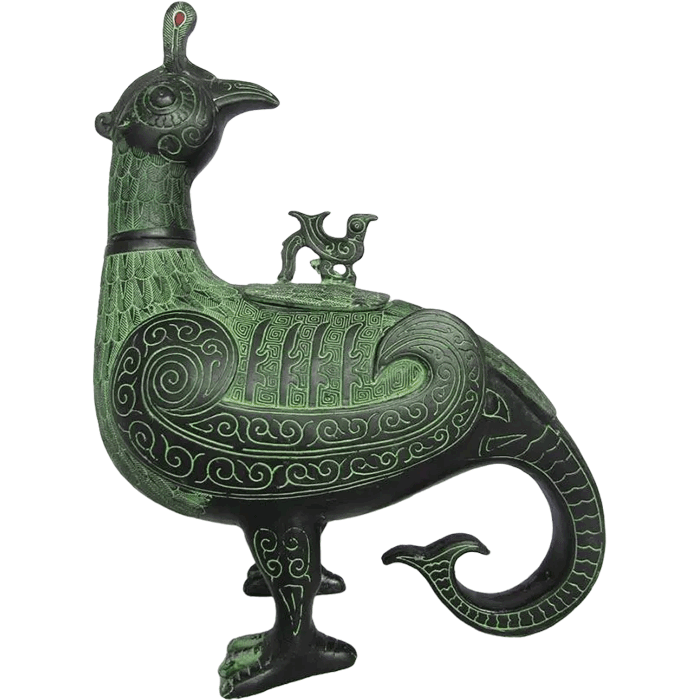
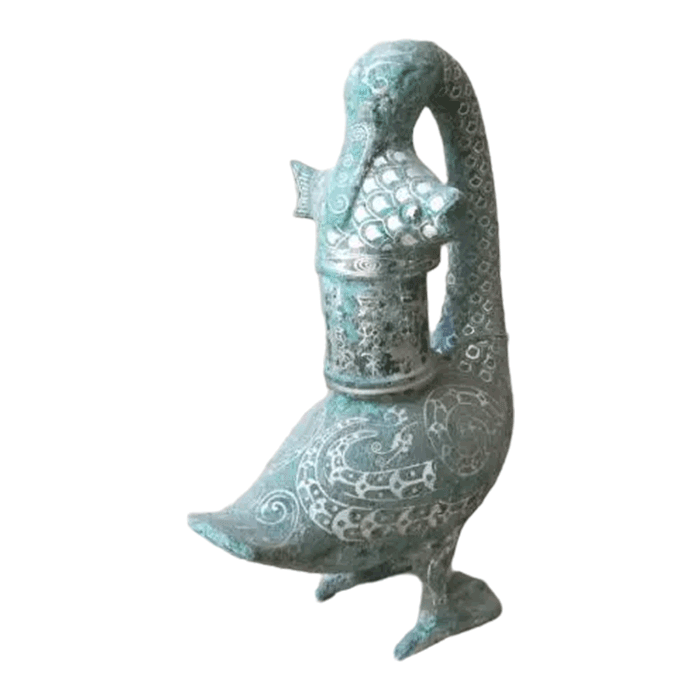
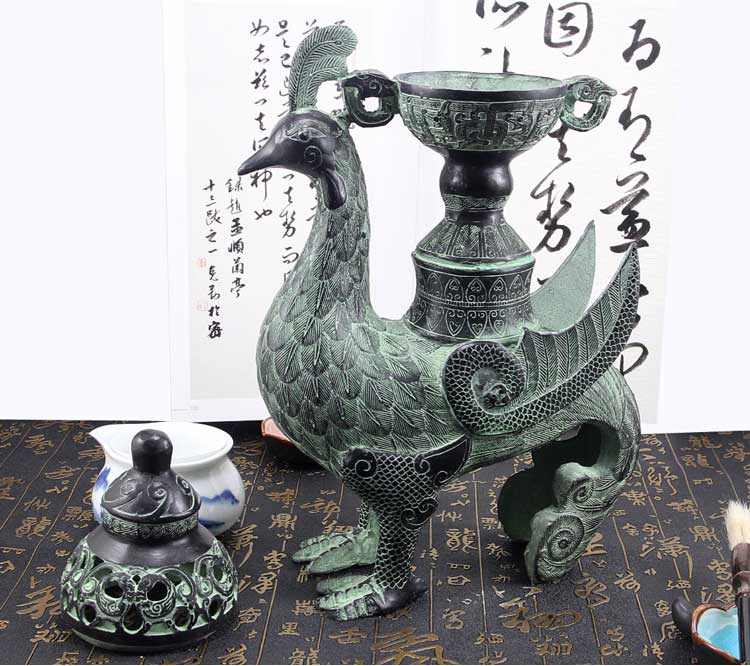
Bird-form vessels typically stand on two thick legs fused into a solid base, with the body curving upward into a rounded breast and a separate lid or spout representing the head. The legs are often cast as part of the same pour as the body, requiring careful mold alignment to avoid seams at the joints.
Elephant and Rhino-Shaped Bodies
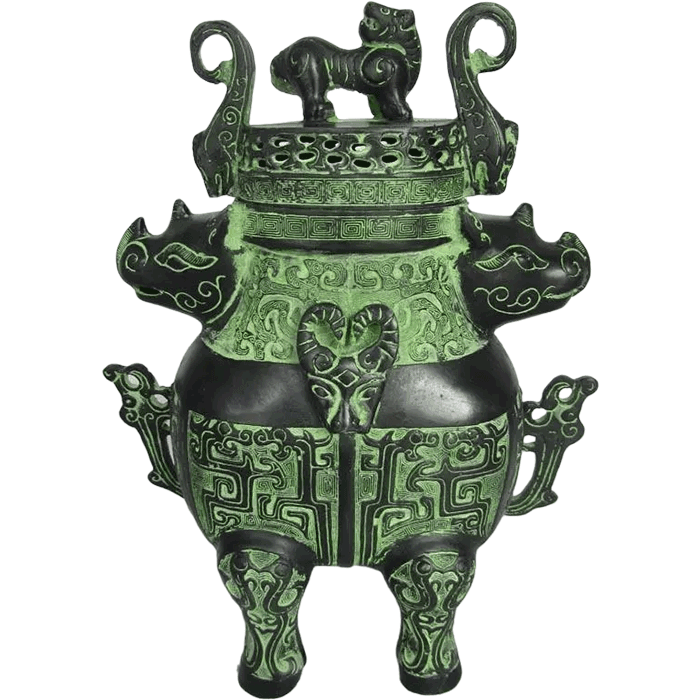
Four-legged animal vessels — most famously elephant and rhinoceros forms — use thick, columnar legs to support a heavier body mass. The legs on these pieces are proportionally shorter and wider than on bird-form vessels, reflecting the need to bear more weight. Collectors examining a reproduction should check whether the leg-to-body ratio matches known archaeological examples, since inaccurate proportions are a common giveaway in lower-quality replicas.
Buyers who want to compare these animal forms against other bronze statue traditions, including standalone figural sculpture, can browse animal bronze statues with different themes to see how leg and body proportion conventions carry over into non-vessel bronze art.
Square-Based and Compound-Foot Forms
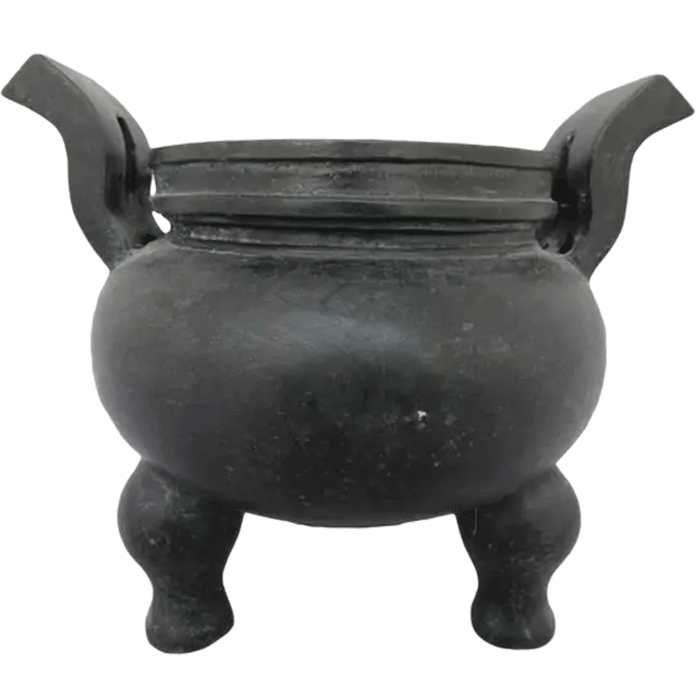
A third category departs from the round trumpet foot entirely, using a square or rectangular base instead. These vessels usually pair a squared foot with a body that transitions from angular shoulders into a rounded belly, creating a visual contrast between the rigid base and the softer upper form. This compound structure is more demanding to cast because the mold must accommodate both straight edges and curved surfaces without visible seam lines.
Workshops experienced in reproducing this style often reference historical bronze wine vessels documented in academic collections; readers interested in the vessel family this square-based form belongs to may find ancient Chinese bronze wine vessel records useful for cross-referencing shapes before placing a custom order.
Multi-Tiered Foot Rings
Some later examples add a secondary, smaller foot ring beneath the primary trumpet base, creating a stepped profile when viewed from the side. This detail is subtle but important for dating and classification, and it is exactly the kind of structural nuance that gets lost in low-resolution photographs — one reason experienced buyers request measured drawings or physical samples before bulk ordering.
What This Means for Custom Reproduction Orders
Once a buyer has identified which foot-and-body family they need — trumpet-footed, animal-shaped, or square-based — the next step is confirming that a workshop can replicate the proportions accurately at the requested scale. Luoyang Yichuan Bronze Craft Co., Ltd. produces these vessel forms using traditional lost-wax casting in premium bronze alloy, with hand chasing and patina finishing applied afterward to match either an antique or a modern surface look. Because the company supports custom orders from a single prototype piece up to full production runs, buyers can request one accurately proportioned sample before committing to a larger batch — useful when the goal is matching a specific foot type or body ratio seen in a reference photograph.
The company's production facility in Yichuan County, Luoyang, Henan Province spans 3,000 square meters and employs more than 30 skilled craftsmen, including bronze-casting masters and finishing artisans, producing over 50,000 bronze art pieces annually. This scale allows the same team that hand-finishes a single custom commission to also manage larger export orders without switching workshops mid-project — a common pain point for buyers who need consistent patina color matching across a multi-piece set.
Quality and Packaging Considerations for Fragile Forms
Vessels with a narrow waist or thin trumpet foot are structurally vulnerable during shipping, particularly on animal-shaped pieces where the legs act as stress points. Every order undergoes quality inspection before shipment, with free replacement offered for casting defects and export-compliant protective packaging designed specifically for fragile sculptures. For buyers new to sourcing this category, reviewing general background on Chinese bronze sculpture traditions can help set realistic expectations for lead time, finish quality, and packaging standards before requesting a formal quote.
A Practical Checklist for Buyers Comparing Forms
Before submitting a custom request, it helps to confirm the following details in writing with the workshop:
- Foot type required — trumpet, animal-leg, square base, or multi-tiered ring
- Body proportion reference — photograph, drawing, or physical sample
- Target finish — antique patina or modern polished surface
- Order volume — single prototype versus bulk production run
- Packaging requirements for the specific foot-and-body vulnerability of the chosen form
Because the company holds ISO 9001 quality management certification and produces to export quality inspection standards for art crafts, buyers can request documentation alongside the physical sample when evaluating whether a workshop's casting precision matches the structural demands of a particular foot-and-body design. This is especially relevant for square-based or multi-tiered forms, where seam control at the transition points determines the long-term durability of the piece.
Final Notes on Reading Vessel Structure
Distinguishing these forms is ultimately a matter of training the eye to look past decorative motifs and focus on structural logic — how the foot supports the body, and how the body's curvature responds to that support. Buyers who master this distinction are better equipped to communicate precise specifications to a casting workshop, reducing the back-and-forth typically needed to get a reproduction that matches the intended historical or aesthetic reference. Whether the end goal is a museum-grade replica or a decorative piece for a commercial interior, starting with an accurate read of foot and body shape sets the foundation for every decision that follows, from mold-making to final patina finishing. Those planning a fully custom commission can also review the process for how to customize a bronze sculpture from sculpmart.com to understand how specification details like these are translated into a production brief.