How to Choose a High-Quality Goujian Sword Reproduction
How to Choose a Historically Accurate and High-Quality Goujian Sword Reproduction
The Sword of Goujian, an archaeological marvel from China's Spring and Autumn period, represents a zenith of ancient bronze metallurgy and artistry. Its legendary sharpness, intricate design, and remarkable state of preservation after more than two millennia have made it an icon of cultural heritage. For museums, cultural retailers, and private collectors, acquiring a replica is not merely about owning a copy; it's about capturing a piece of history. However, the market is saturated with replicas of varying quality. Choosing a superior reproduction requires a discerning eye for historical accuracy, material integrity, and manufacturing excellence. This guide provides a comprehensive framework for B2B buyers to evaluate and select a replica that honors the legacy of the original masterpiece.
Understanding the Historical Significance of the Original Sword
Before evaluating a replica, it is crucial to understand the unique characteristics of the original artifact. Unearthed in 1965 from a tomb in Hubei province, the Sword of Goujian amazed archaeologists. Despite being over 2,500 years old, its blade was largely untarnished and sharp enough to draw blood. This incredible preservation and enduring quality are attributed to its complex metallurgical composition and the airtight conditions of its scabbard and tomb.
The sword’s body is primarily a copper-tin bronze alloy, but its composition varies across different parts. The spine is more flexible and resilient, containing a higher percentage of copper, while the edges are harder and sharper due to a higher tin content. This sophisticated composite construction demonstrates an advanced understanding of metal properties that was far ahead of its time. Furthermore, the blade is adorned with an intricate, dark rhombic pattern, a testament to the advanced finishing techniques of the era. The guard is inlaid with blue crystal and turquoise, and the hilt is bound with silk over a clay core. Perhaps most famously, the blade bears an eight-character inscription in ancient "bird-worm seal script," which reads, "King of Yue, made this sword for his personal use."
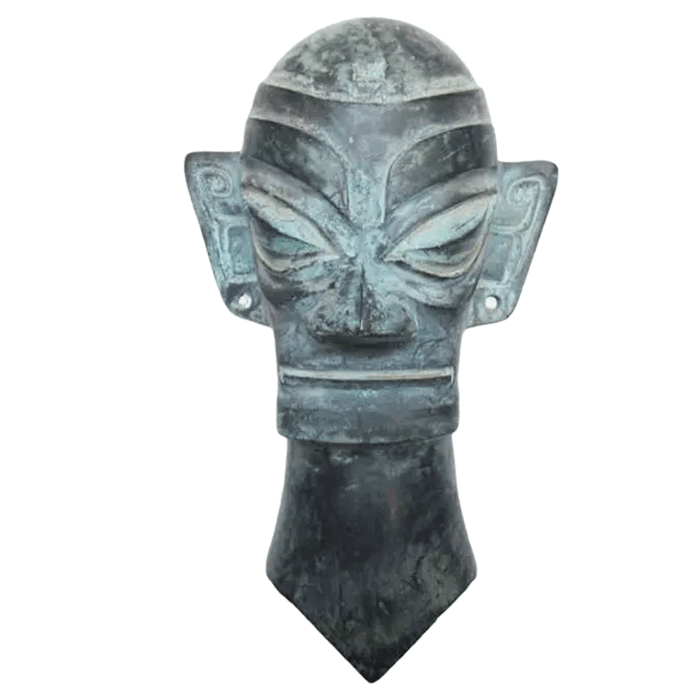
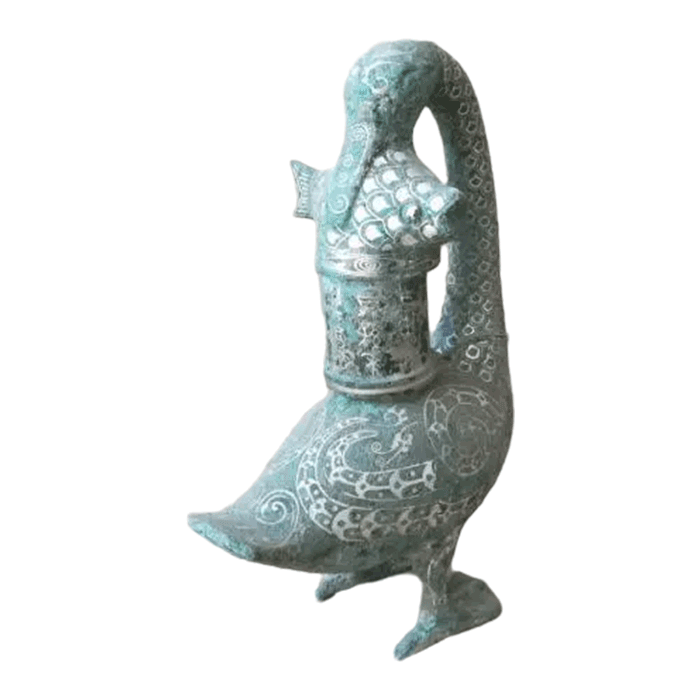
A faithful reproduction must strive to replicate these key features. It is not enough for a replica to simply mimic the shape; it must also reflect the material science, artistic detail, and cultural context of the original. When evaluating a potential supplier, inquire about their research process and their understanding of these historical nuances. A knowledgeable manufacturer will appreciate the significance of details like the bi-metallic construction and the specific style of the ancient script, as detailed in historical sources like the lotus crane square pot and yue wang goujian sword. This foundational knowledge is the first indicator of a supplier capable of producing a truly exceptional piece.
Key Material and Construction Indicators of a Superior Replica
The physical properties of a reproduction are the most tangible measure of its quality. A discerning buyer should focus on the core materials and the method of construction, as these elements dictate the replica's authenticity, durability, and aesthetic value.
The Importance of Bronze Alloy Composition
The original sword's resilience is a direct result of its specific bronze alloy (Cu-Sn). A high-quality replica should be cast from a premium bronze alloy, not a cheaper substitute like brass (a copper-zinc alloy) or other metals that fail to capture the correct weight, color, and aging properties. Ask potential suppliers for details on the specific grade of bronze they use. At Luoyang Yichuan Bronze Craft Co., Ltd., we utilize a premium copper-tin bronze alloy that is specifically formulated to emulate the properties and appearance of ancient Chinese bronzes. This commitment to material purity is essential for achieving an authentic look and feel, and for ensuring the piece will develop a stable, attractive patina over time. Understanding the difference between bronze and brass is fundamental for any serious buyer of historical replicas.
Evaluating the Casting Method: Lost-Wax Tradition
The method used to cast the sword is critically important. The traditional lost-wax casting (cire-perdue) method, used for millennia to create intricate metal objects, is the gold standard for producing high-fidelity bronze artworks. This multi-step process involves creating a wax model, encasing it in a ceramic shell, melting the wax out, and then pouring molten bronze into the resulting mold. This technique allows for exceptionally fine detail, capturing the subtle curves of the blade and the precision of the inscriptions in a way that modern mass-production methods like die-casting cannot.
When vetting a manufacturer, confirm that they employ the traditional lost-wax method. A supplier who has mastered this ancient technique, like our team of over 30 skilled craftsmen, demonstrates a commitment to historical authenticity and artistic integrity. This process is labor-intensive and requires a high degree of skill, but the result is a replica with a level of detail and character that is impossible to achieve otherwise. It ensures that each piece is not just a copy, but a work of art in its own right, reflecting the same foundational techniques used to create the original chinese bronze sculpture.
Assessing Craftsmanship: From Blade Inscription to Hilt Details
Beyond the base material and casting method, the fine details and finishing work separate an average replica from a museum-quality masterpiece. The hand of a skilled artisan is evident in the precision of the final product. A meticulous evaluation of these details is a key factor in your choice of a Goujian sword reproduction.
The Intricacies of the Rhombic Pattern and Inscriptions
Two of the most iconic features of the Sword of Goujian are its surface pattern and inscription. The faint, dark rhombic pattern on the blade is believed to be a result of a specific surface treatment process involving sulphidation. A superior replica will feature a clearly defined and consistent pattern that is integrated into the metal's surface, not merely painted or superficially etched on. It should be subtle yet distinct, visible when the blade catches the light at the correct angle.
Similarly, the "bird-worm seal script" inscription must be accurately rendered. This requires not only precise casting but also careful hand chasing by a master artisan to sharpen the characters and ensure their historical accuracy. The lines should be clean, the strokes fluid, and the style consistent with known examples of the script from that period. A poorly executed inscription is an immediate sign of a low-quality reproduction.
Finishing Touches: Hand Polishing and Patina
The final finish of the sword contributes significantly to its overall aesthetic and authenticity. After casting, the raw bronze must be meticulously hand-chased to remove imperfections and refine details. This is followed by a careful hand-polishing process to achieve the desired luster on the blade edges and guard.
The patina—the surface coloration that develops on bronze over time—is another critical element. A skilled bronze foundry can apply a custom patina to simulate the appearance of an ancient artifact or to achieve a more modern, pristine look. This is a chemical process that requires deep expertise to achieve a consistent and durable color. Inquire about a supplier's patina capabilities. Do they offer a range of options? Can they match a specific color reference? The ability to provide consistent patina color matching across a bulk order is a hallmark of a professional, quality-focused operation.
The Role of a Supplier in Ensuring Quality and Consistency
Finally, the capabilities and professionalism of the manufacturing partner are as important as the physical product itself. For B2B buyers, a reliable supply chain, consistent quality, and responsive service are paramount.
Verifying Manufacturing Credentials and Quality Systems
A reputable supplier should operate under a recognized quality management system. Look for certifications like ISO 9001, which indicates that the company has established and maintains effective processes for quality assurance and continuous improvement. This certification provides objective evidence of a commitment to professional standards. Furthermore, their products should comply with export quality inspection standards for art crafts, ensuring a smooth customs and import process.
Production Capacity and Customization
Consider your specific needs. Do you require a single, highly customized prototype for a museum exhibit, or a large production run for a retail collection? A versatile supplier should be able to accommodate both. Our facility, with an annual output of over 50,000 bronze pieces, can support everything from a single custom prototype (MOQ from 1 piece) to extensive bulk orders. The ability to customize a bronze sculpture from sculpmart.com, including variations in patina, size, or display mounts, is a significant advantage for buyers looking to create a unique offering.
Quality Control, Packaging, and After-Sales Support
Sourcing fragile, high-value items internationally presents logistical challenges. A trustworthy partner will have robust internal quality inspection processes, conducting a final check before every shipment. They should also address the critical pain point of shipping damage by using export-compliant protective packaging designed specifically for fragile sculptures.
Finally, inquire about their policies on defects and after-sales support. A confident manufacturer will stand behind their work, offering free replacement for any casting defects. Valuable after-sales support, such as providing guidance on patina touch-ups or restoration, demonstrates a long-term commitment to their clients and the artworks they produce.
By carefully considering the historical context, material science, artisanal craftsmanship, and the supplier's professional capabilities, you can confidently select a Goujian sword reproduction that is not just a product, but a worthy tribute to one of the greatest treasures of the ancient world.