How Sanxingdui Bronze Human Statues Differ
How Sanxingdui Bronze Human Statues Differ from Other Site Artifacts
The Sanxingdui site is known for a remarkable range of ancient bronze artifacts, including masks, human heads, standing figures, kneeling figures, sacred trees, animals, vessels, and ritual objects. For museum visitors, researchers, and collectors, the challenge is not simply recognizing that an object is bronze. It is understanding whether an artifact is a human-form sculpture, a mask, a vessel, or another ceremonial object, and identifying the visual features that make it distinctive.
Sanxingdui Bronze Human Statues are especially important because they present the human body as a sculptural subject rather than only as a face, symbolic image, or decorative motif. Their unusual proportions, strong silhouettes, elaborate headwear, and formal poses differ clearly from many bronze traditions associated with the Central Plains. At the same time, they should not be treated as one uniform category. A standing figure, a bronze head, and a kneeling person may all have human characteristics, but they serve different visual and classification purposes.

Start by Separating Figures, Heads, and Masks
The first step in distinguishing a human statue is to look for the presence of a complete or substantially complete body. A statue normally includes the head and torso, and it may also include arms, hands, legs, clothing details, footwear, or a base. Even when the body is stylized rather than anatomically naturalistic, it is intended to be read as a figure occupying space.
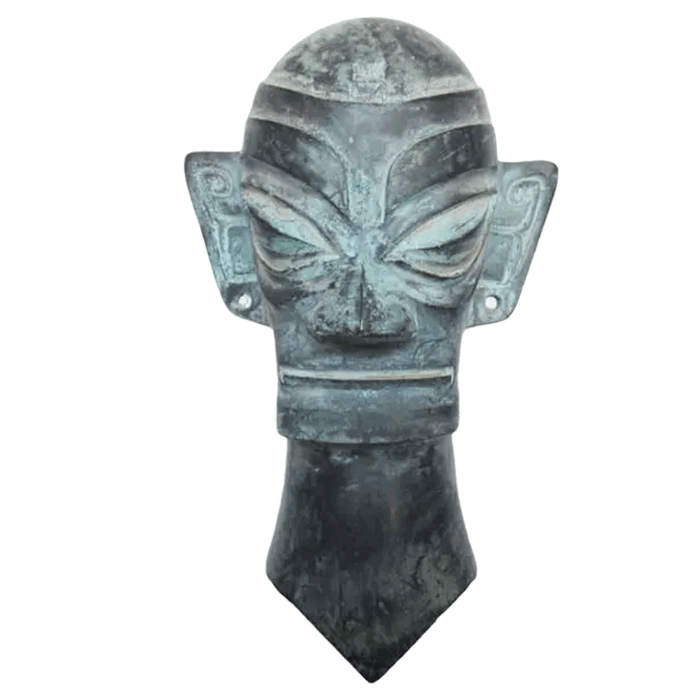
By contrast, a bronze human head is primarily a sculptural representation of the face and upper skull. Sanxingdui bronze heads can include distinctive large eyes, high noses, wide ears, and carefully modeled hair or crowns. They may appear highly expressive, yet they are not necessarily statues in the full-body sense. Their visual impact comes from facial treatment, head shape, and attached ornaments rather than posture or body language.
Masks are different again. A mask is generally a face-oriented object, often designed with openings, projecting features, or a format that suggests display, mounting, or ritual presentation. At Sanxingdui, exaggerated eyes and ears are among the most recognizable traits of several masks. These elements can make a mask seem almost human or supernatural, but a mask should not automatically be classified as a human statue because it does not represent a complete body.
| Artifact Type | Main Visual Focus | Key Identification Clue |
|---|---|---|
| Human statue | Whole body or body in pose | Torso, limbs, posture, hands, garment, or base |
| Bronze head | Facial features and headwear | Detached head without a modeled body |
| Bronze mask | Frontal face and symbolic features | Face-like format, often with prominent eyes or ears |
| Bronze vessel | Container form and ritual function | Opening, body cavity, feet, handles, or lid structure |
This distinction is useful for collectors and replica buyers because a “human bronze” description can otherwise be too broad. A full-length standing figure requires different casting, structural support, finishing, and display planning than a mask or a head sculpture.
Recognize the Unusual Body Proportions and Formal Poses
Many human-form Sanxingdui bronzes are notable for stylization rather than naturalistic anatomy. The body may be elongated, the shoulders broad, the hands enlarged, or the arms arranged in an intentional and highly formal position. Instead of showing casual movement, these sculptures often communicate stillness, ceremonial presence, or symbolic authority.
The well-known large standing figure is a useful example of this approach. It is recognized by its tall vertical composition, long robe-like clothing, raised or extended hands, and a carefully structured crown or headpiece. Its hands are especially important. Rather than appearing relaxed, they are positioned as if they may have held an object or participated in a ritual gesture. When evaluating a reproduction or studying an image, the hand position should be examined as closely as the face.
Kneeling figures create a different silhouette. Their bent legs and compact body structure immediately distinguish them from tall standing statues. The kneeling posture can suggest presentation, service, ceremony, or a formal role, although the exact ancient meaning should not be assumed without archaeological context. For identification purposes, the key point is that posture is central: a kneeling figure is read through its body arrangement, while a mask is read mainly through its frontal facial design.
Compared with many later decorative human sculptures, Sanxingdui-style figures may appear less concerned with ordinary portrait realism. Their visual language is more deliberate and symbolic. The viewer’s attention is directed toward the headgear, gaze, hands, garment structure, and stance rather than muscles, natural movement, or individualized facial expression.
Look Closely at Eyes, Ears, Headwear, and Facial Structure
Although a full body is the clearest classification feature, the face still provides valuable evidence. Human-form bronzes from Sanxingdui are often associated with pronounced eyes, extended or emphasized ears, straight noses, and strongly defined brows. These elements create a powerful front-facing identity, even when the figure is viewed from a distance.
Large eyes should not, however, be used as the only identification rule. Prominent eyes also appear on masks and heads from the site. The difference lies in how facial features relate to the rest of the object. On a statue, the face is one component within an integrated body, costume, posture, and display format. On a mask, the eyes may dominate the entire composition. On a detached head, the headwear and facial modeling are the primary visual information.
Headwear is another important feature. Crowns, topknots, decorative bands, and tall vertical ornaments can change the perceived status and character of a figure. In a quality reproduction, the transition between the head, crown, and hair should be clear and structurally balanced. Details should not appear as shallow surface marks only. They need enough definition to remain visible after patina finishing and from normal viewing distance.
For broader context on the site’s distinctive objects, collectors may consult Sanxingdui bronze ware history. Comparing figures with masks, trees, and vessels helps prevent the common mistake of grouping every anthropomorphic object into one category.

Compare Human Figures with Vessels and Ritual Bronzes
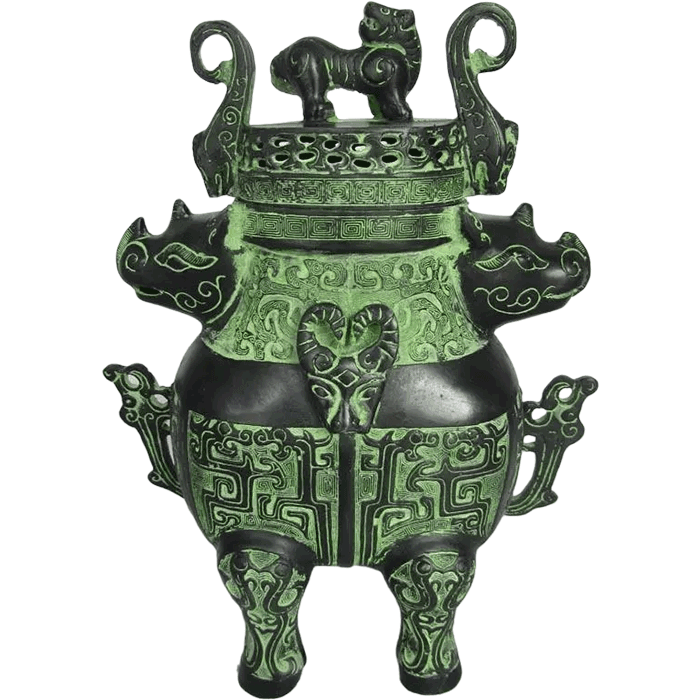
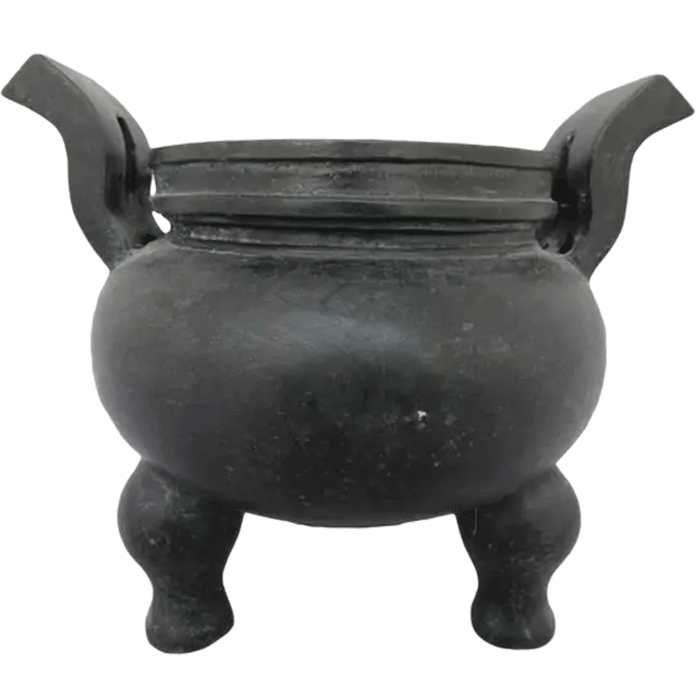
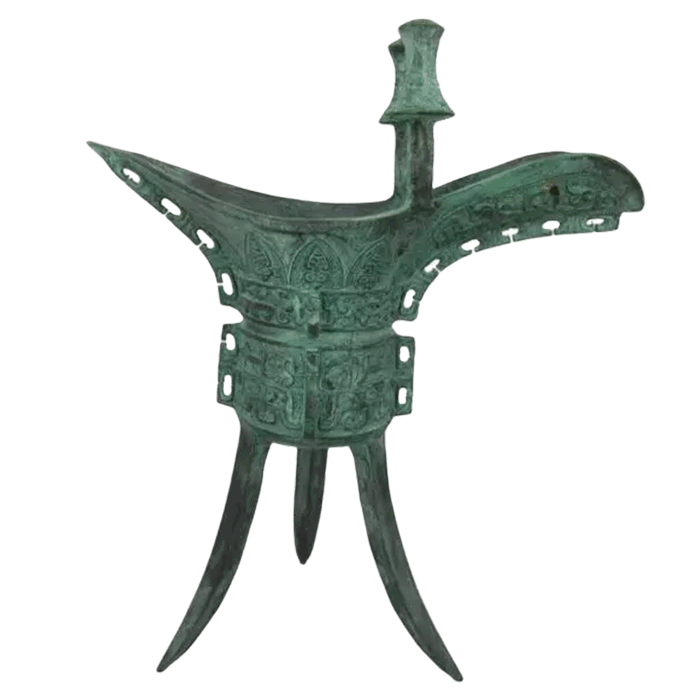
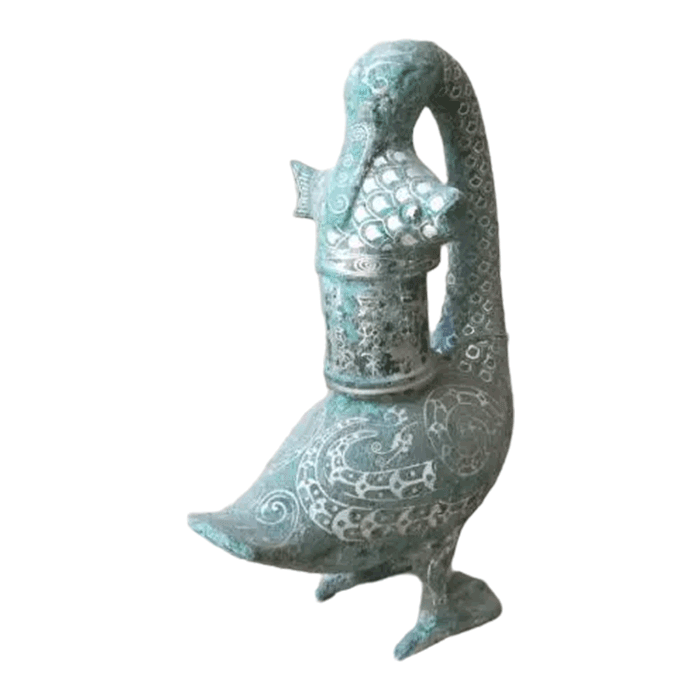
Sanxingdui is associated with objects that differ fundamentally in shape and probable use. Bronze vessels, for example, are organized around volume. A ding, zun, hu, tripod, or other vessel type normally has an opening, a hollow interior, a defined rim, supporting feet, handles, or a lid. Even when a vessel includes animal heads or human-like decorative details, its central design purpose remains that of a container or ritual implement.
A human statue, in contrast, is organized around bodily presence. Its structure depends on balance, stance, and the relationship between upper and lower sections. The arms may project, the figure may need a base, and the weight distribution must be considered carefully in both the original artifact and any modern bronze interpretation.
Collectors interested in comparing ceremonial container forms with sculptures can review several bronze ware forms. This comparison is helpful because vessel terminology is sometimes incorrectly applied to all ancient bronzes. A figure can be ritual in character without being a vessel, while a vessel can carry symbolic imagery without becoming a statue.
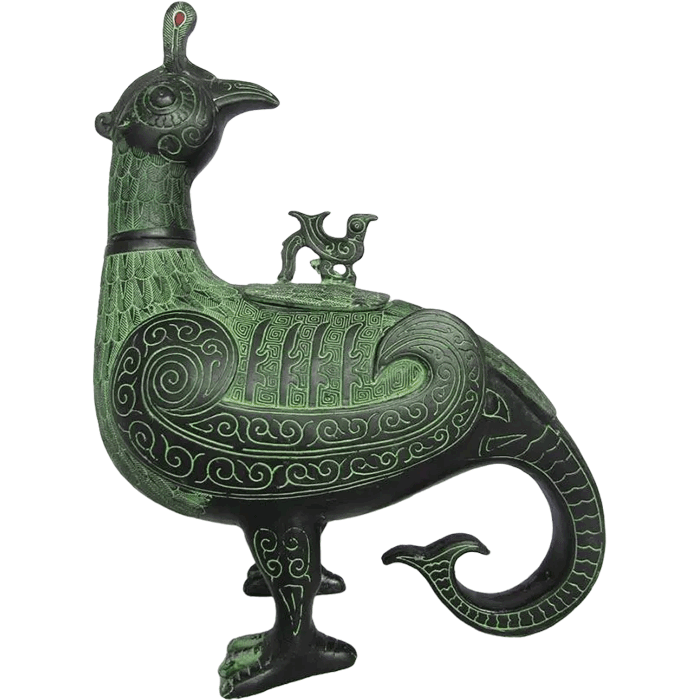
Bronze trees, animal forms, birds, and hybrid creatures also differ from human figures in their primary composition. A sacred tree is built around branching structure and vertical ornament. An animal bronze is identified through anatomy such as horns, wings, claws, tails, or elongated bodies. A hybrid object may combine several visual references, but it should be catalogued according to its dominant form and archaeological interpretation rather than a single decorative feature.
Understand Why Surface Finish Matters in Modern Reproductions
When a museum, academic display project, interior design buyer, or collector commissions a bronze interpretation, surface finishing can strongly influence whether the result communicates the intended historical character. Ancient bronze surfaces have complex visual qualities created over time, while a new cast sculpture requires controlled finishing to achieve an appropriate antique or modern appearance.
Luoyang Yichuan Bronze Craft Co., Ltd. produces custom bronze artworks using premium Cu-Sn bronze alloy and the traditional lost-wax casting method. The process can include hand chasing, polishing, and patina finishing. These steps are especially relevant for Sanxingdui-inspired human figures because fine details such as fingers, robe edges, ears, crowns, and facial planes need to remain legible after casting.
Patina selection should be discussed early in a custom project. A dark brown, green-toned, blackened, or mixed antique-style surface can emphasize relief and age-inspired character. A cleaner modern finish can make the same figure appear more architectural or contemporary. Color matching should be evaluated on sample areas where possible, particularly when a sculpture must coordinate with an existing exhibition, collection, or interior environment.
It is also important to distinguish bronze from brass when reviewing material specifications. The article on bronze and brass differences provides useful background for buyers who are comparing metal terminology. For a human sculpture with detailed modeling, alloy selection and casting practice affect not only color but also the clarity of the finished surface.
Use a Clear Brief When Ordering a Human-Figure Replica
A successful custom commission begins with accurate reference material and a precise statement of purpose. A museum shop may need a reduced-scale educational replica. A collector may want a display sculpture based on a particular standing or kneeling form. A public-space project may require a larger artistic interpretation inspired by ancient bronze design rather than an exact archaeological copy.
Before production, provide dimensions, reference photographs, front and side views where available, preferred patina, display location, base requirements, and target quantity. If the order requires an exact reproduction, identify which elements must remain faithful to the source, including body proportions, hand position, crown profile, robe patterns, and surface texture. If the design is interpretive, clarify which details may be adapted.
- Specify whether the object is a full-body statue, head, mask, or mixed display set.
- Confirm final height, width, depth, and approximate installation weight requirements.
- Identify whether the sculpture will be displayed indoors or outdoors.
- Provide preferred antique-style or modern patina direction.
- Request protective packaging suitable for fragile projecting features such as hands, crowns, or extended ornaments.
- Confirm whether one prototype or a bulk production quantity is needed.
Luoyang Yichuan Bronze Craft Co., Ltd. supports custom projects from one piece, with bulk quantities negotiated according to sculpture size and design complexity. The company operates from Yichuan County, Luoyang, Henan Province, with a 3,000-square-meter production area and more than 30 skilled craftsmen, including bronze casting and finishing specialists. Its ISO 9001 quality management system certification and pre-shipment inspection process support export-oriented bronze art orders.
For a project that requires a full custom workflow, buyers can customize a bronze sculpture with reference-based design discussions, casting requirements, finishing preferences, and packaging considerations. Casting defects are covered by free replacement, while after-sales support is available for patina touch-up and restoration guidance.
Key Differences to Remember During Discovery
The simplest way to distinguish Sanxingdui Bronze Human Statues is to assess the object as a complete composition. Does it have a body, an intentional pose, hands, garment structure, and a base or support? If so, it is more likely to belong to the human-figure category. If the object focuses only on a face, it may be a mask. If it is primarily a head, it should be understood as a bronze head. If it has a cavity, rim, feet, or handles, it is likely a vessel rather than a statue.
Beyond classification, the most memorable qualities of these figures are their elongated silhouettes, formal gestures, distinctive facial treatment, elaborate headwear, and symbolic visual presence. These traits make them different not only from Sanxingdui masks and vessels, but also from many conventional human sculptures in other bronze traditions.
For researchers and collectors, careful distinction improves cataloguing, interpretation, display planning, and replica sourcing. For custom bronze projects, it ensures that the selected form, casting structure, patina, and packaging match the actual object type being represented.