How Does a Bronze Zun's Flared Rim Aid Wine Rituals?
How the Flared Rim of a Bronze Zun Enhances Ancient Wine Rituals
Among the many vessel forms that emerged from China's Bronze Age, few carry as much ceremonial weight as the wine vessel known as the zun. Collectors, museum curators, and cultural-product importers who study antique bronzes often notice one distinctive feature first: the wide, outward-flaring rim that sits atop a rounded or trumpet-shaped body. This is not a decorative afterthought. The flared rim of a Bronze Zun was engineered — through centuries of trial, refinement, and ritual practice — to serve specific functional purposes in wine offering ceremonies. Understanding this design detail helps buyers evaluate the authenticity and craftsmanship of both antique pieces and modern reproductions.
Understanding the Bronze Zun in Ritual Context
The zun belongs to a family of ancient Chinese bronze handicrafts used primarily during the Shang and Zhou dynasties for holding and presenting fermented wine or millet spirits during ancestral worship and state ceremonies. Unlike storage jars meant for everyday use, ritual vessels like the zun were designed with symbolic proportions: a broad body to signify abundance, a stable base to represent permanence, and — most notably — a flared mouth that made the vessel practical for its ceremonial role.
In these rites, wine was not simply poured; it was measured, presented, and shared according to strict protocol. Officiants would lift the zun, tilt it carefully, and direct the liquid into secondary vessels such as ladles or drinking cups. The rim's geometry directly influenced how smoothly and precisely this transfer could be performed, which is why its form persisted across multiple bronze-casting periods with only gradual stylistic variation.
The Anatomy of the Flared Rim
Why the Flare Matters for Pouring
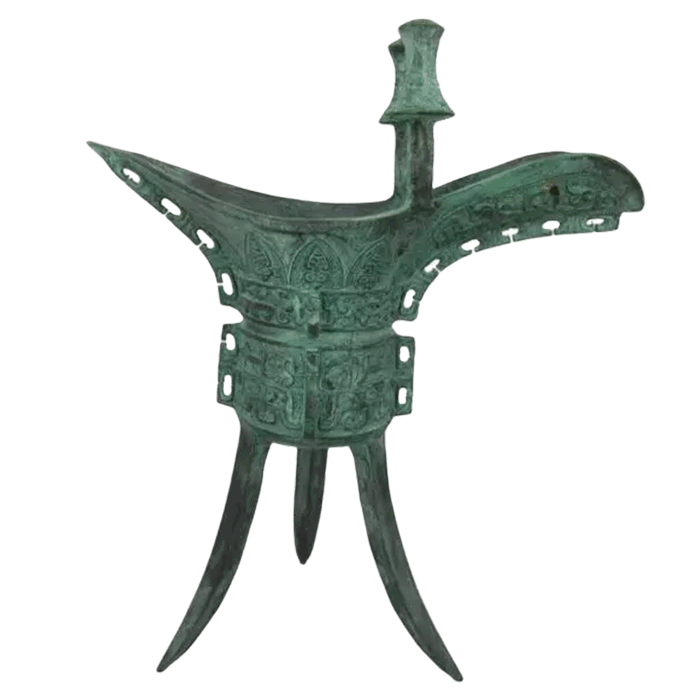
A flared rim widens the opening of the vessel outward rather than keeping it vertical or inward-curving. This shape accomplishes several things during a pouring ritual. First, it creates a wider target area, reducing spillage when wine is decanted into a ladle or secondary vessel — an important consideration given that ritual wine was often costly and symbolically significant. Second, the outward curve directs the flow of liquid away from the vessel's outer wall, preventing drips from running down the body and staining the surface or the officiant's hands.
Third, and often overlooked, the flare provided a practical grip surface. Many surviving examples show the rim's edge slightly thickened or rounded, allowing the vessel to be steadied with both hands during a ceremony without the risk of a sharp or fragile edge breaking under repeated handling. This attention to tactile function reflects a level of engineering sophistication in early bronze workshops that modern reproduction studios still aim to replicate.
Rim Thickness and Structural Balance
Beyond pouring mechanics, the flared rim also plays a structural role. Because the zun's body is typically wider in the middle and narrower toward the base, weight distribution becomes a concern once the vessel is filled with liquid. A properly flared and reinforced rim helps counterbalance this top-heaviness, keeping the piece stable when tilted at the angles required during ritual pouring. Casting a rim that is both aesthetically flared and structurally sound requires careful control of wall thickness during the mold-making stage — a detail that separates well-made reproductions from mass-produced decorative pieces.
Craftsmanship Behind an Authentic Bronze Zun Replica
Lost-Wax Casting and Alloy Composition
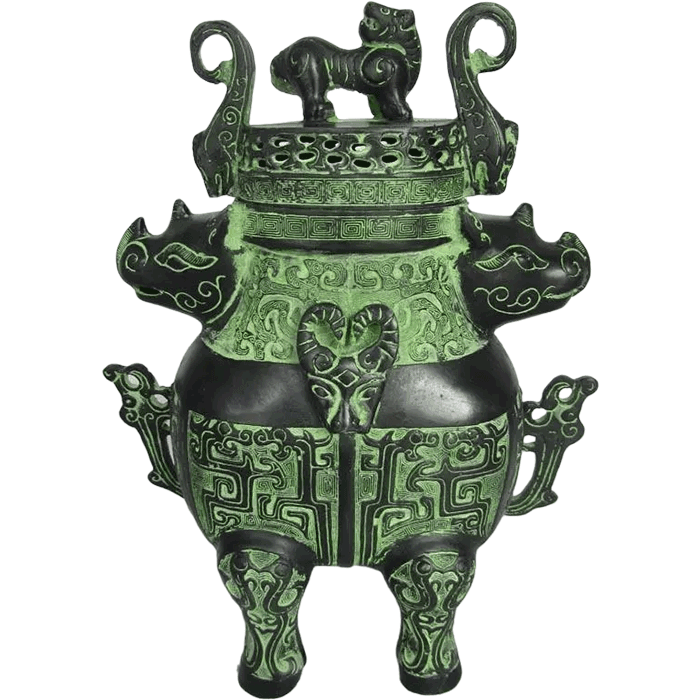
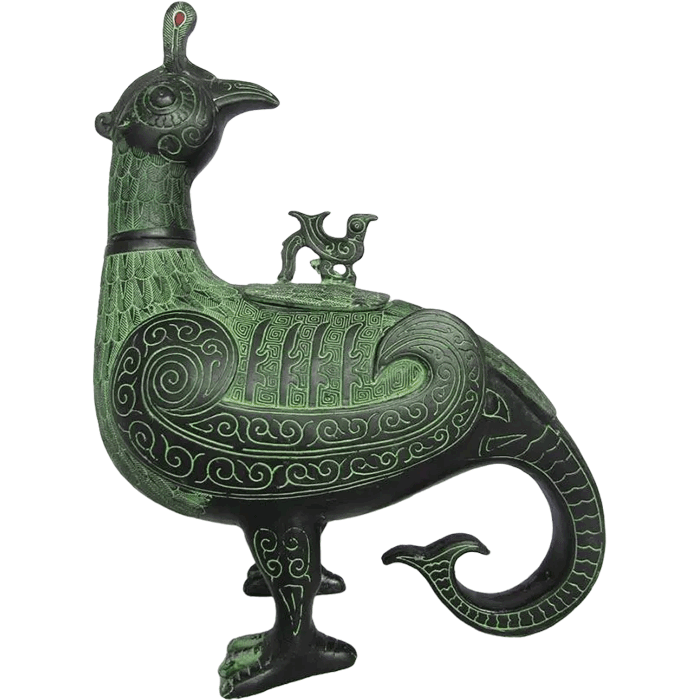
Reproducing the functional geometry of a Bronze Zun accurately requires more than surface-level imitation. At Luoyang Yichuan Bronze Craft Co., Ltd., each piece is cast using the traditional lost-wax method with a premium copper-tin bronze alloy, the same general composition historically used for ritual vessels. This alloy choice matters: it affects not only color and patina development but also how well the rim retains its shape during cooling and how the metal responds to hand chasing and polishing afterward.
Our workshop, based in Yichuan County, Luoyang, Henan Province, operates across a 3,000-square-meter production area staffed by more than 30 skilled craftsmen, including bronze-casting masters and finishing artisans. This scale allows us to produce over 50,000 bronze art pieces annually while still accommodating single custom prototypes — an important flexibility for collectors who want a one-off museum-grade replica rather than a bulk order. For readers interested in the historical range of forms these vessels took, our overview of the evolution of bronze culture over 2000 years traces how ritual vessel shapes changed across dynasties.
Patina Finishing for Museum-Grade Authenticity
Once cast, a Bronze Zun's surface undergoes hand chasing, polishing, and patina finishing to achieve either an antique or modern appearance. Matching historical patina color consistently across a batch of vessels is one of the more technically demanding aspects of reproduction work, since natural oxidation patterns vary by alloy ratio, humidity, and finishing technique. Our finishing artisans apply controlled patina processes specifically to address this pain point, ensuring that collectors receive vessels with a consistent, museum-appropriate finish rather than mismatched coloring across a set.
For buyers assembling a themed collection — such as pairing a zun with related ritual forms like ding tripods, hu vases, or ceremonial mirrors — this consistency is essential. Readers can browse related vessel categories through our chinese bronze antique collection to see how different ritual forms are finished to complement one another.
Sourcing Considerations for Collectors and Importers
Quality Assurance and Export Compliance
For museum buyers and cultural-product importers, sourcing a Bronze Zun replica involves more than admiring its form. Structural integrity, alloy quality, and packaging for international transit all affect whether a piece arrives in the condition promised. Our company is ISO 9001 certified, and every vessel is inspected against export quality standards for art crafts before shipment. Because ritual bronzes like the zun often have wide, protruding rims and flared openings, they are particularly vulnerable to damage in transit if packaging is not designed with their geometry in mind — a detail we account for with export-compliant protective packaging for fragile sculptures.
We also offer a minimum order quantity starting at a single piece for custom sculptures, which suits collectors seeking one exact reproduction rather than a production run. Bulk orders remain negotiable depending on size and design complexity, giving importers flexibility as their catalog needs grow. Should any casting defect appear on inspection, we provide free replacement, along with after-sales support for patina touch-ups and restoration guidance — support that is particularly relevant for buyers managing aging inventory or display pieces exposed to varying climates.
Comparing Ritual Vessel Forms
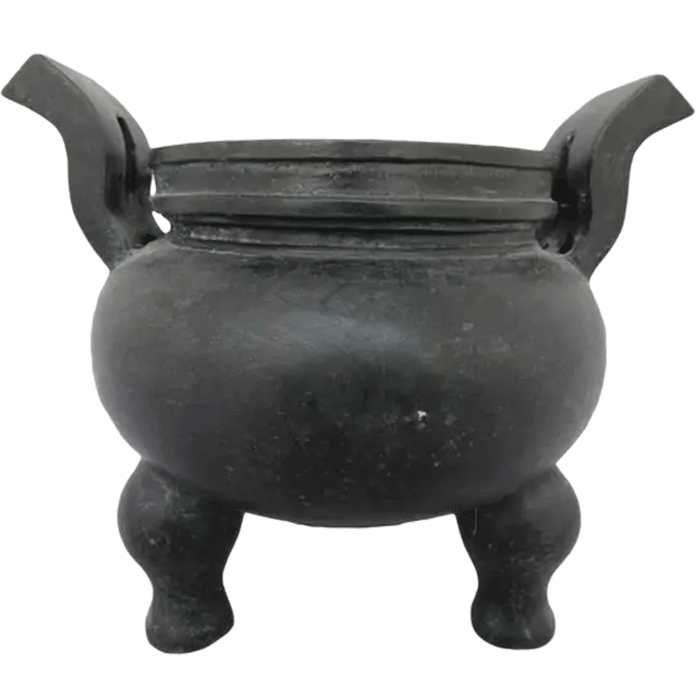
Collectors new to Chinese ritual bronzes sometimes confuse the zun with related vessel types such as the ding or hu. While all three served ceremonial functions, their rim and body designs differ according to purpose: the ding was primarily used for cooking and offering food, the hu for storing larger volumes of liquid, and the zun specifically for wine presentation and pouring — hence its emphasis on rim flare over sheer capacity. Readers researching these distinctions in more depth may find our article on introduction to several bronze wares useful for comparing vessel categories before selecting a piece for a collection.
| Vessel Type | Primary Function | Key Design Feature |
|---|---|---|
| Zun | Wine presentation and pouring | Wide flared rim for controlled pouring |
| Ding | Food offering and cooking | Tripod legs, deep body |
| Hu | Liquid storage | Narrow neck, larger capacity |
Evaluating a Bronze Zun for Your Collection or Catalog
When assessing a reproduction for purchase, examine whether the rim's flare angle matches documented historical examples, check the consistency of the patina against the body's shape, and confirm the alloy composition aligns with traditional Cu-Sn ratios rather than lower-cost substitutes. These factors influence both the vessel's visual authenticity and its long-term durability as a display or export item.
For buyers exploring custom commissions — whether an exact museum replica or an adapted design for retail — our team can work from reference photographs or historical records to produce a matching piece. Details on this process are available through our page on how to customize a bronze sculpture from sculpmart.com, which outlines how prototypes are developed before production begins.
The flared rim of a Bronze Zun is a small design element with outsized functional significance, shaping how ancient wine rituals were performed with precision, stability, and respect for the ceremony's symbolic weight. For collectors and importers, recognizing this detail is a useful first step before evaluating any reproduction's craftsmanship, and it provides a technical foundation for judging whether a given piece honors the vessel's original purpose or merely its outward appearance.