How Casting Seams Reveal an Antique Style Chinese Bronze
How Casting Seams Reveal the Story Behind an Antique Style Chinese Bronze
Collectors and interior buyers evaluating a bronze piece for the first time often focus on surface color or sculptural detail, overlooking one of the most telling indicators of quality: the casting seam. For anyone researching an Antique Style Chinese Bronze before committing to a purchase, understanding how seams form, how they are finished, and what they say about the workshop behind the piece can save both money and disappointment.
Understanding the Lost-Wax Casting Process Behind Every Bronze
Traditional Chinese bronze casting relies on the lost-wax method, a technique that has been refined over thousands of years and remains the gold standard for reproducing intricate antique forms. A wax model is built, coated in a ceramic shell, then heated so the wax melts away, leaving a cavity into which molten copper-tin alloy (Cu-Sn bronze) is poured. Once cooled, the ceramic shell is broken away to reveal the raw casting.
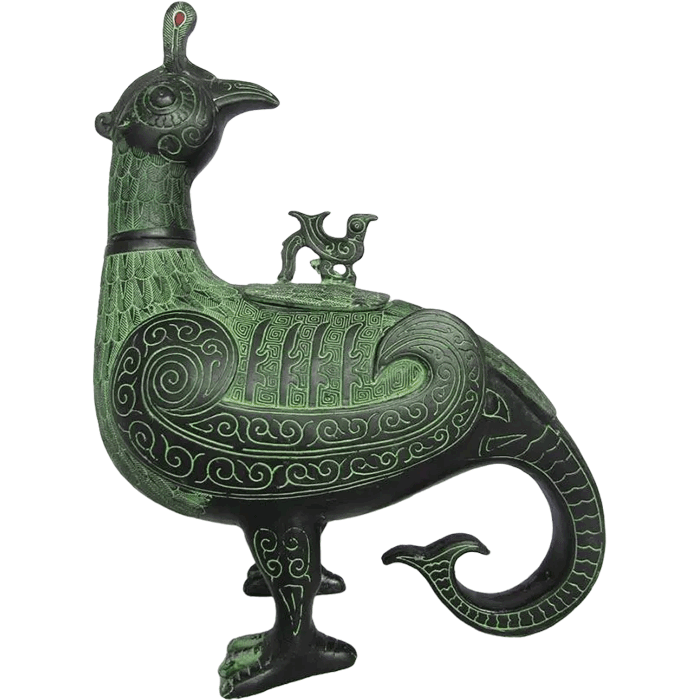
Because most sculptures, vessels, and ritual vessels are too complex to cast as a single seamless piece, workshops typically cast in sections — a body, a handle, a lid, a decorative flange — and then join them together. This is where casting seams originate, and it is also where the skill level of a foundry becomes visible to a trained eye. Readers interested in the historical roots of this craft may find it useful to review the evolution of bronze culture over 2000 years, which traces how casting techniques evolved from the Shang and Zhou dynasties through later imperial workshops.
What Casting Seams Are and Why They Matter
A casting seam is the faint line or ridge left where two mold sections meet, or where separately cast components were joined through brazing, riveting, or fusion casting. On genuine antique bronzes recovered from archaeological sites, these seams are often irregular, following the natural boundaries of ancient piece-mold or lost-wax construction. On a well-made reproduction, a skilled foundry deliberately replicates this irregularity rather than producing a perfectly smooth, machine-like surface.
This distinction matters for three practical reasons:
- Authenticity of style — seams that appear too uniform or too polished can signal mass-produced casting rather than genuine hand-finished work.
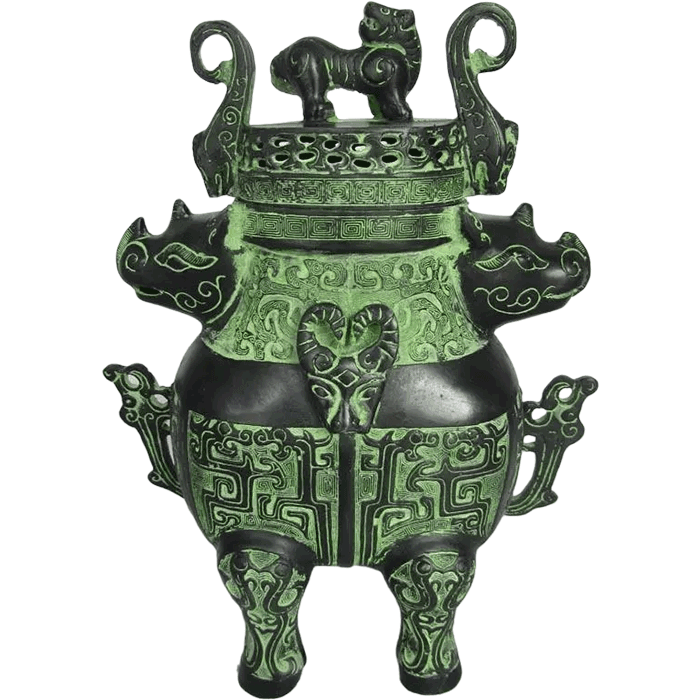
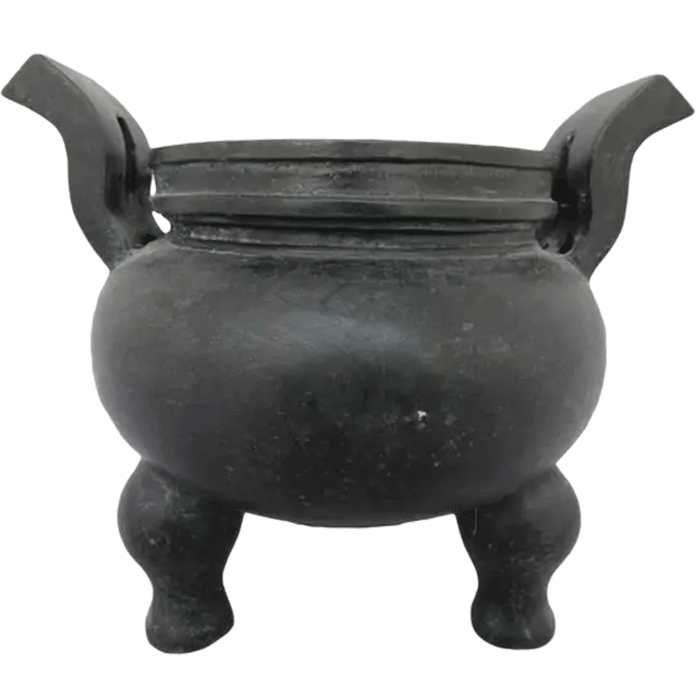
- Structural integrity — poorly closed seams weaken joints, especially on larger vessels like ding tripods or hu vases that carry significant weight.
- Value assessment — buyers sourcing pieces for galleries or high-end interiors often use seam quality as a shorthand for overall craftsmanship before inspecting finer surface details.
For a deeper look at how classic vessel forms were originally constructed and decorated, the article on Houmuwu square cauldron offers useful historical context on how ancient ding tripods were cast and joined.
Common Seam Locations to Inspect
When examining a bronze sculpture or vessel, buyers should check these areas first:
- Where limbs or heads meet the body on human and animal statues
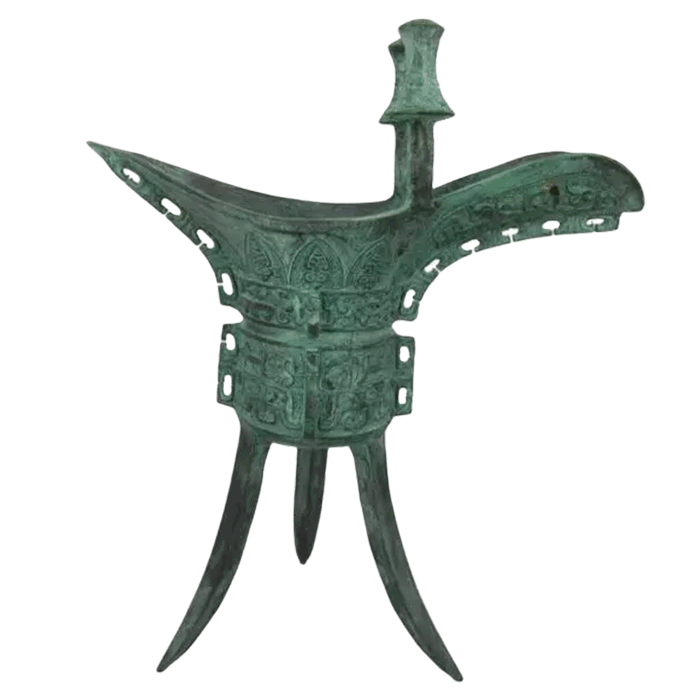
- The base or foot ring of vessels such as zun and hu
- Handle attachment points on incense burners and vases
- The rim junction on bronze mirrors and lids
On a genuine Antique Style Chinese Bronze, these joints should feel deliberate — slightly textured, consistent with hand-chasing work rather than an unfinished factory edge.
Reading Seam Lines to Judge Craftsmanship Quality
Not all seams are equal. Distinguishing a well-executed seam from a poor one comes down to how the foundry handles the post-casting stage. At workshops with experienced bronze-casting masters, seams are chased by hand — carefully filed, textured, and blended into the surrounding relief pattern so that the joint disappears into the design rather than interrupting it. This is a slow, labor-intensive process, and it is one reason skilled craftsmanship commands a premium over low-cost casting alternatives.
Luoyang Yichuan Bronze Craft Co., Ltd. employs more than 30 skilled craftsmen, including dedicated bronze-casting masters and finishing artisans, working across a 3,000 square meter production facility in Yichuan County, Luoyang. This scale allows seam work to be handled by specialists rather than generalists, which is particularly important on complex pieces such as multi-figure sculptures or vessels with dense surface ornamentation like taotie masks or cloud-and-thunder patterns.
Buyers comparing suppliers should ask specifically how seams are finished — whether by hand chasing, grinding, or patina overlay — since this single detail often correlates strongly with the overall quality of the piece. Those exploring vessel-specific detailing can review introduction to several bronze wares for a breakdown of decorative conventions across different vessel types.
Seams on Sculptural Work vs. Vessels
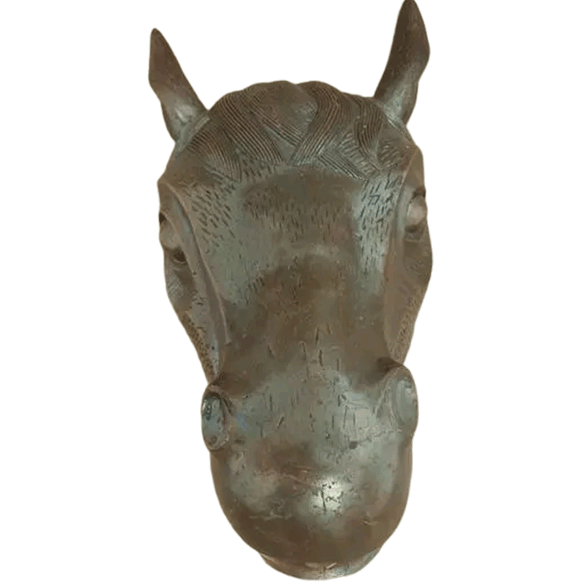
Human and animal bronze sculptures typically hide seams within folds of drapery, muscle contours, or fur texture, since organic forms give finishers natural cover for joint lines. Vessels, by contrast, often have geometric surfaces where seams are harder to disguise, which is why ding tripods, zun vases, and hu vessels demand a higher level of finishing precision. For collectors specifically comparing figural pieces, the bronze statues with different themes collection illustrates how seam placement varies across standing figures, seated Buddhist statues, and dynamic poses.
Patina, Polishing, and Finishing: How Seams Are Concealed or Preserved
Once casting and hand-chasing are complete, the final surface treatment plays a major role in how visible — or invisible — seams appear. Antique-style finishing typically involves chemical or heat-induced patina application to achieve consistent coloration across the entire piece, including over seam lines, so that the joint blends naturally with surrounding oxidation tones rather than standing out as a bright, untreated stripe.
This is one of the more technically demanding aspects of reproducing antique bronzes: matching patina color consistently across a piece that was cast in multiple sections, each of which may absorb chemical treatment slightly differently due to alloy density or surface texture. Workshops equipped to solve this — through controlled patina baths, layered polishing, and finishing artisans trained specifically in antique or modern surface looks — produce pieces where seams are essentially undetectable to casual inspection, while still retaining the subtle asymmetry that gives an Antique Style Chinese Bronze its authentic character.
For buyers who want a piece finished to a specific historical reference, custom color matching and reproduction detailing can be discussed directly through customize a bronze sculpture from sculpmart.com, where prototype samples can be reviewed before committing to a full production run.
Sourcing Reliable Antique Style Chinese Bronze Pieces for Your Collection
For collectors and decor buyers in the early evaluation stage, seam inspection should be one part of a broader due-diligence checklist alongside alloy composition, weight distribution, and documented production standards. A few practical questions worth asking any supplier:
- Is the workshop certified under a recognized quality management system, such as ISO 9001, and does production comply with export inspection standards for art crafts?
- What is the minimum order quantity for a custom or single sculpture, and can a prototype be reviewed before bulk casting?
- Is every shipment quality-inspected, and what happens if a casting defect — including a poorly closed seam — is found after delivery?
Luoyang Yichuan Bronze Craft Co., Ltd. addresses these concerns directly: production is ISO 9001 certified, minimum order quantity starts at a single custom piece, and every shipment undergoes quality inspection before dispatch, with free replacement offered for casting defects. Annual output exceeds 50,000 bronze art pieces, ranging from single collector commissions to bulk production runs, which means both small galleries and large decor buyers can source from the same facility without compromising on finishing standards.
Packaging is another overlooked factor connected indirectly to seam integrity — a piece with a well-finished seam can still be damaged in transit if protective packaging is inadequate. Export-compliant packaging designed for fragile bronze sculptures helps ensure that the careful hand-chasing work described above survives shipping intact.
Where to Continue Your Research
Buyers wanting to compare vessel types, sculptural themes, or historical reference pieces before finalizing a design brief can browse the chinese bronze sculpture catalogue, or review animal-form pieces through the bronze statues with different themes section. For background on how specific historical artifacts were constructed, including seam and joint techniques used in famous excavated pieces, the article on Zenghouyi chime bell and Qinshihuang mausoleum bronze chariots and horses offers useful comparative detail.

Final Considerations Before Purchase
Casting seams are not a flaw to avoid entirely — they are an inherent part of how bronze pieces, ancient and modern, are constructed. What separates a well-made reproduction from a mediocre one is not the absence of seams but how carefully they are finished, chased, and blended into the patina so the final piece reads as a coherent, historically consistent object. Before finalizing any purchase, request close-up photographs of joint areas, ask about the finishing process used, and confirm what quality assurance and after-sales support — including patina touch-up guidance — the supplier offers. These details, more than surface color alone, indicate whether a workshop can consistently deliver pieces worthy of serious collection or long-term decor investment.
To review general craftsmanship standards and factory background before requesting a quote, visit the about scultmart page for additional company details.