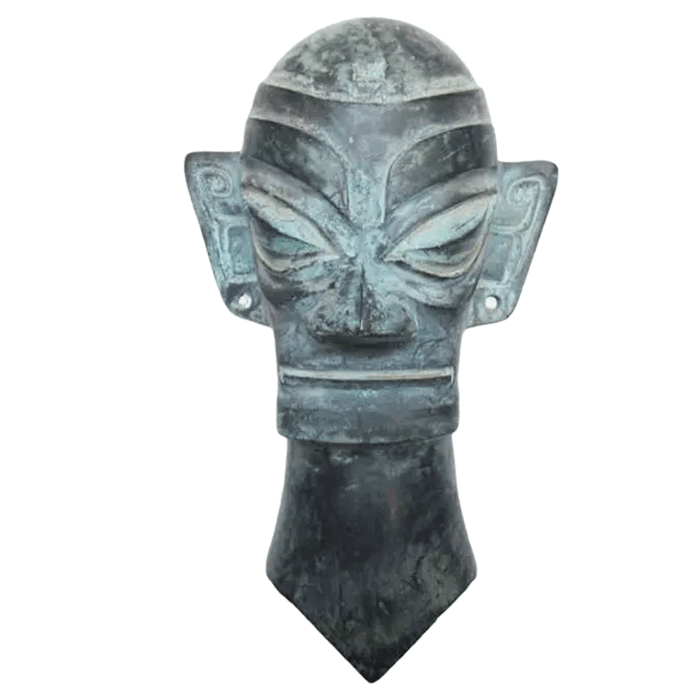
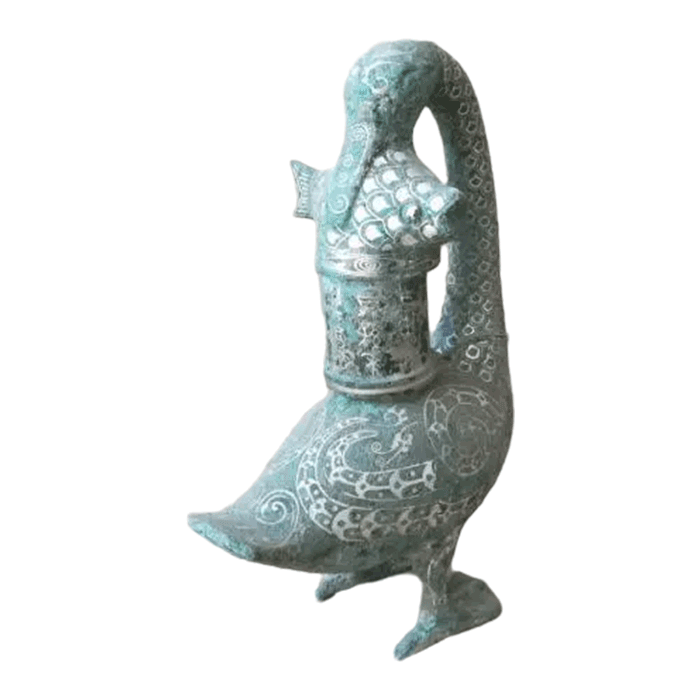
How Ancient Chinese Bronzes Were Used in Sacred Rituals
Chinese Bronze Sculpture Traditions Trace Their Roots to the Sacred Rituals of Ancient China
Long before bronze became a medium for decorative art and collectible statues, it held a position of profound spiritual and political significance in ancient China. Ritual bronzes were not simply vessels or ornaments — they were instruments of communication between the living and their ancestors, symbols of political legitimacy, and markers of social hierarchy. For art buyers, collectors, and cultural-project researchers exploring this field for the first time, understanding these ritual origins provides essential context for appreciating why classical bronze forms remain so influential in fine craftsmanship today.
This article examines how ancient Chinese bronzes functioned within ceremonial life, the major vessel types used in these rites, and how that heritage continues to shape modern bronze artistry, including the production of custom-cast Chinese Bronze Sculpture pieces for collectors and cultural institutions worldwide.
The Sacred Role of Bronze in Ancient Chinese Ritual Life
During the Shang and Zhou dynasties, bronze casting reached extraordinary technical heights, and the resulting objects were reserved almost exclusively for the ruling and aristocratic classes. Bronze vessels were used in ancestral worship ceremonies, believed to carry offerings of food and wine to deceased forebears, whose goodwill was thought to influence the fortunes of the living. Possessing a set of ritual bronzes was a visible declaration of status — the number and type of vessels a noble family owned was strictly regulated according to rank.
These practices are documented extensively in historical accounts of the evolution of bronze culture over 2000 years, which trace how ritual bronze production evolved from simple ceremonial tools into an elaborate system of political and religious symbolism. Bronze was considered a bridge between heaven, ancestors, and the mortal ruler, which is why so much craftsmanship, material investment, and inscriptional detail was devoted to these objects.
Ritual Vessel Types and Their Ceremonial Functions
Ancient ritual bronzes were produced in a wide variety of forms, each with a distinct ceremonial purpose. Understanding these categories helps explain why certain shapes remain popular subjects for reproduction and custom commissioning today.
Ding Tripods: Vessels of Authority
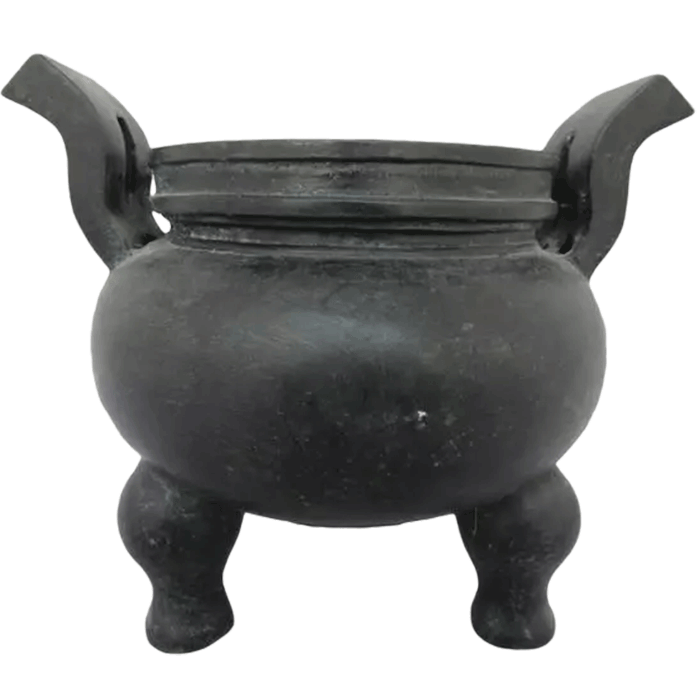
The ding, a three or four-legged cauldron, was arguably the most important ritual vessel in ancient China. Originally used for cooking sacrificial meat offerings, the ding evolved into a powerful symbol of political authority. Sets of ding vessels, differing in number according to rank, were used in state ceremonies and burial rites. The famous Houmuwu square cauldron remains one of the most celebrated examples of this vessel type, illustrating the scale and technical mastery achieved by Shang dynasty bronze casters.
Zun, Hu, and Wine Vessels
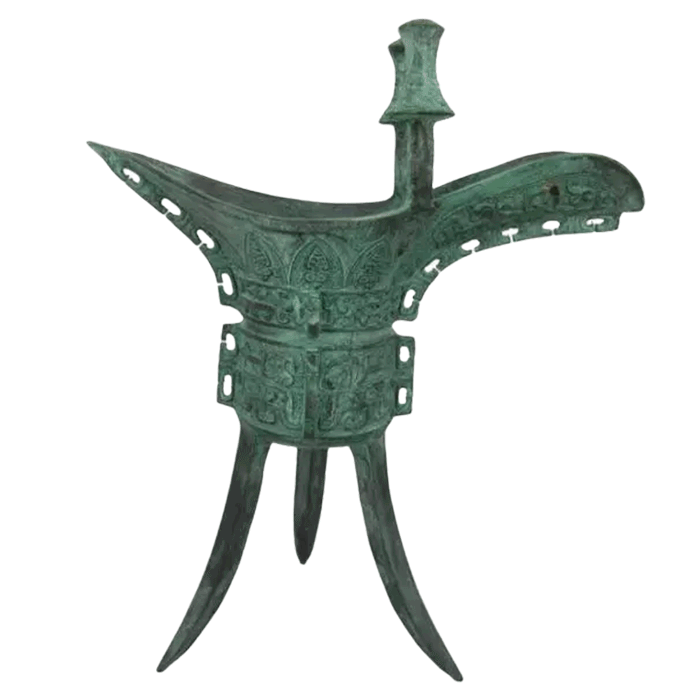
Wine played a central role in ancestral offerings, and bronze zun and hu vessels were crafted specifically to hold ceremonial wine for these rites. Their elegant proportions and animal-inspired motifs reflected both aesthetic refinement and religious symbolism. Details on how these forms were designed and used can be found in resources covering ancient Chinese bronze wine vessel traditions, which remain a valuable reference for collectors seeking historically accurate reproductions.
Bronze Mirrors and Incense Burners
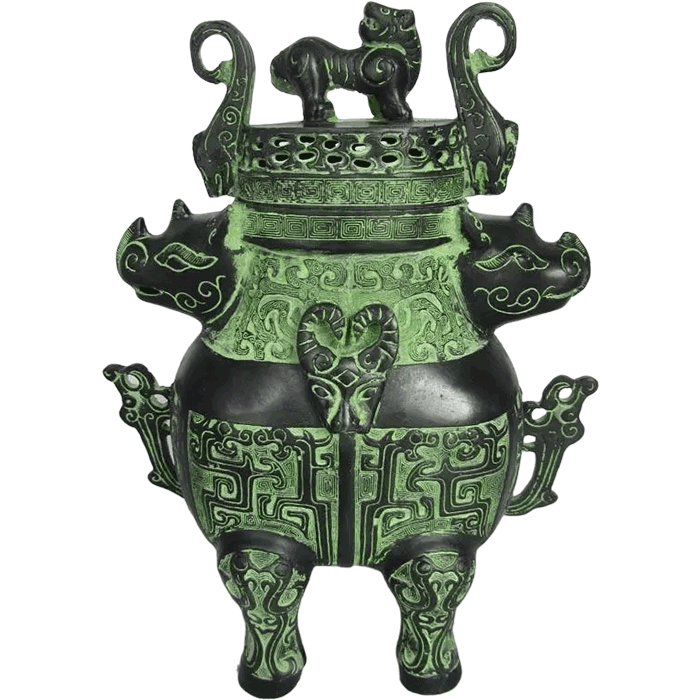
While mirrors are often associated with personal use, many ancient bronze mirrors carried ritual and symbolic inscriptions intended to ward off misfortune or invoke blessings. Similarly, bronze incense burners played a functional role in temple worship and ancestral rites, releasing fragrant smoke believed to carry prayers upward. Readers interested in the artistry behind these objects can explore further insights in the article on several bronze mirrors, which outlines their decorative and spiritual dimensions.
Musical Bronzes and Grand Ceremonial Displays
Beyond vessels, bronze was also cast into musical instruments used in court and religious ceremonies. Bronze bells were arranged in carefully tuned sets, performed during state rituals to accompany sacrifices and formal court gatherings. The scale of ambition behind these ceremonial bronzes is best illustrated by the Zenghouyi Chime Bell and Qinshihuang Mausoleum bronze chariots and horses, two of the most technically sophisticated bronze projects unearthed from ancient China. These discoveries demonstrate that bronze ritual objects were not limited to tabletop vessels — entire ceremonial ensembles, including musical instruments and life-sized figures, were commissioned to honor rulers and deities alike.
From Ritual Bronzes to Modern Bronze Sculpture Craftsmanship
The techniques developed for ancient ritual bronzes — particularly the lost-wax casting method — remain foundational to bronze artistry today. Modern foundries continue to rely on these same principles to achieve the fine surface detail, structural integrity, and rich patina finishes that collectors expect from museum-quality reproductions and custom Chinese Bronze Sculpture commissions.
At Luoyang Yichuan Bronze Craft Co., Ltd., this heritage informs every stage of production. Located in Yichuan County, Luoyang, Henan Province — a region historically significant to Chinese bronze culture — our workshop operates across a 3,000 square meter production facility staffed by more than 30 skilled craftsmen, including bronze-casting masters and finishing artisans. Each piece, whether a faithful reproduction of an ancient ding or a contemporary custom sculpture, is cast in premium bronze alloy (Cu-Sn) using traditional lost-wax methods, followed by hand chasing, polishing, and patina finishing in either antique or modern styles.
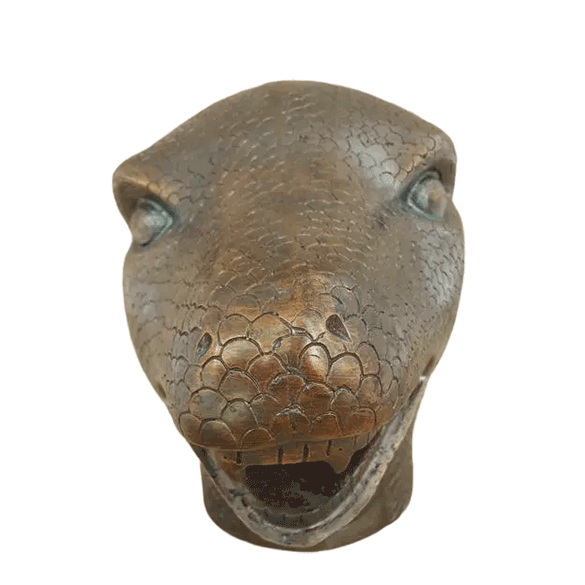
This combination of historical fidelity and modern production capability allows the company to support projects ranging from a single museum-grade replica to bulk orders of over 50,000 bronze art pieces annually, all under an ISO 9001 quality management system that meets export inspection standards for art crafts.
Sourcing Museum-Quality Bronze Reproductions and Custom Artworks
For collectors, gallery owners, and cultural-project researchers, sourcing ritual-style bronze reproductions presents specific challenges: achieving exact replication of antique forms, matching consistent patina color across production batches, and ensuring export-compliant protective packaging for fragile sculptures. These are precisely the pain points that a specialized bronze workshop is equipped to solve.
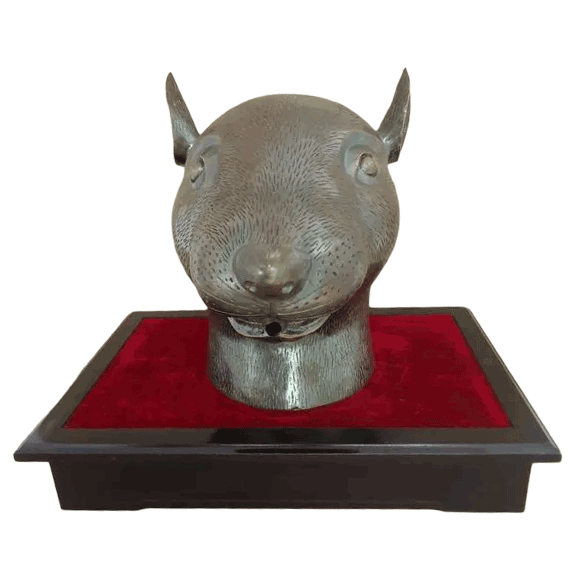
Buyers exploring options can review a broad range of Chinese bronze sculpture categories, including vessels modeled on classical ding, zun, and hu forms, as well as bronze statues with different themes spanning historical figures, deities, and animal subjects. For projects requiring a specific design, dimension, or finish not available in standard catalogs, it is possible to customize a bronze sculpture from sculpmart.com, with minimum order quantities starting from a single piece for custom sculptures and bulk pricing negotiated according to size and design complexity.
Quality Assurance and After-Sales Confidence for Bronze Art Buyers
Because ritual-style bronzes and custom sculptures are often shipped internationally and represent significant investments, quality assurance and after-sales support matter as much as casting skill. Every order undergoes quality inspection before shipment, and casting defects are addressed with free replacement policies. After-sales support also extends to patina touch-ups and restoration guidance, helping collectors maintain the appearance and integrity of their pieces over time.
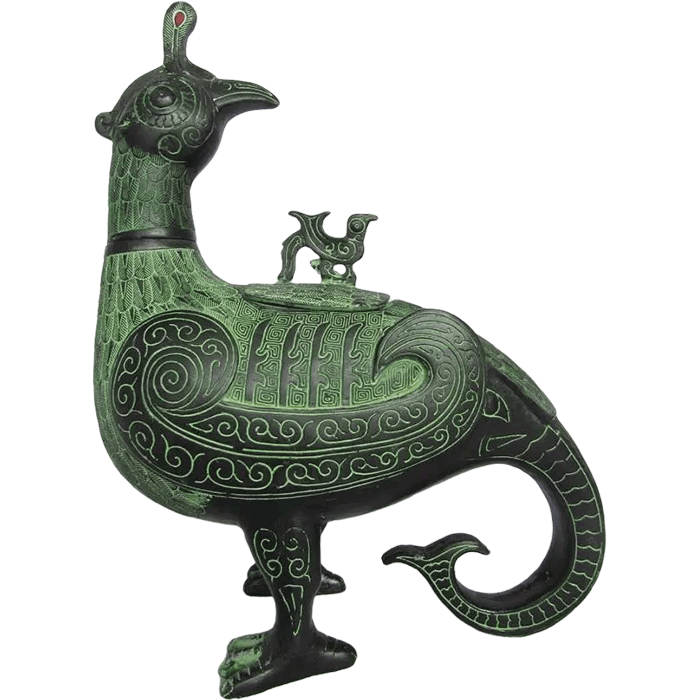
These assurances are particularly relevant for buyers acquiring vessels inspired by historically significant pieces, such as those referenced in studies of the some ancient Chinese bronze miscellaneous vessels catalog, where accurate proportion and surface treatment are essential to preserving historical authenticity in a modern reproduction.
Why Ritual History Still Matters for Today's Bronze Collectors
Understanding how ancient Chinese bronzes were used in ritual contexts does more than satisfy historical curiosity — it informs practical decisions for anyone commissioning or acquiring bronze art today. Knowing why a ding has three or four legs, why zun vessels carry specific decorative bands, or why certain animal motifs appear on ceremonial bells allows buyers to evaluate reproductions with a more discerning eye and to communicate design intent more precisely when working with a foundry.
For cultural institutions building historically grounded collections, or private collectors seeking a distinctive centerpiece, this ritual heritage provides both aesthetic inspiration and a framework for judging authenticity and craftsmanship. A well-cast Chinese Bronze Sculpture, whether a faithful museum replica or an original custom design, carries forward thousands of years of technical and symbolic tradition — connecting contemporary spaces to the ceremonial world of ancient China.
Those looking to deepen their understanding further can also explore related supporting crafts, such as handmade silver pieces often paired with bronze ritual sets in historical display collections, or browse bronze decorations designed for contemporary interior settings inspired by classical forms.
To learn more about the workshop behind these reproductions and custom commissions, visit the about sculpmart page for background on production standards, certifications, and craftsmanship practices that continue the legacy of ancient Chinese ritual bronze artistry.